It’s time for another review for books I read this year (previously: 2024, 2022). According to my GoodReads, I read 27 books this year. Here are some highlights:
The Demon-Haunted World

I started the year with Carl Sagan’s The Demon-Haunted World, as some kind of antidote to current / coming events. I last read this in about 2010, and held it in very high regard. I still do, but Carl comes off as a bit of a fuddy duddy at times (especially when talking about “the youth” today / in the 1990s). That’s not to say that he’s wrong about where society has gone (quiet the opposite), but it as a kind of tone. If you’re interested in an introduction to skepticism, I’d probably recommend the Skeptic’s Guide to the Universe.
Pachinko

Next up was Pachinko, which had been on my list for a while but a friend’s recommendation pushed it to the top. The writing is top-notch and the characters (and the hardship the author threw at them) are still with me 11 months later.
That same friend recommend The House in the Cerulean Sea, which I read this year. I also liked it too, but not enough to rush out and read the sequel.
The Mercy of Gods

This is a new series from the authors behind The Expanse, but the setting and tone are completely different. The feelings that have stuck with me the most are the bleakness and how people survive in desperate times. Not the most uplifting stuff, but an enjoyable (or at least entertaining) read. I’m looking forward to reading more in the series when they come out.
Sailing Alone around the World

This book is a gem, and got my only 5-star of the year (aside from a re-read of another 5-star). I’d recommend it to anyone, even if you aren’t into sailing. Slocum tells the story of the first (recorded) single-handed circumnavigation of the world, which he made aboard the Spray starting in 1895. He’s an incredible writer: both in clarity and style. I loved the understated humor sprinkled throughput.
And his descriptions of the people he met along the way was surprisingly not racist, and maybe even progressive for the time. He managed to avoid the “noble savage” trope entirely. And for the most part he avoided casting any non-American / non-Europeans as “savages” of any kind (aside from the indigenous people in Tierra del Fuego who, admittedly, did try to kill him).
This is available on Project Gutenberg. Check it out!
Service Model
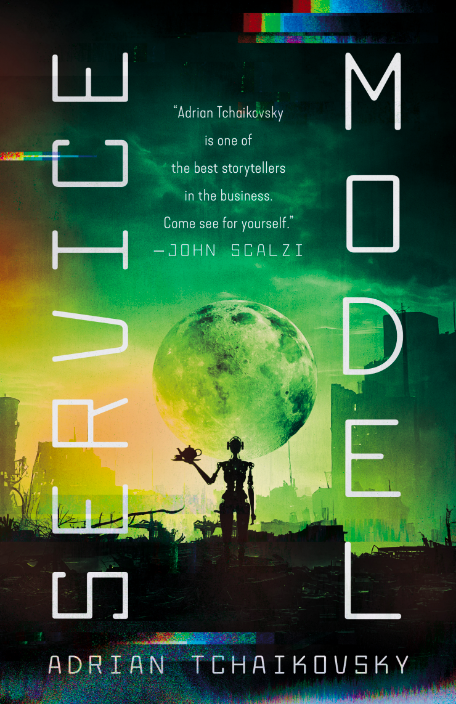
A fantastic little story. It took me a little while to realize that it’s actually a (dark) comedy, but once I did I was along for the ride.
I won’t spoil much it but there’s a small part that tech people / computer programmers will find entertaining. A character used the term “bits” in a couple places where I thought they should have used “bytes”. I assumed that the author (Adrian Tchaikovsky) had just made a small mistake, but no: he knew exactly what he was doing.
Nonfiction

A couple of economics books slipped into my non-fiction reading this year. First was The Price of Peace: Money, Democracy, and the Life of John Maynard Keynes by Zachary D. Carter (audiobook). Reading Keynes and commentary on Keynesian economics was a big part of my undergraduate education. Robert Skidelsky’s three-volume John Maynard Keynes is still my high-watermark for biographies.
This book gave a shorter and more modern overview of Keynes, both his life and economics (which really are inseparable).
In a similar vein, I listened to Trade Wars Are Class Wars. I can’t remember now who I got this recommendation from. I don’t remember much of it.
In the “Boating non-fiction” sub-sub-genera, I had two entries (I guess Sailing Alone around the World goes here too, but it’s so good it gets its own section).
- Into the Raging Sea by Rachel Slade: A fascinating look at the disaster that sank the container ship El Faro in the Caribbean (in 2015, so it’s not ancient history!). I won’t spoil anything, but it really is like a slow-motion train wreck. Slade does a great job telling the story.
- Sailing Smart by Buddy Melges and Charles Mason. I’ve been sailing on a Melges boat and I’m from the Midwest (Buddy is from Wisconsin) so this was like catnip to me. This was part auto-biography, part sail-racing tips. The biography part feels like pretty much any biography from a successful person (i.e. selecting on the dependant variable). I’m not a good enough sailor to judge the sail-racing tips. But it was a quick read.
Newsletters
It’s not books, but I did read every edition of a couple newsletters:
- Money Stuff by Matt Levine. And the Money Stuff podcast he hosts (with Katie Greifeld) is consistently a highlight of my week (RIP Friend of the Show Bill Ackman).
- One First by Steve Vladeck. This is useful for keeping up to date with legal news, especially things around the Supreme Court. But even more valuable is Steve’s analysis.
Hodgepodge
A few quick thoughts on a handful of books.
- A Psalm for the Wild Built, by Becky Chambers: The second Becky Chambers book I’ve read. She’s great. The actual story didn’t do much for me, but the interesting characters moving through an interesting world more than made up for that.
- To shape a Dragon’s Breath, by Moniquill Blackgoose (audiobook). I enjoyed it.
- Murderbot (again). I haven’t watched the TV show, but I re-read all the books when I was in a bit of a slump and needed something light. ART and Murderbot are the best.
- The Overstory by Richard Powers. I stopped reading this a few years ago after a certain character had a certain accident that just felt… unearned, about halfway through the book. I probably should have kept reading but couldn’t. Anyway, I picked up the audiobook and finished it off. It is a great book, but parts of it were a slog to get through.
- No Country for Old Men, by Cormac McCarthy. The Blank Check podcast covered the Coen Brothers this year so I picked up No Country. For me it’s not quite at the level of The Road but it’s still great.
- Mythos by Stephen Fry (audiobook). I highly recommend the audiobook for this one, since Stephen Fry narrates it himself. I never took a Greek History / civilization course in college, but this seemed like a really good overview.
- Endymion by Dan Simmons. This was a bit of a letdown after the first two parts of the Hyperion Cantos (which are just masterpieces). Still fun, but I haven’t moved on to the next book yet.
- A Little Hatred by Joe Abercrombie. This was a strangely easy, flowing read about a pretty awful world.
- The Adventures of Amina Al-Sirafi by Shannon Chakraborty. This book ruled. Amina rules.
- Shards of Earth by Adrian Tchaikovsky. Not my favorite Tchaikovsky, but still interesting.
- Cloud Cuckoo Land by Anthony Doerr. This was a re-read for me, after I recommended it to some friends. I felt bad for accidentally recommending a 600 page book (the downside of e-readers: you don’t appreciate how long a book is). I just love the characters, the story, the message, everything.
