






Used - Good
$16.11$16.11
$3.99 delivery Wednesday, April 29
Advertisement
Advertisement
Ships from: VikaSP Sold by: VikaSP
Used - Very Good
$16.12$16.12
$3.99 delivery May 1 - 6
Advertisement
Advertisement
Ships from: tLighthouse Books Sold by: tLighthouse Books
Download the free Kindle app and start reading Kindle books instantly on your smartphone, tablet, or computer - no Kindle device required.
Read instantly on your browser with Kindle for Web.
Using your mobile phone camera - scan the code below and download the Kindle app.
Follow the author
OK
Objective Knowledge: An Evolutionary Approach Revised Edition
Purchase options and add-ons
- ISBN-100198750242
- ISBN-13978-0198750246
- EditionRevised
- PublisherOxford University Press
- Publication dateNovember 9, 1972
- LanguageEnglish
- Dimensions8.4 x 0.8 x 5.4 inches
- Print length406 pages
Customers who viewed this item also viewed
Six Easy Pieces: Essentials of Physics Explained by Its Most Brilliant TeacherPaperbackFREE Shipping on orders over $35 shipped by AmazonGet it as soon as Sunday, Apr 26
Conjectures and Refutations: The Growth of Scientific Knowledge (Routledge Classics)PaperbackFREE Shipping on orders over $35 shipped by AmazonGet it as soon as Sunday, Apr 26Only 10 left in stock (more on the way).
Objective Knowledge (Routledge Classics)PaperbackFREE Shipping on orders over $35 shipped by AmazonGet it as soon as Sunday, Apr 26
The Rational Optimist: How Prosperity Evolves (P.s.)PaperbackFREE Shipping on orders over $35 shipped by AmazonGet it as soon as Sunday, Apr 26
Thing Explainer: Complicated Stuff in Simple WordsHardcoverFREE Shipping on orders over $35 shipped by AmazonGet it as soon as Sunday, Apr 26
The Book of Life: Daily Meditations with KrishnamurtiJiddu KrishnamurtiPaperbackFREE Shipping on orders over $35 shipped by AmazonGet it as soon as Sunday, Apr 26
Customers also bought or read
- Conjectures and Refutations: The Growth of Scientific Knowledge (Routledge Classics)
Paperback$22.60$22.60Delivery Sun, Apr 26 - The Fabric of Reality: The Science of Parallel Universes--and Its Implications
Paperback$14.78$14.78Delivery Sun, Apr 26 - The Logic of Scientific Discovery (Routledge Classics)
Paperback$36.99$36.99FREE delivery Sun, Apr 26 - The Beginning of Infinity: Explanations That Transform the World
Paperback$13.20$13.20Delivery Sun, Apr 26 - The Science of Can and Can't: A Physicist's Journey through the Land of Counterfactuals
Paperback$15.28$15.28Delivery Sun, Apr 26 - The Compleat Strategyst: Being a Primer on the Theory of Games of Strategy (Dover Books on Mathematics)
Paperback$10.95$10.95Delivery Sun, Apr 26 - Six Easy Pieces: Essentials of Physics Explained by Its Most Brilliant Teacher
Paperback$13.24$13.24Delivery Sun, Apr 26 - Unended Quest: An Intellectual Autobiography (Routledge Classics)
Paperback$17.53$17.53Delivery Sun, Apr 26 - Reality Is Not What It Seems: The Journey to Quantum Gravity
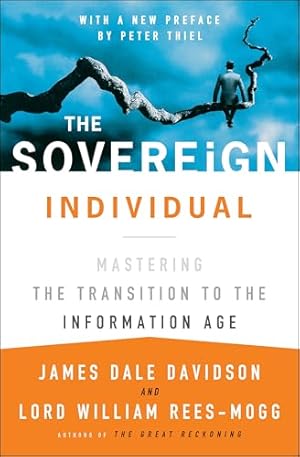
Paperback$11.58$11.58Delivery Sun, Apr 26 - The Sovereign Individual: Mastering the Transition to the Information Age#1 Best SellerDevelopment & Growth Economics
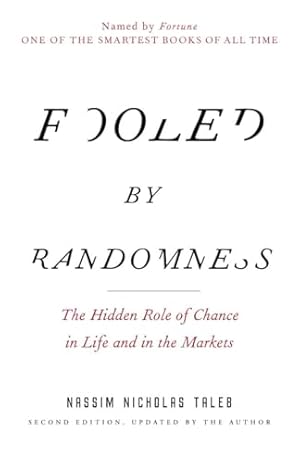
Paperback$15.00$15.00Delivery Sun, Apr 26 - Fooled by Randomness: The Hidden Role of Chance in Life and in the Markets (Incerto)#1 Best SellerBusiness Statistics
Paperback$12.68$12.68Delivery Sun, Apr 26 - Rationality: What It Is, Why It Seems Scarce, Why It Matters
Paperback$16.79$16.79Delivery Sun, Apr 26 - The Cave and the Light: Plato Versus Aristotle, and the Struggle for the Soul of Western Civilization
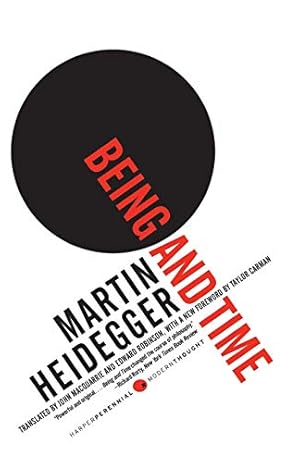
Paperback$16.72$16.72Delivery Sun, Apr 26 - Being and Time: A Study of Being, Existence, and the Meaning of Time (Harper Perennial Modern Thought)
Paperback$15.29$15.29Delivery Sun, Apr 26 - The Essential Tension: Selected Studies in Scientific Tradition and Change
Paperback$22.00$22.00Delivery Sun, Apr 26
Editorial Reviews
About the Author
Product details
- Publisher : Oxford University Press
- Publication date : November 9, 1972
- Edition : Revised
- Language : English
- Print length : 406 pages
- ISBN-10 : 0198750242
- ISBN-13 : 978-0198750246
- Item Weight : 15.2 ounces
- Dimensions : 8.4 x 0.8 x 5.4 inches
- Best Sellers Rank: #1,421,917 in Books (See Top 100 in Books)
- #216 in Epistemology (Books)
- #1,039 in Epistemology Philosophy
- #1,865 in Consciousness & Thought Philosophy
- Customer Reviews:
About the author

Discover more of the author’s books, see similar authors, read book recommendations and more.
Related products with free delivery on eligible orders
Customer reviews
Customer Reviews, including Product Star Ratings help customers to learn more about the product and decide whether it is the right product for them.
To calculate the overall star rating and percentage breakdown by star, we don’t use a simple average. Instead, our system considers things like how recent a review is and if the reviewer bought the item on Amazon. It also analyzed reviews to verify trustworthiness.
Learn more how customers reviews work on AmazonTop reviews from the United States
There was a problem filtering reviews. Please reload the page.
- Reviewed in the United States on August 21, 2009Format: PaperbackVerified PurchasePopper displays here his so called "third philosophy", that goes around the world 1, world 2 and world 3. This is not a very popular topic in Popper scholarship, in part because it is his late philosophy and it is not constructed under a systematic manner as the other two were (The Logic of Scientific Discovery and The Open Society).
Still, much than a mature and finished philosophy is a programmatic start up. You will find isolated papers, conferences that Popper offered in his last years, more or less happily ensembled by the editor. But there is much more in the rear that it would seem at a first glance. The impact on deep consideration of the influences between the different worlds and, especially, between the world 3 and the other two, is something that still has not been done.
Only 9 years ago, for instance, the Peruvian guru De Soto published an interesting book, The Mistery of the Capital, where he stresses that poverty is mainly caused not because poors in the world do not have assets; but instead because these assets are not "visible" to the international markets because they do not have appropriate titles of property universally accepted. In popperian terminology: because their assets only exist in the world 1 and world 2, but not in world 3.
World 3 is still a promised land to be discovered. Poppers work is an adequate beginning if you want to change the situation.
- Reviewed in the United States on December 29, 2001Format: PaperbackWhen an undergraduate in college, I was mainly exposed to so called "Continental" philosophy which seems to have a tendency, to say the least, toward bosh, and to analytic philosophy which seems to have a tendency, to say the least, toward triviality, plus, since it was a Catholic college, selections from Plato, Aristotle, and medieval metaphysicians.
I could not really acclimate myself with these doctrines. It is in a sense unfortunate that I found an alternative outside my formal schooling. With Popper I found someone who is readable--I think that any intelligent general reader can understand him--original, and with an outlook congruent with natural science.
He is known for his ideas on scientific method--that science does not really "prove" theories, but creates conjectures which have rich empirical content and withstand falsification. With ideas like this, decades ago, he attacked doctrines like Marxism, and psycho-analysis. Demolishing the claims of these doctrines may seem to be no big deal today, but decades ago they were major tools of our intellecutal elites.
This book covers old ground such as his views on science but also, it seems to me, breaks new ground. A new contribution is his theory of the Three Worlds, which I think is fruitful. He also deals with the question of free will, which I sense is the weakest part of his book.
Popper distinguishes three realms or 'worlds.' World1 is the world of physical objects; World2 is the world of our subjective beliefs, thoughts, feelings; World3 is what he calls an objective world of knowledge, the objective contents of thought--the knowledge contained in books, musuems, libraries, etc.
Popper holds that most philosophers considered the object of epistemology--the theory of knowledge--to be World2. Popper argues that this is misguided. He thinks it is, to use his words, "irrelevant." The proper object for epistemology is World3. We should concern ourselves not with justifying our subjective beliefs but with objective theories--their contents, the arguments supporting them, etc.
A theory of knowledge based on World3 has some interesting ramifications. It is immune from modern relativistic attacks (this is my personal view). World2 epistemology has premises, both implicit and explicit, that make it vulnerable to relativistic attacks. World3 epistemology, instead, proceeds with the GROWTH of knowledge. Another interesting feature of World3 is that, even though it is man-made, it is autonomous. If humanity were to disappear, World3 will still be "outthere". World3 is created by individuals with certain goals, but the contents of World3 seem to have a life of its own(and this is very metaphorical). It can be used by others in different ways, it leads to new problems and solutions not considered before, etc.
Popper also deals with the problem of understanding in the humanities. There are some who hold that there is a difference between understanding in the natural sciences and understanding in the human sciences--that in fields like history, psychology, sociology, one has to understand by a method which seems to me to be something like a mystical intuitive grasp of the thoughts of another. Popper thinks that this is old hat. The method to, say, reconstruct a damaged ancient text is fundamentally no different from understanding regularities in nature.
Popper died not too long before the advent of the world wide web. It seems to me that Popper's ideas on the three worlds are very applicable to the world wide web. The World Wide Web would fall under the category of World3. It has an ever expanding content of knowledge, of conjectures, of arguments and discussion. Being a part of World3, it is human made, but the world wide web has a certain autonomy. A road built on the web by one person for one thing can be used in different ways by different people.
- Reviewed in the United States on February 17, 2010Format: PaperbackIn these important essays, Karl Popper discusses Hume's problem (induction), Tarski's philosophical achievements, Wittgenstein's language problem, his three worlds and all sorts of `isms'.
Hume's problem
Hume noted that, however great the number of repetitions, man cannot justify the reasoning that an experience will lead again to the same outcome (no induction). But, why do reasonable people believe it? Out of `custom or habit', without which man would hardly survive.
Popper's solution for the problem is `deduction'. People function within a theoretical framework and should continue to do so as long as the framework has not been falsified or improved.
Alfred Tarski
Tarski's philosophical importance is immense.
He demonstrated that truth is simply correspondence with the facts.
Moreover, he showed that any language contains descriptions of facts and a meta-language which contains statements about these facts. He solved, thereby, the liar's paradox.
Wittgenstein
For Wittgenstein, a proposition is a picture of reality. More, it is impossible to discuss the relationship between language and reality, because language cannot be discussed by language.
As Ray Monk explained in his brilliant book about Wittgenstein, language was not the centre of Wittgenstein's preoccupations, but ethics. Language was only a useful tool in order to speak clearly about ethical problems.
Three Worlds
For Karl Popper, our universe is composed by three worlds: the physical world, the world of our mental experiences and an objective world (our actual knowledge written down in books, on hard disks, on visual displays ...)
But, as W. Van Orman Quine astutely remarked: why do we need world 2? It is the same as world 1. Popper rejected categorically physicalism.
Popper lambastes rightly the megalomania of many philosophers who cover their `incompetence' in obscure, would-be highbrow sentences and abstractions.
All philosophic texts should be written in simple, lucid and easily comprehensible language, as used in these texts.
This book is a must read for all those interested in the (philosophical) world we live in.
Top reviews from other countries
Marie ThérèseReviewed in Japan on February 27, 20165.0 out of 5 stars Schema " P1 ⇒ TT ⇒ EE ⇒ P2 ",
Format: PaperbackVerified PurchaseI found so many suggestive essays in this book, such as "Of Clouds and Clocks", in which physical determinism is closely discussed (⇒ Popper denies it ).
In "Epistemology Without a Knowing Subject", Popper shows very important schema as follows :
P1 ⇒ TT ⇒ EE ⇒ P2
that is : problemP1 --- tentative theory(TT) --- evaluative error elimination(EE ) --- problemP2
And, Popper says "The evaluation is always critical, and its aim is the discovery and elimination of error.
This schema is the essence of what Popper wants to say in this book.
Mr. Francois MarcognetReviewed in the United Kingdom on May 5, 20135.0 out of 5 stars The Evolutionary Epistemology of Karl Popper
Format: PaperbackVerified PurchaseWe find in this book the last philosophy of karl Popper, with his "Three Worlds": 1, 2 and 3 for the ideas or the theories, upon the basis of his great works: "The Logic of Scientific Discovery", the "Postscript", and "Conjectures and Refutations".
It is always a logical approach applied to all the problems that can appear in philosophy, and particularly about the theory of knowledge, and in life in general, the problematic of problem solving. He insists on the results of his first researches, with the problem of induction and the criterium of demarcation, and with the study of the growth of knowledge with bold tests and refutation (or corroboration that means to be nearer the truth but never definitely).
So he could give answers to the main philosophical problems: Hume, Kant, metaphysics and commonsense, empiricism and the Vienna Circle, Russel and Wittgenstein, the philosophy of language... Finally he defended an evolutionary theory of knowledge, through trying and error and problem solving, confident he became in the results of biology (Darwin, Lamarck, Spencer, John Eccles, Karl Lorenz...), keeping his realism in philosophy and with the theory of the truth of Tarski. He developed a plea for an objective knowledge, according to an evolutionary epistemology, corresponding to a Neo-Darwinism and a New-Synthesis.
YusufReviewed in the United Kingdom on November 27, 20135.0 out of 5 stars UCL student using it for debate
Format: PaperbackVerified PurchaseHad a debate which required this book for proper objective argument. Karl Popper vs Thomas Kuhn debate. Conflict in philosophies. The book's also a good read for an objective philosophical perspective on the growth of science. Stimulated my more intellectual thoughts and good to have on the shelf too.
James ChambersReviewed in the United Kingdom on January 23, 20155.0 out of 5 stars An alternative view
Format: PaperbackVerified PurchaseA great book and service to match, worth the five stars awarded.


![CPCE Exam Prep 2025-2026: 625+ Practice Questions and Counselor Comprehensive Study Guide: [2nd Edition]](https://m.media-amazon.com/images/I/41oiRV+z+FL._AC_SR100,100_QL65_.jpg)
![FSOT Study Cards 2026-2027: FSOT Exam Prep and Practice Questions for the Foreign Service Officer Test [Full Color Cards]](https://m.media-amazon.com/images/I/31Vzc9Cr5uL._AC_SR100,100_QL65_.jpg)