
The grid() method in Tkinter is used to arrange widgets in a window using a row-and-column layout. It places widgets inside a container (such as a window or frame) in a two-dimensional table structure. Each widget is assigned a specific row and column position. The grid size is determined automatically based on the widgets added.
Example: This example creates a window with one label placed using the grid() method.
from tkinter import *
root = Tk()

l = Label(root, text="Hello")
l.grid(row=0, column=0)

root.mainloop()
Output
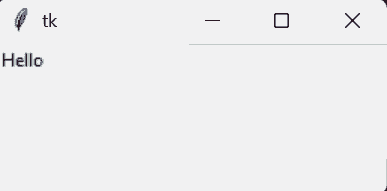
Explanation: l.grid(row=0, column=0) places the label in the first row and first column of the window.
Syntax
widget.grid(options)
Common Parameters:
- row: Row number where the widget is placed.
- column: Column number where the widget is placed.
- rowspan: Number of rows the widget spans.
- columnspan: Number of columns the widget spans.
- padx / pady: Extra space around the widget (horizontal/vertical).
- sticky: Aligns the widget inside the cell (N, S, E, W).
Examples
Example 1: This program creates a basic form with labels and entry fields. Each widget is positioned using specific row and column values.
from tkinter import *
r = Tk()

Label(r, text="Name").grid(row=0, column=0)
Entry(r).grid(row=0, column=1)

Label(r, text="Age").grid(row=1, column=0)
Entry(r).grid(row=1, column=1)

r.mainloop()
Output
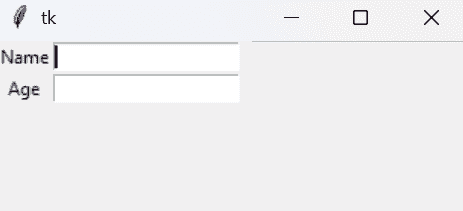
Explanation: Each widget is placed using grid(row=?, column=?), which positions it inside the table layout.
Example 2: This example creates a button that spans across two columns. It shows how to merge grid cells horizontally.
from tkinter import *
r = Tk()

Label(r, text="Username").grid(row=0, column=0)
Entry(r).grid(row=0, column=1)

Button(r, text="Login").grid(row=1, column=0, columnspan=2)

r.mainloop()
Output
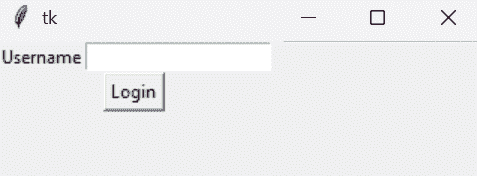
Explanation: columnspan=2 makes the button extend across two columns.
Example 3: This program demonstrates how to align widgets inside their grid cells. It uses the sticky option for alignment control.
from tkinter import *
r = Tk()

Label(r, text="Left").grid(row=0, column=0, sticky=W)
Label(r, text="Right").grid(row=0, column=1, sticky=E)

r.mainloop()
Output
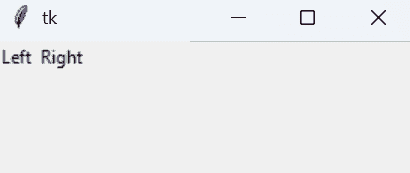
Explanation: sticky=W aligns the widget to the left and sticky=E aligns it to the right inside the grid cell.
