The Breaching Experiment is an ongoing musical exploration. Sociological metal, eclectic, apocalyptic, political and personal, furious, with an anti-fascist heart.
Listen and download releases for free at Bandcamp.
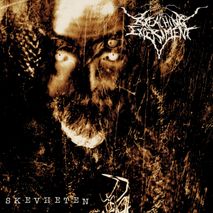

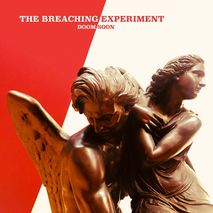

Skevheten
2026
The album was created around a feeling of disconnection with the world. In times where leaders engage in war-mongering, authoritarianism and climate denial, what used to be mainstream political concerns has turned into extremism. Even politely suggesting that peace is preferable over war places you at the extreme end of the political map, as does the suggestion that perhaps, pretty please, we could consider doing something about the climate crisis. The feeling represents a fundamental alienation toward politics and a sense of existential desperation as our hold on the world is slipping away.
The lyrics, all in Swedish, were written out of an urge to express this skewness. Song lyrics deal with militarism, authoritarianism, life and death, colonial relationships, and anxiety. But a gleam of light still occurs here and there, through examples of meeting the natural world in a pause from societal bonds. Indeed, this album is crowded with animals, and not all of them benevolent. Toads boiling frogs, hens searching for shiny things only to choke on worms, wasps to fill you with hatred, snakes to bite you when you’re sick, wolves to hunt you down. But also foxes to dance with by the roadside.
Musically, the record is a blend of black and doom metal, with elements of other influences slipping in through the cracks. It’s even a bit catchy at times.
Special thanks to Doug Gross for narrating the title track. Being Canadian, he was put to the task of reading a lyric in Swedish, not knowing what the words meant or how they should be pronounced. It came out perfectly, as a sonic illustration of the overall theme. The lyric is a paraphrase of a poem from 1916 by Swedish poet Pär Lagerkvist, titled "Anguish". He was in his twenties when he wrote it, during the First World War, and its emotional content is quite adequate also for our times.
Personnel:
Performed by Christian Ståhl, except narration on "Skevheten", by Doug Gross.

Morphocide
2025
This album is an antifascist outcry over the state and development of the world in the recent decade. It is coloured by despair and outrage because world politics are too often exacerbating rather than solving the problems humanity is currently facing. Instead of system reforms for combatting climate change and defeating inequalities we see increasing authoritarian and outright fascist politics gaining influence, and an opposition that is either non-existent or at a loss of how to fight this development.
I have coined the term ”morphocide” to describe the necessary dismantling of fossil capitalism, described in an article in Journal of Critical Realism. The previous single ”Extinctathon”, released in 2024, also deals with this. However, in 2025, we could observe another morphocide, namely the assault on liberal democracy in the US. This ongoing coup d’état is a fossil-infused fascistoid nightmare. The songs on this album is a response, from the gut, and will hopefully be just one of many voices in a choir of resistance.
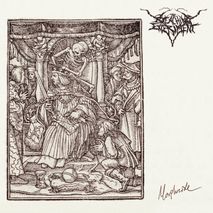
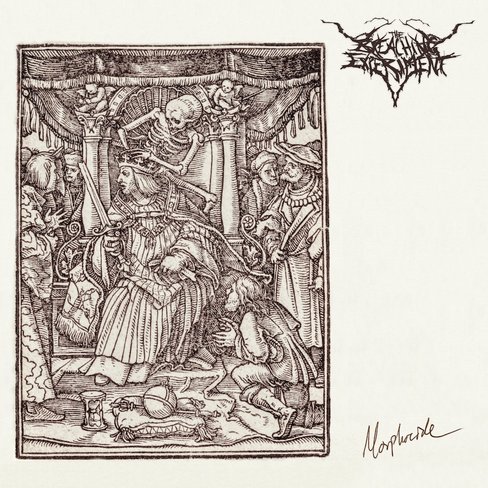
The music on this album is rooted in death metal with influences from death n’ roll, punk and black metal. The cover art is a woodcut from 1526 called The Emperor, from the series "The Dance of Death" by Hans Holbein the Younger.
The cover art is a woodcut from 1526 called The Emperor, from the series "The Dance of Death" by Hans Holbein the Younger.
Personnel:
Performed by Christian Ståhl
Songs and their meanings:
1. Morphocide
The title track describes the assault on US democracy that is currently happening, and how this attack on the open society transforms it into something completely different. It seems to be orchestrated by a dimwit, but underlying it is an elaborate plan to dismantle the democratic order and political accountability, and all attempts at fighting climate change for that matter.
2. Hate Hate Hate (Lament for Gaza)
This song is a response to the horrifying situation in Gaza, which amounts to no less than genocide carried out with utmost inhumanity. A doctor at a hospital said in a news report that the only thing not missing in Gaza is death. And that was a comment made before soldiers started to shoot people when collecting food and water at help stations.
3. The Great Refusal
This song is based on Herbert Marcuse’s book Eros and Civilization, which has interesting points related to the current societal development, even though it was published in the 1950’s. We need to take part in a great refusal of the principles that guides a society built on destruction, warmongering and repression, and nurture a more positive perspective on ourselves and society.
4. Fuck You You Fucking Fuck
I woke up one morning to the news that Trump had just signed an order to keep coal plants open and even developing new ones, to keep producing ”clean, beautiful coal”. This idiocy just made my heart sink, and this song is a violent cry over the flagrant policies designed to counteract all developments toward fossil-free societies. It’s perhaps not the most nuanced lyric, but sometimes you just have to let off steam.
5. Divide Et Impera
This song deals with the lack of effective response from the left to the current right-wing authoritarian policies. Since the opposition is scattered and disempowered, there is no real threat to these politics. Andreas Malm once said that it seems like the left has forgotten how to fight. He has a point.
6. The Breath of Mankind
We are the dragon that breathes fire over the world, burning forests and civilisations. The necropolitics of industrial and postindustrial societies threatens the future of humankind. We need to rise above our history.
7. Dialectic
This song is about the very best kind of friend: the kind that challenges you. I am lucky to be married to such a person.
8. Hauntology
When the world is in chaos we may need to look to ghosts of past futures in order to find new directions, as noted by Jacques Derrida who coined the term ”hauntology”. This song is about the importance of sociological and political imagination, and that this may be promoted by engaging with utopian ideas, present and past, and think about how they could be moulded to forge a new and better world.
9. Among Ruins
The lyrics are an adaptation of Psalm 102:6, about being lost and desolated in the aftermath of a ruined civilisation. Although I’m not religious, these verses do describe well the feeling of grief over what has been lost.
10. Negative Entropy
Inspired by Jeremy Lent’s book The Web of Meaning, this song describes how society creates destruction and that we need to move beyond modern dichotomies that separates humans from the natural world.
11. Old King Coal
We thought we had banished Old King Coal, but he keeps reasserting his dominance over our world and our minds. His Fog Demon covers our cities with smog, while he smirks at our coughing fits. Based on an 1880 etching from the George Collection.
12. Blood Rain
This song is lamenting the seemingly unending drive of humankind toward war and destruction. These are hard times for being a pacifist, when the dream of world peace is considered too utopian to be taken seriously. It’s hard not to give up.
13. Fascist McFascistface
Calling a spade a spade, this punkish song is about looking at what is currently happening in the US and defining it as what it is: the development is an example of textbook fascism. Jeremy Snyder, a scholar on the topic who chose to leave the US for Canada, has explained it well: https://snyder.substack.com/p/of-course-its-a-coup
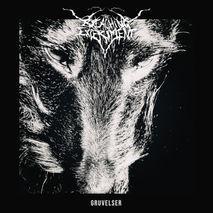
Gruvelser
2025
Eleven tracks of death and black metal, with a hint of soul. Lyrics focuses on a broad array of topics, from climate change and politics to dark feelings and various complaints over human existence.
Personnel:
Performed by Christian Ståhl

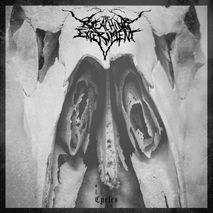
Cycles
2025
Six tracks of raw, slow black metal. The lyrics deal with the cycles in and out of depression. From falling into the darkness, to realizing that the ”clarity” you think you saw when being at the bottom of a pit wasn’t true at all, to again questioning whether the clarity outside the pit isn’t just pretend and make-believe, to falling into that same old pit once more. And how we may need someone to pull us out before we get stuck down there.
Personnel:
Performed by Christian Ståhl

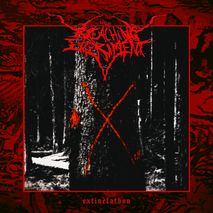
Extinctathon
2024
We are destroying biotopias in search for cheap packaging for our endless online shopping frenzies. Our capitalist era is a necrotopia. But every social form may be dismantled, killed, or at least fundamentally reformed. It is time to commit morphocide.
Personnel:
Lead guitar by Marcus Borggren
Drums by Mike Cameron Force
All other instruments performed by Christian Ståhl

Dark Resonance
2024
A development of Hartmut Rosa's theory of resonance, this album is an exploration of the potential of finding resonance with and in death. This is illustrated through eight black metal tracks, with musical and lyrical nods to Mayhem and Darkthrone.
Personnel:
Performed by Christian Ståhl.

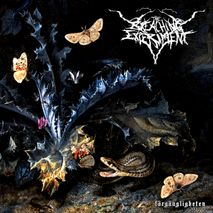
Förgängligheten
2023
A black metal album with lyrics in Swedish dealing with sickness, death, grief and depression.
Personnel:
Performed by Christian Ståhl.
Cover art: Otto Marseus van Schrieck, Still Life with Thistle and Snake

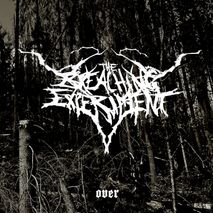
Over
2023
A cover of Portishead's track Over, reimagined as a black metal tune.
Personnel:
Performed by Christian Ståhl. Written by Adrian Utley, Beth Gibbons and Geoff Barrow.

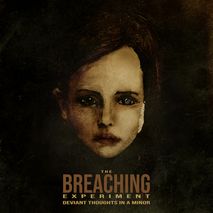
Deviant Thoughts In A Minor
2023
A musical experiment in A Minor (and Major).
Personnel:
Written and performed by Christian Ståhl.
Cover art by Thomas Klintecorn.

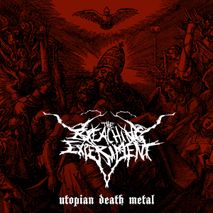
Utopian Death Metal
2022
A death metal EP with themes spanning the various borders between utopia and dystopia.
Personnel:
Written and performed by Christian Ståhl.
Lead guitar by Marcus Borggren.

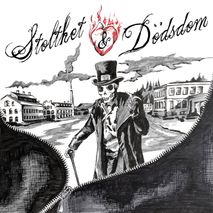
Stolthet & Dödsdom
2022
An album about an old Swedish village, Gusum, telling stories about the people, the mill, and the tension between labor and capital.
Read the full release notes and lyrics here (in Swedish).
Personnel:
Written and performed by Christian Ståhl, exept the song Genomfartsled, written by Thomas Klintecorn and performed by Thomas Klintecorn and Christian Ståhl.
Cover art by Anna-Carin Fagerlind Ståhl.

M-C-M'
2020
An EP with slow and moody music, which lyrically varies lamentations of climate and policy developments with an analysis and illustration of Marx's formula for how capitalism makes profit, and how this is translated into the living conditions of workers.
Personnel:
Christian Ståhl: All instruments, vocals and drum programming.
Cover art by Anna-Carin Fagerlind Ståhl.

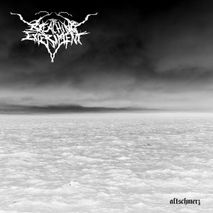
ALTSCHMERZ
2020
An album of eight black metal-infused songs, musically shifting between blastbeats, doomy lows and one or two rock anthem influences. Lyrically, the songs circle broadly around internal and external anxiety, from the closest relationships to general political lamentations.
Personnel:
Christian Ståhl: All instruments, vocals and drum programming
A video for the track The Bloody Machine of Robespierre:

E.O.W.
2019
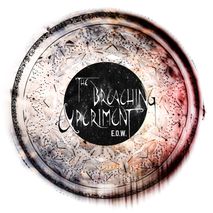
The album E.O.W. is a work of sociological metal, based on Erik Olin Wright's book Envisioning Real Utopias. It was released in 2019.
Read the full release notes and lyrics here.
Personnel:
All instruments, vocals and drum programming performed by Christian Ståhl, with the following exceptions:
- Narration on Growth Machine by Doug Gross.
- Narration on Real Utopias by Erik Olin Wright, from a lecture given at the ISA World Congress of Sociology in Yokohama, Japan, 2014, used with kind permission from the International Sociological Association.
- Additional narration on Real Utopias by Markus der Schlagwerker, Monica Wise, Tom Wise, and Anna-Carin Fagerlind Ståhl.
- Lead guitar by Marcus Borggren on tracks 1, 3, 5, 6, 7, 8 and 9.

SHIKASTA IS GOING DOWN
2019
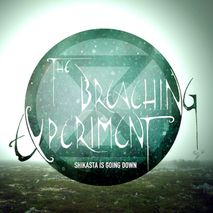
This single was released in 2019, with the original tracks released in 2013 and 2014, respectively. Lyrics are inspired by Doris Lessing's Shikasta series and the political landscape in Europe and elsewhere.
Personnel:
Christian Ståhl: Guitars, bass, drums, vocals
Doug Gross: Narration
Thomas Klintecorn: Noise

ANTHROPOCENE
2019
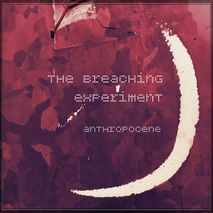
This EP focuses on rhythms and bass lines, and lyrics around climate change, poetry, space and politics.
Personnel:
Christian Ståhl: Bass VI, vocals and drum programming
Thomas Klintecorn: Bass VI

DOOM SOON
2018
This album is musically a punk-rock endeavor. The lyrics deal with political issues such as climate change, work and welfare, populist politics and online bullying.
Personnel:
Christian Ståhl: Guitars, bass, vocals
Anna-Carin Fagerlind Ståhl: Vocals
Linus Melchiorsen: Drums
A video for the track Arbetslinjen:

MISCELLANEOUS
A rendering of Spock's Theme from the Star Trek episode "Amok Time", played on some far-off planet:
