
Custom Software Development Services for Scalable Business Solutions
Custom software development services by Codmash help businesses build secure, scalable, and easy-to-use digital systems designed around their unique workflows.
We develop CRMs, admin dashboards, client portals, booking systems, SaaS platforms, automation tools, reporting systems, and custom web applications that reduce manual work, improve productivity, and support long-term business growth.
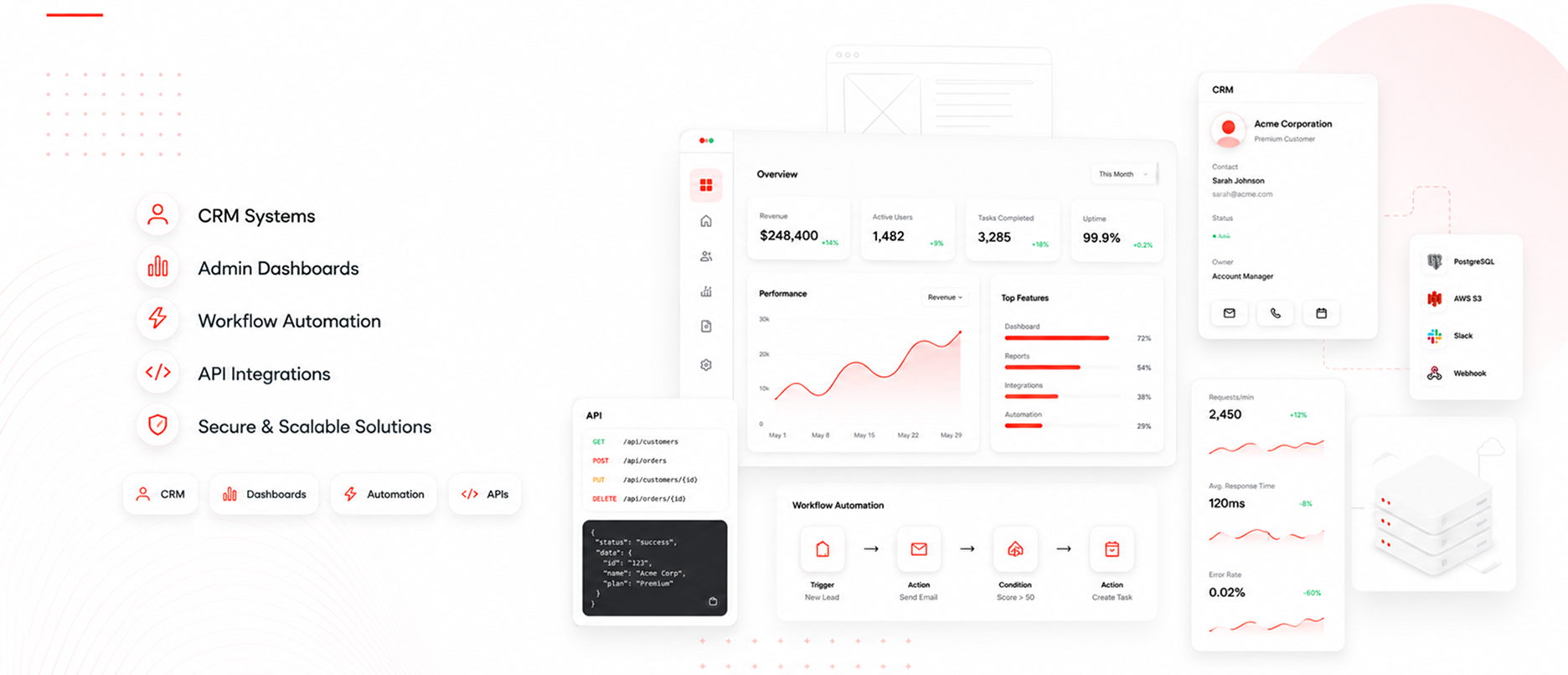
Business-Centered Software Development Built for Growth
Every business has different processes, challenges, users, and growth goals. Ready-made software can help in some cases, but it often creates limitations when your workflow needs more flexibility, control, automation, or integration.
At Codmash, our custom software development services focus on building digital systems that match how your business actually works. Whether you need to manage leads, automate tasks, track operations, handle bookings, manage customers, or centralize data, we create software that is practical, secure, scalable, and built for long-term use.
Custom Software Development Solutions for Modern Businesses
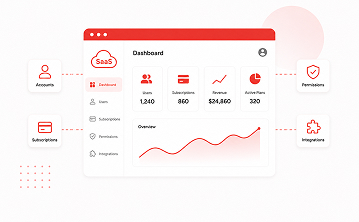
Scalable SaaS Product Development
Scalable platforms with accounts, subscriptions, dashboards, permissions, integrations, and product-ready interfaces.
Best for SaaS products, subscription platforms, cloud software, and multi-user systems.
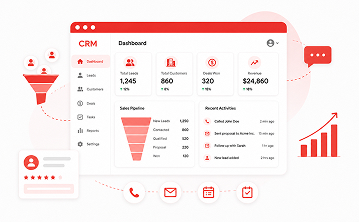
Custom CRM System Development
Custom CRM systems to manage leads, customers, sales activity, follow-ups, communication, tasks, and reports.
Best for sales teams, lead tracking, customer management, and follow-up workflows.
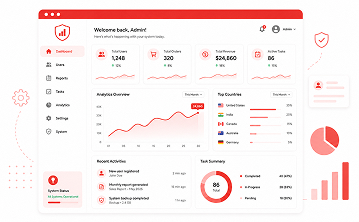
Smart Admin Dashboard Solutions
Clean admin dashboards to manage users, reports, tasks, analytics, system controls, and business data.
Best for reporting panels, internal tools, user management, and admin control systems.
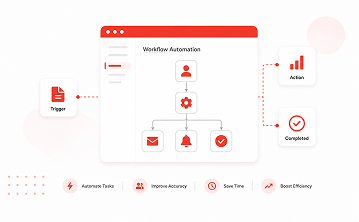
Business Workflow Automation Software
Automation tools that reduce manual work, improve accuracy, speed up workflows, and simplify business operations.
Best for task automation, approvals, notifications, lead routing, and operational efficiency.
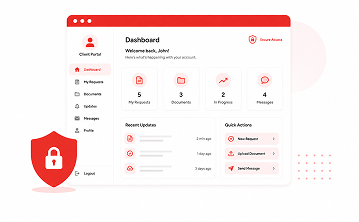
Secure Client Portal Development
Secure client portals for logins, updates, requests, documents, progress tracking, and communication.
Best for customer portals, member dashboards, service platforms, and client communication.
Our Custom Software Development Services
01
Business Analysis & Software Strategy
We start by understanding your business workflow, user roles, problems, goals, data needs, and existing systems. This helps us define the right software structure before development begins.
- Workflow analysis
- Business goal mapping
- Feature planning
- User role planning
- Software roadmap
02
Software Architecture & Planning
We plan the technical structure, database model, modules, user permissions, integrations, security needs, and scalability requirements for your custom software.
- System architecture
- Database planning
- Module structure
- Permission planning
- Technical roadmap
03
UI/UX Design for Software
We design clean and easy-to-use software interfaces that help users complete tasks quickly. Every screen is planned for clarity, usability, productivity, and smooth navigation.
- User flows
- Wireframes
- Dashboard UI
- Form design
- Interactive prototypes
04
Custom Web Application Development
We develop custom web applications that support business operations, customer management, reporting, bookings, data tracking, and online service delivery.
- Frontend development
- Backend development
- Admin panels
- User dashboards
- Secure login systems
05
API Integration & Third-Party Systems
We connect your software with third-party tools, payment gateways, CRMs, email platforms, analytics tools, shipping systems, and other business applications.API integration
- API integration
- Payment gateway setup
- CRM integration
- Email automation
- Data syncing
06
Database & Reporting Systems
We build structured database systems and reporting dashboards that help businesses store, manage, filter, analyze, and use data more effectively.
- Database design
- Data management
- Reporting dashboards
- Filters and search
- Export functionality
07
QA Testing & Security Checks
Before launch, we test your software for bugs, usability issues, security risks, browser compatibility, responsive behavior, performance, and workflow accuracy.
- Functional testing
- Responsive testing
- Bug fixing
- Security checks
- Launch QA
08
Software Maintenance & Support
After launch, we support your software with updates, bug fixes, performance improvements, new features, security patches, and long-term technical maintenance.
- Bug fixing
- Feature updates
- Performance optimization
- Security updates
- Technical support
Our Custom Software Development Approach
Our custom software development approach is built around understanding your workflow, planning the right system, designing user-friendly interfaces, developing secure features, testing every detail, and supporting long-term growth.
Discover

We understand your business process, challenges, goals, users, existing tools, and technical requirements.
Define
We define the software features, user roles, workflows, data structure, integrations, and project roadmap.
Design
We design wireframes, user flows, dashboards, forms, and interface screens focused on usability and productivity.
Develop
We build secure, scalable, and performance-focused software using the right technology stack and clean architecture.
Test

We test features, workflows, integrations, performance, responsiveness, security, and user journeys before launch.
Custom Software Development Tools & Technologies
We use reliable technologies, frameworks, databases, APIs, and development tools to build secure, scalable, and easy-to-manage custom software solutions.
Frontend Technologies
HTML5, CSS3, JavaScript, React, Next.js, Vue.js, Tailwind CSS, Bootstrap
Backend Technologies
PHP, Laravel, Node.js, Express.js, REST APIs
Databases
MySQL, PostgreSQL, MongoDB, Firebase
Integrations & Cloud Tools
Stripe, PayPal, Google APIs, Firebase, AWS, CRM systems, analytics tools
Testing & Project Tools
GitHub, Postman, Jira, Trello, Google Analytics, PageSpeed Insights
Why Choose Codmash for Custom Software Development Services?
Workflow-Based Planning
We study your actual business process before development, so the final software supports your workflow instead of forcing you to change it.
Scalable Architecture
We build software with a structure that can support new features, more users, integrations, automation, and future business growth.
User-Friendly Interface
We design clean dashboards, forms, portals, and user flows that make the software easier for your team and customers to use.
Secure Development
We focus on user permissions, secure login, data protection, validation, and reliable coding practices to keep your software safer.
Integration Support
We connect your software with third-party tools, APIs, payment systems, CRMs, analytics platforms, and business applications.
Long-Term Maintenance
After launch, Codmash can support your software with bug fixes, updates, performance improvements, security patches, and new features.
Frequently Asked Questions
Custom software development services include planning, designing, developing, testing, launching, and maintaining software built specifically around a business workflow, user needs, and growth goals.
A business should choose custom software when ready-made tools cannot fully support its workflow, automation needs, reporting requirements, user roles, integrations, or long-term scalability.
Codmash builds CRMs, admin dashboards, client portals, booking systems, SaaS platforms, automation tools, reporting systems, business management tools, and custom web applications.
Yes. Codmash can integrate custom software with CRMs, payment gateways, email platforms, analytics tools, APIs, shipping systems, third-party apps, and internal business tools.
Yes. Codmash can replace manual processes, spreadsheets, repeated admin work, and disconnected tools with custom software development.
A custom software system can help manage customers, orders, bookings, staff tasks, reports, documents, approvals, notifications, payments, and internal workflows from one organized platform.
Codmash helps prioritize custom software development features based on business goals, user needs, workflow importance, budget, timeline, and launch value.
We usually recommend starting with the most important features first, such as user roles, dashboard, data management, reporting, admin controls, and core workflows. Advanced features, API integrations, AI automation, and analytics can be added in later phases.
Codmash can build custom software with different user roles, permission levels, dashboards, and access controls. For example, an admin may manage the full platform, staff members may access assigned tasks, customers may use their own portal, and managers may view reports. This is useful for CRMs, client portals, SaaS platforms, booking systems, and business management software.
Yes. Codmash can review existing custom software and help improve, rebuild, or extend it. This may include fixing bugs, improving UI/UX design, adding new features, optimizing performance, improving security, updating outdated code, connecting APIs, improving dashboards, or rebuilding the software with a more scalable structure.
Yes. Codmash can connect custom software with existing tools such as CRMs, payment gateways, email platforms, accounting tools, calendars, analytics tools, inventory systems, shipping providers, AI tools, and third-party APIs. These integrations help reduce duplicate work, improve automation, and keep business data connected across systems.
