
Donald Trump made a historic visit to the Middle East on Monday to mark the ceasefire agreement between Israel and Hamas, and the return of hostages to Israel. Newsweek writers give their verdicts on Trump's accomplishment, the possibility of peace, and what happens next in the Middle East—share your verdict in the comments below.

President Trump strode into the Israeli Knesset on Monday to a standing ovation and celebratory speeches from both the government and opposition. Some details have yet to be decided, but Trump triumphantly declared the war between Israel and Hamas to be over and basked in the good news before departing for Egypt, where he presided over a signing ceremony witnessed by a roomful of world leaders. Before the day was out, Trump took off for Washington.
His lightning-fast visit to the Middle East had a surreal quality, announcing that a new American Age is here to stay. Despite the "yes, but" hostility from much of the legacy media and discredited former foreign policy establishment, it is undeniable that Trump succeeded where two generations failed. He brought lasting peace to a long-troubled region where peace, cooperation, and prosperity are his likeliest legacy among a community of allies.
You can’t blame Donald Trump for sounding a victorious note at the Knesset. The Israel-Hamas ceasefire deal he helped push across the finish line last week could legitimately be called his greatest diplomatic achievement thus far—a deal his predecessor, Joe Biden, couldn’t get. Yet as he often does, Trump is overstating the case and embellishing his success. A ceasefire does not necessarily mean that a comprehensive peace is around the corner; nor is it an assurance that war won’t return to Gaza if the 20-point peace plan—much of which is still to be negotiated—runs into implementation problems. There are a number of ways this process can run aground, first and foremost Hamas’ continued refusal to disarm and demilitarize. If he’s not careful, Trump risks having his very own George W. Bush “mission accomplished” moment.
Monday's Sharm El-Sheikh summit in Egypt highlighted the resilience of Palestinian nationalism. While Israeli Prime Minister Netanyahu was absent, President Mahmoud Abbas engaged with major world leaders, was photographed with President Trump, and was publicly acknowledged by the U.S. president. This marked a sharp reversal from just weeks earlier, when Palestinians holding passports were denied U.S. visas, and Abbas was barred from attending the UN General Assembly by Secretary Marco Rubio.
The Palestinian leader has pledged elections within a year and welcomed key political figures, including Nasser Al-Qidwa, co-author of a peace plan with former Israeli Prime Minister Ehud Olmert, back into Fatah, reinforcing efforts toward Palestinian national unity. Sharm El-Sheikh provided global confirmation of the need for a political horizon and a badly needed hope for a Palestinian state within the two-state solution.
Only a demonic soul would not celebrate the cessation of the ethnic cleansing and starvation of millions of Palestinian people. For the first phase of this ceasefire agreement, President Trump deserves credit—he has done what President Biden failed to do. Achieving a lasting peace, prosperity, and self-determination for Palestinians and Israelis should be the ultimate goal. But this task requires the support of many nations. To get there, we have to see three things immediately: unrestricted aid; international journalists finally allowed in, along with impartial, empowered peacekeepers monitoring Gaza and the West Bank; and an end to the brutal occupation and caging of the Palestinian people. Will we see them? Time will tell.
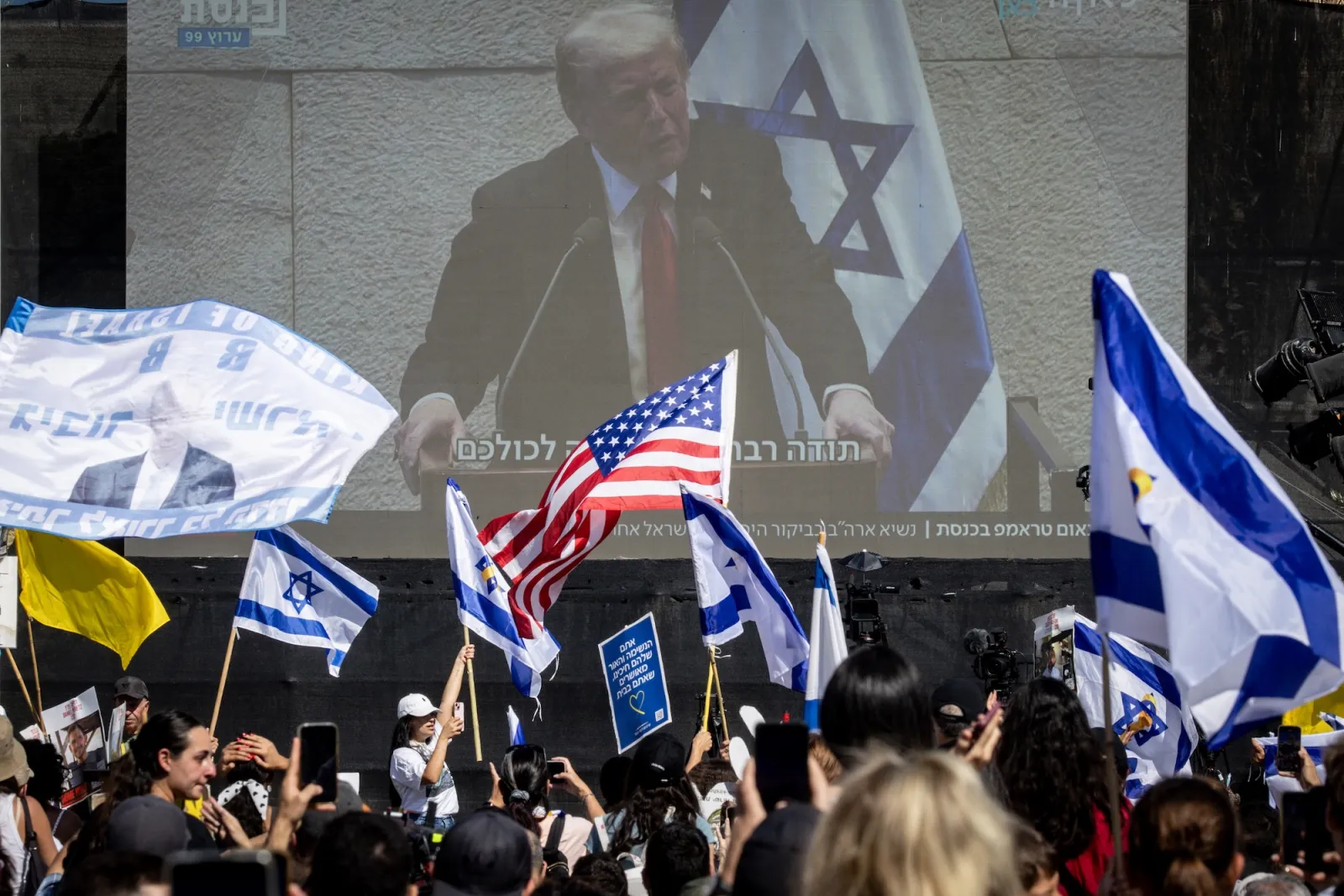
Trump’s Middle East visit and the release of captives by both sides mark a long-overdue moment of relief. Any pause in the killing and starvation of Gaza must be welcomed. And Trump deserves credit for helping secure that respite. But let’s be clear: this could—and should—have happened long ago. Both Trump and Biden had the power to halt the slaughter months earlier and save tens of thousands of lives.
“Generations from now, this will be remembered as the moment that everything began to change,” Trump told the Knesset. Yet as he spoke, Palestinians were still burying their dead and searching for the missing. For them, real change will only begin when accountability, reparations, statehood, the right of return, the rebuilding of Gaza, and self-determination are realized—not when peace is defined by the terms of their occupier.
This ceasefire is a necessary pause, not peace. Genuine peace requires justice—and justice demands that international law, not the protection of allies at any cost, guide what happens next.
Trump’s uniquely Trumpian Middle East “victory lap” was a masterclass in theatrical power politics—proof that American leverage, when applied ruthlessly, can still move mountains. By dragging the region’s leaders toward Trump's 20-point plan, Washington showed it can pressure Israel, which cannot fight without U.S. support, while cajoling Qatar and others to restrain Hamas. But a major fork lies in the road: Hamas has not formally agreed to disarm, and unless Trump can make Qatar, Turkey, and the other Muslim actors deliver the group kicking and screaming to this surrender, Monday’s spectacle will look like little more than theater, and the jihadists will be able to claim, despite Gaza’s devastation, a form of Middle Eastern victory.
The ceasefire/hostage release deal between Israel and Hamas was made possible by President Donald Trump’s understanding that such an agreement must be predicated on the achievement of Israel’s two essential goals in the post-October 7 war. Unlike his predecessor President Joe Biden and opponent in the 2024 election, Vice President Kamala Harris, he insisted on the immediate release of all the hostages and Hamas’ surrender of all its arms and control of the Gaza Strip. But while he is basking in much-deserved praise for his role as a peacemaker in the aftermath of the hostages’ homecoming, the key question now is whether he will, as Hamas and their Qatari allies hope, allow the next phase of the agreement to be bogged down in negotiations and let the terrorist group to evade efforts to make it give up its arms and control of the Gaza Strip. If he does, then he will still deserve plaudits for freeing the hostages. But he will also have made it possible for the genocidal Islamist group to start rebuilding their military, kill Palestinian dissidents, and set in motion a process that will lead inevitably to attempts at future October 7-style atrocities inflicted against Israel and another bloody war whose goal is the destruction of the one Jewish state on the planet.
The views expressed in this article are the writers' own.
