


that lifestyle interventions can prevent cognitive decline
FINGER is the world’s first randomized controlled trial to demonstrate that multidomain lifestyle interventions can reduce the risk of cognitive decline and dementia. The results were first published in the Lancet medical journal in 2015. The study has been followed up during 11 years. Moreover, research teams all over the world have built further on FINGER, and are adapting and testing the FINGER model in different settings and populations and with different focuses.
The World-Wide FINGERS network was established in 2017 to unite these teams and provide a platform for scientific support, collaboration, and data sharing,and harmonization.
The FINGERS Brain Health Institute (FBHI) functions as a hub for the FINGER research and is a scientific coordination center for the World-Wide FINGERS network. We also drive dissemination and implementation efforts, to help ensure that scientific findings come to practical use, for the benefit of individuals and societies.

Professor Miia Kivipelto leads the FINGER research and is a founder of both FINGERS Brain Health Institute and the World-Wide FINGERS network.
The FINGER model
– reducing the risk of cognitive decline
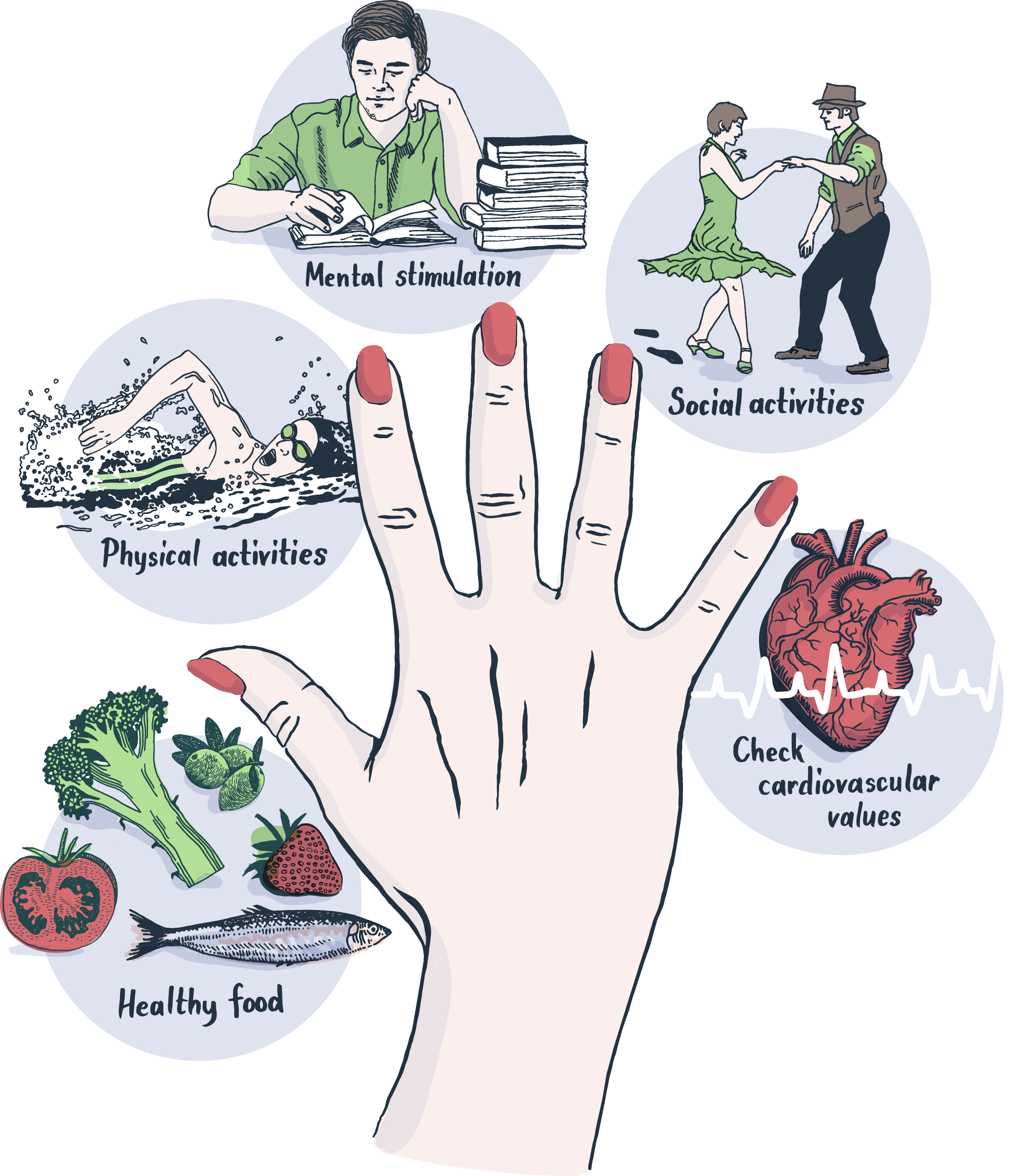
Healthy diet
Your brain needs balanced and nutritious food. The brain’s weight represents 2% of our body weight but uses 25% of our total energy.
Physical activity
Regular physical activity is essential for your body and brain. Try to include a mix of cardio, strength, and balance training.
Cognitive stimulation
Your brain is flexible and resilient. It can and should be trained throughout our lives.
Social activities
Social activities and engagement are important for our brain health. We also need recovery and rest.
Cardiovascular risk factors
What is good for your heart is good for your brain. Get regular check-ups of blood pressure, cholesterol, blood glucose, and body weight, and treat unwanted values.
The FINGER model
– Reducing the risk of cognitive decline
Healthy food
Your brain needs balanced and nutritious food. The brain’s weight represents 2% of our body weight but uses 25% of our total energy.
Mental stimulation
Your brain is flexible and resilient. It can and should be trained throughout our lives.
Physical activity
Regular physical activity is essential for your body and brain. Try to include a mix of cardio, strength, and balance training.
Cardiovascular risk factors
What is good for your heart is good for your brain. Get regular check-ups of blood pressure, cholesterol, blood glucose, and body weight, and treat unwanted values.
Social activities
Social activities do good for our brain health. We also need recovery and rest.