-
-

Logo
-
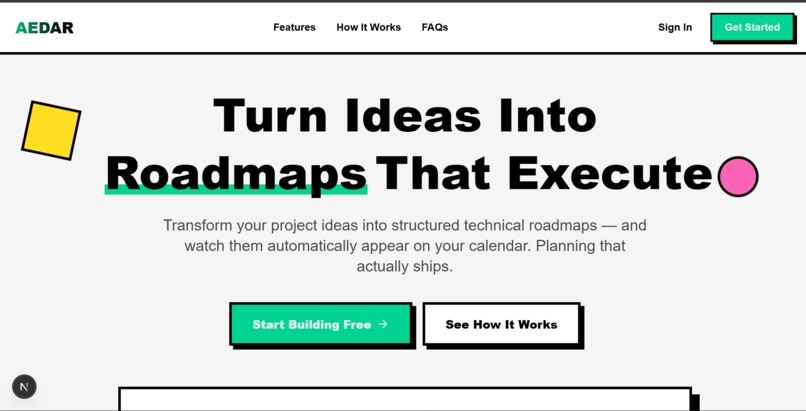
Landing page
-
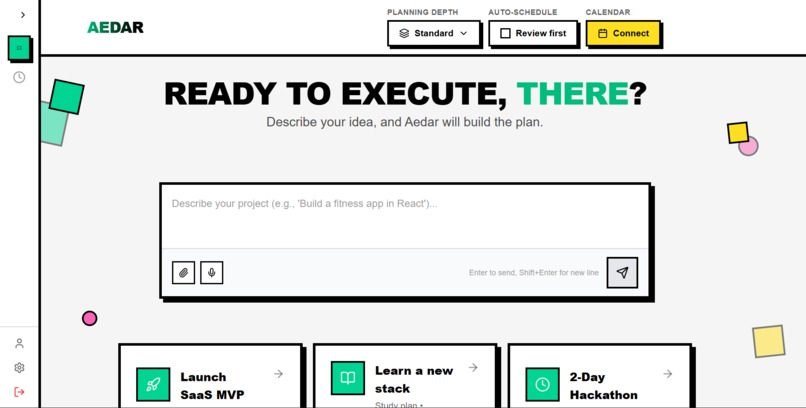
Chat page
-
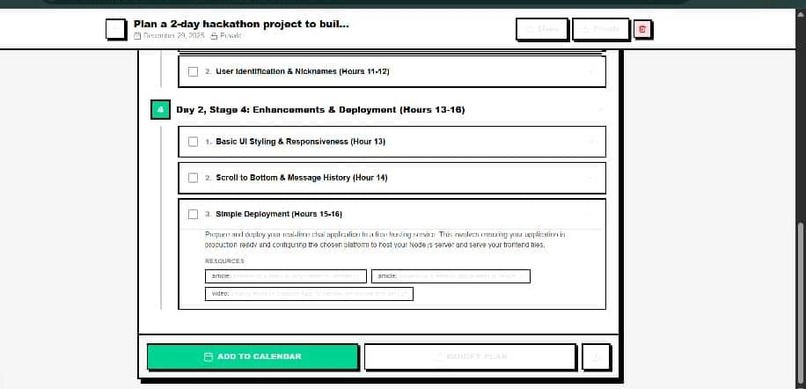
Generated Roadmap


Inspiration
Every developer knows the pain: you have a brilliant project idea, but turning it into an actionable plan feels like a project in itself. We spend hours breaking down tasks, estimating timelines, and trying to fit everything into our already-packed schedules. By the time we finish planning, we have lost the momentum to actually build.
We asked ourselves: What if AI could handle the entire planning phase? Not just generate a to-do list, but create a structured technical roadmap with phases, milestones, resources, and then automatically schedule it into your calendar.
That question became Aedar -- an AI execution agent that bridges the gap between "I have an idea" and "I am shipping it."
What it does
Aedar transforms vague project ideas into structured, actionable roadmaps through a conversational AI interface. Here is the workflow:
Describe your project - Tell Aedar what you want to build in plain English (e.g., "Build a fitness tracking app with React Native")
AI generates your roadmap - Aedar analyzes your request and creates a comprehensive technical roadmap with:
- Multiple phases (Setup, Core Development, Testing, Launch)
- Detailed milestones with time estimates
- Curated learning resources for each step
- Adjustable planning depth (Sprint, Standard, or Architect mode)
Auto-schedule to your calendar - Connect your Google Calendar, and Aedar finds open slots in your schedule to book each milestone automatically
Track and iterate - Save roadmaps, mark milestones complete, and modify plans as your project evolves
The platform includes three planning modes:
- Sprint (Concise): 3-5 key milestones for simple tasks
- Standard (Balanced): Full architecture, development, and launch phases
- Architect (Deep): Detailed breakdown with risk analysis, tech stack recommendations, and QA steps
How we built it
Frontend (Next.js 15 + TypeScript)
- Built with the App Router for server-side rendering and optimal performance
- Neo-brutalism design system with Tailwind CSS featuring bold shadows, thick borders, and emerald accents
- Responsive layout supporting mobile through desktop
- Real-time loading states with contextual flavor text ("Analyzing requirements...", "Breaking down architecture...")
Backend (NestJS + TypeScript)
- RESTful API architecture with modular service design
- Google Gemini AI integration for intelligent roadmap generation
- Structured prompt engineering to ensure consistent, parseable roadmap output
- Google Calendar API integration for availability checking and event creation
Authentication and Data
- Supabase for authentication (Google OAuth) and PostgreSQL database
- Secure session management with HTTP-only cookies
- User profiles storing calendar connection status and preferences
Key Technical Decisions
- Chose NestJS for its modular architecture and TypeScript-first approach
- Used Gemini AI for its strong structured output capabilities and cost efficiency
- Implemented neo-brutalism UI for a distinctive, memorable developer experience
- Server Components in Next.js for faster initial page loads
Challenges we ran into
1. OAuth Token Flow Complexity
Google OAuth with Supabase presented unexpected challenges. The access token arrives in the URL hash fragment, which is not sent to the server. We had to implement a client-side handler to extract tokens from the hash and establish the session before redirecting to the app.
2. Structured AI Output Parsing
Getting Gemini to consistently return valid JSON roadmaps required extensive prompt engineering. We implemented strict output schemas and fallback parsing to handle edge cases where the AI would include markdown formatting or explanatory text around the JSON.
3. Calendar Availability Logic
Finding open slots in a user's calendar while respecting working hours, existing events, and timezone differences proved more complex than anticipated. We built a custom algorithm that:
- Fetches events for a configurable time window
- Identifies gaps between events
- Filters by preferred working hours
- Suggests optimal scheduling based on task duration
4. Next.js 16 Async API Changes
Next.js 16 introduced breaking changes where cookies() and headers() became async. This required refactoring our authentication checks across all server components to properly await these functions.
Accomplishments that we are proud of
- End-to-end execution flow: From a single sentence to calendar events in under 30 seconds
- Intuitive planning depth modes: Users can choose their level of detail without complex configuration
- Distinctive UI/UX: The neo-brutalism design makes Aedar instantly recognizable and enjoyable to use
- Production-ready architecture: Clean separation of concerns, comprehensive error handling, and type safety throughout
- Calendar integration that actually works: Real availability detection and event creation, not just a mock feature
What we learned
Technical Lessons
- Prompt engineering is as important as traditional engineering when building AI products
- OAuth flows have many edge cases -- always test with fresh accounts and incognito windows
- Neo-brutalism CSS is surprisingly complex to implement consistently (those shadow offsets add up)
Product Lessons
- Developers want tools that reduce friction, not add new workflows to learn
- The "human-in-the-loop" confirmation step before auto-scheduling builds trust
- Loading states are a UX opportunity, not just a necessary evil
Process Lessons
- Building the happy path first and handling edge cases iteratively kept momentum high
- TypeScript's strict mode caught numerous bugs before they reached production
- Testing with real calendar data (our own schedules) revealed issues synthetic data never would
What is next for Aedar
Short-term Roadmap
- Team collaboration features for shared project roadmaps
- Integration with additional calendars (Outlook, Apple Calendar)
- Export to project management tools (Linear, Jira, Notion)
- Mobile-responsive improvements for on-the-go planning
Medium-term Vision
- Progress tracking with AI-powered check-ins ("How is the auth module going?")
- Adaptive rescheduling when tasks take longer than estimated
- Template library for common project types (SaaS MVP, Mobile App, API Service)
- VS Code extension for in-editor roadmap access
Long-term Goals
- Multi-agent system where Aedar coordinates with coding assistants
- Predictive analytics on project completion likelihood
- Enterprise tier with team capacity planning
- Open API for third-party integrations
Aedar is not just a planning tool -- it is the first step toward AI that does not just advise, but executes alongside you.
Built With
- gemini-api
- google-calendar
- mcp
- nest.js
- next.js
- node.js
- react
- render
- supabase
- tailwind
- vercel


Log in or sign up for Devpost to join the conversation.