-
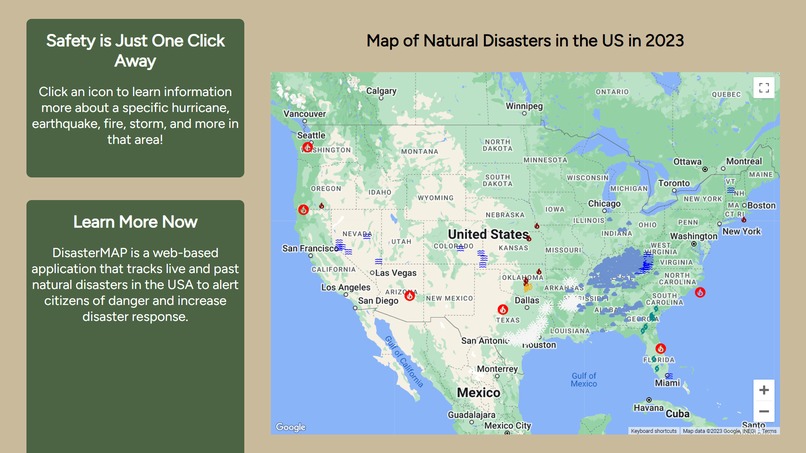
DisasterMapAI home page
-
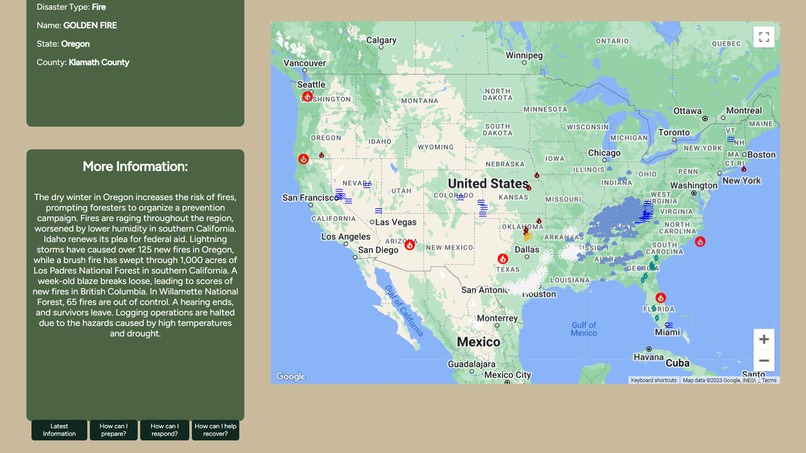
Latest information about a fire in Oregon
-
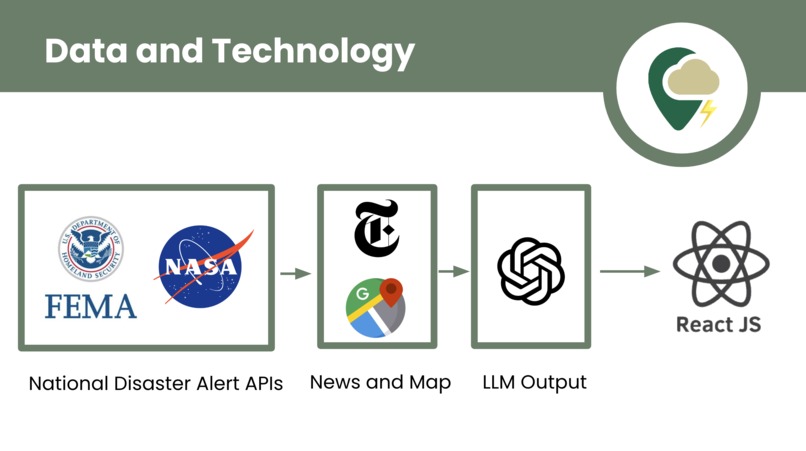
Combining FEMA and NASA tracking with NYT reporting for the most accurate information
-
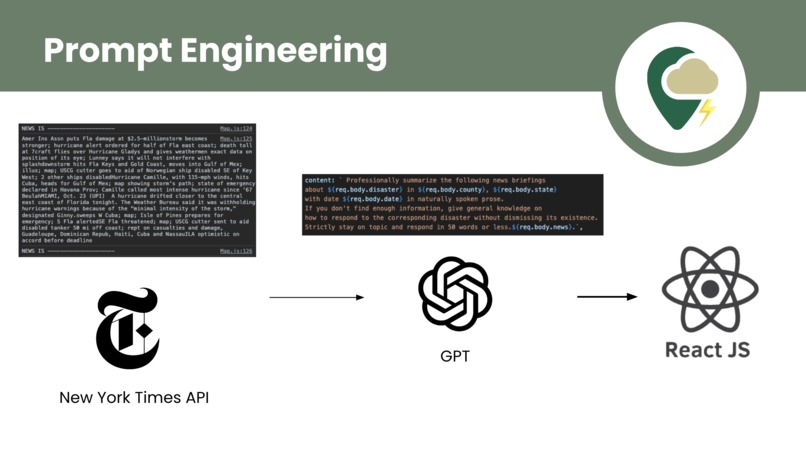
Specially engineering prompts for victims of the oncoming disaster, volunteers ready to help, and those willing to support the affected
-
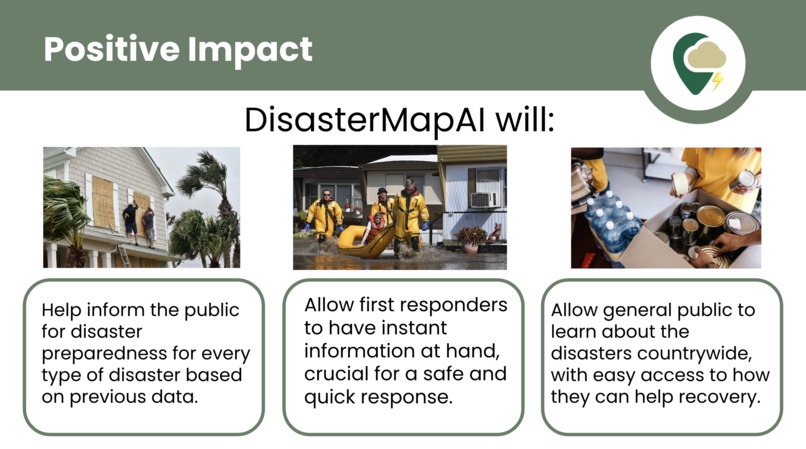
Supporting the community during their time of need
-
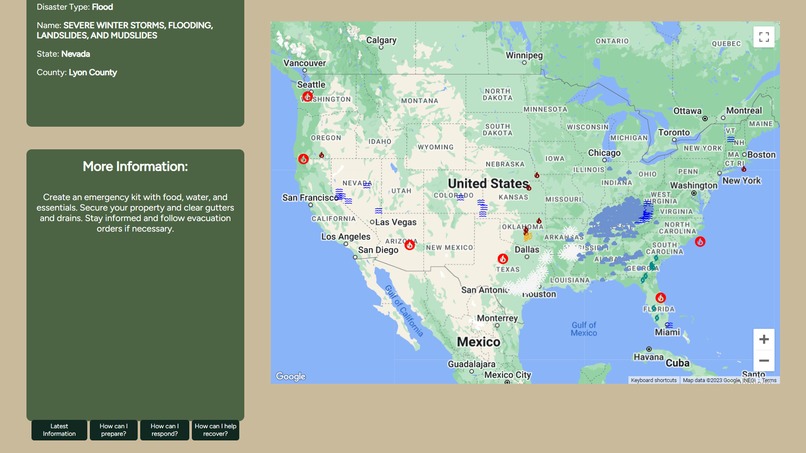
How to prepare for a flood in Nevada
-
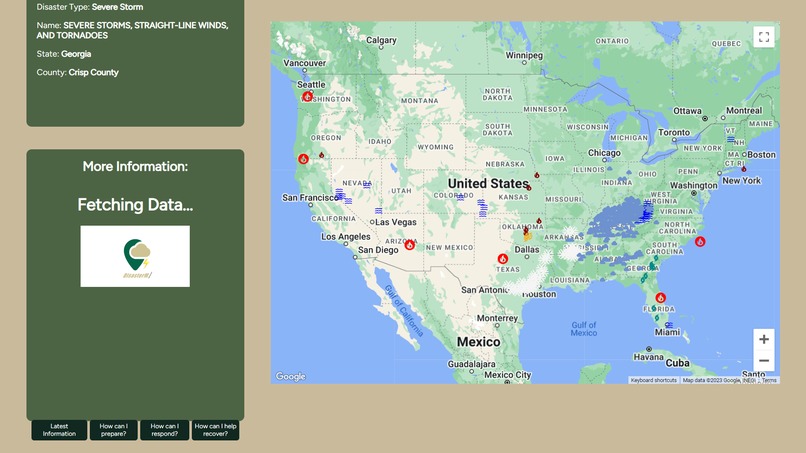
Loading information about a severe storm in Georgia
-
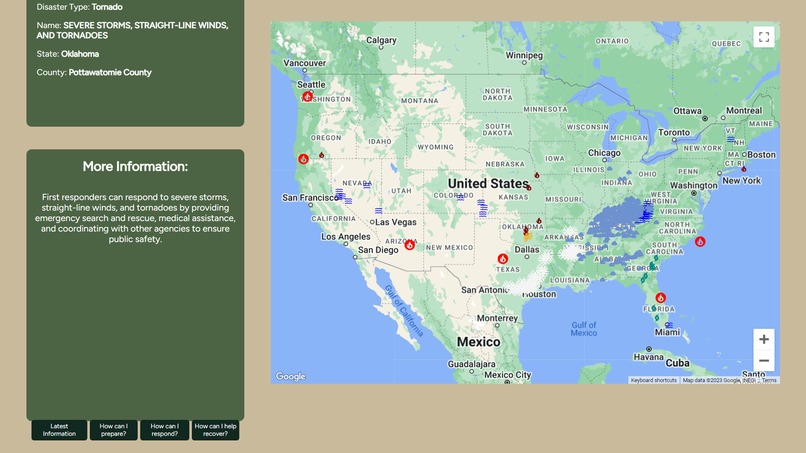
How to respond to a tornado in Oklahoma
-
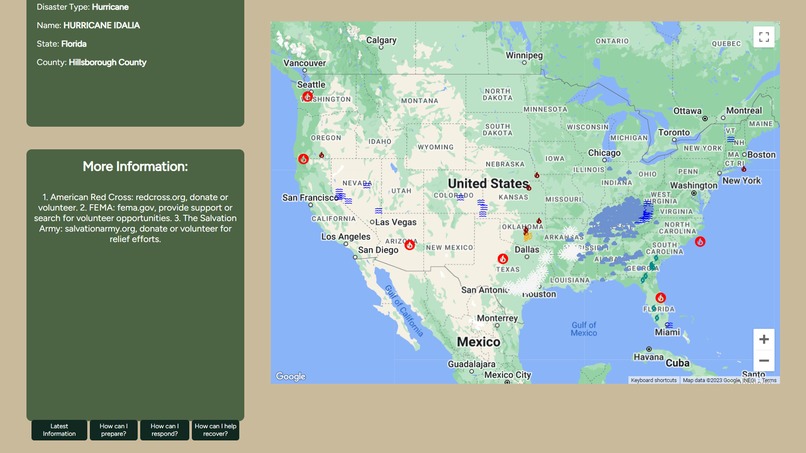
How to recover from a hurricane in Florida
-
DisasterMapAI about page


Inspiration
DisasterMapAI was inspired by the countless victims affected by natural disasters before, during, and after they occur and the brave first responders who risk their lives to help those in need during these trying times.
What it does
DisasterMapAI displays natural disasters tracked by the Federal Emergency Management Agency (FEMA) and the National Aeronautics and Space Administration (NASA) on a sleek Google Maps overlay. Selecting a specific natural disaster instantly returns what type of disaster it is with the state and county it affects. For more information, DisasterMapAI aggregates related articles from the New York Times and summarizes these articles to display to the user. For tips to prepare for the oncoming disaster, opportunities to help those affected, and recovery resources for victims after the disaster has passed, DisasterMapAI generates any of these as selected by the user.
How we built it
We built the map of natural disasters by calling the FEMA and NASA API and overlaying their locations over a Google Maps widget. Each natural disaster is tracked in an icon that stores its disaster type with its location by county and state. These attributes are instantly displayed when the user selects any natural disaster. More information is generated by first aggregating news articles with the New York Times API and feeding these articles into ChatGPT-3.5. We then engineer a prompt to return a summary of the selected disaster based on the information received by the news articles.
We built the selective response feature by engineering 3 different prompts for 3 different purposes: tips to stay safe as a disaster approaches, opportunities to help those affected, and recovery resources for victims after the disaster has passed. We feed these tailored prompts into ChatGPT-3.5 to output and display to the user.
Challenges we ran into
Our biggest challenge was aggregating enough data to provide accurate information for current natural disasters. Since ChatGPT-3.5 is limited to its data aggregation up to September 2021, we had to work around this by aggregating news articles from popular news outlets: our final choice of which being the New York Times. These news articles are concatenated to our prompt that outputs updates about the user's selected natural disaster to assist with providing more accurate information.
Another challenge was finding a large enough dataset of natural disasters to open our service to as many users as possible. We initially worked with NASA's dataset as they had the most recently occurring disasters, but they were limited in the types of disasters they covered. This led us to FEMA's dataset, that covered more disasters in total, though further in the past. In addition, working with FEMA broadened our scope from not just disaster response, but also disaster recovery. This opened up our service to both disaster victims and the brave volunteers ready to help.
Accomplishments that we're proud of
We're proud to develop a life-saving service for victims, first responders, and emergency donors alike to get the latest information for any natural disaster in the United States. We believe DisasterMapAI will prove crucial to improve the preparation, response, and recovery of any type of natural disaster.
What we learned
When it comes to natural disasters, knowledge is power. We learned that in a disastrous situation, knowing the right thing to do could make all the difference. With our service, we plan to provide all the facts for all types of people for any disaster both past and present.
What's next for DisasterMapAI
We plan to take DisasterMapAI to the next level with worldwide coverage beyond the United States. We also plan to reach out to more users with a mobile-friendly application and partner with more news outlets to broaden our dataset for a more accurate output.




Log in or sign up for Devpost to join the conversation.