-
-
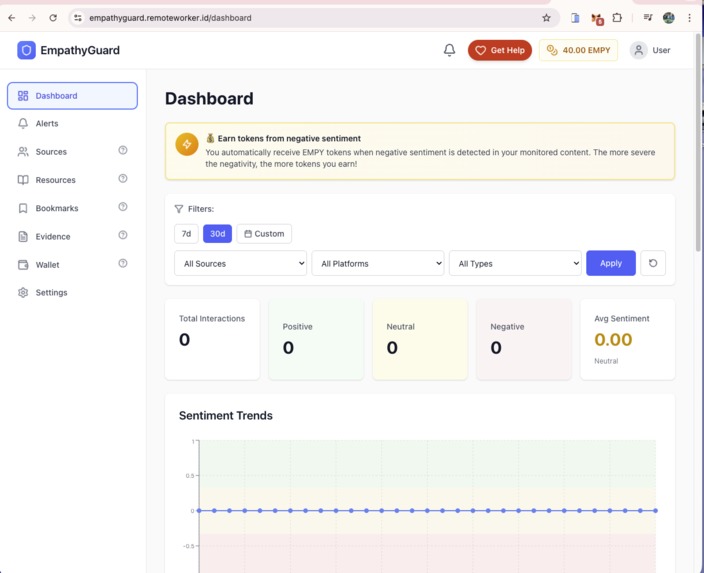
Dashboard showing EMPY token earned
-
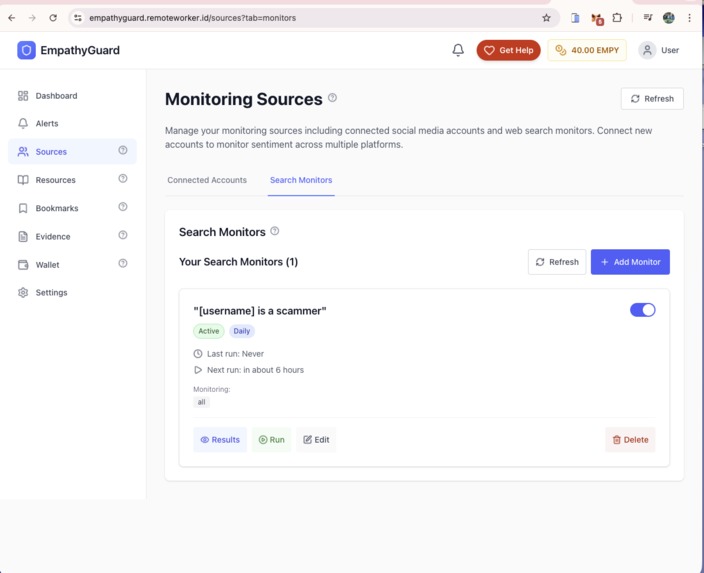
Web search monitoring for cyber bullying keyword
-
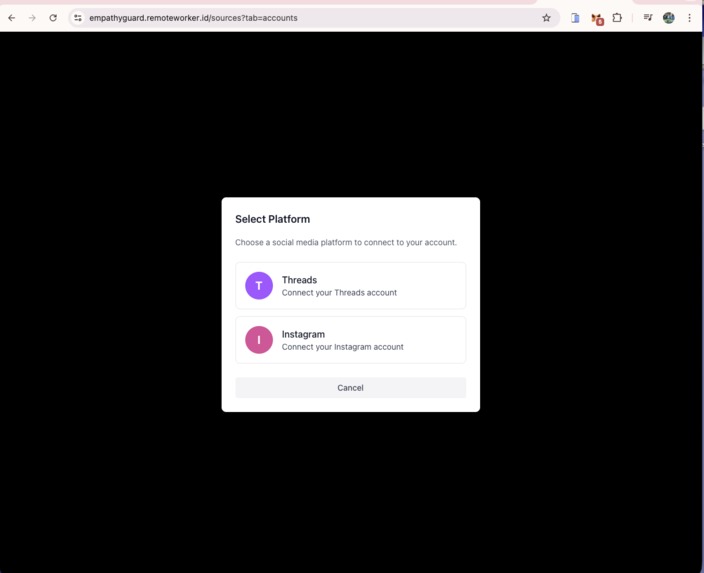
Social media monitoring connection
-
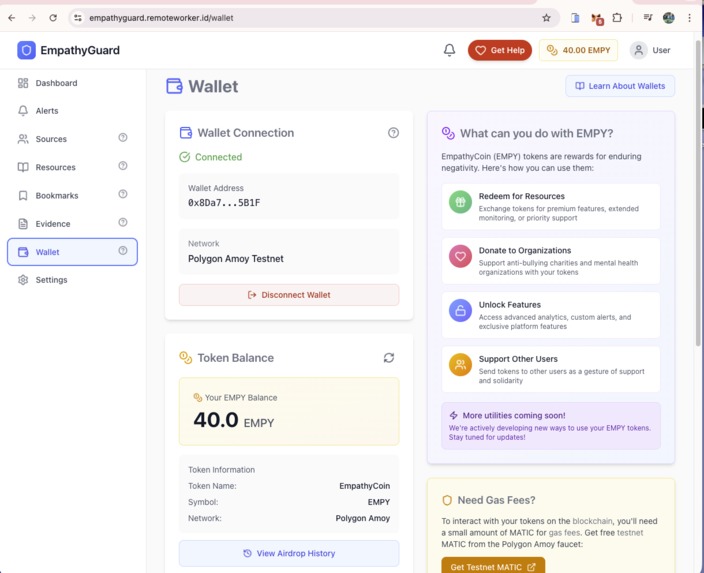
Web3 Wallet Integration
-
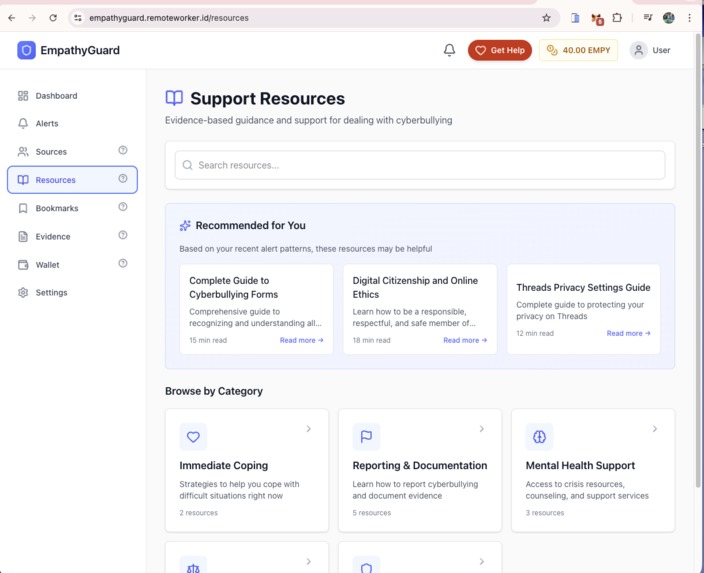
Cyber bullying support resource center
-
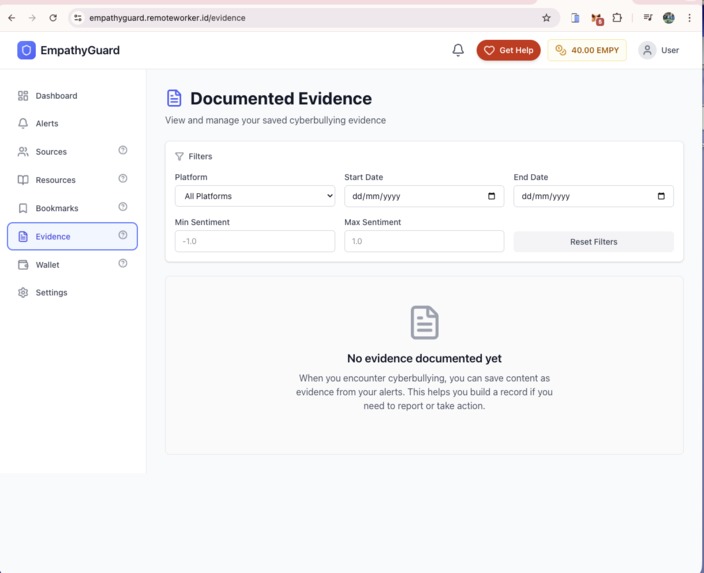
Cyber bullying evidence


After experiencing online bullying that significantly impacted my mental health, I realized that victims of online harassment face a double burden: the emotional toll of negativity and the feeling that their suffering goes unacknowledged. While platforms focus on content moderation, there's little support for those already affected. I wanted to create something that not only detects negativity but also provides tangible recognition and support for those dealing with it. EmpathyGuard was born from the belief that if we can't eliminate online toxicity entirely, we can at least ensure victims feel seen, supported, and compensated for their resilience.
EmpathyGuard is an AI-powered sentiment monitoring platform that watches your online presence across social media and the web. When negative sentiment, bullying, or toxic interactions are detected, the system:
- Alerts you instantly via real-time notifications
- Analyzes the severity using advanced sentiment analysis
- Automatically rewards you with EmpathyCoin (EMPY) tokens based on negativity severity
- Tracks your history so you can see patterns and take action
- Provides tangible support through blockchain-backed tokens you can use or donate
- The worse the negativity detected, the more tokens you earn—turning toxic moments into tangible compensation and acknowledgment of what you're going through.
How we built it Backend:
- Node.js/TypeScript with Express for the API
- Supabase (PostgreSQL) for data storage with Row Level Security
- AI-powered sentiment analysis using natural language processing
- Bull queues for background processing of content monitoring
- Real-time WebSocket notifications
Blockchain Integration:
- Deployed EmpathyCoin (EMPY) ERC-20 token on Polygon Amoy testnet using Hardhat ethers.js for blockchain interactions
- Smart contract with minting capabilities and ownership controls
- Automated token airdrops triggered by sentiment detection
Frontend:
- React with TypeScript
- Real-time dashboard showing sentiment trends
- Wallet integration for receiving token rewards
- Airdrop history and transaction tracking
Key Features:
- Multi-platform monitoring (social media, web search results)
- Tiered reward system (10-50 EMPY based on severity)
- Anti-abuse protection (daily limits, cooldowns, account age checks)
- Comprehensive audit trail of all transactions
Challenges we ran into
- Thirdweb Paywall: Initially planned to use Thirdweb SDK, but discovered their free tier no longer supports testnet deployments. Had to pivot to direct Hardhat deployment and ethers.js integration.
- Sentiment Analysis Accuracy: Balancing sensitivity to detect genuine negativity while avoiding false positives. Implemented multi-factor analysis including keywords, emoji sentiment, and context.
- Anti-Abuse Design: Preventing users from gaming the system while ensuring legitimate victims aren't blocked. Implemented daily limits, cooldown periods, and account age requirements.
- Real-time Processing: Handling sentiment analysis and blockchain transactions without blocking the main application flow. Used queue-based architecture with retry logic.
- Blockchain Reliability: Managing failed transactions, gas estimation, and retry logic with exponential backoff to ensure tokens reach users even during network congestion.
Accomplishments that we're proud of
- Fully functional token economy: Successfully deployed and integrated a real ERC-20 token with automated airdrops
- Comprehensive anti-abuse system: Built safeguards that protect the platform while supporting legitimate users
- Real-time sentiment monitoring: Created a pipeline that processes content, analyzes sentiment, and triggers rewards automatically
- User-centric design: Every feature focuses on supporting victims, not just detecting problems
- Production-ready architecture: Implemented proper error handling, logging, retry logic, and database security
- Turning pain into purpose: Built something meaningful from personal experience that could help others What we learned
Technical:
- Blockchain integration is more accessible than expected when using standard tools like Hardhat and ethers.js
- Queue-based architectures are essential for reliable background processing
- Proper error handling and retry logic are critical for blockchain operations
- Database-level security (RLS policies) provides strong protection for user data
Product:
- Victims of online harassment need acknowledgment as much as protection
- Tokenizing empathy creates tangible value from intangible suffering
- Anti-abuse measures must be carefully balanced to not punish legitimate users
- Real-time feedback is crucial for user trust and engagement
Personal:
- Turning personal pain into a solution for others is deeply fulfilling
- Technology can provide support in ways traditional systems cannot
- Web3 enables new models of compensation and recognition
- Building something meaningful requires both technical skill and emotional understanding
- What's next for EmpathyGuard
Short-term:
- Complete frontend wallet integration and airdrop notifications
- Deploy to mainnet (Polygon) for real-world use
- Add support for more social media platforms (Twitter/X, Instagram, TikTok)
- Implement token redemption marketplace (therapy sessions, support resources)
Medium-term:
- Machine learning model training on harassment patterns for better detection
- Community moderation features where users can report and verify incidents
- Token staking for premium features (priority monitoring, advanced analytics)
- Partnership with mental health organizations for token-funded support
Long-term:
- DAO governance where token holders vote on platform decisions
- Cross-platform identity verification to prevent abuse
- Integration with existing social media reporting systems
- Token utility expansion (donate to anti-bullying causes, support other victims)
- Mobile app for on-the-go monitoring and alerts

Log in or sign up for Devpost to join the conversation.