-
-

Platform icon
-
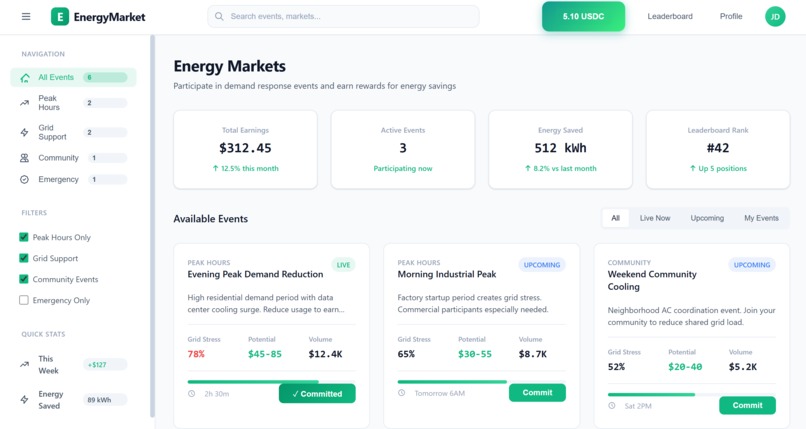
User dashboard with events they can commit to
-
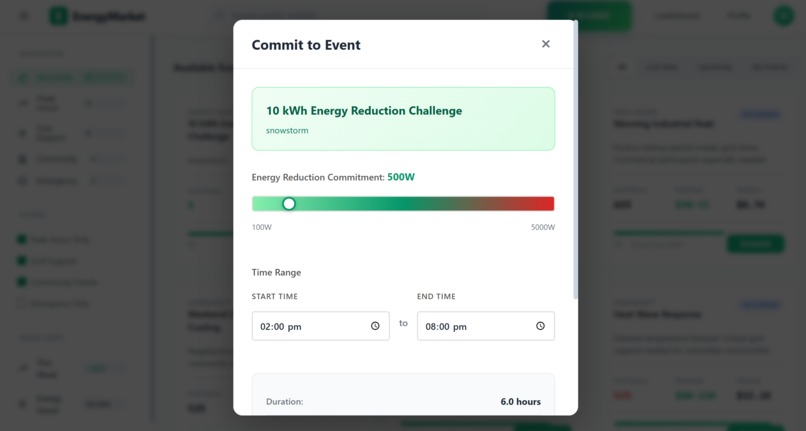
Committing to reduce energy on an event: Users choose energy amount to reduce, time period.
-
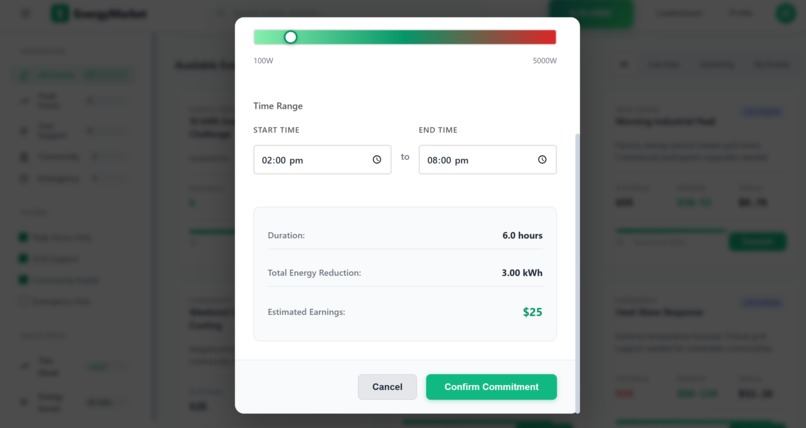
Committing to reduce energy on an event: Users can see expected payout if they actually commit.
-
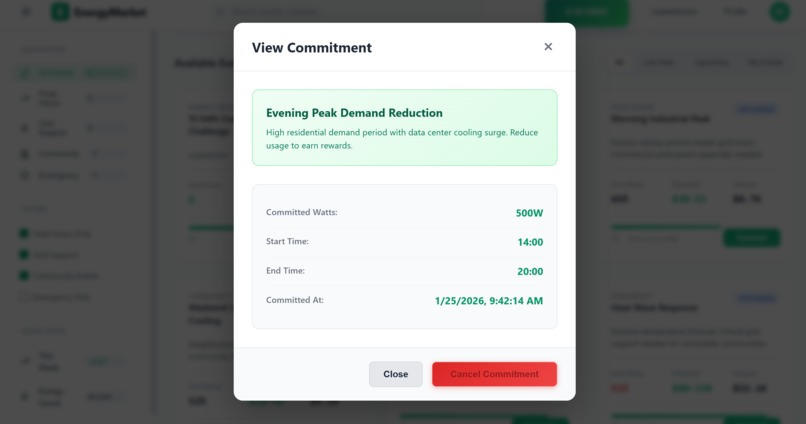
Committed event
-
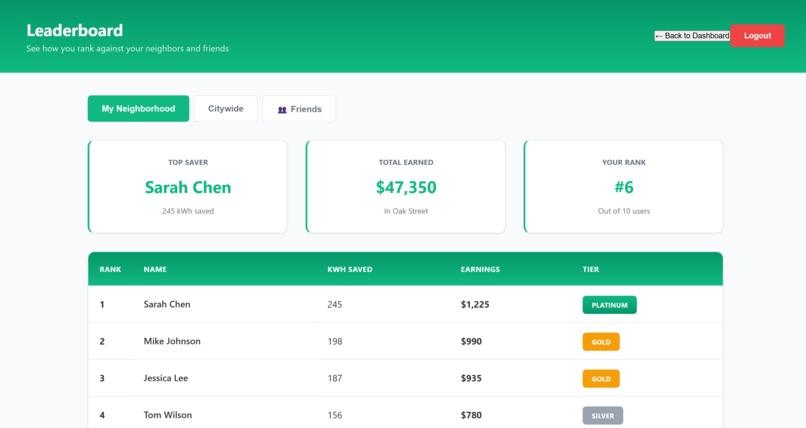
Leaderboard
-
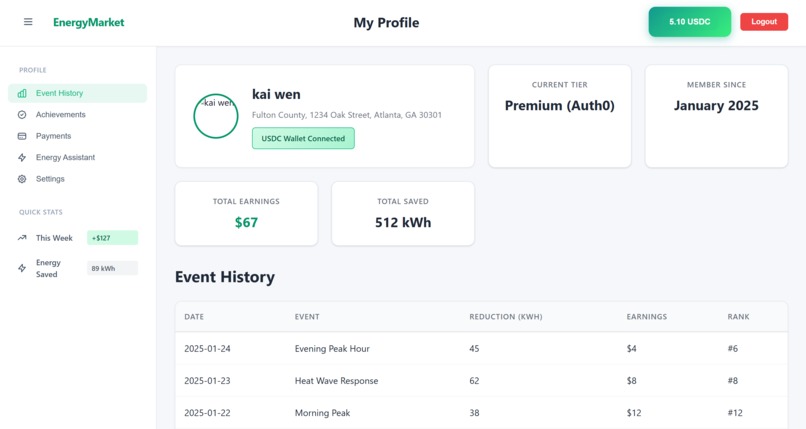
User profile with event and payment history
-
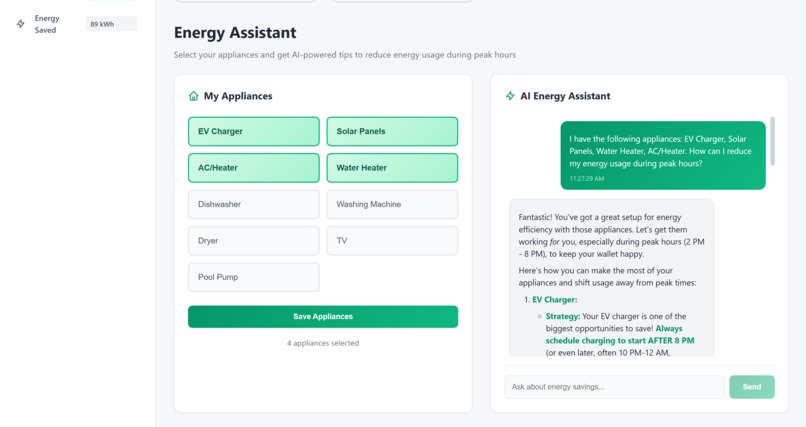
User profile with Gemini advice on how to reduce energy usage given their appliances
-
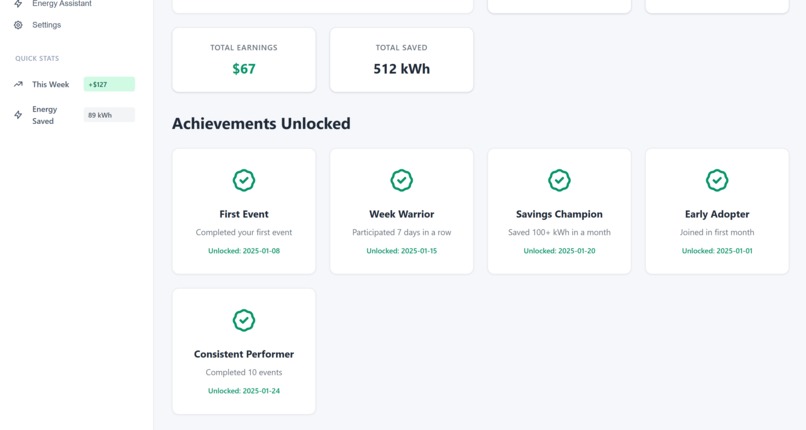
User profile with achievements
-
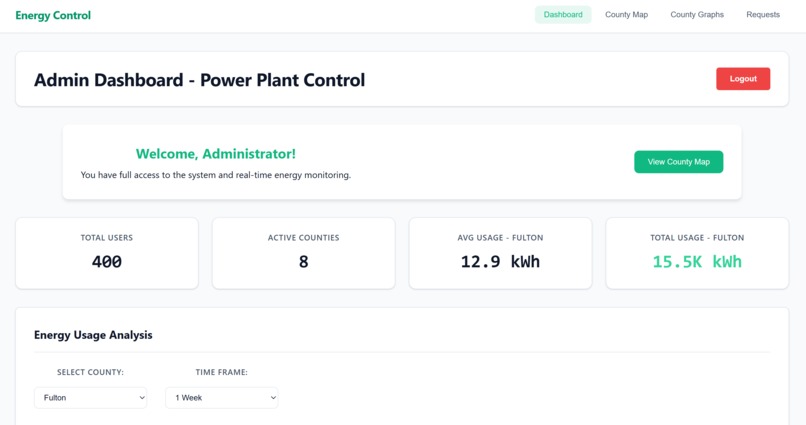
Power company (admin) dashboard
-
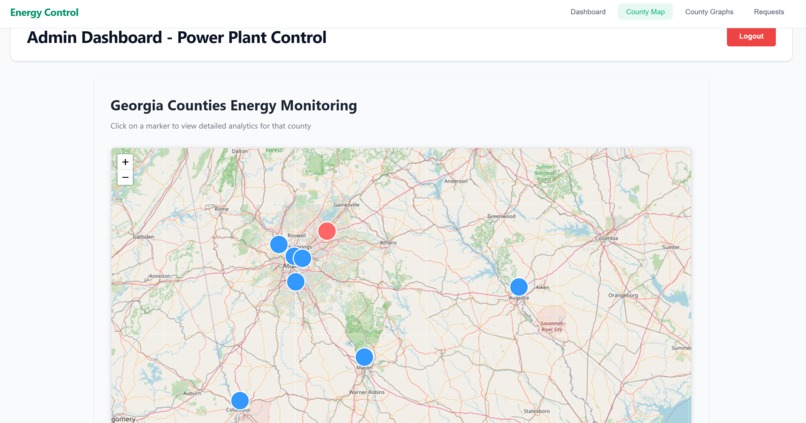
Admin map by city and county
-
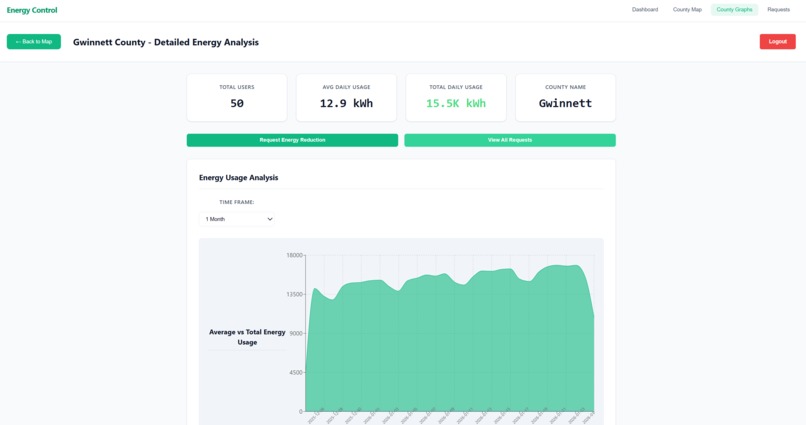
Admin map - Viewing individual county's data
-
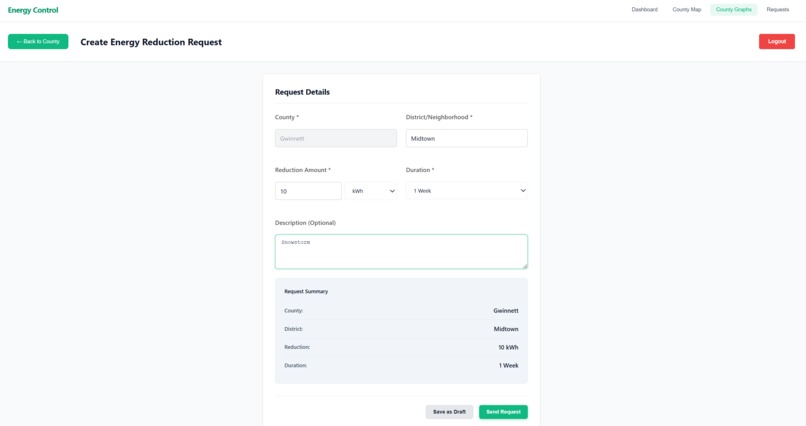
Admin - Making a request to lower energy usage in a certain county, which will then show up on the users' side in that county
-
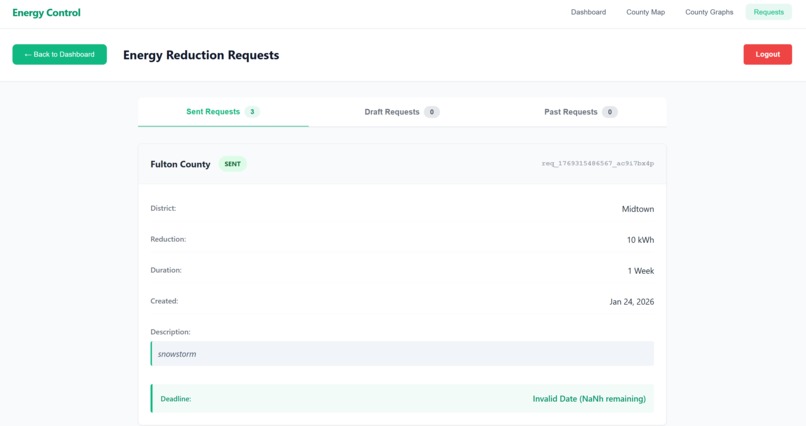
Admin - Energy reduction requests


EnergyXchange
Turning Everyday Energy Decisions into Grid-Scale Reliability
Track Chosen
Smart Grid / Clean Energy Infrastructure
Problem Statement
The hardest problem in the clean energy transition is not generation — it is timing.
As renewable energy adoption grows, electricity demand has become increasingly volatile. Peak demand periods place extreme stress on the grid, forcing power companies to rely on expensive and carbon-intensive peaker plants to maintain reliability. Meanwhile, everyday energy consumers — renters, households, and small businesses — want lower costs and greater control over their energy usage, but have no direct way to participate in grid stability efforts.
This creates a fundamental misalignment:
- Consumers lack incentives and agency to reduce demand when it matters most
- Power companies need reliable, predictable demand reduction to maintain grid stability
Without coordination, the grid operates inefficiently, costs rise, emissions increase, and peak-hour stress continues to worsen.
Ideation & Development Process
We began by asking:
What if everyday energy users could act like a power plant — voluntarily, transparently, and at scale?
Traditional demand response programs often rely on invasive approaches, such as remotely controlling appliances or locking users into long-term contracts. These methods reduce trust, limit participation, and exclude renters and small businesses.
Our key insight was that demand response only works if commitments are credible.
To be useful to power companies, demand reductions must be:
- Voluntary — users stay in control
- Verifiable — reductions must be measured against realistic baselines
- Reliable — users must have skin in the game
From this, we designed EnergyXchange as a two-sided platform that introduces commitment-based incentives and penalties, ensuring that users “put their money where their mouth is.” Users who commit to reducing energy usage during peak periods are rewarded when they follow through — and penalized if they fail to meet their commitment. This mechanism makes aggregated demand reduction reliable enough to function as a true grid resource.
We validated our approach using real energy data from Georgia counties to identify load patterns, peak demand periods, and realistic reduction targets.
Solution Proposed and Intended Impact
EnergyXchange is an incentive-driven demand response platform that transforms individual energy commitments into a dispatchable virtual power plant.
How It Works
- Users securely log in and view minute-level energy usage data
- During grid stress periods, power companies issue demand response events
- Users voluntarily commit to reducing their energy usage during these windows
- Energy reductions are verified against each user’s historical baseline
- Users who meet or exceed their commitment are rewarded
- Users who fail to reduce usage after committing are penalized
EnergyXchange uses Auth0 secured, role based access to connect power companies and everyday energy users while ingesting minute level energy data.
Individual user energy reductions are verified against historical usage and combined into a single, measurable demand response resource. Power companies can view aggregated data, usage statistics, and verified reductions through an admin dashboard. Once reductions are confirmed, incentives are calculated and distributed to participating users.
This coordinated system functions as a virtual power plant that helps power companies reduce peak load, avoid expensive peaker plants, and lower overall grid stress.
This commitment mechanism ensures that aggregated demand response is predictable, measurable, and trustworthy for power companies.
Grid-Scale Coordination
Individual user reductions are combined into a single demand response resource that power companies can monitor in real time through an admin dashboard. This aggregated system functions as a virtual power plant, allowing utilities to:
- Reduce peak load
- Avoid firing up expensive peaker plants
- Improve grid reliability and forecasting accuracy
How We Built It
- Frontend: React with real-time visualization using Chart.js and Recharts
- Backend: Node.js with Express
- Database: Firebase for users, events, and energy data
- Authentication: Auth0 with Google OAuth and role-based access control
- Incentives & Penalties: Settled transparently using Solana devnet smart contracts
- Intelligence Layer: Gemini-powered chatbot that explains energy usage and helps users make smarter reduction decisions
What We Learned
Working as a team reinforced the importance of clear communication and collaborative problem solving, especially when facing technical challenges. From a technical perspective, we deepened our knowledge of full stack development, secure authentication, data visualization, and incentive modeling.
We also gained a broader understanding of energy consumption patterns, demand response programs, and modern grid technologies that support sustainability and reliability.
Intended Impact
EnergyXchange turns everyday energy behavior into a reliable grid asset.
By aligning incentives between consumers and power companies, our platform:
- Improves grid reliability during peak demand
- Lowers operational costs for utilities
- Reduces reliance on carbon-intensive peaker plants
- Empowers renters and small businesses to actively participate in the energy transition
By requiring users to commit — and enforcing accountability — EnergyXchange ensures that demand response is not just aspirational, but actionable, scalable, and trusted.
EnergyXchange demonstrates how software, incentives, and accountability can transform unused energy flexibility into real infrastructure for a cleaner, more resilient grid.
What Is Next for EnergyXchange
Our vision for EnergyXchange is to transition into a fully optimized mobile experience so these tools are accessible to as many users as possible. We also plan to introduce additional security measures to further protect user data as the platform scales.
Based on user engagement and performance, we will continue refining incentives to determine which approaches drive the greatest participation and grid impact. Partnering with businesses and power companies to offer collaborative incentives will allow us to scale our mission, creating a win-win scenario for users, energy providers, and the environment.
Built With
- auth0
- chart.js
- css3
- gemini
- leaflet.js
- react
- recharts
- solana
- typescript
- vite
- vultr


Log in or sign up for Devpost to join the conversation.