-

Equapath Logo
-
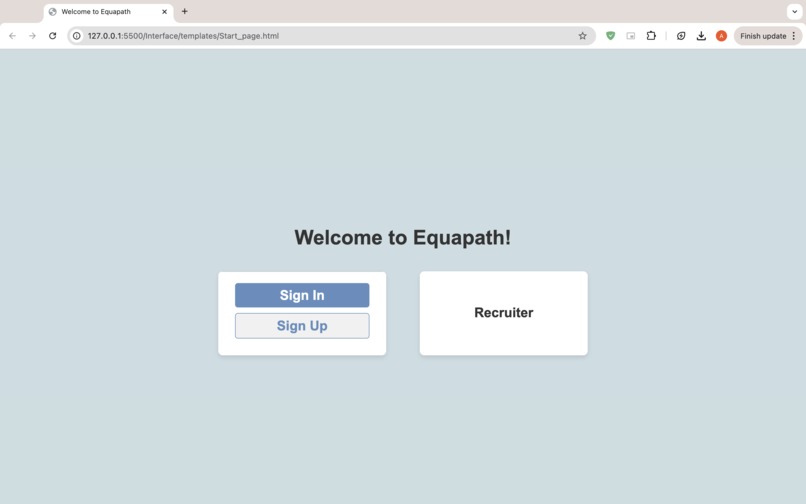
Interactive format, showing options to sign in or sign up depending if you are a applicant or recruiter
-
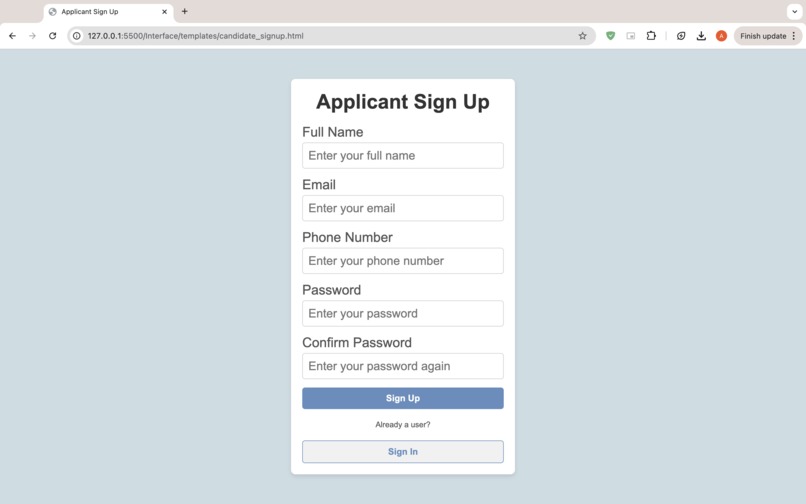
Applicant sign up page
-
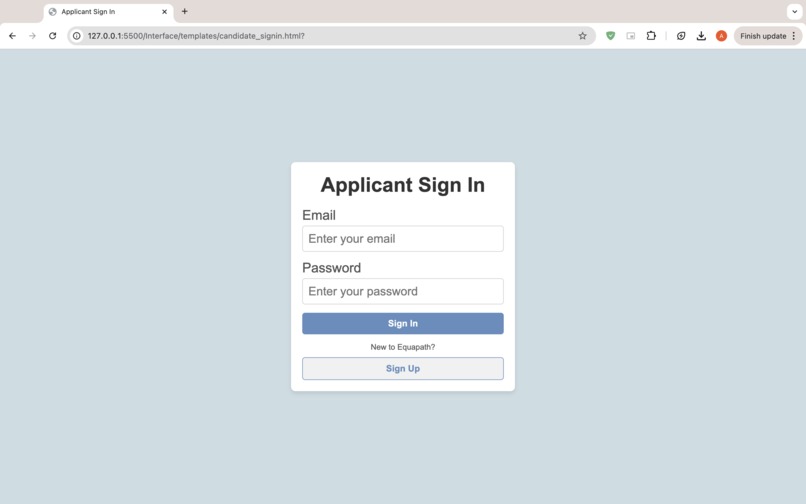
Applicant sign in page
-
-


Inspiration
The inspiration for Equapath arose from recognizing the biases that can influence hiring decisions, even when unintentional. Despite ongoing advancements, unconscious biases around gender, race, and other identifiers still impact recruitment. Equapath was created to make hiring fairer and more inclusive by anonymizing candidate profiles and ranking applicants based on skill-focused AI, empowering recruiters to make objective, skill-based decisions. Our mission is to connect talent and opportunity in a way that fosters diversity and inclusivity in the workplace.
What it does
Equapath is a recruitment platform designed to emphasize anonymous, skill-based hiring, with two main dashboards:
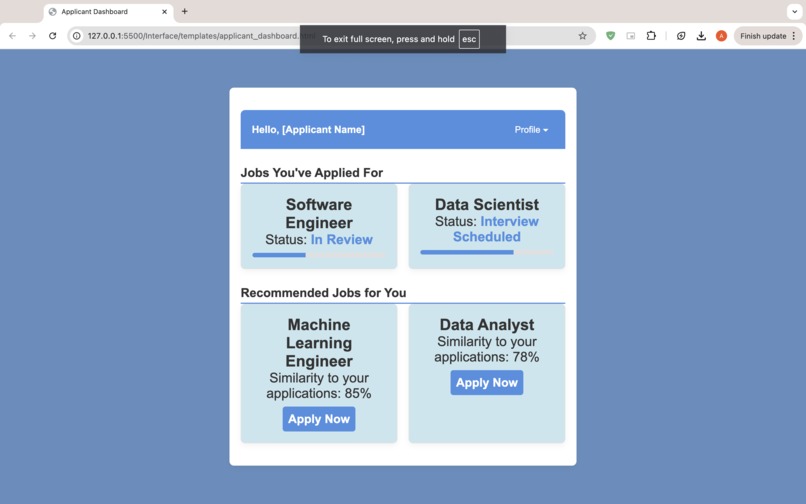
Applicant Dashboard: Applicants can track the jobs they’ve applied to, view personalized recommendations based on previous applications, and receive insights into skill gaps to guide professional development.
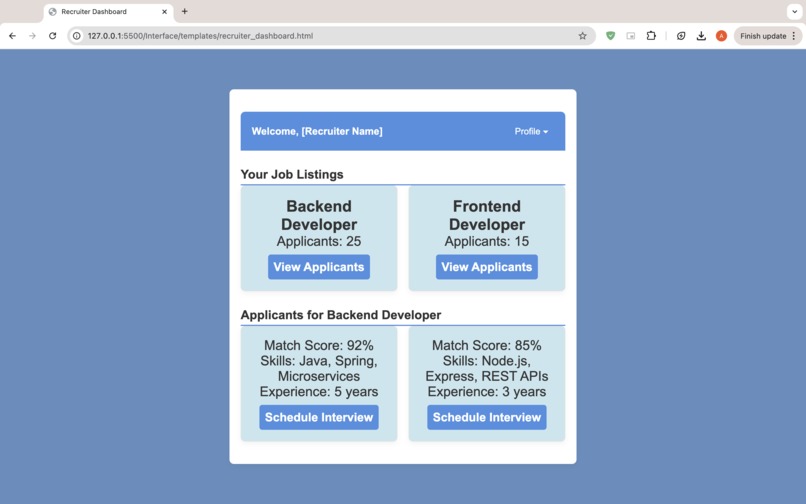
Recruiter Dashboard: Recruiters view anonymized profiles of candidates, along with an AI-generated matchability score that ranks applicants based on skills and experience, without revealing personal information. This “blind hiring” approach minimizes bias, focusing only on the most relevant qualifications for the role.
How we built it
Equapath was developed using HTML, CSS, and Python (Flask), combining front-end accessibility with a powerful backend to ensure secure, unbiased hiring interactions. AI algorithms integrated into the backend analyze applicant skills and rank their compatibility with open roles.
Frontend: HTML and CSS were used to design a clean, responsive interface that provides an intuitive experience for both applicants and recruiters. Backend: Flask manages data routing, session handling, and security, while also serving as the foundation for anonymized profiles and AI-driven matchability scoring. AI Integration: AI algorithms assess each applicant’s skills and experience, calculating a matchability score for each job listing. This score allows recruiters to make unbiased, data-driven decisions based on applicants' qualifications. Database: Stores job listings, anonymized candidate profiles, and application statuses, allowing Equapath to provide targeted job recommendations and track applicant progress.
Challenges we ran into
Designing an anonymized, data-rich structure was challenging, as we aimed to maintain enough information for recruiters while removing personal identifiers. Additionally, implementing an AI-driven matchability algorithm required careful calibration to ensure accurate and fair scoring, truly reflecting each candidate's potential fit.
Accomplishments that we're proud of
We’re proud to have created a platform that prioritizes fairness through an anonymized recruiter dashboard and AI-driven applicant ranking. Equapath empowers both recruiters to make unbiased decisions and applicants to engage with a transparent, equitable hiring process.
What we learned
Through this project, we deepened our understanding of AI’s role in fair hiring and the complexities of anonymizing data while keeping it meaningful. Working with Flask enabled us to build a secure backend, and integrating AI to create data-driven matchability scores taught us about designing ethical algorithms that emphasize skills over personal characteristics.
What's next for Equapath
In the future, we plan to enhance our job-matching capabilities with machine learning, refining the AI-driven matchability scoring and personalizing job recommendations even further. Additionally, we aim to introduce metrics that allow recruiters to review and mitigate any unconscious biases, promoting more reflective and equitable hiring practices. Our ultimate vision is for Equapath to be a leading tool for companies striving to build diverse, skill-focused teams based on merit.


Log in or sign up for Devpost to join the conversation.