-
-
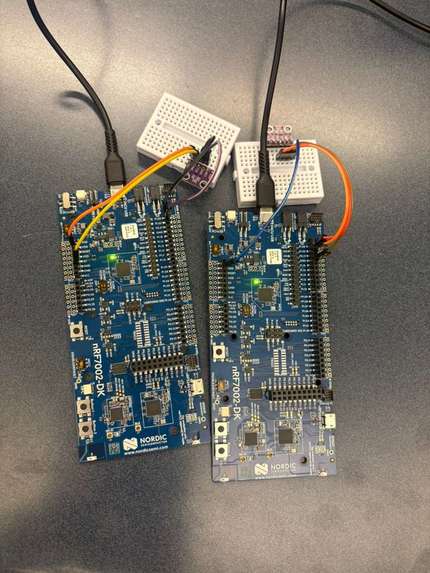
Gateway and node
-

Team Tango Charlie


Inspiration
This project was inspired by a real fire alarm incident at a Northeastern University building. When the alarm went off, there was visible confusion about where the emergency actually was. People were evacuating, but there was no clear indication of which room or area triggered the alert. At the same time, many densely populated living spaces, especially older buildings and shared housing, still rely on basic fire alarms with no location awareness or network resilience. We wanted to explore whether a simple, low-cost system could provide clearer, more actionable information during emergencies.
What it does
Fallback Fire System is a distributed fire monitoring system with a central gateway. Each device monitors its local environment and reports live data like temperature and humidity. Under normal conditions, the gateway connects to existing Wi-Fi and serves a real-time dashboard. If the building network goes down, the gateway automatically switches into a local access point mode. First responders or occupants can connect directly to it and still see live incident data, including where the alert originated. The system is designed to keep working when infrastructure fails.
How we built it
We built the system using Nordic nRF7002-based devices running Zephyr RTOS. Each node collects sensor data and sends it to a gateway device. The gateway runs in Wi-Fi station mode when possible and hosts a lightweight web dashboard. If it loses connectivity, it falls back to SoftAP mode without restarting or losing data. The entire system was built with simple components, minimal configuration, and clear separation between sensing, networking, and presentation logic.
Challenges we ran into
Managing Wi-Fi state transitions was the hardest part. Handling clean switches between station mode and access point mode without race conditions took time. Resource limits were another challenge. Running sensors, networking, and a web server on the same device required careful tuning. We also had to be very selective about scope due to the short hackathon timeline.
Accomplishments that we're proud of
We built a system that actually works end-to-end. It survives Wi-Fi failures and still provides access to live data. The design stayed simple and understandable, without overengineering or unnecessary features. Most importantly, the demo clearly shows real-world usefulness rather than just a concept.
What we learned
Reliable systems matter more than complex ones during emergencies. Fallback behavior should be a first-class feature, not an afterthought. Zephyr and the nRF Wi-Fi stack are powerful, but require careful event handling and state management. Clear goals make it easier to ship something real in a short time.
What's next for Fallback Fire System
Supporting multiple sensor nodes reporting to a single gateway at scale. Adding basic room or zone identification. Improving the dashboard for first responders. Exploring low-cost deployment in older buildings and shared housing.
Built With
- bme280
- c
- http
- nrf7002dk
- rest
- softap
- west
- wifi
- zephyr


Log in or sign up for Devpost to join the conversation.