-
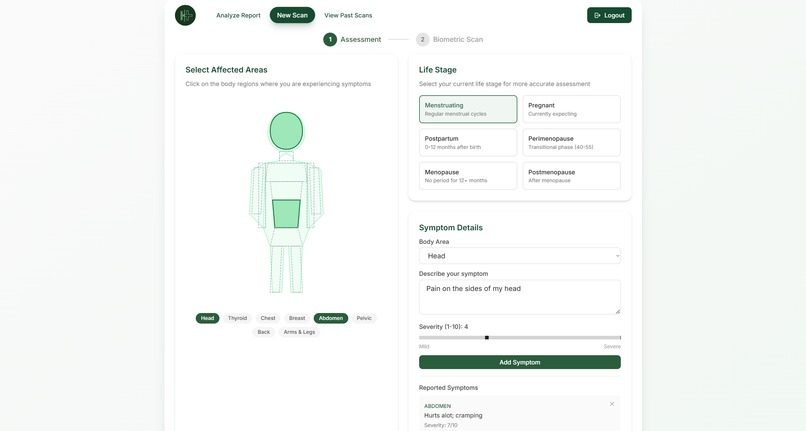
Preliminary Questionnaire
-
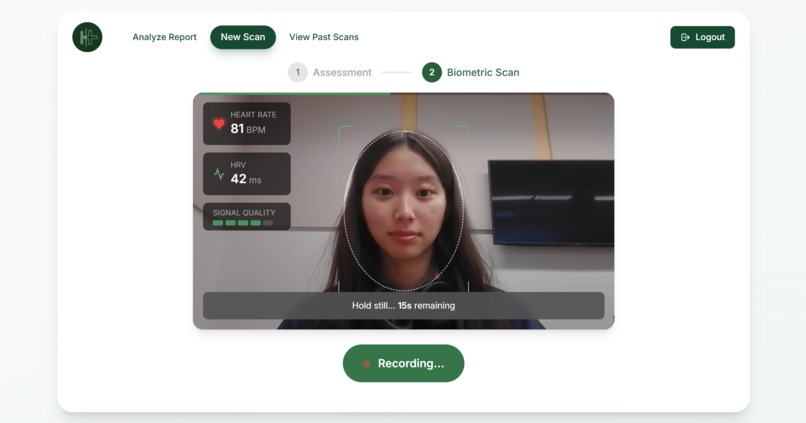
Presage Video Scan
-
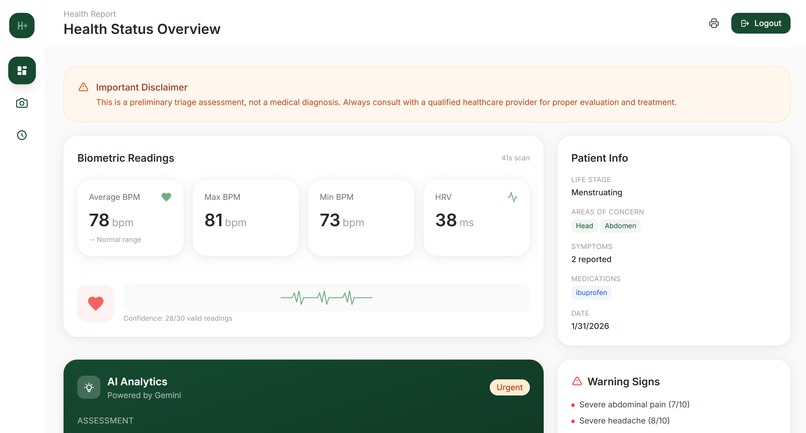
Health Report Part 1
-
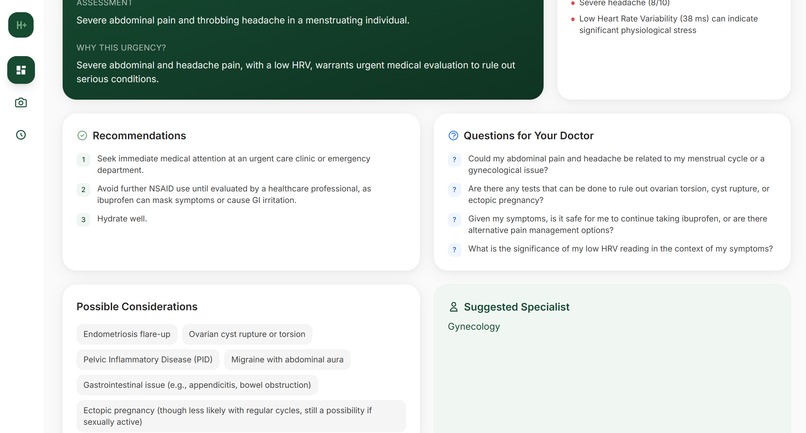
Health Report Part 2
-
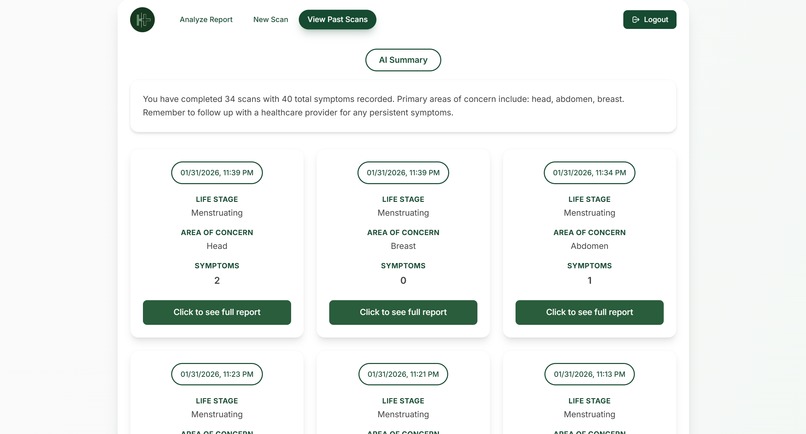
Scan History


Inspiration
For years women's healthcare concerns have been overlooked and dismissed. A 2022 study states that "29% of women ages 18-64 report that their doctor had dismissed their concerns during that time, compared to 21% of men. [15%] of women said they have had a provider not believe they were telling the truth, compared to 12% of men" (KFF, 2022). Hera+ was inspired by the challenges that we, our friends, and our family members have faced as women navigating the healthcare system.
What it does
Hera+ provides a few different services for women. Before appointments, users can answer a few preliminary questions about their symptoms, medical history, and target area and then conduct a body scan using Presage. Hera+ will then provide users with a report of their estimated vitals, ways to advocate for their health, and a summary of how their vital stats connect with the listed symptoms. Users can then download these reports and take them to their doctors appointments to help them with their medical discussions. Hera+ will keep a time-stamped log of the user's past scans, so they can revisit past logs and track changes in their symptoms and stats.
How we built it (Tech Stack)
Front-end: React + Vite + TailwindCSS
Back-end: Node.js
Body Scan: Presage
User Auth + Database: Supabase
Containerization: Docker
Design: Figma + Canva
Challenges we ran into
It was difficult for us to settle on an idea. We had too many ideas at once, and each addressed a different problem, which made it challenging to focus on one pillar. We spent a significant amount of time evaluating the impact, practicality, and difficulty of each idea, and we often went back and forth as we discussed. In the end, we settled on an idea and pushed forward with it. We also faced a few difficulties with integrating various API keys, especially Presage since it only works on Linux OS.
Accomplishments that we're proud of
Despite only meeting as a group for the first time on Friday, we quickly fell into a great working energy. We questioned each other and prompted one another to really consider the ideas we had and how practical, realistic, and useful they would truly be. We managed to stay organized and on track, allowing us to easily complete our work alongside one another. We’re incredibly proud of the work we did considering it was the first hackathon for 2 of our members and only the second for the other 2 members.
What we learned
We learned about the various uses of Presage and how beneficial it can be in the healthcare field. Upon researching for our project, we also learned about just how large the gap is between how men and women are treated in the healthcare industry. Furthermore, we learned how to use Git/GitHub to work in a team collaborative and for version control when we had to rollback due to errors.
What's next for Hera+
In the future, we’re thinking of implementing a live chat feature with question and response format, to allow users to communicate with AI rather than providing one-sided information. We also had ideas to implement a location feature that links women to nearby women’s healthcare clinics. As Presage and other similar software adds new features, we would match that to give users more data about their vital stats.
Built With
- canva
- chatgpt
- claude
- cursor
- figma
- node.js
- presage
- react
- tailwindcss
- typescript
- vite




Log in or sign up for Devpost to join the conversation.