-
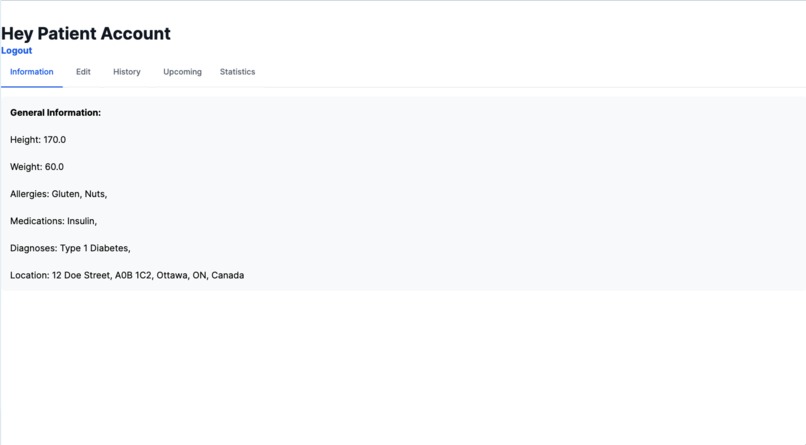
Patient Dashboard 1
-
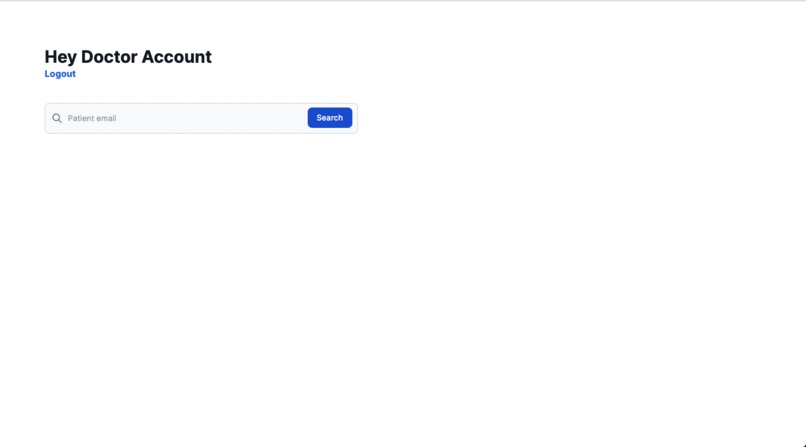
Doctor Dashboard 1
-
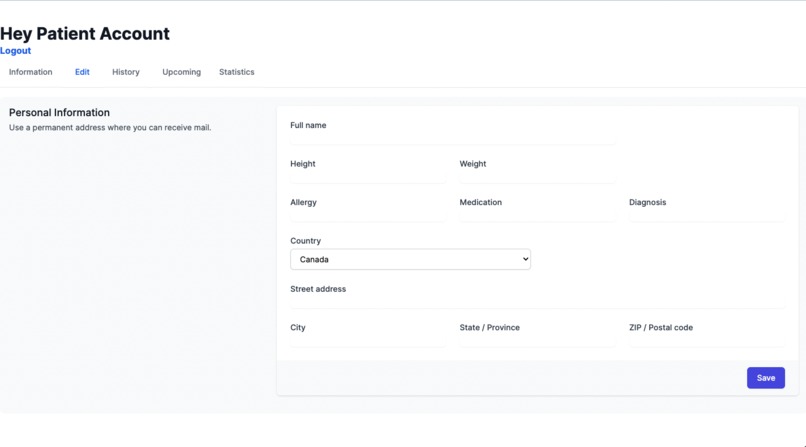
Patient Dashboard 2
-
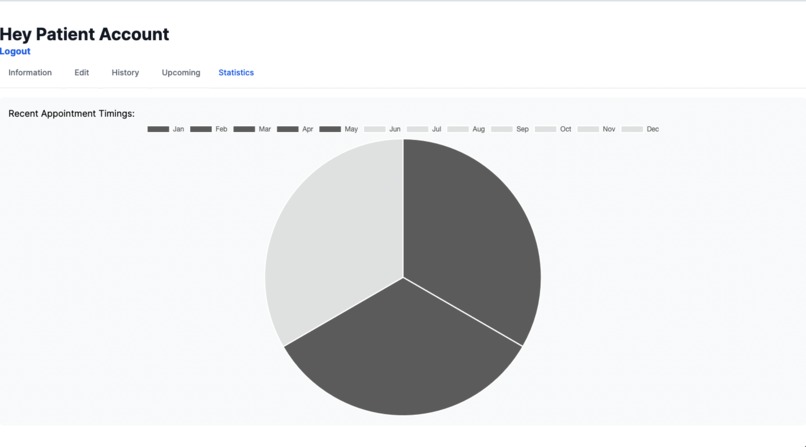
Patient Dashboard 5
-
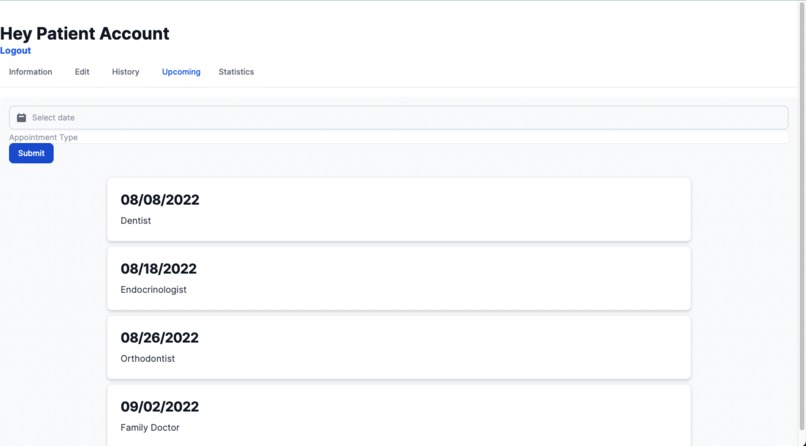
Patient Dashboard 4
-
Home Page
-
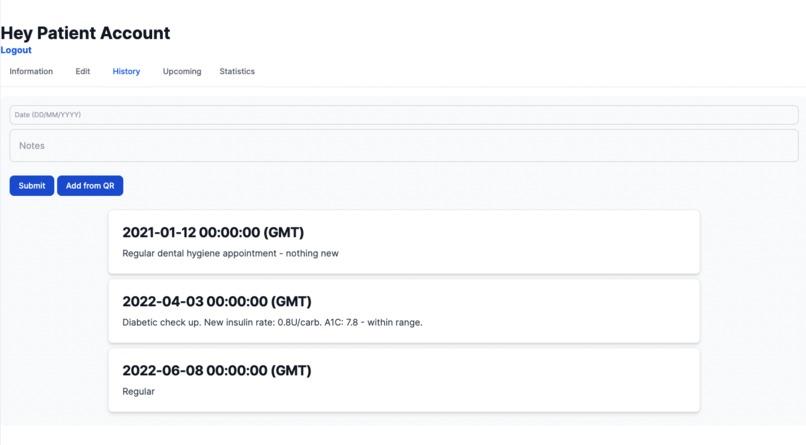
Patient Dashboard 3
-
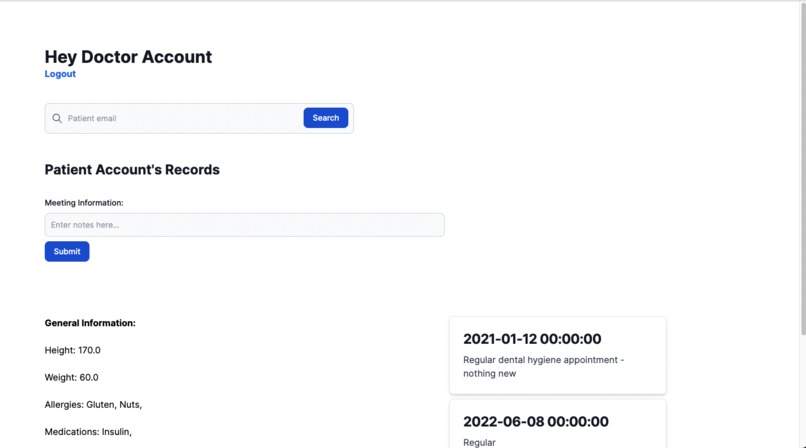
Doctor Dashboard 2
-
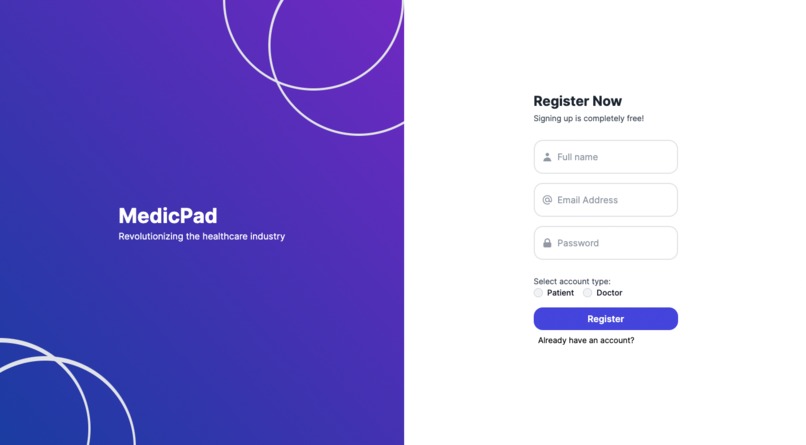
Registration Page
-
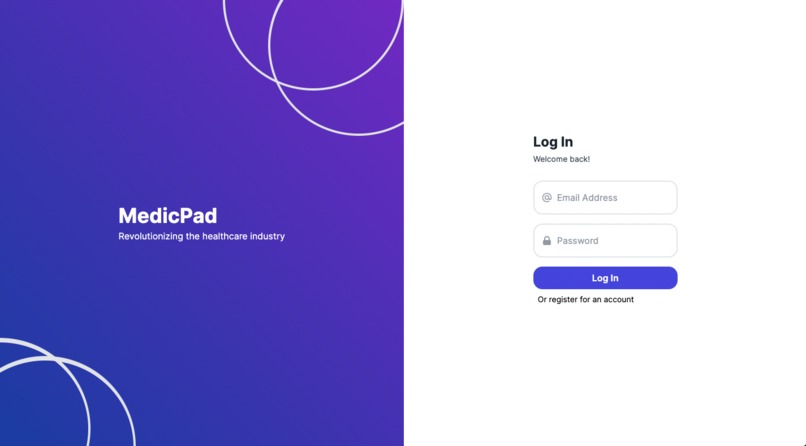
Login Page


Inspiration
While researching current technological limitations, we came across a notice written by eHealth Ontario stating that patients in Ontario are currently denied access to their Electronic Health Records (EHR). We recognized how this could be inconvenient for many residents of Ontario. In particular, we noticed that several challenges in our personal lives could be solved if an application like MedicPad existed. For example, Helen's grandmother has many medical complications, so she has to often leave the house to see her family doctor, renal transplant specialist, and dermatologist; therefore, it's critical for her to be able to receive all of her medical records for her to know details about how her organs are performing. In addition, due to the large number of appointments she has to attend, an app that can manage all of her appointments would be extremely beneficial to her. Furthermore, Wasif, who has type 1 diabetes, has been looking for an app that can record his conditions and insulin trends; MedicPad's features can help with this. Despite the fact that the Ministry of Ontario has stated that this is an issue, there hasn’t been much progress made in terms of allowing electronic access to medical records, so we want to create MedicPad to fill that gap.
What it does
MedicPad has a plethora of features, with the primary goal of allowing Ontario patients to upload paper copies of their EHR to be stored electronically. Patients will be able to find all of their records in one place, making it more efficient. It has an interface that allows doctors and patients to easily transfer and obtain data summaries, streamlining the diagnosis/treatment process. To make doctor visits simpler, patients can record information such as height, weight, and allergies/medications on the platform. Our platform will provide detailed summaries and statistics to the patient and doctor in order to provide insight into trends that may impact a patient's life. Moreover, patients no longer need to request reminders from multiple providers as MedicPad sends email reminders for all appointments in a centralized manner.
How we built it
To build our project, our group members worked collaboratively on GitHub and Virtual Studio Code (live-share). On the front-end, we used standard HTML with Tailwind.CSS as a CSS framework to easily implement cross-platform readability and speed up the coding process. For the backend, we used Django, a Python library. For our database, we switched from MySQL to SQLITE3 which had better implementations with Django.
Challenges we ran into
The most difficult obstacle we encountered was the lack of a programming language that all three of us knew. As a result, we struggled to decide what language to code our project in so that everyone could contribute. In the end, some of our group members had to learn a new language, while others were new to GitHub and VS Code. This slowed down our progress as the experienced members had to spend time helping the less experienced members catch up through teaching them the fundamentals. However, we were constrained by time. With all members constantly busy, we had a difficult time finding suitable times to meet and communicate about our progress. These difficulties proved to be challenging, but we were able to overcome them by splitting up the work and updating each other of our progress on the group chat whenever we had time.
Accomplishments that we're proud of
We are proud that, despite the difficulties mentioned above, we were able to persevere. We not only finished our prototype with all of our desired features, but we also found a solution that worked well for the three of us. We managed our time so that there would be no last-minute issues, and we learned so much along the way. Additionally, we were able to write the project from scratch and we effectively connected the various parts of our program with many new frameworks together.
What we learned
In terms of programming languages, frameworks, and libraries, we (members who didn’t already know them) learned how to use Python, HTML, CSS, Django and Tailwind CSS. The documentation for these libraries and frameworks were extremely helpful (as was Stack Overflow for debugging of course!!). We learned how to use GitHub and VS Code. Furthermore, we gained knowledge of security vulnerabilities, responsive design, server side scripting, Python QR code generation, Unix timestamp manipulation, and MD5 hashing, and put them into use. We also learnt a little bit of Javascript by implement the charts.js framework.
What's next for MedicPad
Our most urgent plan is to augment the security of our platform. To do this, we can decentralise the database so that one entity does not have access to all the info, secure passwords that are specifically issued by health providers, encrypt information, and implement two factor authentication to protect the accounts of users. Furthermore, because our platform will be used by people of all ages and conditions, accessibility features will be crucial. We plan to add a text-to-speech feature that will read text aloud to people with low vision, as well as a speech-recognition feature that will allow users with limited mobility to control the computer with their voice.


Log in or sign up for Devpost to join the conversation.