-
-
ONE Track application
-
Container
-
Pallets
-
Laptop
-
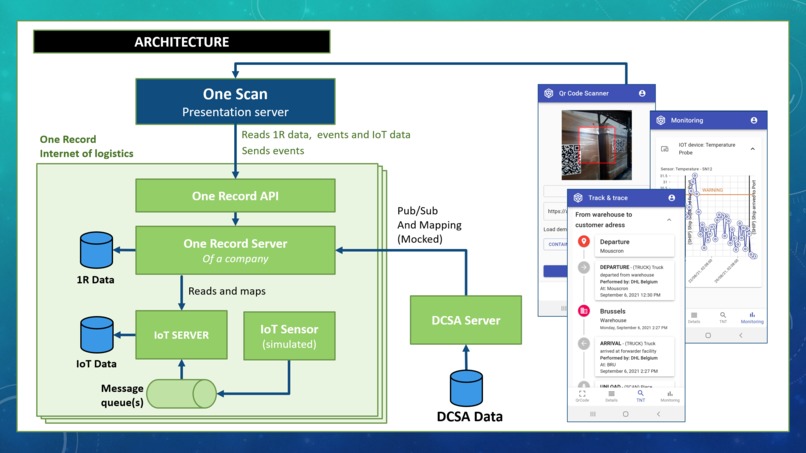
Architecture


Inspiration
Nowadays, there is no possibility for actors involved in freight transportation to track & trace precisely a single piece unit, from origin factory to its final destination, using a single tool and in a unified manner.
Last year we developped a first part of ONE Track, aiming to provide a unified multi-modal realtime Track and Trace view of every steps of a shipment, from production factory to the consignee. This year, we wanted to focus on how to actually produce the data, that is to say to provide a ONE Track application that can be used by technicians during their daily work, to scan, track, trace or monitor goods handled.
What it does
During this IATA ONE Record Hackathon we developed an application called ONE Track.
This application is intended for all technicians involved in the entire logistics transport chain, from the factory to the consignee. The application is connected to the ONE Record Internet of Logistics as well as to a DCSA server. Thus, the application can be used in a multi-modal transport scenario, including sea, road, and air transport.
The technician using the app can:
- scan a qr code label on a Piece or Item (container, pallet, package, ...)
- have access to information about this Piece, as well as potential specific instructions like special handling to guide him, depending on the type of goods and the role of the technician.
- have access to track&trace information of the Piece or Item by displaying the list of associated events (in a unified way including ONE Record and DCSA events).
- have access to IoT data monitored by IoT devices associated to the Piece or Item, if any, and check if data is compliant with handling instructions.
- send events corresponding to the task being done, for example "Piece received at warehouse", with timestamp, emitter company and location information.
Targeted Challenges
#1 First, The Track and Trace: our app provides a multi-modal common way of tracking. It allows access to ONE Record & DCSA data and to browse and analyze all events of the entire logistics transport chain.
#2 Then The IoT challenge by allowing to get IoT monitoring data requested for specific shipments through the 1R API.
#5 Finally we targeted the Open Challenge. Indeed our app allows the users to access shipment information and to update the status in a user friendly way simply by scanning a QR code. The app could also provide contextual information in order to improve the daily work of technicians
Try it out!

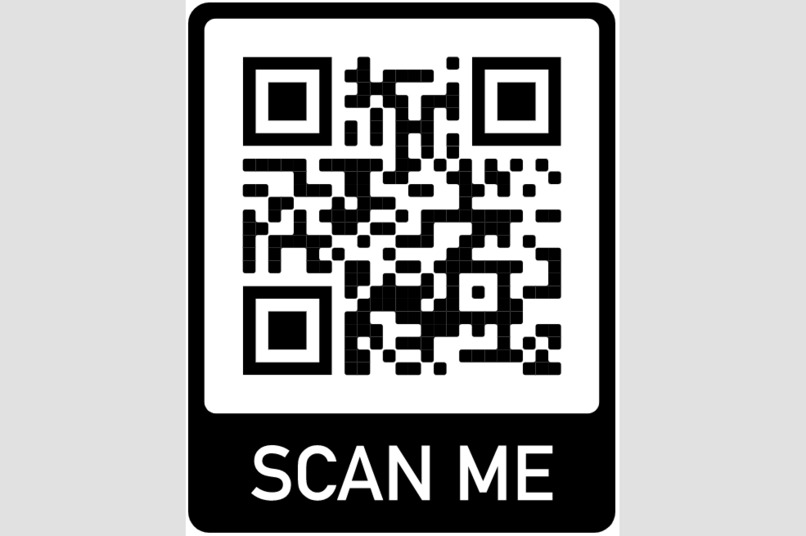
Install the application by browsing https://track.onerecord.fr or scan the QRCode above with your smartphone or tablet, then click "..." menu and "Install the application". WARNING/!\ Please note that only Google Chrome and Android are supported /!\WARNING
Log as an operator or as a supervisor. The operator can only have access to the scanned Piece or Item information, and send events about the transportation. The supervisor has access to the scanned Piece or Item information, send events, see the whole multi-modal history of events of this Piece or Item, and see monitoring data reported by IoT devices associated to the Piece or Item.
Configure your profile by clicking on the icon in the top-right corner of the application, and select your Company and Location (used when the technician sends events), then save and proceed to next step.
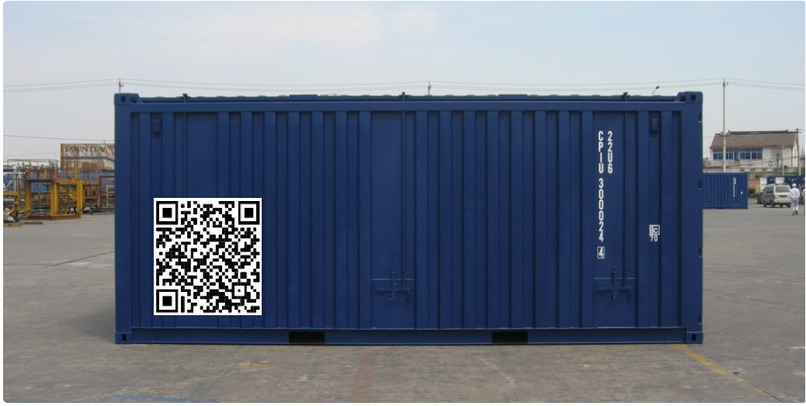
Scan Sea Container

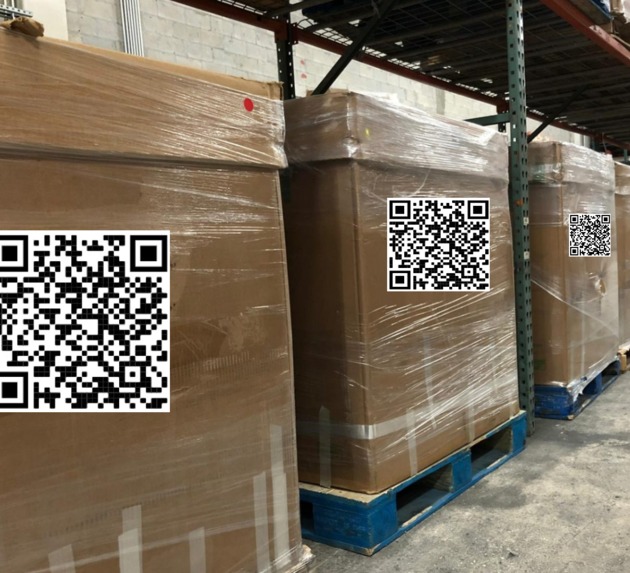
- Scan Pallet loaded into the Sea Container

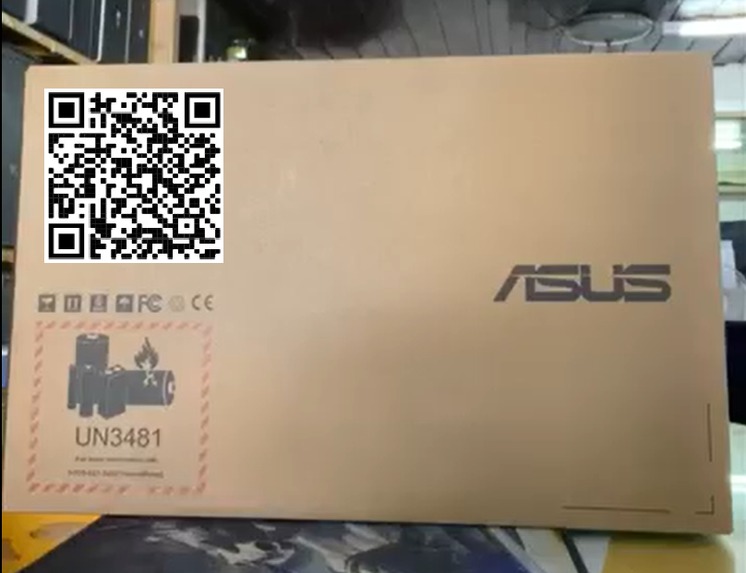
- Scan Item Laptop box

Or select one of our predefined links avaible on the "QR Code" page.
Then navigate through details, events or monitoring data.
On Details screen, it is also possible to browse the contained pieces or items of the logistics object scanned and click on one of these to have access to its data (it is also possible to go back to previous data using the "back button" of your phone or browser)
Note that only the Pallet has associated IoT data.
Available data through our APIs:
ONE Record Data
- Shipping sea container GET https://api.onerecord.fr/companies/msc/piece-dgs/container1
- Pallet (PieceDg) GET https://api.onerecord.fr/companies/asus/piece-dgs/pallet1
- Item GET https://api.onerecord.fr/companies/asus/items/zenbook1
- ProductDg GET https://api.onerecord.fr/companies/asus/product-dgs/zenbook
- Sea shipment and waybill(s) GET https://api.onerecord.fr/companies/agility/shipments/seashipment
- Air freight shipment and waybill(s) GET https://api.onerecord.fr/companies/dhl/shipments/shipment1
- Special Handling GET https://api.onerecord.fr/companies/dhl/special-handlings/eli
- and more with all reference data (companies, locations, countries...)
Events
- Of sea container GET https://api.onerecord.fr/companies/msc/piece-dgs/container1/events
- Of pallet in the sea container GET https://api.onerecord.fr/companies/asus/piece-dgs/pallet1/events
- Of item (laptop box) GET https://api.onerecord.fr/companies/asus/items/zenbook1/events
IoT Devices (Extension of ONE Record API to list associated sensors of a given logistics object)
- Associated with the pallet GET https://api.onerecord.fr/companies/asus/piece-dgs/pallet1/iot-devices
IoT Sensors (Extension of ONE Record API to list sensor of a given Logistics Object)
- Of the IoT Device GET https://api.onerecord.fr/companies/asus/iot-devices/temperature-probe/sensors
IoT Measurements (Extension of ONE Record API to list measurements of a given sensor, ready to display in a chart)
- Temperature measurements GET https://api.onerecord.fr/companies/asus/iot-devices/temperature-probe/sensors/temperature/measurements
DCSA Data
Events
- Happened during the sea transportation part of our scenario, published and avaible through our DCSA server's DCSA-TNT API: GET https://dcsatnt.onerecord.fr/v2/events
How we built it
Architecture

About our technical architecture, we developed our own ONE Record server following the latest standard specification. It is connected to another server exposing data coming from simulated IoT devices and provides all data through the ONE Record API. We added a mapping integration between our self-deployed DCSA-TNT server and our ONE Record server. This architecture allows the ONE Track application to access data and emit events seamlessly to any domain that could be sea, road or air through a unique API which is the ONE Record API.
Challenges we ran into
- Building a realistic end-to-end scenario with consistent data, dates, and all events.
- Integration of DCSA-TNT server.
- Implement our own ONE Record server, following the latests standard specification.
- Building ONE Track as a progressive webapp (still does not work properly on IOS because of the QRCode scanner library).
- Displaying IoT data in a chart on a mobile device.
Accomplishments that we're proud of
- Our scenario covers a multi-modal use case from the production factory of laptops to the central stock, then it covers also the e-commerce phase, and then covers trucking and air freight transportation to the consignee.
- Our data includes pretty realistic events, with consistent timestamps
- Our app is totally or at least mostly bug free
- We managed one again to accomplish what we were aiming at, with great teamwork and spirit!
- Every technical part of our application (ONE Record server and API, IoT server, ONE Track app, ...) is automatically deployed and accessible behing onerecord.fr domain.
What's next for ONE Track Application
- The application could have much more advanced features in the future, incluing:
- Automatic detection of deviation, for example by comparing the weight or volume value measured by a connected scale or volume scanner of a warehouse which could be paired with ONE Track app with data currently saved and available through ONE Record API.
- Why not continue developing this application and make it production ready?
Built With
- dcsa-api
- docker
- iot-data-simulator
- java-spring-boot
- materialui
- one-record-api
- ovh
- postgresql
- pwa
- rabbitmq
- react
- traefik






Log in or sign up for Devpost to join the conversation.