-
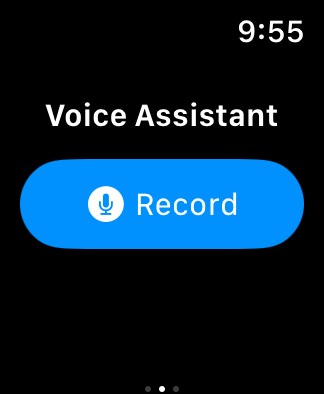
Watch Voice Assistance
-
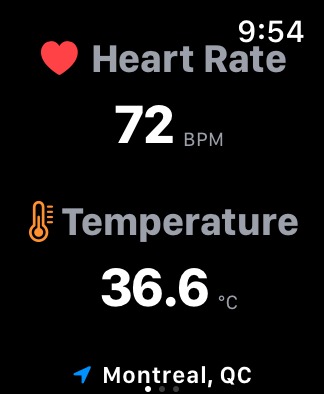
Watch Home
-
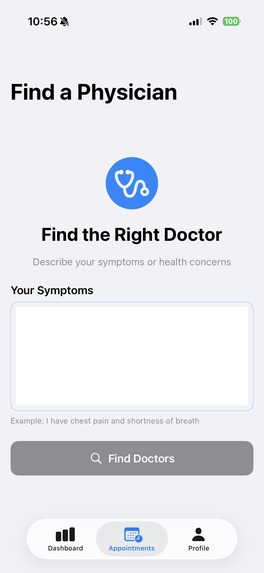
Find Physician App
-
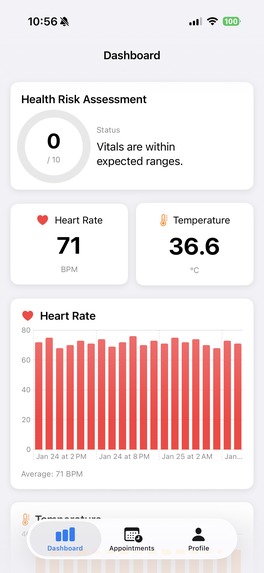
Home App 1
-
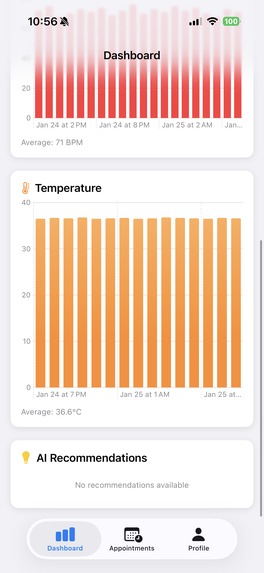
Home App 2


Inspiration
When people start feeling unwell, they often ask themselves whether it is serious, if they should wait, if they should consult a medical professional. Many asks AI for advice, but current systems stop at that level of interaction, leaving users with the responsibility to navigate healthcare systems on their own. Many people struggle to receive the proper care in a short notice as access to healthcare systems is difficult and tedious. Hence, we built PulseWise to bridge that gap. We developed an assistant that helps the user inform themselves on their health and it will offer recommendations depending on the user's needs, thus providing contextual insights.
What it does
PulseWise is a personal health assistant that integrates conversational AI with reliable physiological data to guide every user to proper medical care. The application will include:
- Gathers user-reported symptoms via voice or chat
- Retrieves Apple Watch heart rate and body temperature data
- Detects physiological anomalies and symptoms severity
- Determines the necessity for a medical appointment
- Finds nearby walk-in clinics
- Contacts emergency services when symptoms are critical
- Saves a health memory to personalize decisions
How we built it
Our team designed a system that combines wearable data, conversational AI and backend development into an easy-to-use app.
- Designed an iOS application utilizing Swift and SwiftUI for user interactions
- Developed a watchOS application to collect the Apple Watch health data: heart rate and body temperature
- Used Node.js and Express.js as the backend layer
- Implemented MongoDB to store user data: user profiles, health history, physiological predisposals, appointments
- Integrated Gemini as the LLM for symptom interpretation and health risk estimations
- Added Multure for safe data handling
- Utilized Docker for consistent deployment of backend services
Challenges we ran into
Throughout the implementation of PulseWise, we have come across many adversities. That being said, through exemplary communication and deep commitment, we were able to push through these challenges.
- Medical responsibility implied designing rigorous escalation logic as to avoid false reassurance or unsafe advice to the user
- Ensuring accurate data interpretation such that the mapping of heart rate and temperature data has meaningful health significations
Accomplishments that we're proud of
- Successfully incorporating Apple Watch physiological data into AI-driven decision-making
- Supporting text and voice-based interaction interfaces
- Constructing an assistant that takes instant action for the user
What we learned
Our team has learned that AI-assisted medical care must address technical, ethical, social issues in healthcare systems.
- AI in healthcare must be transparent, accurate, bias-free and escalation-aware
- Real-world healthcare systems are fast-paced and difficult to manage
- Voice interfaces adds complexities, but grants great accessibility
What's next for PulseWise
We wish to expand our product to users in need of an AI assistant that will guide them in their health journeys.
- Deeper integration with Apple Health and additional health features such as sleep analysis
- Improving anomaly detection
- Multilingual voice and chat support
- System integration with clinic and hospital scheduling databases
- Extended support to users with chronic conditions
Built With
- docker
- express.js
- gemini
- ios
- javascript
- mongodb
- multer
- node.js
- swift
- swiftui
- watchos


Log in or sign up for Devpost to join the conversation.