-
Title
-
The Problem
-
The Solution
-
Project Info
-
Opportunities
-
Future


Inspiration
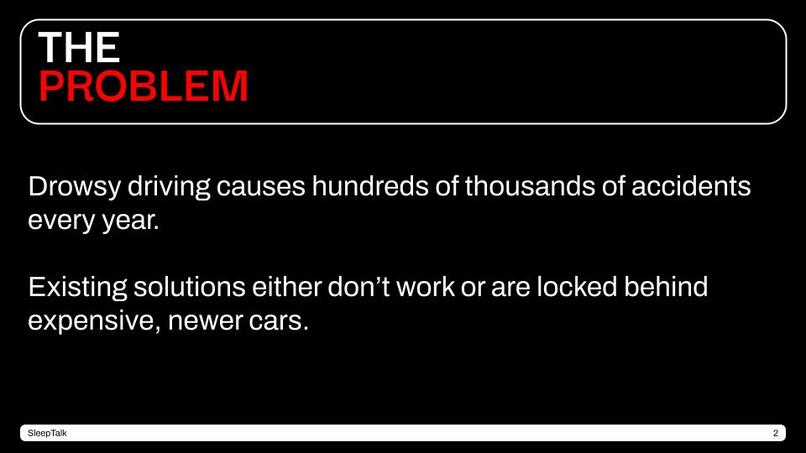
Drowsy driving is a serious and often overlooked cause of car accidents. Many people have experienced long drives where it becomes hard to stay awake, especially late at night. Most current solutions are either simple alarms or expensive systems built into newer cars.
Some modern cars, like newer BMW and Volkswagen models, have safety features that can detect when a driver becomes unresponsive. However, these features are only available in newer vehicles, which means many drivers don’t have access to this kind of protection.
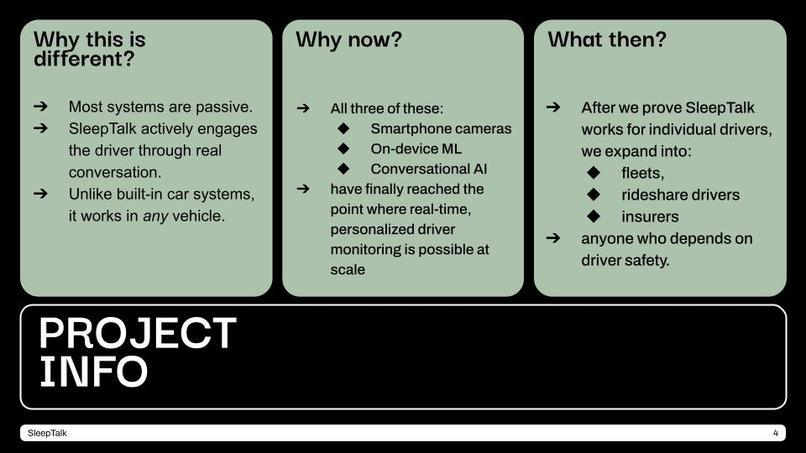
We wanted to create something that works for everyone. SleepTalk was inspired by the idea that safety on the road should not depend on how new your car is. By using a smartphone (something most drivers already have), we aim to bring smart, active drowsiness prevention to any car.
What it does
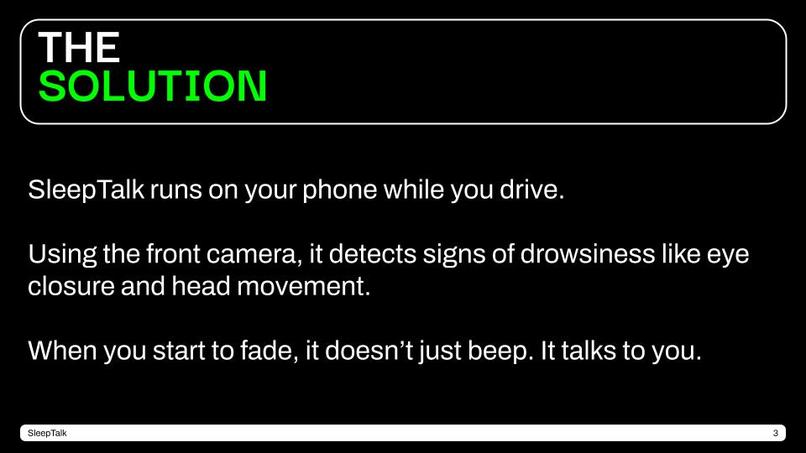
SleepTalk is a mobile AI copilot that runs in the background of your phone while a navigation app is on your dashboard, and uses the phone’s camera to monitor the driver for signs of drowsiness such as eye closure and head movement. When sleepiness is detected, the app immediately engages the driver through conversation: asking questions, reacting to responses, and escalating its tone if the driver continues to fade. The AI remembers context, adapting its behavior based on how often the driver becomes drowsy.
How we built it
- iOS/Android SDK
- Dart
- Flutter
- Python
- Flask
- MediaPipe
- ElevenLabs
Challenges we ran into
Integration hell was real with this project! Nothing would fit together easily.
Accomplishments that we're proud of
We successfully built a working end-to-end prototype that detects drowsiness and responds in real time through conversation. We’re proud of the context-aware escalation logic, which allows the AI to adapt its tone based on repeated sleep events rather than treating every alert the same.
What we learned
It was our first time using Flutter and ElevenLabs. After this experience, we will definitely be continuing with them!
What's next for SleepTalk
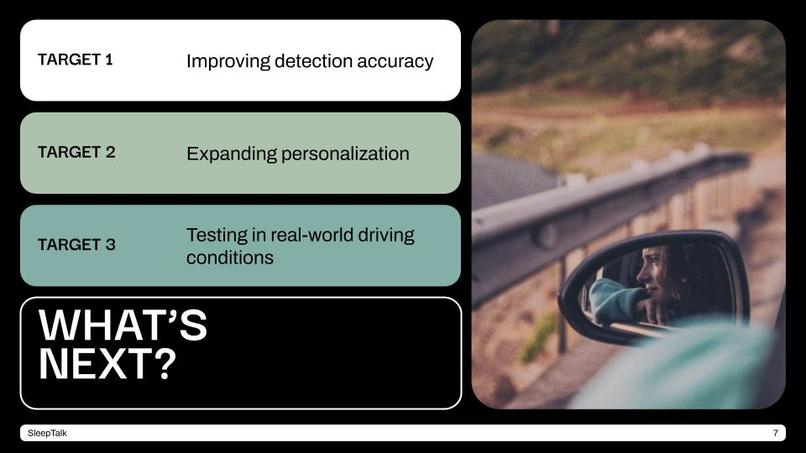
Next, we plan to refine detection accuracy, and personalize the experience for the user. For instance, if it is a student that feels drowsy, SleepTalk will talk about his interests, hobbies, or even course material that he's studying for. Making it way a more interesting and engaging conversation.
Commercialization
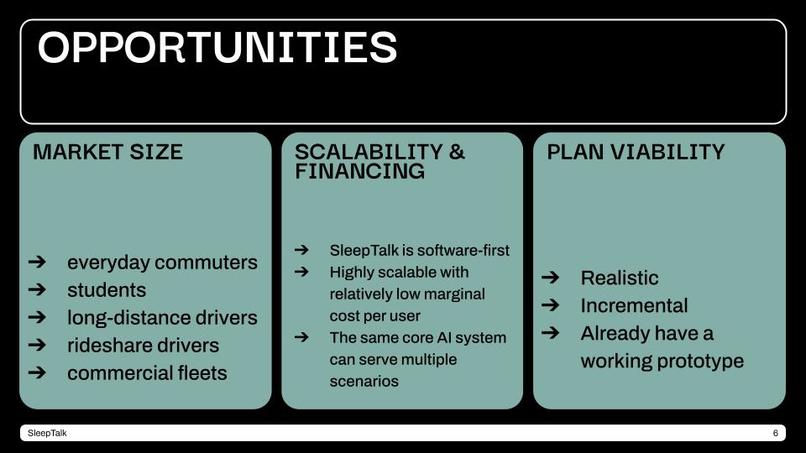
If/when we bring this project to market, we will test the app in more real-world driving conditions. Longer term, we see opportunities to partner with fleet operators, rideshare drivers, and insurers, and to integrate SleepTalk with vehicle systems to further improve road safety.



Log in or sign up for Devpost to join the conversation.