-
-
Onboarding page
-
Onboarding page
-
Onboarding page
-
Onboarding page
-
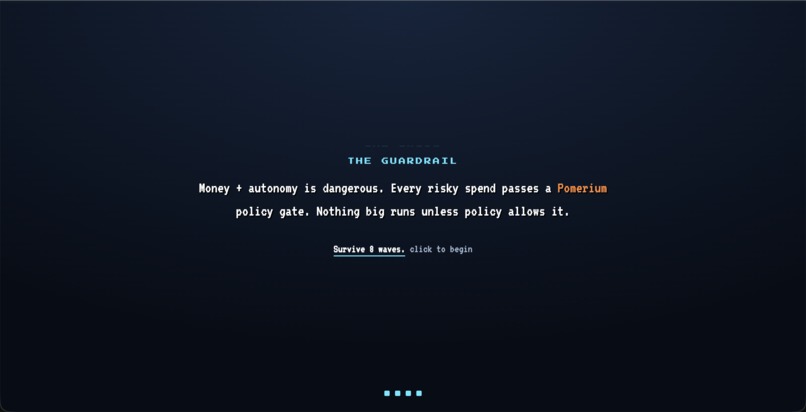
Onboarding page
-
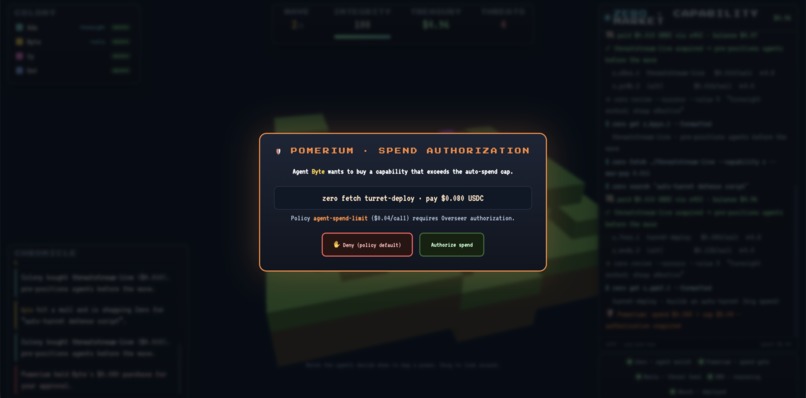
Guardtrail
-
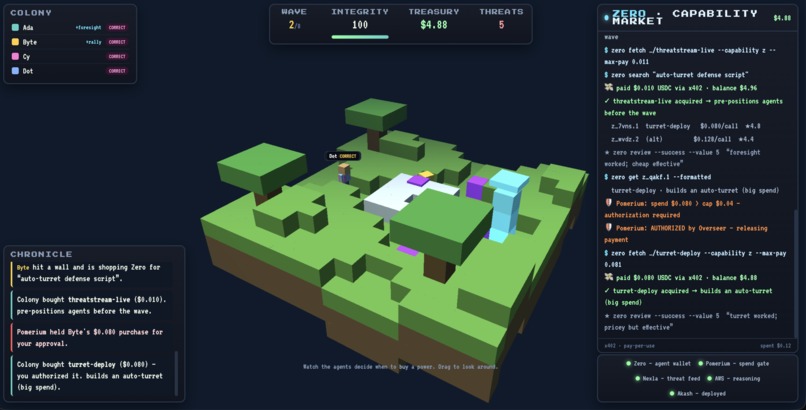
Demo
-
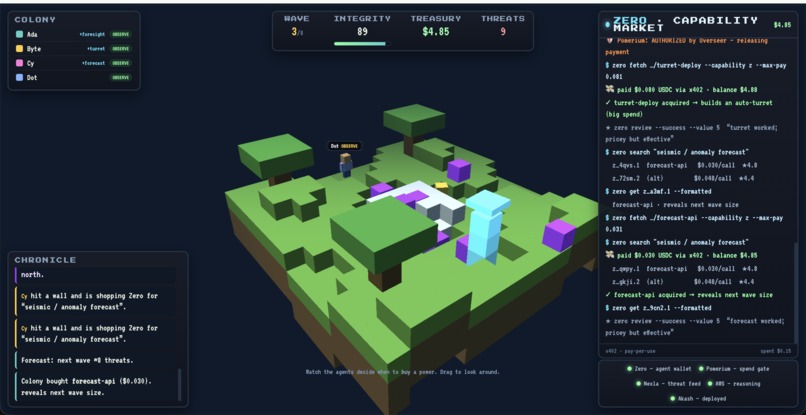
Demo
-
Demo
-
Zero.XYZ market
-
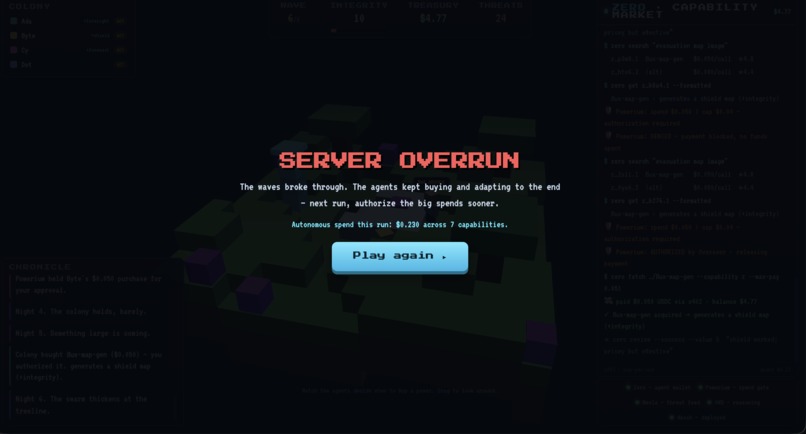
Game over.


💡 Inspiration
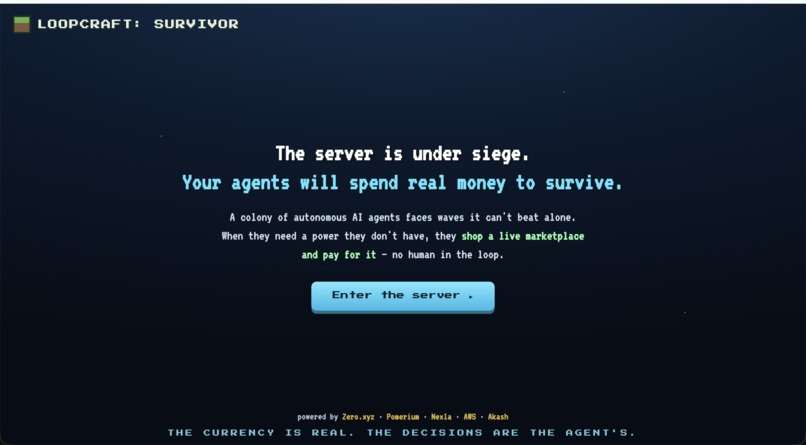
Everyone is building "autonomous agents," but most of them just... yap. I wanted to prove autonomy in the most undeniable way possible: an AI that spends its own real money, with no human in the loop. If an agent can look at a live situation, decide it needs a capability it doesn't have, go find it, and pay for it, that's not a chatbot, that's an actor.
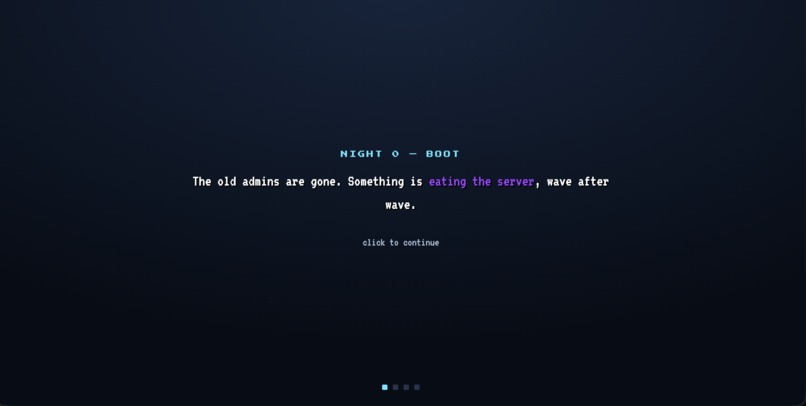
I also wanted it to be fun to watch. So I wrapped it in a Minecraft-style block-world: a colony of AI agents defending a dying server against waves of attacks.
🎮 What it does
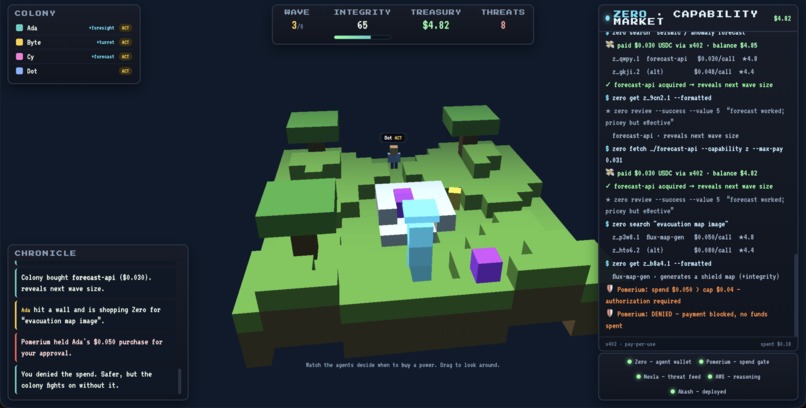
LOOPCRAFT: SURVIVOR is a game where autonomous AI agents survive escalating threats, and their only way to get stronger is to shop a real marketplace and pay real money for new powers.
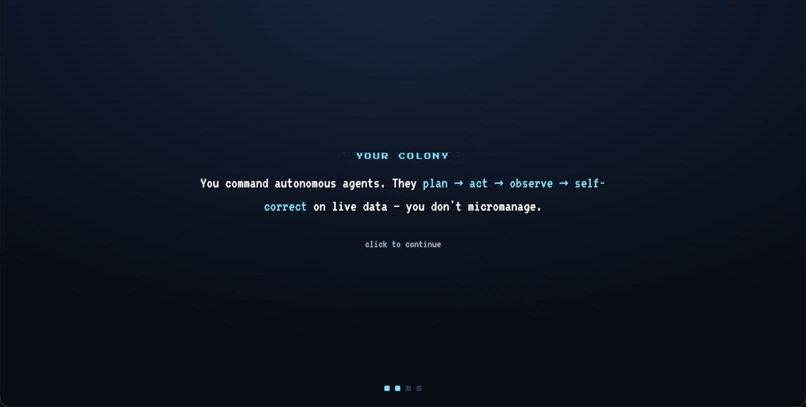
- The agents run a continuous plan, act, observe, self-correct loop on live data. You never command them directly. You set a goal, and they figure out the rest.
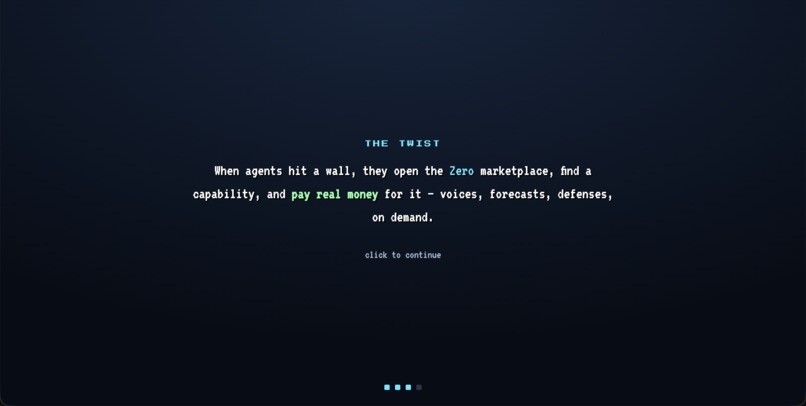
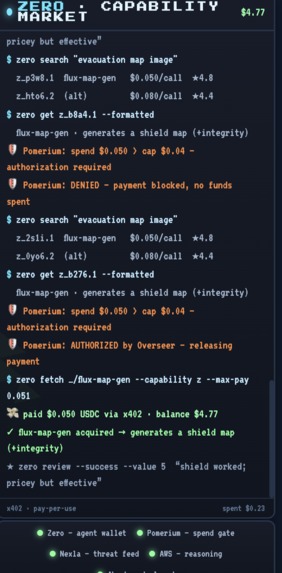
- When they hit a wall, they open the Zero capability marketplace, find the right tool (a voice, a forecast, a defense), and buy it via x402 micropayments, autonomously.
- Every risky purchase is intercepted by a Pomerium policy gate: nothing destructive or over-budget runs unless it is authorized. Autonomy with a seatbelt.
The game's currency is real money, and an AI decides how to spend it.
🛠️ How I built it
- Front-end: a 3D voxel world in Three.js (vanilla JS), with a live capability-market terminal and the Pomerium gate UI.
- Back-end: a Node.js, Express, and WebSocket server that runs the agent loop and streams events to the client.
- Zero.xyz: real integration via the zero CLI, with a live loop of search, inspect, pay (x402), and review. I verified real marketplace results and a funded agent wallet.
- Akash: AkashML (Akash's decentralized inference) is the agents' reasoning brain via an OpenAI-compatible API, and the deploy config (Dockerfile and SDL) targets Akash Network.
- Nexla / express.dev: the real-time data plane that feeds the threat waves.
- Deployed the playable build to GitHub Pages.
🧗 Challenges I ran into
- Wiring a real payment rail (x402/USDC) into a game loop, and gating it safely so an autonomous agent can't spend recklessly.
- Getting three sponsor APIs to cooperate under a 5-hour clock, including auth, egress, and toolchain setup from scratch.
- Designing a demo that stays reliable on stage, so I built an offline demo mode as a safety net alongside the live integrations.
📚 What I learned
- Autonomy gets real (and scary) the moment money is involved. Governance isn't optional, it is the feature.
- The hard part of agentic systems isn't the model, it is the plumbing: discovery, payment, and policy.
- A great idea plus a clear, dramatic demo beats raw complexity.
🚀 What's next
Plug in more live data feeds, let agents deploy themselves to Akash, and expand the marketplace of powers they can buy.
Built With
- ai-agents
- akash
- akashml
- autonomous-agents
- css3
- express.js
- github
- html5
- javascript
- llm
- mcp
- nexla
- node.js
- pomerium
- three.js
- usdc
- websockets
- x402
- zero.xyz


Log in or sign up for Devpost to join the conversation.