The “Most Hated” CSS Feature: asin(), acos(), atan() and atan2()
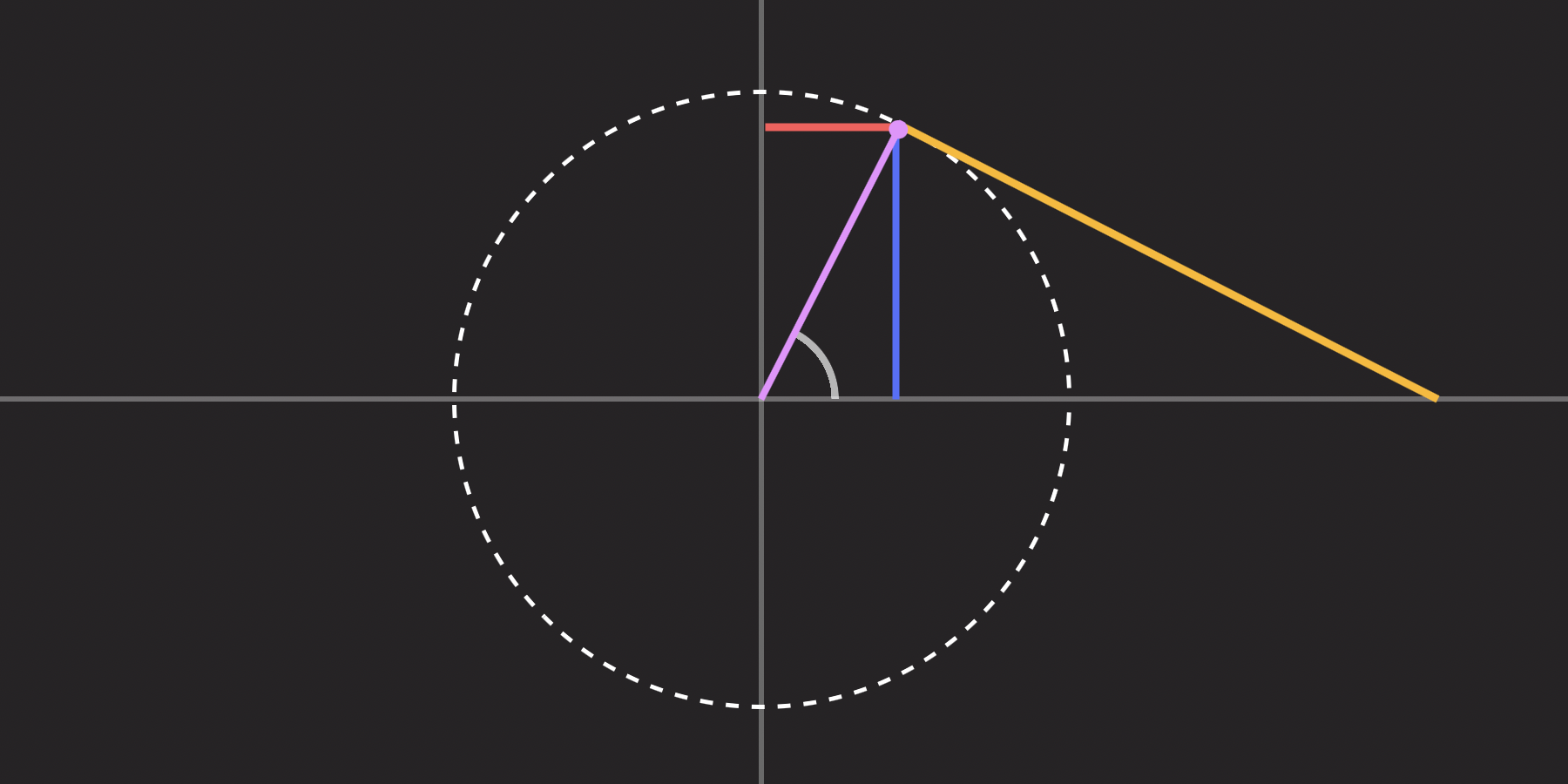
If we have a ratio that represents the sine, cosine or tangent of an angle, how can we get the original angle? This is where inverse trigonometric functions come in!

Last time, we discussed that, sadly, according to the State of CSS 2025 survey, trigonometric functions are deemed the “Most Hated” CSS feature.…
tan() function takes a calculation that resolves to either an <angle> or <tnumber> and returns the result's tangent, which ranges between -Infinity and Infinity. cos() function takes a calculation that resolves to either an <angle> or <number> and returns the result's cosine, which is always a number between -1 and 1. It's incredibly good for drawing waves or laying things out in waves, inverse of the sin() function. sin() function takes a calculation that resolves to either an <angle> or <number> and returns the result's sine, which is always a number between -1 and 1. It's incredibly good for drawing waves or laying things out in waves, inverse of the cos() function. repeating-linear-gradient() function creates a repeating gradient that places colors along a straight line and smoothly transitions between them. We define a section of the gradient, which then gets repeated until it fills the available space.