Smashing Hour With Dave Rupert
Smashing Magazine invited me to sit down for a one-on-one with “Uncle” Dave Rupert to discuss web components, yes, but also check in on Dave’s new Microsoft gig and what the ShopTalk co-host is working on these days.…
The :defined pseudo-class selector is part of CSS Selectors Level 4 specification allowing you to target custom elements created with the Web Components API and defined in JavaScript. Also, this selector matches any standard element built into the browser.…
We’re fans of Custom Elements around here. Their design makes them particularly amenable to lazy loading, which can be a boon for performance.
Inspired by a colleague’s experiments, I recently set about writing a simple auto-loader: Whenever a custom …
In my previous post we looked at Shoelace, which is a component library with a full suite of UX components that are beautiful, accessible, and — perhaps unexpectedly — built with Web Components. This means they can be used …
This is a post about Shoelace, a component library by Cory LaViska, but with a twist. It defines all your standard UX components: tabs, modals, accordions, auto-completes, and much, much more. They look beautiful out of the …
Those of us who’ve been web developers more than a few years have probably written code using more than one JavaScript framework. With all the choices out there — React, Svelte, Vue, Angular, Solid — it’s all but inevitable. One …
We’ve discussed a lot about the internals of using CSS in this ongoing series on web components, but there are a few special pseudo-elements and pseudo-classes that, like good friends, willingly smell your possibly halitotic breath before you go …
Another aspect of web components that we haven’t talked about yet is that a JavaScript function is called whenever a web component is added or removed from a page. These lifecycle callbacks can be used for many things, including making …
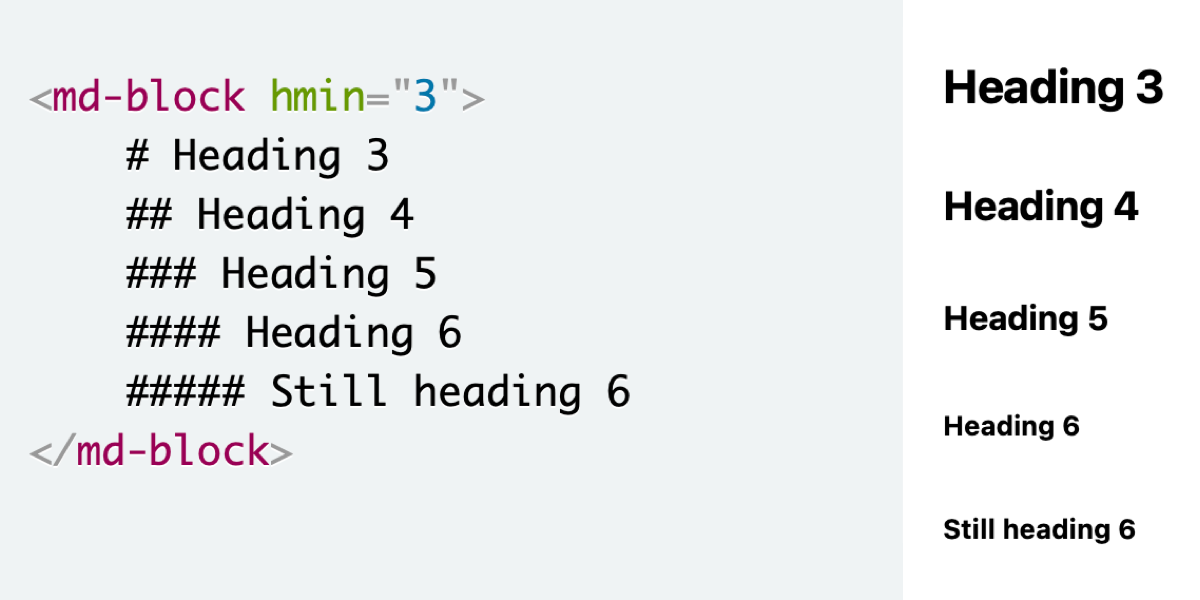
Lea Verou made a Web Component for processing Markdown. Looks like there were a couple of others out there already, but I agree with Lea in that this is a good use case for the light DOM (as opposed …