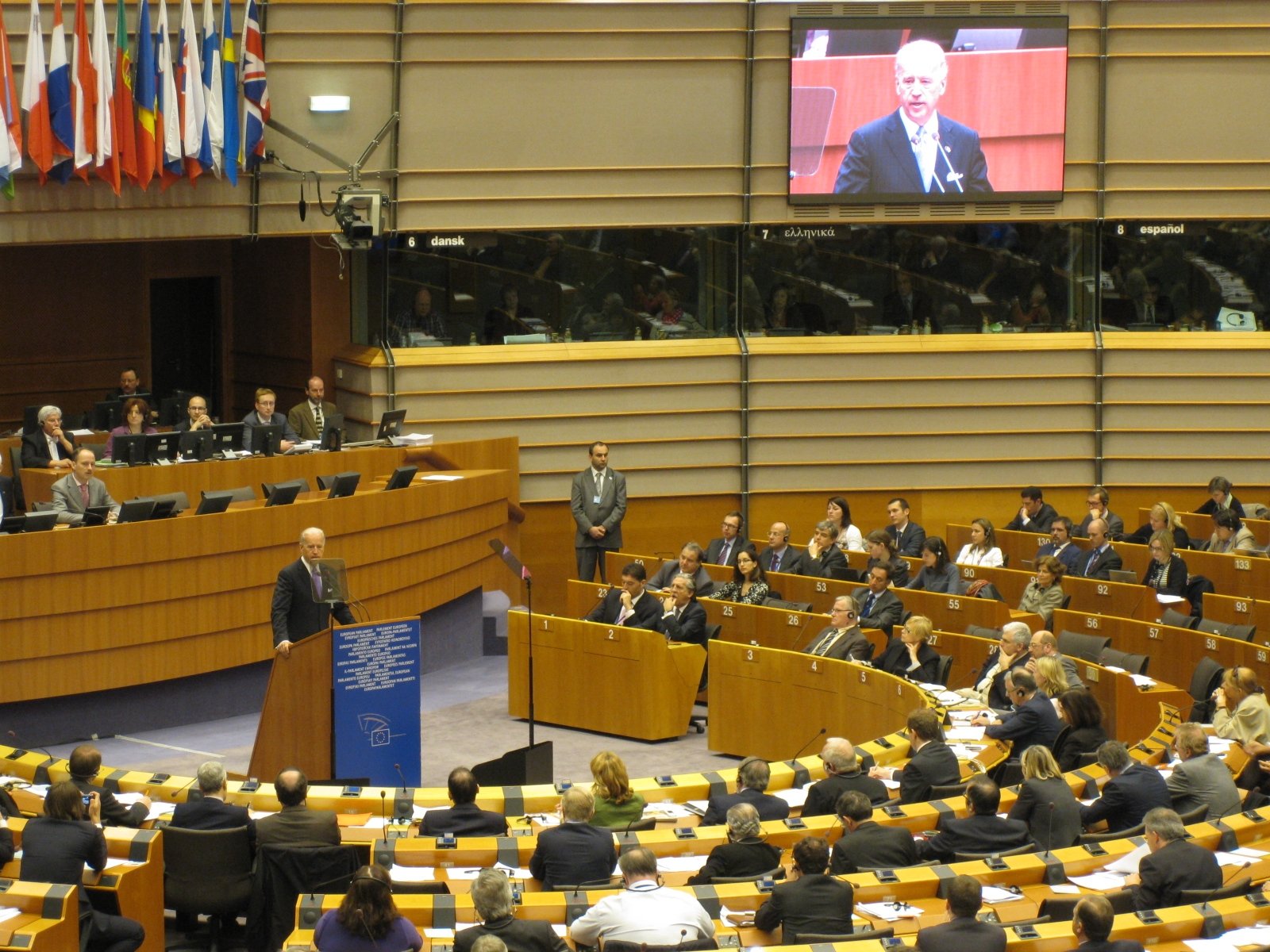
In a highly-anticipated speech to the European Parliament on Thursday (6 May), US vice-president Joe Biden went to great lengths to reassure MEPs of Washington’s commitment to civil liberties and privacy rights, wooing their support for a new anti-terrorist bank data deal after they rejected an earlier one in February.
Recognising the “new powers granted to this parliament by the Lisbon Treaty,” Mr Biden was the first top US official in 25 years to formally address the plenary session of the EU legislature since then-president Ronald Reagan spoke to MEPs in 1985.
He spared no compliments on the history of EU institutions, with the bloc set to mark on Sunday the 60th anniversary of the Schuman declaration, the key document which laid the foundation of what was later to become the European Union.
Brussels has a “legitimate claim” to the title of “capital of the free world,” normally a title reserved for Washington, Mr Biden said. It is a “great city which boasts 1,000 years of history and serves as capital of Belgium, the home of the European Union and the headquarters of Nato.”
Time and again he reassured MEPs of America’s strong desire to have Europe as a “strong partner,” even if they sometimes disagree.
The main source of current friction with the EU legislature is the “Terrorist Finance Tracking Programme” (TFTP), sometimes called the Swift agreement due to the name of the main company facilitating international bank transactions, which the US authorities screen when looking for terrorist leads.
Back in February, the European Parliament struck down an interim agreement allowing US investigators to inspect European data, dealing a blow to Washington’s last-minute lobbying efforts. The No-vote was an expression of the new powers acquired by the EU legislature in the field of justice and home affairs, and was also justified by concerns on privacy and civil liberties.