
Kalshi's CEO Wants 1 Set of Rules. The States Want 50.
Tarek Mansour argues prediction markets can police insider trading themselves, but regulators still see a gambling app.

Tarek Mansour argues prediction markets can police insider trading themselves, but regulators still see a gambling app.
Information regulation is not the way to stop online hoaxes. But that doesn’t mean we should stop searching for the truth.
Plus: How to be more secure in an age of AI hacking, more Trump administration corruption allegations, Virginia Democrat indicted for marijuana scheme, and more...

"Keep AI unregulated," the Argentine president wrote in support of his proposed plan to boost artificial intelligence.
Do as he says, not as he does.
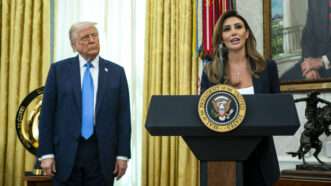
Plus: The internet nearly crashed, the White House keeps threatening media outlets for doing their jobs, and more...
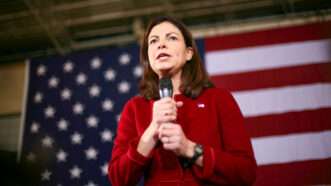
Gov. Kelly Ayotte urged X to kick out the Libertarian Party's former New Hampshire affiliate. The next day, the account was suspended.


Britain's regulator says Microsoft's products are “useful,” “secure,” and “good value for money.” Apparently, that’s a problem.
Even though its claims about job loss and safety don't hold up, the group has convinced the likely next mayor of D.C. to slow Waymo's development.

Meta's AI glasses carry privacy risks, but for blind veterans, they fill a gap that the government has failed to address.
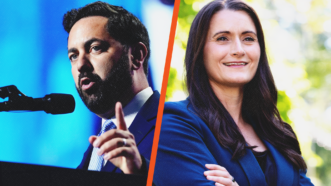
Republican incumbent Mike Lawler and Democratic challenger Cait Conley are trying to tie each other to the AI industry and data centers.

Brazilian economist Fernando Ulrich discusses Bitcoin's challenge to state-controlled money, the AI boom's impact on crypto, and Javier Milei's economic reforms.

The high-concept documentary from Nathan Fielder and Lance Oppenheim offers surprising generosity to a Big Tech villain without fully excusing her crimes.


Let's unpack the latest dystopian tech news—and German cops' dystopian response.
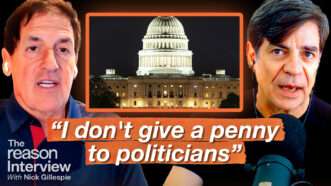
Billionaire entrepreneur Mark Cuban discusses breaking up Big Medicine, why he wants to abolish political parties, and how Ayn Rand shaped his views on capitalism.
Car-tracking cameras, like cellphones, generate vast amounts of sensitive data.

If the former ambassador tried to use her office for personal gain, she was only imitating her boss.

This smug, simplistic film blames Facebook for all that's wrong with the world, ignoring the messy reality of humans and politics.
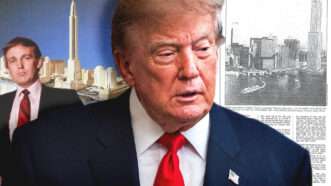
The president stands out from his modern predecessors by openly displaying his contempt for the First Amendment.

The company’s spectacular IPO obscured a quieter breakthrough that could transform satellite communications.
AI executives are planning for a public revolt after a major attack. A federal power grab is the wrong response.
The AI company's decision might be a justifiable idea. But it appears it was made for the wrong reason.

The world’s largest research funder asked its grantees whether it should audit them. Guess what they said.
It’s a small victory for financial privacy against escalating surveillance.

Robby Soave and Christian Britschgi weigh in on the Russian plague, whether superintelligence is sentient, and Tucker Carlson's shaky grasp of history.
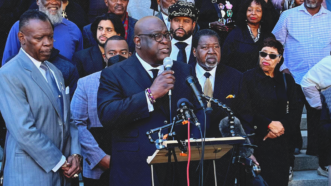
Unions rallied against a D.C. robotaxi bill that already favors them. Riders would pay for their win in higher fares and more dangerous roads.
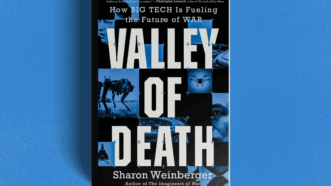
An influx of military spending has been moving tech companies away from serving consumers and back toward chasing government contracts.
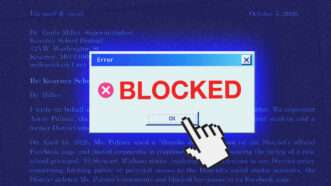
Annie Palmer was banned from the district's Facebook page for expressing her displeasure at the hiring of a new elementary school principal.

The senator wants to “triple union density by 2035” and pay for a host of social welfare programs with new taxes on data centers and AI companies.
Giving patients, and markets, more power in the healthcare system leads to better results.
The automated license plate reader system is “a type of indiscriminate mass surveillance," says a federal judge.
One line in a user agreement could bring every trade on a crypto exchange under federal oversight.
Nobel Prize–winning economist James Heckman discusses what really drives economic mobility, the failures of universal preschool, and how AI is transforming his research.

Plus: Ketamine deep dive, failed Oura IPO, Ray Dalio's warning, and more...

A judge blocked a rule that would have required adult sites to block VPNs or age-check the world.
Progress has always required accepting risk.

The perils of blaming screens for everything

Plus: Tennessee botches the execution of Christa Pike, and Sam Altman says the benefits of AI are worth the risks.
Property rights in space will attract investment, prevent space serfdom, and allow competition to flourish off-world.
Frances Haugen, the woman whose Facebook revelations inspired The Social Reckoning, argues that the real danger of social media isn’t bad speech—it’s the way the platforms are designed.

Algorithms and short-form video drove engagement. They also made it easier to quit.

Social media use is declining, and what's left has shifted from conversation to passive scrolling.

The bill’s “duty of care” could pressure platforms to suppress lawful speech in the name of protecting children.
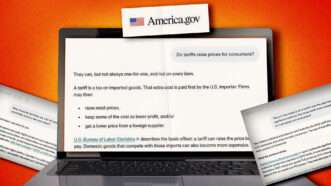
America.gov says that tariffs "can raise the price buyers pay. Domestic goods that compete with those imports can also become more expensive."


New from Reason: a look into what Javier Milei has accomplished and what it will take to make the most of Argentina’s window for real change. Out now for subscribers.


