
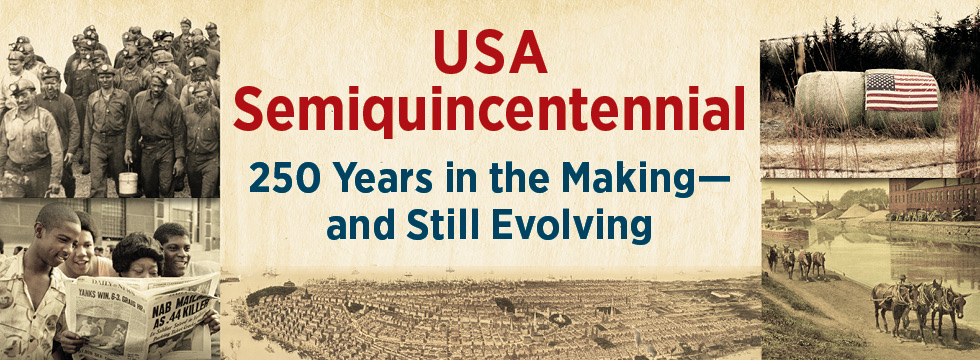
What Builds a National Culture?
The forces that shape a society rarely follow a straight path. The culture of a nation emerges as people create communities, exchange ideas, challenge assumptions, preserve traditions, and push for change. Across generations, they negotiate questions of belonging, identity, freedom, and power.
As the United States commemorates 250 years, we invite our readers to explore the lived experiences that continue to influence our culture and institutions. Collectively, this content considers how our society adapts to change, responds to conflict, builds communities, and redefines culture across generations.
Save 25 percent on your order July 1 through July 31 with code USA250 at checkout.
On the Columbia University Press blog
These reading lists and blog posts examine immigrant foodways, religious life, labor movements, civil rights activism, urban transformation, and other forces that have shaped our society. It encourages us to consider how the past informs the present and how today’s choices shape the future.
Check back weekly for new reading lists and blog posts throughout the month of July.
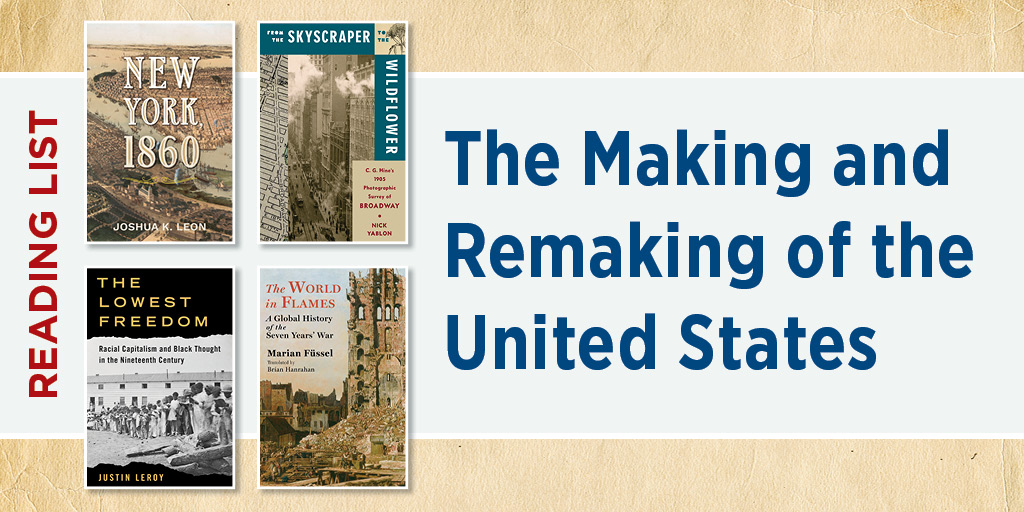
The books in this reading list trace the making and remaking of the country across centuries, revealing that the history of the United States has never been singular or settled.

Joshua K. Leon discusses why New York City stood at the center of the Civil War crisis and what the turbulent months before the conflict reveal about the nation.
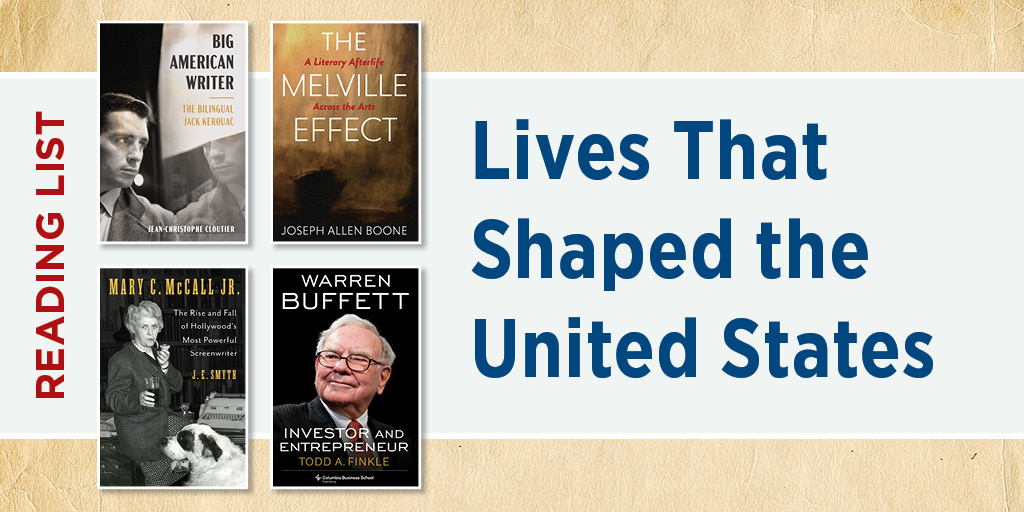
The books in this reading list include figures who transformed how Americans understood democracy, art, race, education, business, celebrity, and public life.

Mark S. Ferrara discusses how Black workers along the Erie Canal faced discrimination, displacement, and exclusion while shaping New York's economic growth.
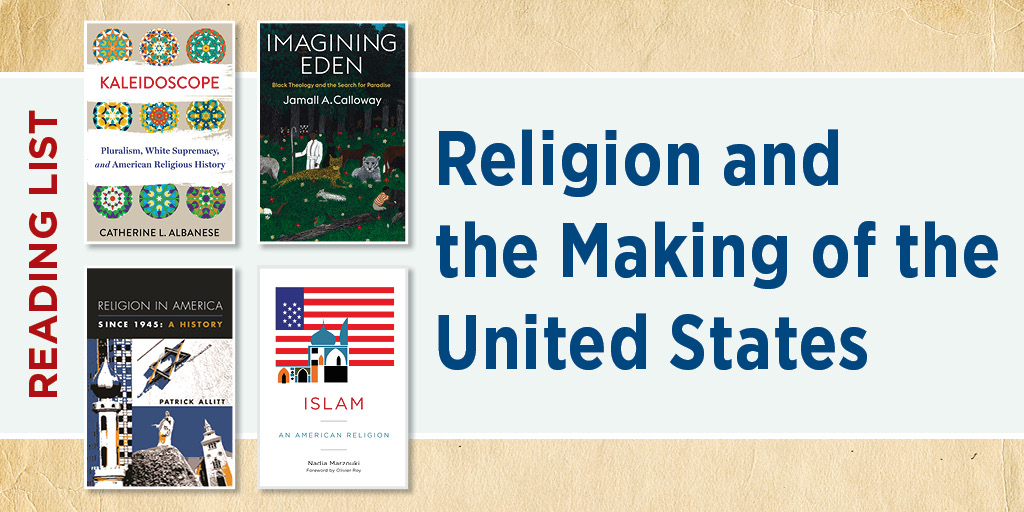
The books in this reading list include figures who transformed how Americans understood democracy, art, race, education, business, celebrity, and public life.

Justin Leroy discusses how nineteenth-century Black thinkers challenged narrow definitions of freedom and argued that economic justice was essential to emancipation.

This reading list explores how food has shaped the United States through histories of migration, culture, religion, trade, and the people behind every meal.

Karima Moyer-Nocchi traces how macaroni and cheese reveals histories of labor, authorship, migration, and Black culinary traditions in the United States.

Victoria D. Stubbs shares six principles for creating brave therapeutic spaces that foster vulnerability, trust, and meaningful dialogue across differences.

The five foods explored here offer a taste of the larger story Rubel tells about how culinary traditions evolve when communities bring their recipes, memories, and cultures together.
The Columbia Granger's World of Poetry
This July, as the United States marks 250 years as a nation, The Columbia Granger’s World of Poetry brings you poems each day that salute our history of independence and acclaim our ideals of freedom and equality. We will bring you cherished favorites such as Ralph Waldo Emerson’s (1803–1888) “Concord Hymn”—“Here once the embattled farmers stood /And fired the shot heard round the world.” In addition to poems that remember revolutionary America, we’ll bring you poems that celebrate the values enshrined in the Declaration of Independence and its vision of America, such as this poem called “America” by Walt Whitman’s (1819–1892):

Centre of equal daughters, equal sons,
All, all alike endear’d, grown, ungrown, young or old,
Strong, ample, fair, enduring, capable, rich,
Perennial with the Earth, with Freedom, Law and Love,
A grand, sane, towering, seated Mother,
Chair’d in the adamant of Time.
Perhaps no one has defined the nature of equality better than Whitman, in another poem called “Thought”:
Of Equality—as if it harm’d me, giving others the same chances and rights as myself—as if it were not indispensable to my own rights that others possess the same.

John Greenleaf Whittier (1807–1892) considered that there was no better demonstration of equality than the right to vote, as he memorializes in his poem “The Poor Voter on Election Day”:
The proudest now is but my peer,
The highest not more high;
To-day, of all the weary year,
A king of men am I.
To-day alike are great and small,
The nameless and the known;
My palace is the people’s hall,
The ballot-box my throne!

Former poet laureate Kay Ryan (b. 1945) in her poem “Atlas” explores with characteristic wit and brevity what happens when one person, king-like, thinks he can do everything himself:
Extreme exertion
isolates a person
from help,
discovered Atlas.
Once a certain
shoulder-to-burden
ratio collapses,
there is so little
others can do:
they can’t
lend a hand
with Brazil
and not stand
on Peru.

In the section called “Grammar” of Tracy K. Smith’s (b. 1972) sequence “History,” we are reminded that even language can serve to divide and exclude, as well as include:
There is a We in this poem
To which everyone belongs.
As in: We the People—
In order to form a more perfect Union—
And: We were objects of much curiosity
To the Indians—
And: The next we present before you
Are things very appalling—
And: We find we are living, suffering, loving,
Dying a story. We had not known otherwise—
We’s a huckster, trickster, has pluck.
We will draw you in.
This July, allow yourself to be drawn in by the exuberant variety of poetic voices as we celebrate and reflect on America’s big birthday.
