-
-
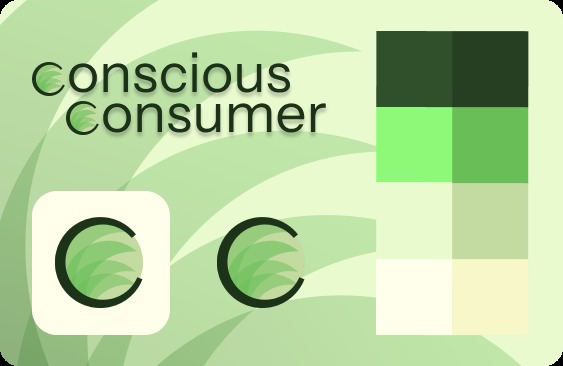
Conscious Consumer Branding

Inspiration
The inspiration for my project came from multiple sources. Initially, I was inspired by Love of Earth Co, an online retail store that sells sustainable, zero-waste products. As someone who chooses to live an environmentally conscious lifestyle, I wanted to create a product that encourages others to do the same.
During the brainstorming phase, I reflected on the mobile app Yuka, which allows users to scan food products and receive health ratings based on various factors. This concept sparked the idea of developing a similar application, but with a focus on sustainability rather than health.
What it does
Conscious Consumer is an eco-conscious mobile app designed to inform and influence users to adopt sustainable practices. It evaluates everyday products through a custom sustainability scale, helping users make more informed decisions.
Main Features
Barcode Scanner
Users can access the barcode scanner through the navigation bar, allowing them to scan product barcodes and retrieve information using APIs and databases.
Sustainability Scale
Each scanned product is rated on an AI-powered sustainability scale, which assigns a maximum score of 30 points based on environmental impact.
- Product Packaging (0-10 points): Assesses how recyclable, reusable, or wasteful a product’s packaging is. This includes whether the packaging is made from sustainable materials or contributes to excessive waste. Products with biodegradable, compostable, or fully recyclable packaging score higher.
- Production Carbon Footprint (0-10 points): Analyzes the environmental impact of the product’s manufacturing process. This includes factors such as energy consumption, greenhouse gas emissions, and water usage. Products from companies that prioritize renewable energy and carbon-neutral production receive better ratings.
- Material Transparency (0-10 points): Evaluates the product’s core materials, focusing on ethical sourcing and sustainability. This includes detecting the presence of harmful substances like microplastics or unsustainable ingredients. Products made from organic, fair-trade, and responsibly sourced materials score higher.
Waste Tracker
The waste tracker helps users monitor their monthly waste output. When scanning or searching for products, users can add them to their tracker, where items are categorized into three waste types:
- Recycle
- Landfill
- Compost
Every month, an AI-generated summary compares the current waste data to the previous month, highlights areas for improvement, and suggests alternative solutions.
Disposal Education
Provides information on how to properly dispose of each product.
Additional Education
AI-curated third-party articles and links offer insights into sustainable practices and the importance of eco-friendly choices. Content is tailored to either the product scanned or the user's waste tracker data.
How we built it
Conscious Consumer is built primarily through Figma. Some branding elements were also created in Adobe Illustrator.
Challenges we ran into
One major challenge from this project was discovering that testing my prototype through Maze was not the most efficient way to gather user data. The biggest implication was that my Figma prototype does not properly adjust to mobile browsers. The URL and browser navigation bars reduce the available screen space, making it difficult to view the prototype as intended.
With the deadline approaching, I quickly pivoted by asking users to complete the survey on a computer browser rather than a mobile device. This allowed enough space for a phone mockup to be generated, enabling users to interact with the prototype on a simulated phone screen. However, the Maze-generated mockup was small and difficult to see, hindering the user experience. Additionally, requiring users to take the survey on a computer significantly reduced participation.
Recognizing that only a few users would successfully complete the survey, I decided to observe one participant instead. This allowed me to gain deeper insight into usability challenges firsthand rather than relying on unobserved survey responses from multiple users.
Accomplishments that we're proud of
One accomplishment I am proud of is Conscious Consumers’ branding and logo design. I typically create simple, minimalist designs, but I wanted to challenge myself by incorporating more creativity and color. I am very happy with the finished product.
I am also proud of the effort I put into understanding my users. Before designing any wireframes, I conducted a survey to gain insight into my target audience and asked what features they were looking for. This process was invaluable in shaping the core functionalities of the project.
What we learned
My biggest takeaway from this project is understanding the do's and don'ts of user testing. I attempted a new approach by conducting surveys through Maze, but encountered several difficulties that hindered the testing outcome. While Maze may be better suited for website prototypes, it was not the right fit for Conscious Consumer.
Moving forward, conducting a think-aloud protocol would be more effective than traditional surveys. This method would allow users to test the prototype directly within the Figma app, experiencing the interface as it would appear on a mobile device. I could then observe their reactions and frustrations in real-time, gaining more valuable insights.
Additionally, I am now motivated to reach out to my network and conduct further research on effective testing methods for mobile app prototypes.
What's next for Conscious Consumer
The next steps for Conscious Consumer are conducting more user testing to perfect the user experience, followed by development, both frontend and backend.
Built With
- figma


Log in or sign up for Devpost to join the conversation.