Labor Unions Hate Robots—and It's Stopping Democrats From Delivering on Affordability
Labor unions almost always value union jobs over technologies that save time, money, and lives.

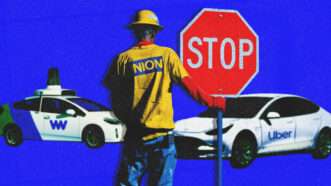
Labor unions almost always value union jobs over technologies that save time, money, and lives.

Robby Soave and Christian Britschgi discuss Donald Trumps' nothing-burger primetime address.
A new report from Meta's Oversight Board.

Journalist Michael Tracey and professor Marcella Szablewicz debate the Epstein scandal and the public reaction to the files.

The E.U. pulls ahead of the U.S. in the creepy international automobile surveillance race.

Tech companies may soon have to comply with yet another U.K. regulation.

The U.S. government has used private ad data to get around the Fourth Amendment. Now foreign enemies are turning it into a weapon.

It's coming faster than you might think.

Spencer Greenberg discusses the science of self-improvement, why our thoughts and emotions can mislead us, and what it really takes to change.

Gov. Kathy Hochul’s one-year moratorium buys time for the state to create a convoluted regulatory regime.

They can also search it without a warrant if you're flying abroad. Yes, even if you're an American citizen.

Researchers studying the history of the universe have captured the largest-ever high-resolution 3D map of the cosmos.

Since the beginning of his first term, the president has repeatedly used his office for personal gain.

Neil Gorsuch proposes an alternative to a Fourth Amendment standard that has proven to be an unreliable safeguard against government snooping.

The anti-social media crusaders have popular support. That should worry online freedom advocates.

Plus: The Democrats' Project 2029 would ban minors from social media, the Supreme Court protects private data in geofence warrant ruling, and more...

Plus: Democrats taking a new tack, the popularity of social media bans, an influencer correspondent, and more...

A Trump memo revives debate over the right to repair.


AI anxiety is widespread, but American students are best placed to succeed.
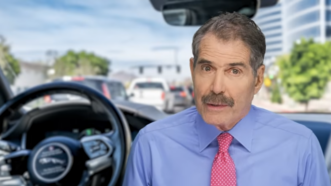
Data show that Waymo has far fewer bodily injury and property damage claims. So why do some politicians oppose it?

A look back on a year of immigration enforcement expansion funded by the OBBBA.
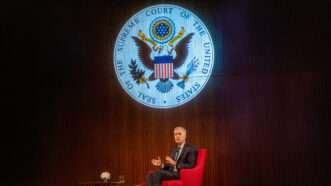
The justice criticizes the Court’s endorsement of coercive plea bargaining and its embrace of dubious Fourth Amendment doctrines.
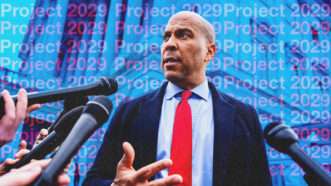
Semafor reported on Project 2029’s "Kids Over Clicks" proposal, which outlines Democrats' plans to regulate social media and AI companies.
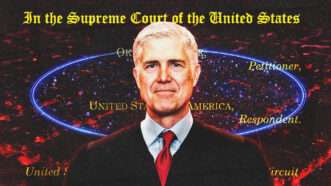
The justice argues that the "reasonable expectation of privacy" test and the third-party doctrine are indefensible in theory and unworkable in practice.

Federal law can punish true threats, and doxing intended to facilitate violence. But this woman simply named a government agent, which is not a crime.

Plus: A federal flip-flop on AI innovation, the beauty of America as seen through World Cup tourists' eyes, and more...

When I got pregnant, my quest for optimization got weirder and more wonderful.
AI doctors are bringing affordable medical care to Utah. Skeptics are now trying to slow it down.

Rescheduling marijuana will make it easier to study a drug that tens of millions of Americans already use.

Anthropic and OpenAI may not like current federal controls on their products, but it will be consumers who end up getting screwed.

Pamela Hobart of G.T. School says a lot of schools are lying to parents.

Jack Clark discusses Anthropic's regulatory fights, the possibility of recursive self-improvement, and how AI could reshape the economy.
The Supreme Court could be poised to decide whether it's you or Big Tech companies.

The court said the law—which would require age verification for everyone—constitutes only a “marginal burden” and "does not raise meaningful concerns about muting valuable protected discourse."

After burning through interceptors in the Iran war, the U.S. faces a dire math problem: Enemies can build drones faster than America can build missiles.
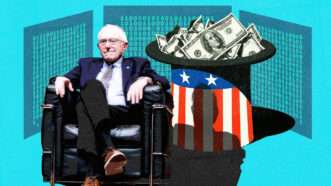
The Vermont senator's American A.I. Sovereign Wealth Fund Act would also create an entirely new regulatory regime for the tech industry.

Anti-technology activists have blocked the adoption of Golden Rice, which is genetically enhanced to produce the vitamin A precursor beta-carotene, for over two decades.

The recently reintroduced American Innovation and Choice Online Act is a departure from America’s current antitrust regime, not an improvement.

The U.K. says tech companies have three months to stop minors from sending or receiving nude images—and universal identity checks for phone users may be the only way forward.

Government agencies would have to report communications and could be sued for bullying.

A proposed FCC rule would require Americans to share more personal information with phone service providers. Bye, bye burner phones?

Congress cannot sit by and hope for AI to fix the deficit.

Britain is following Australia into a policy that has already struggled to keep children off social media, while forcing adults through intrusive age checks.

The government says this is about national security. But given the history—and ongoing litigation—between the White House and Anthropic, something more may be going on.
Celebrate your independence with a subscription to Reason magazine, your most trusted source of honest, insightful news and analysis.





