Power your payment flows with stablecoins.
Transak is the payments infrastructure that connects traditional money with stablecoins and crypto.
Through a single API, wallets, fintechs, remittance companies, payroll platforms, marketplaces, and financial institutions can enable
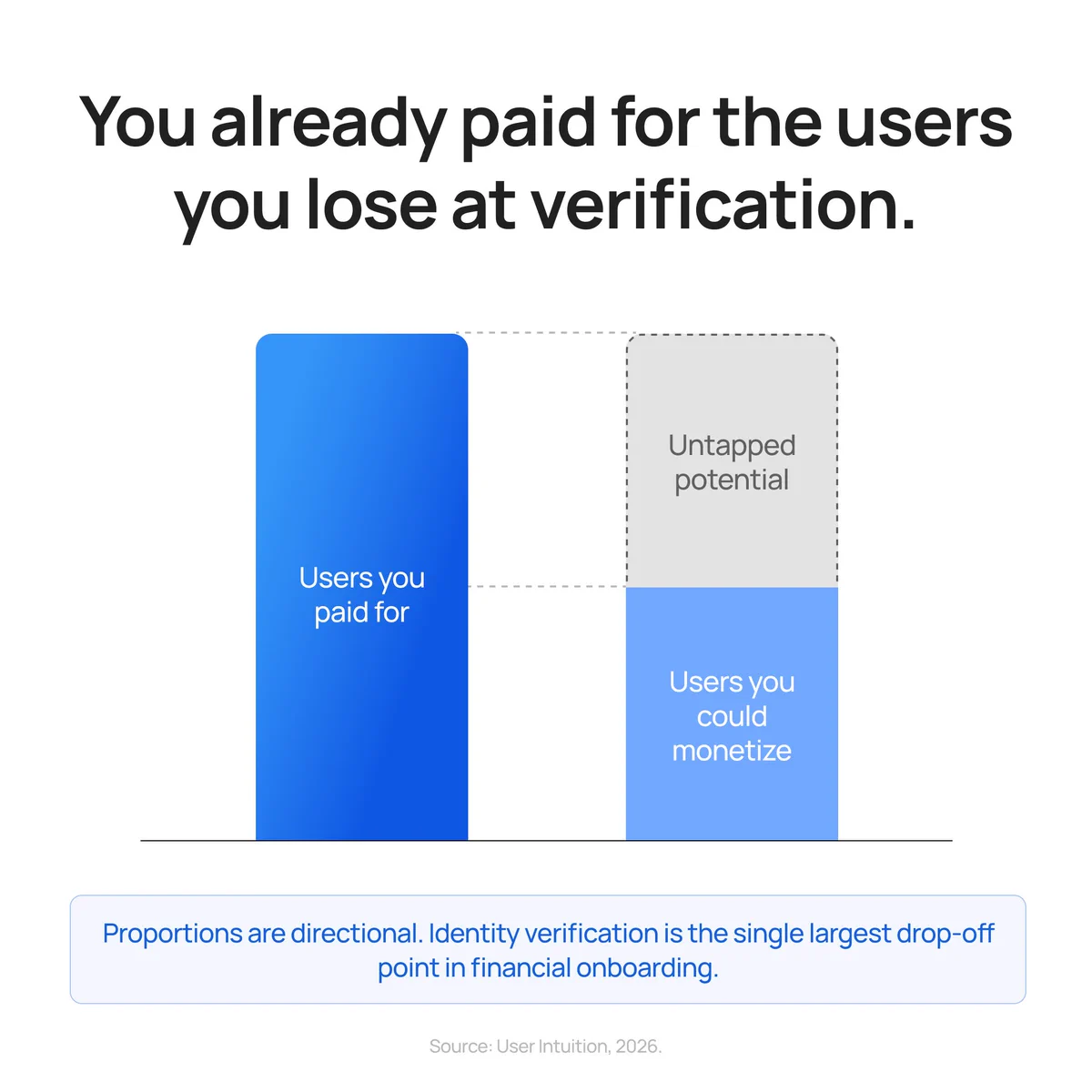
Your most expensive users are not the ones who never signed up.
They are the ones you acquired, who then vanished at the identity check.
A user clicks the ad, starts the signup, reaches the ID-verification step, and… disappears.
You already paid the acquisition cost for that
Before you jump onto the stablecoin bandwagon, ask, "Do my users need to hold stablecoins or just benefit from them and not have to learn a new concept?"
In the first, the stablecoin is the user-facing asset.
This is ideal for the digitally-native who know their way around
Big moment for the team.
Our Co-Founder and CEO @SamiStart has been featured in Stablecoins Most Influential 2026 list by @thestablecon.
The list recognizes people and teams shaping the future of the global stablecoin ecosystem.
Sami has spent several years building the
The most interesting thing about blockchain payments is how ordinary the goal has become.
What was once a logistical and compliance nightmare is now "just another form of money" moving from one place to another, on a rail that settles faster or cheaper than the alternative.
In
Asking your team to take on the burden of payments, compliance, licensing, and delivery, in every market your app serves will hurt your bottom line if you are not a payments company by DNA.
Transak lets any app offer crypto without becoming a payments company.
The walkthrough
Wallets are becoming money apps and every extra step in the user onboarding process is a potential drop off point for users.
In most wallets, buying crypto still means leaving the app: a pop-up, a third-party redirect, a repeated KYC check, fees you cannot see clearly.
What does it take to do well at a company building the payment rails behind hundreds of apps worldwide?
We put that question to @NFT_Arda, Senior Business Development Manager at Transak, and let him talk.
🎥 Watch below.
In this conversation, he gets into:
→ The kind of person who thrives here
→ The challenges the work brings, and why they're worth it
→ How his role and the company have changed over his time at Transak
→ What he's most excited about right now, from the product to where this
For institutions moving value between fiat and digital assets, infrastructure is judged on two things:
1️⃣) settlement speed, and 2️⃣) settlement certainty.
On-ramp and off-ramp both carry that standard.
But the off-ramp (converting digital assets back into spendable fiat) is
Expanding into new markets for fintech companies like neobanks and remittance apps traditionally meant months of work and millions in costs.
And that's before they process a single transaction.
Stablecoin rails backed by regulated infrastructure can potentially cut that
'Nobody wakes up wanting to use a crypto application.'
That's @SamiStart at @consensus2026 in Miami talking to @BlocksterCom, and it cuts to the core of what's changing.
Blockchain and stablecoins are backend infrastructure. Not consumer products or a lifestyle brand.
Want
Our Co-Founder and CEO, @SamiStart, recently spoke with @sobradob at @Forbes about the growing role of stablecoins in global payments infrastructure.
One of the key themes from the conversation was that stablecoin adoption is increasingly being driven by real world utility, not
Onboarding is the entire product for a first-time crypto user.
The moment a user thinks about seed phrases or gas fees, you've lost them.
The hard part isn't the blockchain. It's making the blockchain invisible. KYC, funding flows, compliance, licensing across jurisdictions.
People often put stablecoins and crypto assets (like Bitcoin) in the same bucket.
In reality, they are distinct products solving a different problems.
Bitcoin behaves more like an asset.
Stablecoins behave like cash that moves at internet speeds.
Most of the interesting