
Check out these books about fashion and fashion icons!

Image

Yesterday, I ran a program at work about fashion and fashion icons and we had so much fun talking about designers, how styles have changed over the decades, and what the current trends are! I shared a bunch of books from our library and that got me thinking about how many I want to read. These looked interesting and I thought you might like them too!

Links and descriptions from Amazon.

The House of Worth: The Birth of Haute Couture by Chantal Trubert-Tollu

Image

Arriving in Paris in 1845, at the age of twenty and with only a few francs in his pocket, Charles Frederick Worth would go on to build the most prominent, innovative, and successful fashion house of the century. He was inspired by a love of fine art, luxurious fabrics, and his vision of the female ideal, and was the first to set out to dictate new styles and silhouettes to his elite clientele―not the other way around. He hosted them in his rue de la Paix salons, which included groundbreaking sportswear and maternity departments as well as silk, velvet, and brocade rooms, and a special salon with closed shutters and gas lighting designed to allow clients to try on ball gowns in lighting conditions precisely matched to those of the event at which they would be worn.

Queen of Fashion: What Marie Antoinette Wore to the Revolution by Caroline Weber

Image

When her carriage first crossed over from her native Austria into France, fourteen-year-old Marie Antoinette was taken out, stripped naked before an entourage, and dressed in French attire to please the court of her new king. For a short while, the young girl played the part.

But by the time she took the throne, everything had changed. In Queen of Fashion, Caroline Weber tells of the radical restyling that transformed the young queen into an icon and shaped the future of the nation. With her riding gear, her white furs, her pouf hairstyles, and her intricate ballroom disguises, Marie Antoinette came to embody–gloriously and tragically–all the extravagance of the monarchy.

Coco Chanel: The Legend and the Life by Justine Picardie

Image

Coco Chanel was an extraordinary inventor, conjuring up the little black dress, bobbed hair, trousers for women, contemporary chic, bestselling perfumes, and the most successful fashion brand of all time. But she also invented herself, fashioning the myth of her own life with the same dexterity as her couture; and what lies beneath her own glossy surface is darker, more mysterious, and far more intriguing.

Uncovering remarkable new details about Gabrielle Chanel’s humble early years, Justine Picardie picks up the legend Chanel where it began—in orphanhood and poverty. Throwing new light on her passionate and, at times, dark relationships and providing profound insights into her connections with Cocteau, Diaghilev, Picasso, and Dali, this beautifully constructed portrait gives a fresh and penetrating look at what made Coco Chanel the strong-spirited and powerful presence she became.

Dressing the Decades by Emmanuelle Dirix

Image

An authoritative and visually stunning look at the fashion of the 20th century, Dressing the Decades examines in depth the origins of the most important luxury garments. Each sumptuously illustrated chapter features a detailed overview of a particular decade, including the historical events, politics, technology, and advertising that inspired its most celebrated designs. By offering a thorough socio-economic context for the progress of high fashion through the years, the book provides a new perspective on such iconic items and significant trends as the cocktail dress, the Chanel suit, the tunic dress, boho chic, Futuristic chic, and others.

From the pink gingham pants and pastel-yellow overalls of a sacrificial lamb, to the sexy Versace revenge dresses, power suits, and bicycle shorts of a free woman, British fashion journalist Eloise Moran has studied thousands of pictures of Princess Diana. She soon discovered that behind each outfit lay a carefully crafted strategy: What Lady Di couldn’t express verbally, she expressed through her clothes.

The Lady Di Look Book: What Diana Was Trying to Tell Us Through Her Clothes by Eloise Moran

Image

Diana’s most show-stopping―and poignant―outfits are all here in The Lady Di Look Book, incisively decoded. Moran sees things no one has before: Why, for example, did Diana have a rotating collection of message sweatshirts? Was she mad for plaid, or did the tartan have a deeper meaning? What about her love of costume jewelry on top of the tiaras and oval sapphire engagement ring? With new interviews from some of the people who dressed Diana, Moran’s book is both a record of what Diana wore and why she wore it―and why we are still obsessed with Lady Di.

Christian Dior: Destiny by Marie-France Pochna

Image

In 1947, when Christian Dior’s model spun her wasp-waisted skirt and tipped a hat over one eye, the iconic designer became an instant celebrity. His groundbreaking New Look was quintessentially Parisian—the perfect combi­nation of fanciful and elegant that glorified the female form and seduced his international clientele.

Yet it was by mere chance that Dior—hapless in the face of personal and professional tragedy—met a friendly priest who helped him to rebuild his faith and to find the strength to chart his glorious destiny. He went on to upend the downtrodden postwar era with his joie de vivre and his pursuit of a single goal: to make women “not only more beautiful, but happier” through the proportions of his marvelous designs and a color palette that reflected the Parisian sky. Today, the legacy of this witty yet staunchly private man shines on as his intuitive creativity continues to inspire the House of Dior’s designers to reinvent the woman of tomorrow.

In the Name of Gucci: A Memoir by Patricia Gucci

Image

Patricia Gucci was born a secret: the lovechild whose birth could have spelled ruination for her father, Aldo Gucci. It was the early 1960s, the halcyon days for Gucci—the must-have brand of Hollywood and royalty—but also a time when having a child out of wedlock was illegal in Italy. Aldo couldn’t afford a public scandal, nor could he resist his feelings for Patricia’s mother, Bruna, the paramour he met when she worked in the first Gucci store in Rome. To avoid controversy, he sent Bruna to London after she became pregnant, and then discretely whisked her back to Rome with her newborn hidden from the Italian authorities, the media, and the Gucci family. 

In the Name of Gucci charts the untold love story of Patricia’s parents, relying on the author’s own memories, a collection of love letters and interviews with her mother, as well as an archive of previously unseen photos. She interweaves her parents’ tempestuous narrative with that of her own relationship with her father—from an isolated little girl who lived in the shadows for the best part of a decade through her rise as Gucci’s spokesperson and Aldo’—s youngest protégé, to the moment when Aldo’s three sons were shunned after betraying him in a notorious coup and Patricia—once considered a guilty secret—was made his sole universal heir. It is an epic tale of love and loss, treason and loyalty, sweeping across Italy, England and America during the most tumultuous period of Gucci’s sixty years as a family business.

Thanks for visiting—come back soon!

In case you missed them: 6 months of book reviews

It’s hard to believe we are half-way through 2026 and I’ve read some great books so far! In case you missed them, here are my book reviews for the first half of the year:

Close to Death by Anthony Horowitz 4.5 stars: I really enjoyed this clever murder mystery set in Riverview Close, a small and exclusive locked-gate neighborhood outside London. It’s full of interesting characters and plenty of red herrings to keep you guessing!

My Brilliant Friend by Elena Ferrante 4.5 stars: Great for readers who like sagas about families and friendship. Originally published in 2011, the book is the first of Ferrante’s four Neapolitan novels spanning sixty years.

We Begin at the End by Chris Whitaker 4.5 stars: A terrific story set in the coastal town of Cape Haven, California. Full of complex characters who must navigate the challenges of love, family, grief, trauma, and moral decisions.

The Witch Elm by Tana French 3.5 stars: Standalone psychological crime novel set in Dublin. In this story, the effects of post traumatic stress disorder influence the main character’s ability to remember key events relating to a murder.

Heartwood by Amity Gaige 4 stars: Suspenseful read about the search and rescue efforts of a missing hiker on the Appalachian Trail in Maine. The author combines the genres of a police investigation with an in-depth look at marriage and family relationships, and the story features several female characters who must face unresolved problems with their own mothers.

A Very Typical Family by Sierra Godfrey 3.5 stars: A quick and light read about estranged siblings who must come together to save their family home. The author shows how even the most complicated relationship problems can be resolved.

The Correspondent by Virginia Evans 3 stars: Epistolary novel about a bristly elderly woman who wants to be connected to others, but can only do so through letter-writing. Not my favorite, but definitely readable and good for a book club.

Behind Closed Doors by B. A. Paris 3.5 stars: Domestic thriller about a woman who seems to have the perfect marriage, but the truth of their relationship is locked inside their beautiful home. A solid story that keeps moving, a book you can read on a plane or the beach and not have to concentrate too much!

The Rebel Romanov, Julie of Saxe-Coburg, The Empress Russia Never Had by Helen Rappaport 4 stars: Narrative nonfiction about Julie of Saxe-Coburg, how she fit into the Romanov dynasty, and what happened to her. Great for readers who like European history and royal intrigue

Marjorie Morningstar by Herman Wouk 4 stars: Classic coming-of-age story about a young Jewish woman who wants to be a Broadway actress. This was a re-read from many years ago and I enjoyed it just as much!

The Irish Goodbye by Heather Aimee O’Neill 3 stars: Referring to the act of leaving without saying goodbye, a story about confronting a family tragedy from years earlier. An engaging plot and a good book for travel.

The Woman in Suite 11 by Ruth Ware 3.5 stars: Ware’s follow-up to The Woman in Cabin 10, set ten years later. Travel writer Lo Blacklock finds herself in a dangerous situation when she attends a grand opening of an exclusive luxury hotel in Switzerland. A page-turner with plenty of bad decisions and red herrings, wrapped up in conflicting loyalties and interesting moral questions.

Isaac’s Storm by Erik Larson 5 stars: Terrific nonfiction narrative about devastating Hurricane Isaac in 1900 that demolished the fast-developing city of Galveston, Texas. Great for readers who enjoy learning about history and the people dealing with catastrophe.

Among Friends by Hal Ebbott 3 stars: Debut novel following the long friendships of two couples, now in their fifties, and their two teenage daughters. Everything changes when something really bad happens and the two couples must confront the multitude of negative thoughts they have been cultivating, particularly when true personalities and selfishness come to light.

A Marriage at Sea – A True Story of Love, Obsession, and Shipwreck by Sophie Elmhirst 4 stars: Excellent nonfiction account of a young adventurous couple whose boat sinks in 1972. They endure nearly four months in two rubber rafts, while fighting starvation, dehydration, dangerous waters, and intense feelings of depression and hopelessness.

“A” Is for Alibi by Sue Grafton 3.5 stars: The first in Sue Grafton’s alphabet series of detective novels, featuring private investigator Kinsey Millhone in the fictional city of Santa Teresa, California. A fast and entertaining read.

Saoirse by Charleen Hurtubise 3.5 stars: Story about a young artist, Sarah, who escapes an abusive home in Michigan and moves to Ireland under an assumed name. What will happen when Sarah’s past catches up to her?

London Falling by Patrick Radden Keefe 4.5 stars: Excellent nonfiction account of a teenage boy from London who died under strange circumstances in a fall off a luxury apartment balcony. Zac Brettler’s family learned that prior to his death in 2019, their nineteen-year-old son had been posing as the son of a Russian oligarch and was navigating a dangerous underworld.

I hope you’re having a nice weekend and have the chance to read something good!

Thanks for visiting—come back soon!

Book Review: Fox by Joyce Carol Oates

Image

Fox
by
Joyce Carol Oates

Rating: 3 out of 5.

Does anyone remember the book We Were the Mulvaneys? I read it a long time ago, when it was first published in 1996, and it was my first experience reading a book by Joyce Carol Oates, a highly regarded and award-winning author. She taught at Princeton University from 1978 to 2014 and now teaches at Rutgers University. I don’t remember a lot about We Were the Mulvaneys except that it was dark and depressing…but good! Since then, I’ve read two other books by the author, plus a short story, and I would say that they have all been dark and deal with violence, abuse and painful family issues. Oates is an excellent writer and that’s what made me return to read her latest book, Fox, published in 2025.

Fox is not a happy story and I had a hard time reading it because the author dives deep into sexual abuse and the mind of Francis Fox, an eighth grade English teacher and a serial pedophile at a remote private boarding school in New Jersey. He’s a charmer. Everyone loves him. The headmistress is smitten. Even though he’s a hard grader, he engages and encourages all his students in class. All the while, he’s identifying his female prey and grooming them during private sessions in his basement office.

When a local resident discovers Fox’s car and body amid a gruesome scene at a nearby nature preserve, everyone thinks it must have been an accident. But as details emerge, police investigators wonder if it was murder.

The story reads like a slow-burning mystery, casting doubt on several characters. In addition, Oates gets into Fox’s mind, as well as several other characters that figure predominantly in the plot, including the girls he’d been abusing. The author also jumps back to Fox’s previous teaching jobs, which ended abruptly. How was he never caught?

Oates also fills in the relationships, details, and whereabouts of many characters during the weeks leading up to Fox’s death, leading, very slowly, to the conclusion. In addition to sexual abuse, another theme gentrification, pitting the locals against the wealthy who have taken over much of the land.

I was exhausted after I read this 672-page book. And uncomfortable with both the subject and how the abuse was explained in great detail. Perhaps that’s the only way to truly understand what Fox was all about. I thought it was excessive. The only thing that mattered was that he was evil.

I’m giving it three stars because Joyce continues to be an excellent writer, but I don’t think I will read another of her books. They’re just not for me. On to the next book!

Have you read Fox or any other books by Joyce Carol Oates? Leave a comment and tell me what you thought.

I read We Were the Mulvaneys long before I started my blog, but here are my reviews of the other books and story I read:

Little Bird of Heaven

A Widow’s Story

“Where Are You Going, Where Have You Been?”

Thanks for visiting—come back soon!

Five books about life in early America

Image

Happy July 4th! In celebration of America 250, here are five books about life in early America.

The Frozen River by Ariel Lawhon: historical fiction that begins with the discovery of a body frozen into Maine’s Kennebec River and is based on the thirty-year-long journal of midwife Martha Ballard, a real person

The Hour of the Witch by Chris Bohjalian: excellent historical suspense set in 1662 Boston about twenty-four-year-old Mary Deerfield, who is desperate to get away from a violent marriage. Fearing for her life, she petitions for divorce and later plots an escape, while mounting evidence of witchcraft threatens to send her to her death.

The Last Pilgrim by Noelle Granger: a rich historical fiction about Mary Allerton Cushman, the last surviving passenger of the Mayflower

Fever 1793 by Laura Halse Anderson: Young Adult historical fiction about Mattie Cook, a fourteen-year-old girl living in Philadelphia during the Yellow Fever plague of 1793

Mayflower by Nathaniel Philbrick: comprehensive and scholarly nonfiction that begins with Mayflower’s voyagein 1620 and ends with the conclusion of King Philip’s War in 1676

Thanks for visiting—come back soon!

Book Review: The Autobiography of Benjamin Franklin

Image

The Autobiography of
Benjamin Franklin

Rating: 5 out of 5.

Being mostly a fiction reader, I wasn’t sure I would enjoy reading the Autobiography of Benjamin Franklin, but I was happily surprised to find Franklin’s memoir a remarkable and amusing record of time in America during the mid- to late 1700s. I also enjoyed refreshing my memory about the colonies before the American Revolution and the steps that led to independence.

But one of the most important things I learned was that Franklin was simply exploding with ideas to make life better in America. Both industrious and frugal, he knew how to succeed in many enterprises, including owning a printing shop, a newspaper, being a postmaster and establishing a library, a university, a hospital and a fire company. In addition, he had an excellent instinct for human behavior and was able to reconcile many tense discussions among both his fellow men and important leaders. He used this diplomatic skill throughout his life.

Image
The Franklin Stove/Image: benjaminfranklinbio.com

Franklin was always thinking and had many inventions, including the Franklin Stove (still around), better street light fixtures, a system for keeping the streets clean and of course, proving the relationship between electricity and lightning with his famous kite and key experiment.

Franklin was daring and witty and was an incorrigible flirt in his later years. He wrote Poor Richard’s Almanac, a publication full of clever advice.

In addition to inventing things, Franklin loved to find ways to bring people together to support interests and causes. He formed Junto, a secret men’s discussion and debate club, he organized a volunteer defense and he helped raise money for buildings and churches.

I also learned these Franklin tidbits:

Image
  • Franklin was the youngest son of seventeen children.
  • He attended school for one year. He was a learner through and through and taught himself math and several languages. He loved to read.
  • As a young man, he had a hankering for the sea, but his father wanted to keep him on land.
  • He apprenticed with his older brother James, a printer, in Boston.
Image
Mrs. Ben Franklin/Image: benjaminfranklinbio.com
  • He ran away to Philadelphia at age 17 and met his future wife, Miss Read, on his first day in town.
  • He had a son out of wedlock.
  • Another son died of smallpox at age 4 and Franklin forever regretted not having him inoculated.
  • Although he did not consider himself a military man, he was commissioned to build a fort in Bethlehem, Pennsylvania to protect the American frontier.
  • He refused to obtain a patent for the Franklin Stove because said he only invented it to help people.
  • I enjoyed Franklin’s comments about the cost of a college education, a big worry for his father, “But my father, in the meantime, from a view of the expense of a college education, which having so large a family he could not well afford,” chose to establish his children in successful jobs.

    Franklin also mentions a few regrets, which he calls “the great errata” of his life. One of them is, during a year-long trip to England, only writing once to Miss Read to inform her only that he’d be gone a long time. She didn’t wait and married another man. Read and Franklin finally got together later, after her husband deserted her. Another mistake was agreeing to collect money for a friend, then spending it.

    Ben Franklin contributed generously to early American life. He had tremendous foresight and knew how to deal with people. I recommend this memoir to readers who are interested in history and the character behind important figures.

    Want to know more? Check out these additional sources:

    fi.edu (The Franklin Institute) Benjamin Franklin FAQ
    ushistory.org – The Electric Ben Franklin
    Wikipedia – Benjamin Franklin

    Thanks for visiting – come back soon!

    Book Review: London Falling by Patrick Radden Keefe

    Image

    London Falling
    by
    Patrick Radden Keefe

    Rating: 4.5 out of 5.

    Last year I saw a story in the news about a teenage boy from London who died under strange circumstances in a fall off a luxury apartment balcony. Zac Brettler’s family learned that prior to his death in 2019, their nineteen-year-old son had been posing as the son of a Russian oligarch and was navigating a dangerous underworld. How did Zac wind up in such a bizarre and tragic situation? In 2024, an article written by Patrick Radden Keefe first appeared in The New Yorker. Prior its publication, Zac’s family had not gone public with their story, but after several years, they were still searching for answers. After The New Yorker article, Keefe wrote London Falling, published in April 2026.

    After his death, Zac’s parents, Matthew and Rachelle, desperate to understand what happened, dove into an intense and agonizing investigation into their son’s secret life. They kept in close touch with Scotland Yard and shared what they found with the detective in charge of the case. Did Zac jump or was it an accident? Or was it murder?

    In addition to the story about Zac, Keefe’s narrative provides a detailed look at the changes London underwent in the 1990s. After the dissolution of the Soviet Union in 1991, there was an influx of foreign money and by the time Zac became a teenager, the next generation of Russians, the children of oligarchs, had populated the area, including Zach’s private boarding school. Zac, a clever and gregarious child who liked to joke and tell stories, grew into a teenager who was obsessed with money.

    He started boasting about big real estate deals and his contact with power movers. And he got mixed up with two men, Akbar Shamji, a business man in his forties, and Verinder Sharma, who said he was a rubber tycoon, but was really a violent mobster.

    You might ask how Zac’s parents missed these dangerous developments. The answer is complicated. They were loving parents and involved in their two sons’ lives. But they also believed in independence. At eighteen, Zac was a legal adult and, according to interviews with the Brettlers, they “gave their son enormous latitude to live his life.” This was despite their concerns about his obsession with money and bragging about deals. Teenagers go through phases and they hoped he would grow out of it.

    The author also devotes a good portion of the book to the Brettler family. Both of Zac’s grandfathers were Holocaust survivors. Rachelle’s father arrived in London alone and became a well-known and highly-respected rabbi. And both their fathers, who came to London with nothing, were intent on building families. It was rough digging into Zac’s digital life, left behind on his phone and iPad. Rachelle wanted to get into Zac’s mind. What was he feeling on the day he went off the balcony. Matthew was more analytical and took solace in compiling details of the events leading up to Zac’s death. Both were searching for a way to reconfigure their family.

    I was fascinated with the details of this story and was glad to discover another author of narrative fiction. I learned a lot about London, the history of the Thames, Akbar’s family and the huge and complicated businesses his father built after the family was evicted from Uganda by Idi Amin.

    I recommend London Falling to readers who like history and true crime stories.

    Thanks for visiting—come back soon!

    Book Review: Saoirse by Charleen Hurtubise

    Image

    Saoirse
    by
    Charleen Hurtubise

    Rating: 3.5 out of 5.

    Last week my OG book club met to discuss Saoirse by Charleen Hurtubise. Before I talk about the book, I want to talk a bit about my book club because I am so grateful for these women. I met these ladies through our local Mom’s Club and then quickly through friends of these moms. Back then we were busy with babies and preschoolers, but we were all readers who wanted to make time to talk about books. We officially started a book club in 1999 and met once a month, but not until after our babies were down for the night. The first book we read was The Bonesetter’s Daughter by Amy Tan.

    Our children have grown, and sadly, we lost a dear friend. But we’re still reading and getting together, and chatting in a group text between our meetings. And we meet a lot earlier in the evening! It was a beautiful night when we met last week. My friend ST hosted on her covered deck with a great spread of food and drink.

    I had not heard of Saoirse, but there were copies at the library and we all grabbed them. First, if you’re wondering how to say the title, it’s pronounced Sear-sha. It’s an Irish name that means freedom and symbolizes everything that happens in the book.

    The story begins in 1990 and spans about ten years with alternating timelines, where we follow Sarah, a young woman who, at nineteen, escapes an abusive and dangerous family situation in Michigan. Sarah knows she must leave forever and that means changing her identity and leaving her baby sister behind. To escape, she steals her friend’s passport and builds a new life in the coastal town of Donegal, Ireland.

    Sarah, later known as Saoirse, works through the trauma she experienced in Michigan by sketching and painting. Her talent is undeniable and gains attention, but Saoirse worries that her past will catch up with her. With a partner and two young daughters, there’s a lot more at stake. How could she explain? Would anyone understand?

    I enjoyed reading about Ireland, the customs and beliefs about family and taking care of your own. The author includes several characters whose strong beliefs drive their decisions, even when it hurts others. I also enjoyed the author’s descriptions of the Ireland. The cover alone makes me want to visit!

    The story reads quickly and shows several conflicting perspectives. Readers will have to suspend disbelief because the plot depends on several unlikely situations coincidences to keep it going.

    I also enjoyed learning about Hurtubise and her experiences living in Michigan and Ireland. Here’s more information about the author, taken from her website:

    Charleen Hurtubise is a novelist and artist. She is author of The Polite Act of Drowning, published in Ireland and the UK in 2023. Saoirse is her US debut. She holds an M.Sc. from Trinity College Dublin and an MFA in creative writing from University College Dublin, where she has facilitated creative writing seminars. The sixth sister in a family of nine, she spent much of her childhood in Michigan, her early adult years in Boston, and has now lived half of her life in Ireland, which is home. Though she lives in Dublin with her Irish family, the pull of Donegal never leaves and continues to influence her drawings and writings, including Saoirse.

    I recommend Saoirse to readers of women’s fiction who enjoy suspense and drama.

    Thanks for visiting—come back soon!

    When Sue Grafton’s books appear as props in TV shows and movies

    I love when books show up as props in TV shows and movies, especially when I recognize the titles. Did you know that Sue Grafton’s alphabet books have appeared as props in at least two shows and one movie? I love this kind of trivia! Here’s what I found out:

    In the “Mayham” episode of The Sopranos (Season 6 Episode 3), Carmela sits by Tony’s bedside in the hospital, reading “G” Is for Gumshoe.

    Image

    In the “Local Ad” episode of The Office (Season 4, Episode 5), Phyllis goes to a Sue Grafton book signing at the mall to try to get her to be in the Dunder-Mifflin Scranton branch commercial. She meets Grafton, who turns down the offer, and Phyllis is eventually thrown out of the store.

    Image

    In the 2006 film, Stranger Than Fiction, starring Will Ferrell, Emma Thompson, and Dustin Hoffman, Professor Hilbert is spotted reading “I” Is for Innocent while lifeguarding.

    Image

    If you can add to this list, leave a comment and I’ll update the post!

    Thanks for visiting—come back soon!

    Book Review: “A” Is for Alibi by Sue Grafton

    Image

    “A” Is for Alibi
    by
    Sue Grafton

    Rating: 3.5 out of 5.

    If you’re a mystery fan, you may already know about Sue Grafton’s alphabet series of detective novels, featuring private investigator Kinsey Millhone in the fictional city of Santa Teresa, California. Grafton published a book for every letter of the alphabet except Z: she passed away in 2017 before she could finish her final book, “Z” is for Zero. When I was picking books for our mystery book club at my library job, I realized we had never read any of Grafton’s books. So I selected the first in the series to get the group started.

    “A” Is for Alibi is the first of the series and was published in 1982. Told in Millhone’s voice, the story begins when she tells us, “The day before yesterday I killed someone and the fact weighs heavily on my mind.” From here we jump back to when Millhone agrees to take on Nikki Fife as a new client. Fresh out of prison, Nikki served eight years for the murder of her husband, Laurence Fife, a prominent divorce attorney. Nikki says she didn’t do it, and wants Millhone to find out who did.

    We get to know Millhone as we follow her from place to place where she conducts interviews and tracks leads that take her through Los Angeles and Las Vegas. Like many detectives in fiction, Millhone is a bit of a loner with a hard shell. At thirty-two, she’s twice divorced and carries the burden of trauma.

    I’m not going to include any spoilers except to say that Grafton includes a lot of red herrings and I fell for each and every one of them! Characters who seem nice might be shady, or maybe they are just nice. But what about the ones who are difficult? Are they hiding something? Readers get a look at all personalities and many play a role the events that lead to Laurence Fife’s murder and the years that follow.

    I enjoyed reading about Los Angeles and the secluded homes on the beach, as well as Millhone’s running commentary on things and people she encounters. Since the book is set in the 1908s, the lack of technology is refreshing and readers who know that time period will appreciate the references to Millhone’s answering service and occasional mentions of what things cost back then.

    “A” Is for Alibi is a fast and entertaining read. It would be hard for me to commit to a nearly full alphabet of books, but I think I would probably read another one. One of the ladies in my mystery group has read every one of them and said the best ones are in the middle of the alphabet!

    Have you read any of the alphabet series? Leave a comment!

    Thanks for visiting—come back soon!

    Seafaring Stories that will make you long for dry land!
    Image

    If you saw yesterday’s post, you might not be surprised to see me follow with a list of sea faring books! I’d love to include Moby Dick and some others, but I’d have to read them again to properly review them. So for now, here are the ones I’ve read more recently. I included Lord of the Flies because, even though it’s a plane crash that strands the boys on a deserted island, they still have to deal with being out in the middle of the ocean.

    Adrift: Seventy-Six Days Lost at Sea by Steven Callahan

    Alone: Lost Overboard in the Indian Ocean by Brett Archibald     

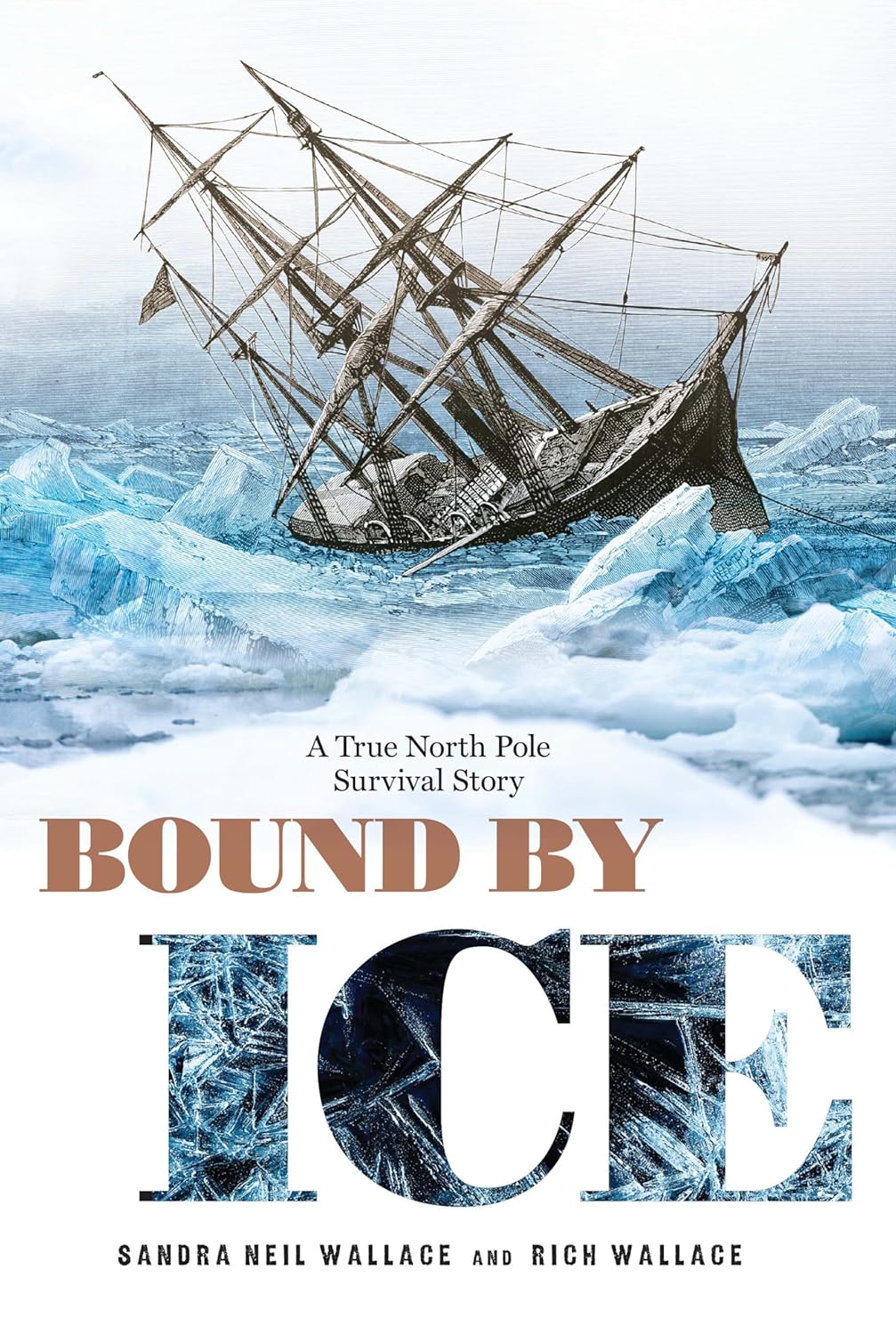
    Bound by Ice: A True North Pole Survival Story by Sandra Neil Wallace and Rich Wallace

    The Cay by Theodore Taylor

    Dead Wake: The Last Crossing of the Lusitania by Erik Larson

    In the Heart of the Sea by Nathaniel Philbrick

    Isaac’s Storm by Erik Larson

    The Light Between Oceans by M. L. Stedman

    Lord of the Flies by William Golding

    A Marriage at Sea by Sophie Elmhirst

    The Old Man and the Sea by Ernest Hemingway

    Refugee by Alan Gratz

    Sea Wife by Amity Gaige

    The Second Mrs. Astor: A Novel of the Titanic by Shana Abé

    Thunderstruck by Erik Larson

    The Wager: A Tale of Shipwreck, Mutiny, and Murder by David Grann

    Thanks for visiting—come back soon!