On a tight budget? Free camping saves money and gets you out into nature. Here's how to find free campsites near you.
I first started camping more than 10 years ago, and I quickly fell in love with it. Not only is it one of the best ways to enjoy the wildness of nature, but it also lets you have room to breathe in a way that few other vacations do. I’ve been to every kind of campsite imaginable—from the wide-open prairies of Nebraska to the cozy woods of the Adirondacks. I’ve car-camped in Wisconsin’s national forests, and I’ve even done some glamping (though I prefer a more rugged vibe). But in all my travels, I’ve found that my favorite type of camping is free camping.
Free camping is especially easy on the wallet, and in today’s uncertain economy, complete with record-breaking inflation, soaring gas prices and a general sense of unease about the future, it’s no surprise Americans are taking to this budget-friendly outdoor vacation in droves. More than 52 million households took a camping trip last year, according to KOA’s 2026 Camping & Outdoor Hospitality Report, and the number of first-time campers hit a 10-year high. With numbers like that, I thought it was high time to talk about where to find the country’s best free campsites.
Ready to hit the open road? I talked to Mary Monroe Brown, former director of Wisconsin’s Office of Outdoor Recreation and current CEO of outdoor advocacy firm Bluebird Consulting, and Benjamin Brosseau, a nature photographer and the director of communications at Paul Smith’s College in the Adirondacks. Together, we’ll share our ideas for where to camp for free and give you loads of tips for having the best camping adventure ever. Read on to learn everything you need to know about free camping.
Get Reader’s Digest’s Read Up newsletter for more travel, cleaning, humor, tech and fun facts all week long.
What is free camping?
Free camping is just what the name suggests: camping for free, without paying money to stay at a campsite. Free camping can take several forms, from car- and RV-based road trips to part of an extended backpacking or bike-packing trip.
Free camping should not be confused with more wild forms of camping, such as off-the-grid dispersed camping and primitive camping (though they can overlap). Free camping can be any type of camping—as long as there’s no charge to set up your site. Here are various types of camping, which can be free or not:
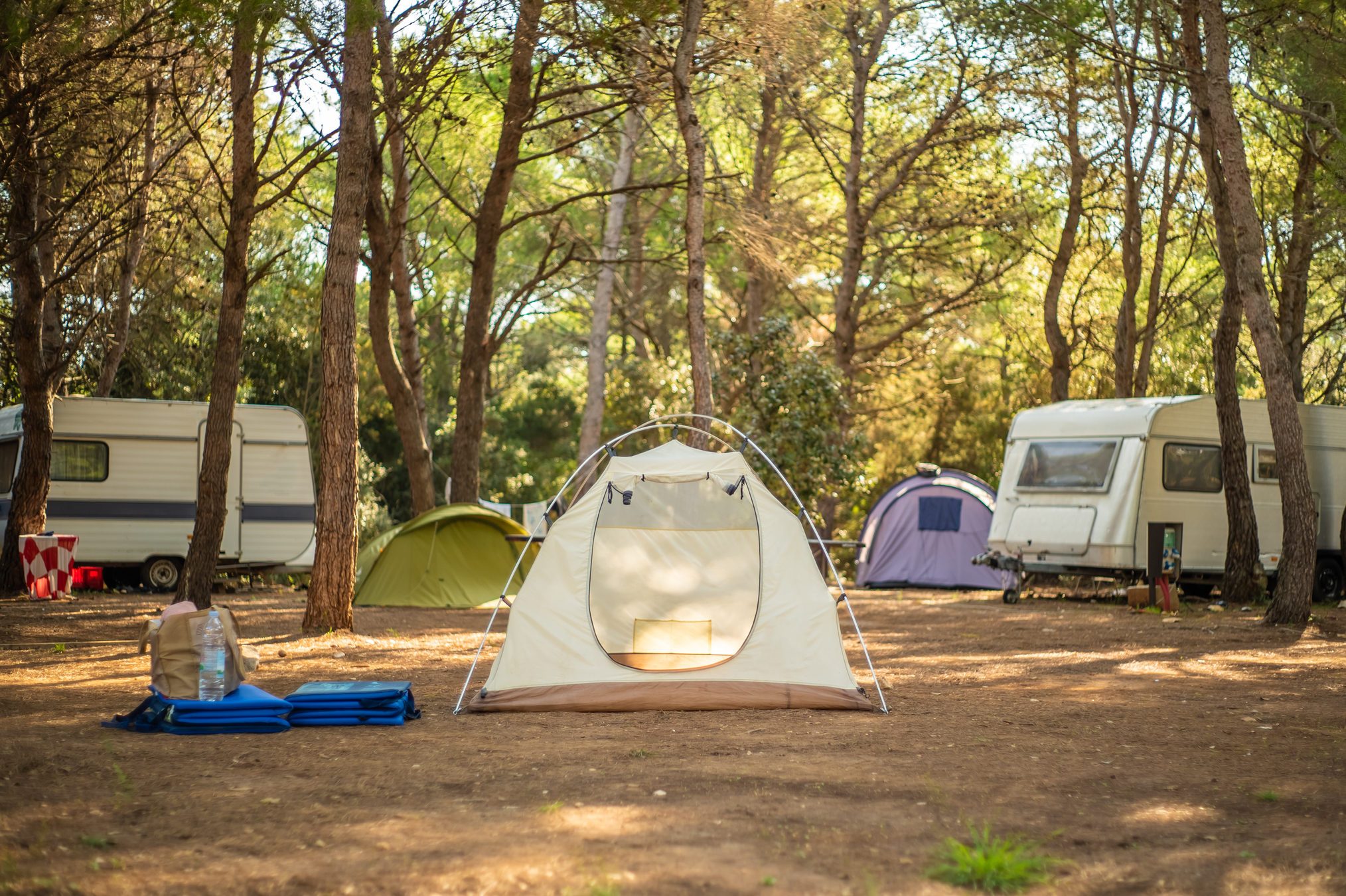
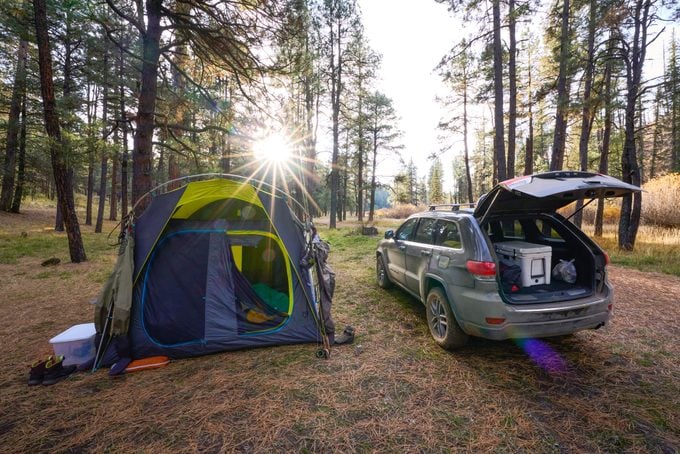
- Car camping: This refers to camping with your car nearby and could include setting up a tent right outside your car or even sleeping in your car.
- Dispersed camping: Camping outside of designated campsites is called dispersed camping. This might include camping in national forests or on land owned by the Bureau of Land Management.
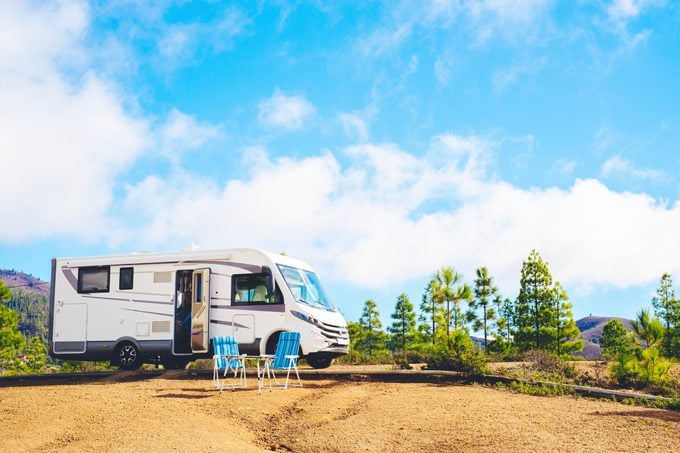
- Boondocking: This term typically refers to dispersed camping in a RV on public land, away from designated campsites and without sewer, water or electricity hookups.
- Dry camping: Similar to boondocking, dry camping involves being self-contained (with no hookups) but at a traditional campground instead of on public lands.
- Primitive camping: This type of remote camping doesn’t involve man-made structures or amenities.
Because free camping areas have no admission or permit fees, you’ll probably have either limited or zero access to water, electricity and bathrooms. Before you take your trip, make sure you know what you’re in for so you can plan accordingly.
Can you camp for free anywhere?
No, you cannot. While many national and state parks and forest areas do set aside areas for free camping, many also require campers to pay a nominal fee that helps support the maintenance of the area. Some campgrounds may also require a reservation, so confirm whether that’s the case before heading out on your trip.
Camping on private land is also prohibited, so just because a chunk of land looks wide open and free, it doesn’t mean that it actually is. Somebody or some entity (an individual, corporation or government) may own that land, and they might not want you camping on it.
Where can I set up a tent for free?
It depends. According to Brown, sites have varying rules about where you can and can’t camp. Some parks and forests allow free camping anywhere a sign doesn’t prohibit it. Other areas, like the Chequamegon-Nicolet National Forest in northern Wisconsin, specify exactly where you cannot camp—requiring campers be at least 200 feet from the water and 150 feet from any trail or service road.
And some sites limit how long you can camp there too. Most Bureau of Land Management sites cap free camping at 14 to 30 days, though the amount of time varies by location. Most national forests allow dispersed camping up to 14 days, though some areas are limited to one day, while others allow up to 30 days. National parks are typically too crowded to allow free camping, or even paid camping without a reservation. However, some do allow backcountry or dispersed camping, though you may need to obtain a free permit.
Regardless of where you plan to camp, check the local regulations by stopping by the ranger station or calling ahead of your stay.
How to find free camping
There’s no single resource to find free camping, but there are plenty of ways to search. Keep in mind that free camping is popular, so don’t expect spots to be available 24/7. (Weekends and holidays tend to be the busiest, so you’ll have the best luck finding a free campsite midweek.) Call ahead or verify reservation details before showing up. You should also keep in mind that national parks are very popular, so it’s a good idea to have a backup plan in case nothing is available.
Here are some resources to find free campsites:
- Campendium: This app allows you to search for campsites all over the country, and you can set the price to “free” to filter out paid campsites.
- The Dyrt: This site offers information on more than 5,000 staff-verified free camping sites across the country.
- United States Forest Service: National forests are easy to find on Google Maps, and the USFS website also offers an interactive map that shows hiking trails, campsites and ADA-accessible areas.
- Bureau of Land Management: The BLM manages public land and is an especially good place to find free overnight parking for your RV.
- Recreation.gov: This website and mobile app is another great resource for finding federal campgrounds, including BLM and USFS sites.
- iOverlander: This volunteer-run project is helpful for finding off-the-grid and free places to camp.
- Boondockers Welcome: For a $79 membership fee, this website connects RVers with private hosts around the U.S. who allow you to park on their property at no charge.
Other good sources for free camping information include websites of local tourism boards, state departments of natural resources and state departments of environmental conservation. These places can also recommend free campsites that tend to be less popular.
What to know before camping for free
Free campsites can be extremely hard to come by during peak summer months because many operate on a first-come, first-served basis. To get a good spot, plan to arrive early in the day, but know that you still run the risk of not finding an available free campsite. Before hitting the road, make a list of several other potential camping and accommodation options in the area, in case your ideal free spot is not available.
The free campsites that tend to go quickest are those that are the most accessible, right off the main road or parking lot. Harder-to-reach, backcountry campsites receive fewer visitors, but they may require a significant hike to access. If all the available campsites are taken, you must find a different site. Do not attempt to camp in an area that is not designated for camping, as it’s both damaging to the environment and illegal.
Disadvantages of free camping
While the advantages of free camping are clear—hello, it’s free!—there are a handful of disadvantages to consider.
- No water: Typically, free campsites don’t offer water hookups, which can be inconvenient.
- No electricity: Free campsites usually don’t have electricity hookups, so you’ll need to bring your own power source or wait to charge devices elsewhere.
- No facilities: Modern bathrooms with sinks, toilets, showers, campsite kitchens and picnic areas are typically not available at free campsites.
- No cell service: Cell service is sometimes not available at paid campsites either, but because free campsites tend to be even further off the grid, they’re even less likely to have cell service.
- No reservations: Free campsites typically don’t accept reservations, so you run the risk of arriving only to find the space occupied.
What to pack for your free camping trip
Since most free campgrounds are located in fairly remote areas, you should bring everything you need for your trip. Here’s what to pack in your well-stocked camping kit.
- Tent, sleeping bag and pillows
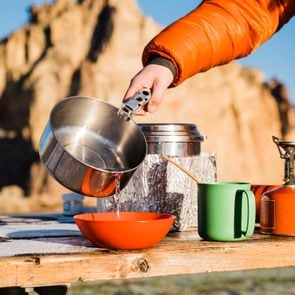
- Campsite cookware
- Quick-drying towels
- First-aid supplies
- Water-filtration device to filter fresh water from streams, rivers and lakes
- Water for emergencies and/or what you’ll need for drinking, cooking and washing
- Toilet paper (and a small shovel, to bury poop)
- Garbage bags for trash
- Cooler, food and storage containers
- Camping chairs and tables (most free campsites don’t have picnic areas)
- Stove for cooking (and fuel, if needed)
How to camp for free responsibly
Finding where to camp for free is only part of the story. No matter how you nab your free campsite, be prepared to leave it as good as or better than you found it. Collect all your trash (and any trash careless campers may have left behind), and take it out with you. If you’re hiking outside of your camp, bring a small, resealable plastic bag to stash any trash you may accumulate along the hike, such as apple cores, granola bar wrappers, used toilet paper and the like.
Brosseau, who camps and hikes in New York’s Adirondack Mountains, says that if you’ll be camping in an area that has bear activity, all food must be left in your car. If that’s not possible, bring a bear canister to store your food—both for your own safety and the bears’. In some areas where bears are particularly curious (like the Adirondacks, which is full of free campsites—and bears!), anything with a scent must be stored in the car or bear canister. That includes toiletries and personal-care items, not just food.
Some free campsites, particularly those in backcountry wilderness areas, have restrictions regarding campfires, and some prohibit fires altogether. Many also specify how far a campsite must be from roads and water, as well as whether or not pets are allowed. Before packing your pup and brushing up on your classic campfire stories, be sure to check local regulations. Remember: Following the rules is essential, and it helps protect the pristine status of natural spaces and the animals that inhabit them.
About the experts
|
Why trust us
Reader’s Digest has published hundreds of travel stories that help readers explore the world safely, easily and affordably. We regularly cover topics such as the best places to visit (and the best times to visit them), tips and tricks to zoom through airport security, flight-attendant secrets, hotel-room hacks and more. We’re committed to producing high-quality content by writers with expertise and experience in their field in consultation with relevant, qualified experts. We rely on reputable primary sources, including government and professional organizations and academic institutions as well as our writers’ personal experiences where appropriate. For this piece on free camping, Cassandra Brooklyn tapped her experience as a travel writer, guidebook author and camper to ensure all information is accurate and helpful to readers. We verify all facts and data, back them with credible sourcing, and revisit them over time to ensure they remain accurate and up to date. Read more about our team, our contributors and our editorial policies.
Sources:
- KOA: “2026 North American Camping & Outdoor Hospitality Report”
- Mary Monroe Brown, CEO of Bluebird Consulting and former director of Wisconsin’s Office of Outdoor Recreation; interviewed
- Benjamin Brosseau, outdoor photographer and director of communications at Paul Smith’s College; interviewed