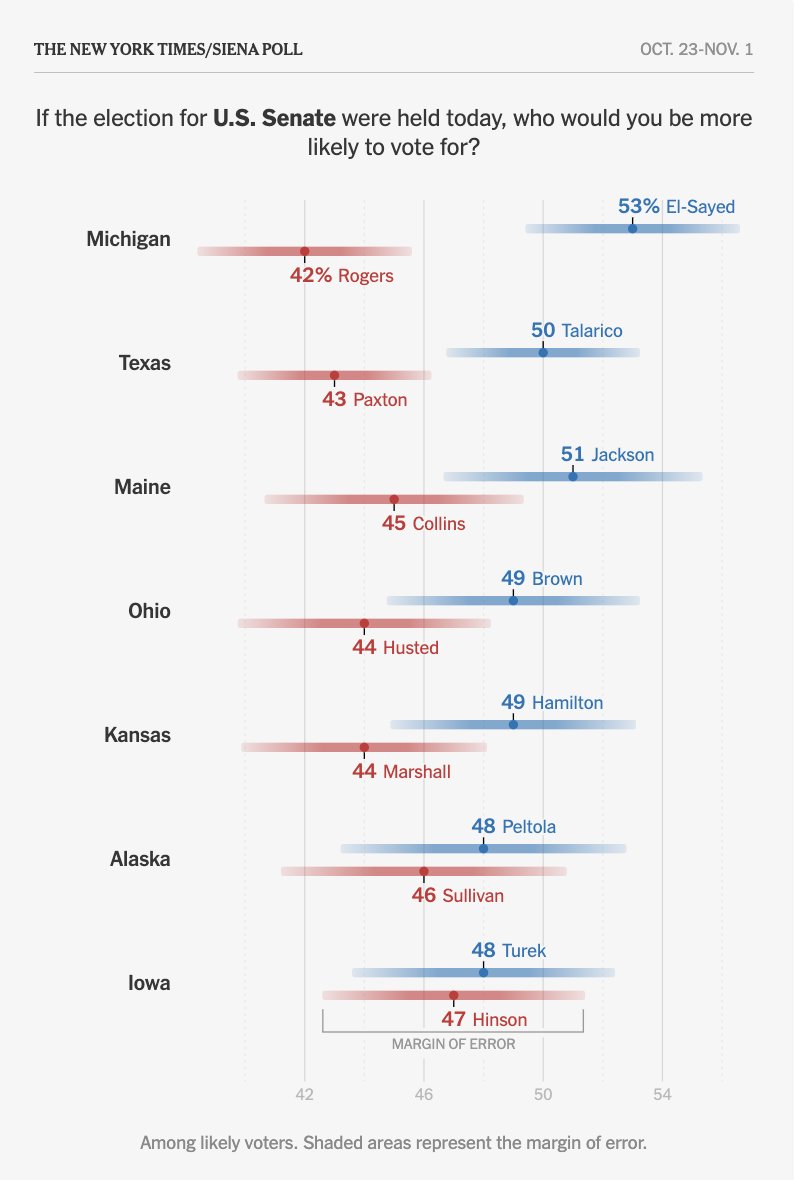
<?xml version="1.0" encoding="UTF-8"?><feed xmlns="http://www.w3.org/2005/Atom" xmlns:media="http://search.yahoo.com/mrss/"><title type="text">Jacobin</title><id>https://jacobin.com</id><updated>2026-11-03T19:41:55.32335Z</updated><link href="https://jacobin.com"/><logo>https://jacobin.com/static/img/logo/logo-type.png</logo><subtitle type="text">Jacobin is a leading voice of the American left, offering socialist perspectives on politics, economics, and culture.</subtitle><entry><id>https://jacobin.com/2026/11/midterms-defeat-trumpism-maga-populism</id><link rel="alternate" type="text/html" href="https://jacobin.com/2026/11/midterms-defeat-trumpism-maga-populism"/><link rel="enclosure" type="image/jpeg" href="https://media.jacobin.com/images/2026/11/326395061230.jpg"/><media:content url="https://media.jacobin.com/images/2026/11/326395061230.jpg" medium="image" type="image/jpeg"/><media:thumbnail url="https://media.jacobin.com/images/2026/11/326395061230.jpg"/><title type="text">Trumpism Is Running Out of Gas</title><updated>2026-11-03T19:41:55.32335Z</updated><author><name>Luke Savage</name></author><category label="Politics" term="Politics"/><content type="xhtml"><div xmlns="http://www.w3.org/1999/xhtml"><p>I have no special insight into what the exact outcome of this yearʼs midterm elections is going to be. It would be absolutely astonishing if Democrats failed to take the House, and the <a href="https://www.nytimes.com/2026/11/01/us/politics/times-siena-poll-senate.html">latest</a> NY/Sienna poll has the Democrats leading in all seven of the races that will determine control of the Senate. This includes nonnegligible edges in both Texas and Kansas, the latter of which hasnʼt elected a Democratic senator since the early 1930s.</p><p>In Michigan, which has been getting a great deal of attention for <a href="https://www.theguardian.com/us-news/live/2026/nov/02/democrats-haley-stevens-mike-rogers-abdul-el-sayed-michigan-midterms-trump-rallies-latest-news-updates">obvious</a> <a href="https://www.theguardian.com/us-news/live/2026/nov/02/democrats-haley-stevens-mike-rogers-abdul-el-sayed-michigan-midterms-trump-rallies-latest-news-updates">reasons</a>, Democratic candidate Abdul El-Sayed boasts a double digit lead, and several key gubernatorial races look to be leaning the same way. Donald Trumpʼs approval rating, meanwhile, is catastrophically low and has been dropping steadily. If Democrats donʼt make considerable gains across the board tonight, it will mean major polling companies got things badly wrong.</p><figure><a href="https://media.jacobin.com/images/2026/11/970482582316.jpg"><img alt="The New York Times/Siena poll on key Senate races, October 23, 2026–November 1, 2026" height="1180" loading="lazy" src="https://media.jacobin.com/images/2026/11/970482582316.jpg" width="804"/></a></figure><p>For other reasons that are less strictly related to polling, however, it has increasingly seemed to me that Trumpism is out of gas and may soon be on its last legs.</p><p>To reiterate something that cannot be repeated enough: Trump has never been particularly popular. So it was wrongheaded for shocked liberal commentators to throw up their hands and declare the country <a href="https://jacobin.com/2024/11/election-trump-liberals-class-racism">lost</a>, both in 2016 and 2024. In order to consolidate its hold on the countryʼs politics, the Trump project ultimately needed to mobilize a larger popular coalition — something it has consistently proven unable to do.</p><p>In his second term especially, in fact, Trump has often seemed indifferent to public opinion and has looked visibly unconcerned when it comes to selling the administrationʼs direction to voters. (I <a href="https://www.lukewsavage.com/p/propaganda-and-the-market-society">wrote about this</a> back in April specifically in relation to the US-Israeli attack on Iran, though there are certainly other examples.)</p><p>Beyond all this, Iʼve been struck by the nature of Trumpʼs midterm campaigning itself.</p><p>CNN recently published an interesting piece in which various reporters reflect on Trump’s rallies theyʼve been attending. Hereʼs how the piece opens:</p><blockquote><p>Ballrooms. Cognitive tests. The male physique. As President Donald Trump closes out the midterm election season with a sprint through ruby red America, his message to voters has veered into some unexpected places. More than ever before, his stops have been remarkable because theyʼre about one thing: Trump himself. His message to voters is to pretend heʼs on the ballot, no matter how unpopular heʼs become. Concerns about the direction of the country, or the cost of living, are mostly shoved to the side.</p></blockquote><p>Indeed, the substance of Trumpʼs speeches speaks to a political project that is increasingly exhausted and running on fumes.</p><p>When Trumpism has been politically strongest, its tenor has been insurgent, and it has at least tried to operate in some kind of populist register. It has successfully tapped into generalized anger toward the political class and rightly or wrongly (usually the latter) convinced at least some nontraditional GOP voters it will bring genuine heterodoxy to government. It has, albeit with deep incoherence, attacked the global trade consensus and hinted it will put an end to unpopular wars. It has promised jobs and reindustrialization. It has hit cost-of-living issues hard, even when engaging in more conventional right-wing messaging about immigration and culture war issues.</p><p>Trumpism has always been profoundly ugly. But here, again, it has found its greatest political success when able to democratize the ugliness somewhat. Its many appeals to racism and sexism have delivered politically when integrated into a larger narrative of hedonism — elect me and you, too, will have license to be nasty and say all the unsayable words again — and national renewal.</p><p>Here, for example, is an excerpt from Trumpʼs 2016 speech to the Republican National Convention:</p><blockquote><p>America is a nation of believers, dreamers, and strivers that is being led by a group of censors, critics, and cynics. Remember: all of the people telling you that you canʼt have the country you want are the same people telling you that I wouldnʼt be standing here tonight. No longer can we rely on those elites in media, and politics, who will say anything to keep a rigged system in place. . . . My opponent asks her supporters to recite a three-word loyalty pledge. It reads: “Iʼm With Her.ˮ I choose to recite a different pledge. My pledge reads: “IʼM WITH YOU — THE AMERICAN PEOPLE.ˮ I am your voice.</p></blockquote><p>The contrast between the above and how Trump has been speaking more recently is striking. The rank ugliness that has defined Trump-era conservatism from the beginning remains. Alongside the usual stand-up comedy, however, his midterm campaigning has also featured many moments like these, from the CNN piece:</p><blockquote><p>The moment that stood out in Perry, Georgia, on October 24 was Trumpʼs assertion that the United States is “making hundreds and hundreds of billions, trillions of dollarsˮ in oil at a time when people are facing high prices at the pump. Appearing to recognize the disconnect, the president acknowledged his aides had advised him not to mention gas prices and oil. “My people said, ‘please donʼt mention that, sir!ʼˮ he said. Trump said the media would later report that “President Trump is talking about all the money we are making while people are suffering at the pump,ˮ in a kind of self-fulfilling prophecy. “I donʼt give a damn! Iʼm going to say it. Weʼre making a freaking fortune!ˮ he thundered.</p><p>At both stops on October 27, Trump dangled $5,000 checks for Americans if Republicans win control of the House and Senate. In Corpus Christi, he invited voters to spend their cash payment at Mar-a-Lago — before quipping they wouldnʼt be able to afford it. “You could even come to Mar-a-Lago,ˮ Trump said. “The problem is that for $5,000, the most youʼll be able to buy is a hamburger and maybe a small dessert. Iʼm not even sure you could buy that. No, donʼt go there. Thatʼs not a good place if youʼre price conscious.ˮ</p></blockquote><p>Whatever he happens to be talking about — his war with Iran, the cost of living, his redecoration of the White House — Trumpʼs messaging, both on the campaign trail and off, has increasingly resembled the above. Thereʼs no hint of a populist undertone here. Thereʼs not even half-hearted attempt to sell the administrationʼs war with Iran nor any message about the cost of living beyond an emblematically cheeky assurance that everything is actually fine. When Trumpism has been most confident and politically robust, it has categorically not looked or sounded like this.</p><p>That, to say nothing of the polls, suggests to me that MAGA may really and truly be exhausted and about to suffer a significant body blow. Should that indeed happen, Trump may still be in a position to inflict plenty more harm — but will in all likelihood serve out the remainder of his time in office as a deeply unpopular and fatally compromised figure.</p><p><em>This article originally appeared in <a href="https://jacobin.com/2026/11/midterms-defeat-trumpism-maga-populism?utm_source=msn&amp;utm_medium=syndication&amp;utm_campaign=feed-footer">Jacobin</a>, a democratic socialist magazine publishing long-form essays and analysis on politics, economics, and culture. <a href="https://jacobin.com/subscribe/?code=SYNDICATED&amp;utm_source=msn&amp;utm_medium=syndication&amp;utm_campaign=feed-footer">Subscribe to the print edition for $20 a year.</a></em></p></div></content><published>2026-11-03T19:41:55.32335Z</published><summary type="text">A look at the polls and Donald Trump’s rhetoric on the midterms campaign trail suggests that MAGA may be exhausted and about to suffer a significant body blow.</summary></entry><entry><id>https://jacobin.com/2026/11/brazil-hilton-lula-workweek-campaign</id><link rel="alternate" type="text/html" href="https://jacobin.com/2026/11/brazil-hilton-lula-workweek-campaign"/><link rel="enclosure" type="image/jpeg" href="https://media.jacobin.com/images/2026/11/323187390457.jpg"/><media:content url="https://media.jacobin.com/images/2026/11/323187390457.jpg" medium="image" type="image/jpeg"/><media:thumbnail url="https://media.jacobin.com/images/2026/11/323187390457.jpg"/><title type="text">A Fight for Workers’ Rights Turned the Tide in Brazil</title><updated>2026-11-03T17:42:58.271288Z</updated><author><name>Cruz Bonlarron Martínez</name></author><category label="Politics" term="Politics"/><category label="Work" term="Work"/><content type="xhtml"><div xmlns="http://www.w3.org/1999/xhtml"><div><p>As Brazilian President Luiz Inácio Lula da Silva celebrated his historic victory over far-right candidate Flávio Bolsonaro on Sunday, he <a href="https://www.instagram.com/reels/De8AW75ivt4/">embraced</a> trans congresswoman Erika Hilton and kissed her on the cheek in celebration. The video circulated on social media, with many users pointing to it as evidence of Brazil’s acceptance of trans identity and the key role that the LGBTQ+ community plays within Lula’s coalition.</p><p>It is important to note that Hilton and other LGBTQ+ politicians are more than simply a piece of a diverse coalition. They are the force behind a piece of legislation that will reduce the Brazilian workweek from forty-four to forty hours, a historic achievement that contributed to Lula’s victory and helped keep fascism at bay.</p></div><section id="sec-1"><header><h2>Life Beyond Work</h2></header><div><p>One day in 2023, after finishing his shift, a pharmacy assistant in Rio de Janeiro called Rick Azevedo decided to record a <a href="https://youtu.be/khap-kk5ybU">video</a> railing against the six-day work schedule to which much of the Brazilian working class are subject, including a <a href="https://almapreta.com.br/sessao/politica/daniel-teixeira-escala-6-por-1-racismo/">disproportionate</a> number of black workers. In the video, he referred to the 6 x 1, the colloquial name for this work regime, as a “modern form of slavery” and asked when the working class was going to make a revolution to put an end to it.</p><p>Azevedo went on to note that if he, as a single man, had no time to do anything, he could only imagine how bad things are for others with kids. He ended the video with a call to revolt, warning that if ordinary workers like him did not organize behind the issue, things would never change. He originally archived the video, but after his manager called him in to work early the next day, he decided to post it on TikTok during his shift.</p><p>The video quickly went viral, with thousands of interactions shortly after it was posted. Azevedo, who already had a following on TikTok for posts about pop culture and Beyoncé Knowles, received messages from others who felt the same way. In response, he founded the social movement Vida Além do Trabalho (VAT, “Life Beyond Work”), organizing first through live streams and WhatsApp groups, then through petitions to change the law.</p><p>Azevedo, who had spent much of his life jumping from <a href="https://revistas.usp.br/cpst/en/article/view/249188/222724">job to job</a> but never finding enough time to finish formal university studies, became a movement leader overnight. The movement soon spread to other states and crowdfunded a protest in São Paulo to organize around the issue, gaining the attention of Erika Hilton, a rising star in the Socialism and Liberty Party (PSOL). Because of his newfound popularity, Azevedo decided to run for Rio’s City Council in 2024 with PSOL’s support, further popularizing the movement and solidifying his alliance with Erika Hilton.</p></div></section><section id="sec-2"><header><h2>The Fight in Congress</h2></header><div><p>After the initial 2024 protests and news of Azevedo’s election in Rio, calls to change the workweek gained momentum and were taken up by some of Brazil’s progressive members of Congress. However, under Brazilian law, a change of this kind could not be made through a simple legislative process; it required an amendment to the Brazilian Constitution.</p><p>In Brazil, a constitutional amendment requires one-third of members in both houses to sign on. This seemed very hard to achieve at the time because many of those in Congress belonged to right-wing and center-right parties that initially <a href="https://www.congressoemfoco.com.br/noticia/6127/veja-quais-deputados-ja-assinaram-a-pec-pelo-fim-da-escala-6x1">opposed</a> the change.</p><p>In February 2025, Hilton got 234 members of Congress to sign on to the constitutional amendment proposal, well over the third needed, allowing her to bring the amendment up for formal debate in Congress. The initial proposal also proved to be quite ambitious, calling for a thirty-six-hour workweek spread over four days without any cut to pay, which would have transformed Brazil’s labor regulations into some of the most progressive in Latin America.</p><p>The thirty-six-hour workweek met opposition from sectors on the center and Right who chose to side with capital and oppose it. Azevedo’s VAT movement and the Brazilian labor movement mobilized around the demand on May 1, and President Lula made the end of the 6 x 1 work schedule a <a href="https://www.congressoemfoco.com.br/noticia/108159/lula-cita-fim-da-escala-6x1-e-fraude-no-inss-em-discurso-do-1-de-maio">centerpiece</a> in his May Day address in 2025.</p><p>Lula stated that this change was necessary to build a balance between workers’ professional lives and their well-being. But despite the pressure, the legislation sat in Congress for the rest of 2025. In April 2026, the president sent his own <a href="https://almapreta.com.br/sessao/politica/lula-escala-6x1-congresso/">proposal</a> to Congress to keep the issue in the media cycle and continue putting pressure on the lower chamber.</p></div></section><section id="sec-3"><header><h2>The End of 6 x 1</h2></header><div><p>The combination of pressure from above and below worked, and in May the proposal finally passed the lower chamber and moved to the Senate. By this point, the reform had been modified so that it would establish a forty-hour workweek with two days off instead of the four-day workweek Hilton had initially proposed.</p><p>The timing now meant that labor reform would be a key part of the national debate in Brazil’s presidential election. The right-wing candidate Flávio Bolsonaro was a sitting senator at the time, and he felt obliged to support the proposed constitutional change for fear of losing working-class voters. This essentially meant conceding that the Right had been wrong to oppose the labor reform.</p><p>After the first round of elections on October 4, it seemed that Bolsonaro’s compromise might have sufficed to shore up support for his candidacy, as he topped the polls and his far-right Liberal Party made significant gains in both houses of Congress. However, Rick Azevedo was elected to Congress on the same night, and Erika Hilton became the female deputy with the highest number of votes in Brazilian history: 1,596,472. This demonstrated how the fight for a shorter workweek connected with diverse sectors of the Brazilian electorate.</p><p>On October 14, a week after the first round of the election, the Brazilian Senate voted 75–1 to <a href="https://www.bloomberglinea.com.br/brasil/senado-aprova-fim-da-escala-6x1-em-impulso-para-lula-antes-do-segundo-turno/">end</a> the forty-four-hour workweek. This promised a change to the lives of sixteen million Brazilians who previously had only one day off a week. Although the legislation that eventually passed was less ambitious than Hilton’s original proposal, it still lowered the work week to forty hours with two days off. This promises to empower millions of workers by making Brazil into one of the few countries in Latin America, a region where businesses are notorious for exploiting workers, to have a forty-hour week.</p></div></section><section id="sec-4"><header><h2>Winning the Culture Wars</h2></header><div><p>The debate around the forty-hour week became a key space for Lula’s campaign to regain momentum after it initially fell behind Bolsonaro in the first round, shifting the focus to what was at stake for the Brazilian working class and the possibility of future reforms. The issue forced the Right to concede that Lula and his coalition had the best interests of workers at heart.</p><figure><img alt="Lula kisses Congresswoman Erika Hilton on the cheek following his victory in the 2026 presidential election." height="616" loading="lazy" src="https://media.jacobin.com/images/2026/11/699356103235.jpg" width="1000"/><figcaption>Lula’s viral victory kiss. (Facebook)</figcaption></figure><p>The debate also revealed the hypocrisy of the Right’s homophobic and transphobic rhetoric around the family, with a gay man and a trans woman leading the fight for working-class families to be able to spend more time together, get an education, and watch their children grow. Now, as Lula enters his fourth (and surely final) term, the global left should watch closely to learn how to take back the narrative from the Right and connect working-class interests with the diverse forms of oppression that workers face.</p></div></section><p><em>This article originally appeared in <a href="https://jacobin.com/2026/11/brazil-hilton-lula-workweek-campaign?utm_source=msn&amp;utm_medium=syndication&amp;utm_campaign=feed-footer">Jacobin</a>, a democratic socialist magazine publishing long-form essays and analysis on politics, economics, and culture. <a href="https://jacobin.com/subscribe/?code=SYNDICATED&amp;utm_source=msn&amp;utm_medium=syndication&amp;utm_campaign=feed-footer">Subscribe to the print edition for $20 a year.</a></em></p></div></content><published>2026-11-03T17:42:58.271288Z</published><summary type="text">Erika Hilton, one of Brazil’s first trans legislators, has brought new energy to the Brazilian left. The socialist congresswoman helped lead the fight to establish a 40-hour workweek that also gave a vital boost to Lula’s presidential campaign.</summary></entry><entry><id>https://jacobin.com/2026/11/mckinney-detroit-democratic-socialism-congress</id><link rel="alternate" type="text/html" href="https://jacobin.com/2026/11/mckinney-detroit-democratic-socialism-congress"/><link rel="enclosure" type="image/jpeg" href="https://media.jacobin.com/images/2026/11/986945728419.jpg"/><media:content url="https://media.jacobin.com/images/2026/11/986945728419.jpg" medium="image" type="image/jpeg"/><media:thumbnail url="https://media.jacobin.com/images/2026/11/986945728419.jpg"/><title type="text">Another Detroit Socialist Is Heading to Congress</title><updated>2026-11-03T17:10:16.315516Z</updated><author><name>Donavan McKinney</name></author><author><name>Sara Wexler</name></author><category label="Politics" term="Politics"/><content type="xhtml"><div xmlns="http://www.w3.org/1999/xhtml"><div><p>In 2018, the election of two democratic socialists to the House of Representatives marked the beginning of a new political era. The socialist freshmen, both endorsed by the recently reinvigorated Democratic Socialists of America (DSA), were Alexandria Ocasio-Cortez from New York City and Rashida Tlaib, representing Michigan’s Twelfth Congressional District in Detroit.</p><p>Eight years later, DSA boasts more than 120,000 members and politicians in elected offices across the country. And after a <a href="https://www.dollarsandsense.org/the-left-wave-that-swept-democratic-primaries/">wave</a> of Democratic primary victories earlier this year, democratic socialists are set to significantly grow their foothold in Congress in today’s general election.</p><p>Among the likely socialist victors is Donavan McKinney, who is expected to win easily in Michigan’s deep-blue Thirteenth District in Detroit and join Tlaib in representing the Motor City in the House. <cite>Jacobin</cite> spoke to him about why he’s running and how growing up working class in Detroit shaped his politics.</p></div><section id="sec-1"><header><hr/></header><dl><dt><p>Sara Wexler</p><p>Why are you running for Congress?</p></dt><dd><p>Donavan McKinney</p><p>I’m running to bring the urgency that this moment demands.</p><p>Right now, I represent the poorest state house district in Michigan: $14,000 is the median income. If you divide that up by twelve months, that’s a little over $1,200 a month. And the average rents in our neighborhoods, if you’re lucky, start at $1,300.</p><p>So that’s all your money down the drain, and you’ve got to worry about the increase in the price of gas and groceries, and insurance costs, whether it’s health insurance or auto insurance. We have some of the highest auto insurance rates in the country. Then childcare costs as well and so many day-to-day expenses.</p><p>I’m running to represent one of the five poorest congressional districts in the country. What I’m going through on the state level is the same thing. [Being in Congress will mean representing] bigger communities, a lot more people. However, it’s the same narrative — the same story: “I just don’t have enough resources to make ends meet.” So for me, this is about meeting the moment, getting people in these positions who are going to put working families first and put our district first.</p></dd><dt><p>Sara Wexler</p><p>Can you tell me about your campaign platform? What priorities are you running on?</p></dt><dd><p>Donavan McKinney</p><p>Universal childcare, Medicare for All, and getting big corporate money out of politics.</p><p>First, I talk about universal childcare a lot as a state legislator. I coled the movement for Pre-K for all. We have pretty much universal pre-K in Michigan now because of our advocacy and the advocacy of many others. We want to expand that to childcare across the board; we’ll take the fight to Washington, DC, for universal childcare.</p><p>For my wife and I, that’s the biggest expense in our day-to-day lives, because we have three beautiful children — two boys, four and two, and a baby girl who just turned one. We pay more for childcare for one of our children than we do for our whole mortgage. And you’ve got to think about how impoverished my district is. If we’re living paycheck to paycheck off of childcare alone, I don’t know how everybody else is getting through it.</p><p>Second, Medicare for All: I’m a big believer because of my mom and what she had to go through. When I was an undergrad at the University of Michigan, I got a call from my mom panicking because she was rushed to the hospital emergency room and they had to do emergency brain surgery. She comes to find out that she had brain tumors growing. And at the time, the only way she could get health care was through her employer; she was working at the time, but her employer didn’t offer it.</p><p>So she was uninsured. And they did the emergency surgery, but guess what? She got that big six-figure bill for that procedure, and she didn’t have any way to pay it. They put her on a payment plan, but I had to go work three jobs at the time while I was a full-time student to make sure that she got the care she needed. By the grace of God, the Affordable Care Act (ACA) kicked in not too long after that, and she was able to afford health care. But I’m a big believer in Medicare for All, because she had preexisting conditions. Whether you have a preexisting condition or not, you deserve health care.</p><p>That’s why I’m a big proponent of Medicare for All. There [are so many problems] when it comes to ACA premiums, as well as my seniors on fixed incomes, rubbing pennies together to try to figure out if they should have food on their table for the day or pay more out of pocket for their doctor’s visits and skyrocketing costs when it comes to lifesaving prescription drugs.</p><p>The third thing I talked about is getting money out of politics. I’ve led that initiative here at the state level. I’ve introduced that legislation two times since I’ve been in office, in back-to-back terms. Each term, we got more and more people. I think the first term we had fewer than ten people sign on. This time around, when we introduced it last year in the state legislature, I think we had thirty or forty people sign on.</p><p>Now, if you look at every Democrat who’s running for state legislative office here in Michigan, they signed on to the Michiganders for Money Out of Politics initiative. We couldn’t get a hearing in the state house. So organizations and people on the ground decided to take back our power over legislation and create a ballot initiative. They collected six hundred thousand signatures across the state, and that initiative will be on the November 3 ballot. I’m excited about it, because it targets monopoly utility companies, our public utilities, as well as our insurance companies — health insurance companies and auto insurance — which give a lot of money to state legislators to really bend the needle toward them instead of working people.</p><p>I’m looking to do the same thing federally, to sign onto the legislation of Congresswoman Summer Lee and Senator Bernie Sanders, which gets rid of all that dark super PAC money, as well as to overturn <cite>Citizens United</cite>. Those are my big three pillars.</p></dd><dt><p>Sara Wexler</p><p>You grew up working class in Detroit. Can you tell me a bit about your background and how that shaped your politics?</p></dt><dd><p>Donavan McKinney</p><p>I was born and grew up in Detroit, raised with my mom, my grandmother, and my younger brother. We moved thirteen times across the city; I spent the vast majority of my life in northeast Detroit, which I now represent in the state legislature. And if the general election goes well, I’ll be representing it in the halls of Congress.</p><p>Like I said, we moved thirteen times. We stayed in cars, shelters, sometimes out in the street. We didn’t know where our next meal was going to come from, but there was no shortage of love and prayers that got us through those tough times.</p><p>I remember what my grandmother told me growing up. She told me two things that I still live by today. Number one is count your blessings, because you woke up this morning when a lot of people didn’t. You have a roof over your head, clothes on your back, food on your table, and — we live in Detroit, the Motor City — a car to drive. Because our transit system isn’t that good yet, but we’re working on it; that’s something we’re going to take to DC to work on. But you’re able-bodied, you’ve got your mental health, you’ve got your faculties, things we take for granted day in and day out.</p><p>Number two, she always used to say, “In life, there will always be people better off than you. There will always be people worse off than you, but never fight the urge to give.” And I put that quote on my first piece of literature when I first ran for state representative ten years ago, back in 2016 when I was just a bushy-tailed kid coming out of college, just trying to figure out life.</p><p>I still live by those two principles today — they’re my North Star. That’s why I’m so passionate about working people and about the service, because that’s what’s forgotten in politics. [I like to say], politics is about the service of the people and bringing humanity and love and leading with your heart back into the politics, which [currently] is so divisive. There’s a lot of hatred, a lot of negativity, and we try to lead with love.</p></dd><dt><p>Sara Wexler</p><p>It seems like when you were growing up, people’s needs weren’t being met, and the affordability crisis was worsening, regardless of whether Democrats or Republicans were in power. What do you make of this?</p></dt><dd><p>Donavan McKinney</p><p>A lot of people I’ve talked to view the Democrats and the Republicans very similarly when it comes to economics. I do believe that the Democratic Party is the party of the people. I have seen the Democrats do a lot more than the Republicans in terms of [helping the] working class. But I’m a big believer in the Scripture. Scripture talks about how you can’t serve two masters.</p><p>What is happening, especially now, is that the Dems are serving the corporate oligarchs, same as the Republicans. You’re either going to have to do what’s best and serve the interests of working people, or you’re going to serve the interests of just a few and increase the wealth of those who are taking advantage of regular working people.</p><p>For me, we follow what we preach. That’s what people want to see. They want to see receipts. So look at our campaign: we ran a campaign that was people powered. We didn’t take a cent of corporate PAC money or AIPAC [American Israel Public Affairs Committee] money. A lot of our money came from individual people across our district, across our state, across our country, who believe in a different style of politics. Leading up to the primary, our average donation on ActBlue was around $30 or $32, something like that — tens of thousands of people just donating to a vision.</p><p>I’m forever grateful for it, because we were outspent. My opponent [in the primary], the current congressman, had his own wealth. He made his money off of pharmaceuticals, and so he had his own money to put in. But he also took money from ICE [Immigration and Customs Enforcement] contractors and AIPAC as well as other corporate PACs, crypto, all of that — DTE, our monopoly utility — and just lying on our name, putting a lot of ads out. I’m very grateful, by the grace of God, that people were really waking up and realizing, “You know what? Donovan is better for the job.” We’re bringing a message that resonates with people and brings folks together.</p></dd><dt><p>Sara Wexler</p><p>Before running for office, you worked for Service Employees International Union (SEIU) Healthcare Michigan, which is the state’s largest health care union. How has your experience with labor organizing informed your politics?</p></dt><dd><p>Donavan McKinney</p><p>I tell this story a lot about my grandfather. My grandfather passed away late last year during the campaign cycle. I’m trying to not be emotional, because the man taught me a lot. When I was a kid, he used to bring me to the union meetings a lot. He worked at Ford Motor Company in the Detroit metro region and was part of the United Auto Workers (UAW) for forty-two years.</p><p>One of the most interesting things about my grandfather is that during those forty-two years, he never missed a day of work. I asked him at his retirement party some years ago, “Granddad, how did you do it?” He told me one thing that stood out, which was that he took pride in what he was doing. He knew that, with his bare hands, he was helping change a life or a family’s life. But more important, he knew that not only the union had his back, but that Ford Motor Company had his back.</p><p>But fast-forward to the year 2026, that work that he had and that salary that he made — that dollar isn’t stretching as far. And these corporations have gotten greedier. Take, for instance, what happened at the Poletown plant in my district, which is on the border of Detroit and Hamtramck. It’s a General Motors factory plant. It’s nicknamed “Factory Zero.” It was the first factory in America, and the first factory in America to be net zero. It was really green, really environmentally friendly and forward-thinking around that.</p><p>Earlier this year, they cut over a thousand jobs, all union jobs. They cut everybody’s jobs, and then, just a few months later, replaced them with robots. I talk about it in the union halls a lot; I talk about how much it’s bullsh–t and how, at the end of the day, nobody has our back but working people ourselves. We need to start electing folks with the right type of mindset and, more importantly, with the lived experience that [leads them to prioritize working people] over these greedy corporations.</p></dd><dt><p>Sara Wexler</p><p>That leads nicely into my next question. You’re running as a democratic socialist. What does that mean to you?</p></dt><dd><p>Donavan McKinney</p><p>I define politics as the redistribution of resources. That’s it; it’s black and white.</p><p>If you’re in these positions of power and influence, if you’re not trying to figure out ways to bring home as many resources as possible back to your communities and the people you represent, then I need you to get up out of here. That’s what led me to run for Congress in the first place, because I felt like our current congressman wasn’t meeting the moment. We’re going to be able to pick up the phone and do constituent service work, because I understand what it’s like being on the phone trying to get somebody to answer to help when you’re in dire need. My current congressman is known for not picking up the phone, not doing the real constituent work of the job.</p><p>Half the battle is showing up. The other half is trying to figure out resources to improve the quality of life of the people you represent. So in terms of democratic socialism, I’m a big believer in Dr Martin Luther King’s teachings. And Tupac [Shakur] said it best: “They got money for wars but can’t feed the poor.” You’re telling me we’re spending money for a war that nobody wants — a billion dollars a day in Iran. And you’re also telling me that, with H.R. 1 [the One Big Beautiful Bill Act], the Republican trifecta cut health care and food assistance for the most vulnerable populations across our country.</p><p>And I thought Republicans didn’t believe in red tape: I thought they believed in slim government and lean government and achieving efficiency in government. But they want to hurt people in order to give a tax break to the wealthiest top 1-percent earners of our country. They’re telling people, “We want you to get recertified every six months for your health care. But we DOGEd government, and we know that you’re not going to get recertified in time because we don’t have the caseworkers to certify you in the right amount of time. Because of the savings we’re going to have on the back end from folks not being able to recertify, we’re going to give a tax break to the ultrawealthy.”</p><p>That’s not the America I want to live in; that’s not the America people in my community want to live in, or anyone who I know wants to live in. It’s up to us Democrats to level the playing field and right the ship, so to speak. I’m going to push hard as hell and advocate for the poor folks in my communities. A lot of my community is struggling and they’re looking for somebody that’s going to fight for them, and that’s my job.</p></dd><dt><p>Sara Wexler</p><p>As you mentioned, you were able to oust the incumbent Democrat in your primary. I’m wondering what role different organizations, DSA for instance, have played in your campaign.</p></dt><dd><p>Donavan McKinney</p><p>I was quoted earlier in the campaign, and I said, “We’re building the biggest and baddest coalition in the country,” which is true. I’ve even had members of Congress call me because they’re like, “Yo, how did you do this?” We have some of the most established folks and even the most conservative Democrats endorsing our campaign, as well as all-the-way-to-the-left DSA types endorsing our campaign. I don’t know if it was just because of me or also because of how bad the incumbent was, but it’s because we’re speaking values.</p><p>We’re leading with our heart, and we’re following what we’re preaching. We brought together faith leaders, elected officials from the federal, state, county, and local levels, community block club leaders, and unions. I was told I was the only nonincumbent the AFL-CIO endorsed on the federal level when it came to the Democratic primary.</p><p>So we had the unions; we had groups like Justice Democrats and DSA and so many other great folks coming together and realizing that we deserve better. That was our campaign message: We deserve better. I’m so grateful because I couldn’t have done it without this coalition. I couldn’t have done it without people coming together and realizing that their voices matter and that they have the power to make a difference in our politics and change the trajectory of our country.</p><p>We’re going to continue that movement as we get sworn in in January. It’s the inside-outside strategy that Dr King talked about. You need people on the outside agitating, advocating, but you also need people on the inside who are willing to listen, willing to really put those words to paper and move legislation very swiftly in this moment, with the urgency that it demands.</p></dd></dl></section><p><em>This article originally appeared in <a href="https://jacobin.com/2026/11/mckinney-detroit-democratic-socialism-congress?utm_source=msn&amp;utm_medium=syndication&amp;utm_campaign=feed-footer">Jacobin</a>, a democratic socialist magazine publishing long-form essays and analysis on politics, economics, and culture. <a href="https://jacobin.com/subscribe/?code=SYNDICATED&amp;utm_source=msn&amp;utm_medium=syndication&amp;utm_campaign=feed-footer">Subscribe to the print edition for $20 a year.</a></em></p></div></content><published>2026-11-03T17:10:16.315516Z</published><summary type="text">Donavan McKinney, a Democratic Socialists of America–endorsed candidate for the US House in Detroit, is set to win his general election today. Jacobin spoke to him before Election Day about why he’s running and what he hopes to accomplish in office.</summary></entry><entry><id>https://jacobin.com/2026/11/pakistan-climate-change-glaciers-flooding</id><link rel="alternate" type="text/html" href="https://jacobin.com/2026/11/pakistan-climate-change-glaciers-flooding"/><link rel="enclosure" type="image/jpeg" href="https://media.jacobin.com/images/2026/10/982280643685.jpg"/><media:content url="https://media.jacobin.com/images/2026/10/982280643685.jpg" medium="image" type="image/jpeg"/><media:thumbnail url="https://media.jacobin.com/images/2026/10/982280643685.jpg"/><title type="text">Life Beneath the Melting Glaciers</title><updated>2026-11-03T17:18:42.593871Z</updated><author><name>Jaclynn Ashly</name></author><category label="Environment" term="Environment"/><content type="xhtml"><div xmlns="http://www.w3.org/1999/xhtml"><div><p>Bulbul Kaie remembers when summer in Hassanabad revolved around a stream.</p><p>The village lies in the mountains of Gilgit-Baltistan, a disputed territory in northern Pakistan bordering China, Afghanistan, and Indian-administered Kashmir. Kaie’s family would carry chairs down to the stream fed by meltwater from the glaciers above, where a cold breeze rose from the water. They would spend afternoons on its bank among orchards heavy with apricots and cherries.</p><p>“We would sit together, drink tea, and enjoy the sound of the stream until it got dark,” recounts the mother of four. “We used to look forward to summer. The sound of the water made us feel calm.”</p><p>Now summer brings dread. “We fear what will happen each year,” the fifty-year-old says.</p><p>Pakistan has <a href="https://www.evk2cnr.org/public/file/184/the-new-inventory-of-13032-glaciers-in-pakistan-gen-25.pdf">more than</a> thirteen thousand glaciers, one of the largest concentrations outside the polar regions, many of them in Gilgit-Baltistan. As climate change drives temperatures higher in these mountains, where warming is <a href="https://www.ipcc.ch/srocc/chapter/chapter-2/">outpacing</a> the global average, the ice melts faster and rain falls harder and less predictably. Cloudbursts — intense, localized downpours that experts say were virtually unknown here until recently — can now destroy a village in an afternoon.</p><p>Last year, Hassanabad was among dozens of villages across Gilgit-Baltistan hit by one of the region’s deadliest flood seasons in years. At least seventy-two people <a href="https://kado.org.pk/wp-content/uploads/2025/08/Gilgit-Baltistan-Floods-GLOFs-District-Wise-Situation.pdf">died</a>, and more than a thousand homes were destroyed or damaged.</p><p>The floods destroyed half of Kaie’s home. She has yet to rebuild. “I’m only staying here because I have no resources to go elsewhere,” she says, her voice breaking. “I fear for my children’s lives and mental health.”</p><figure><img alt="Bulbul Kaie sits with her son inside their damaged home in Hassanabad." height="1523" loading="lazy" src="https://media.jacobin.com/images/2026/10/096684477072.jpg" width="2400"/><figcaption>Bulbul Kaie sits with her twelve-year-old son inside their damaged home in Hassanabad, and a crack runs down the wall behind them. (Jaclynn Ashly / <cite>Jacobin</cite>)</figcaption></figure><p>Kaie is one of thousands still trying to recover. Some live in tents or cracked houses they fear could collapse. Others have been moved onto bare government plots with no land to farm and no way to earn. Few can afford to start again, and the next disaster is rarely more than a season away.</p><p>The people living among these glaciers bear almost no responsibility for the greenhouse gas emissions driving global warming; Pakistan itself <a href="https://unfccc.int/sites/default/files/2025-09/Pakistan_NDC3.0_24%2520Sep.pdf">accounts</a> for about 1 percent of global emissions. Yet it is among the countries <a href="https://www.germanwatch.org/sites/default/files/2025-02/Climate%2520Risk%2520Index%25202025.pdf">most affected</a> by extreme weather, and in its remote mountain communities, homes are being washed away, farmland is disappearing, and livelihoods are collapsing.</p></div><section id="sec-1"><header><h2>At the Glaciers’ Mercy</h2></header><div><p>Behram Shah gathers cherries from a tree outside his Hassanabad home and carries them to the table in a woven basket. “We rely on the glaciers for everything,” says the seventy-six-year-old, who has lost about nine acres to floods in the past decade. “Our livelihoods, and even our drinking water, depend on them. We are completely at the mercy of these glaciers.”</p><p>Every spring, before the summer melt, villagers would gather at the watercourses to pray over the year’s flow, asking God for protection and enough water for the months ahead, Shah recounts. These days, few still make the journey.</p><p>“We used to see the glaciers as the source of our lives,” Shah says. “Now, because of the floods, we associate them with destruction.”</p><figure><img alt="Behram Shah at his home in Hassanabad. " height="1600" loading="lazy" src="https://media.jacobin.com/images/2026/10/376028763918.jpg" width="2400"/><figcaption>Behram Shah at his home in Hassanabad. He lost about nine acres of land to floods in the past decade and says villagers are “completely at the mercy of these glaciers.” (Jaclynn Ashly / <cite>Jacobin</cite>)</figcaption></figure><p>“The cycles that kept us in balance for centuries are being disrupted,” he adds. “All we can do now is pray and leave everything to God.”</p><p>Hassanabad sits in the Hunza Valley, in the Karakoram — one of four mountain ranges that <a href="https://www.evk2cnr.org/public/file/184/the-new-inventory-of-13032-glaciers-in-pakistan-gen-25.pdf">meet</a> in Gilgit-Baltistan and contain some of the world’s highest peaks. Its roughly 175 households are <a href="https://doi.org/10.3390/su13168798">scattered</a> across the mountainous terrain, clustered on either side of the stream and up the slopes. Most residents are Ismaili Muslims who farm fields and orchards passed down through generations.</p><p>Three miles <a href="https://www.sciencedirect.com/science/article/pii/S2405844024119822">above</a> the village, the Shisper and Muchuhar glaciers, <a href="https://www.sciencedirect.com/science/article/abs/pii/S0169555X19304489">once</a> branches of a single glacier, eventually drain into the same stream, which <a href="https://doi.org/10.1080/19475705.2021.1975833">runs</a> about four miles down the valley to join the Hunza River. Their meltwater <a href="https://www.researchgate.net/publication/371108975_Climate_change-induced_Glacial_Lake_Outburst_Floods_in_Hunza_Valley_of_Pakistan_an_assessment_of_indigenous_farming_community_perceptions_and_adaptation">feeds</a> the irrigation channels that keep Hassanabad alive.</p><p>In 2018, the Shisper began to <a href="https://www.nature.com/articles/s41598-020-61277-8">surge</a>, exhibiting <a href="https://www.sciencedirect.com/topics/earth-and-planetary-sciences/glacier-surge">behavior</a> of a type of glacier that can sit almost motionless for decades or centuries before suddenly lurching forward. It <a href="https://www.nature.com/articles/s41598-020-61277-8">advanced</a> nearly a mile, at one point moving nearly sixty feet a day, before <a href="https://pmc.ncbi.nlm.nih.gov/articles/PMC11369478/">pushing</a> across the ravine and damming the stream draining the Muchuhar.</p><p>The lake that formed behind the ice <a href="https://doi.org/10.1017/jog.2024.80">burst</a> four times in four years, sending floodwater down the valley that <a href="https://doi.org/10.1080/19475705.2021.1975833">scoured</a> the ground along the stream’s banks. The last, in 2022, <a href="https://doi.org/10.1017/jog.2024.80">swept away</a> the Karakoram Highway Bridge, <a href="https://tribune.com.pk/story/2357481/fwo-constructs-temporary-steel-bridge-to-link-hassanabad">cutting</a> Hunza off from the rest of the country for two weeks.</p><p>By last summer, the danger was supposed to have passed. The ice still lay across the ravine, says Sher Muhammad, a cryosphere scientist at the International Centre for Integrated Mountain Development, but a wide tunnel had opened through it and water was flowing freely.</p><p>Then the heat came. One town in southern Gilgit-Baltistan <a href="https://www.dawn.com/news/1922954/extreme-heat-rain-trigger-flooding-in-punjab-gb">hit</a> 119 degrees Fahrenheit (48.3 degrees Celsius), its highest temperature in nearly three decades. Across the region, streams were already running high as unusually warm conditions accelerated snow and glacier melt.</p><p>Chunks of ice broke off and fell into the stream, blocking the flow, Muhammad says. Water accumulated behind the ice blockages until they failed, releasing the impound water downstream. It happened twice, in July and August, <a href="https://gnnhd.tv/news/49711/shisper-glacier-lake-outburst-triggers-devastating-flood-in-hunza">damaging</a> houses and farmland, <a href="https://www.dawn.com/news/1930099">ripping</a> out a section of the Karakoram Highway, and <a href="https://www.dawn.com/news/1930099">cutting</a> the water supply to Aliabad, Hunza’s main commercial town, and nearby villages.</p><p>Over the years, dozens of homes in Hassanabad have been destroyed or dismantled before the floods could reach them.</p></div></section><section id="sec-2"><header><h2>The Floodwater Threat</h2></header><div><p>What came before the floods, Kaie says, was not a roar. It was a silence.</p><p>“It’s very ominous,” she says, sitting on the floor of her home, cracks running down the walls. “The entire flow of water suddenly feels like it stops. And there’s silence for about half an hour.”</p><p>In those minutes, the family would run to the bank to see what was coming. If the water looked dangerous, Kaie would send the children uphill to a relative’s house and go back for whatever she could carry.</p><p>“When the floodwater comes, it is so strong,” she says. “It carries boulders the size of houses. If it reaches your home, it will pull it from its foundations.”</p><p>They have lived this way for years, fleeing when the water rises, returning when it drops. When I visited in August, the family had already fled several times that summer. Their fridge and other belongings were still at a relative’s house up the hill.</p><p>Last year’s floods were the worst this part of Hassanabad had seen, residents say. They tore through the orchards between Kaie’s house and the stream and destroyed half the home she and her husband had spent seven years building. The couple had sold most of their farmland to afford it.</p><figure><img alt="The flood pathway in Hassanabad." height="1600" loading="lazy" src="https://media.jacobin.com/images/2026/10/271601180915.jpg" width="2400"/><figcaption>The flood pathway in Hassanabad, with the stripped shells of dismantled homes along the edge of the canyon that floods have carved into the land. (Jaclynn Ashly / <cite>Jacobin</cite>)</figcaption></figure><p>She scrolls through her phone to a photograph from before: rows of fruit trees running down to the water. “It was a very beautiful home,” she says, holding up the screen. Outside, the same ground is dry and stripped bare.</p><p>Later, the highway was rebuilt. It had always run a couple of hundred feet below the houses until last summer’s flood <a href="https://www.dawn.com/news/1930099">swept away</a> part of it. The rebuilt section was laid higher up the slope, directly in front of Kaie’s house.</p><p>Now cargo trucks hauling goods between Pakistan and China pass a few feet from her door. They shake the walls, rattle the windows, and widen the cracks. Dust hangs in the air.</p><p>Her twelve-year-old son sometimes wakes at night, hears the trucks, and thinks the flood has come back, she says. He runs outside, and the family has to find him in the dark.</p><p>“This constant uncertainty is causing a lot of psychological issues for my children,” Kaie tells me, her son sitting quietly beside her. “I try to calm them down and assure them they are safe, but they are still terrified of every sound.”</p><p>She wants to leave, but her husband drives someone else’s car for a living and does not earn enough to move elsewhere. And no one will buy a house in a village beset by recurrent floods.</p><p>“If someone came and gave us money, we would leave immediately,” Kaie says, sniffling back tears. “It feels like torture knowing any day the waters will return and destroy our home we worked so hard to build. And it’s not a question of whether it will happen again; it’s guaranteed.”</p><p>Other families have stopped waiting for the water. Each summer, they take their houses apart, carrying off beams, windows, and doors before the floods can claim them.</p><p>Around the stream, the floods have carved a deep canyon into the land, with another Hassanabad neighborhood sitting beside it. On a flattened patch scattered with debris, the remains of the area’s <em>jamatkhana</em>, the Ismaili house of worship and community gathering, lie among the stripped shells of dismantled homes.</p></div></section><section id="sec-3"><header><h2>Living on the Edge</h2></header><div><p>Sultan Ali, seventy-five, an elder and community leader, walks me along the cliff, shouting whenever I get too close to the edge. “The ground is not strong here,” he warns. “It can collapse at any moment.”</p><p>He gestures at the canyon below. “You see all of this? This was the most beautiful part of our village,” he says, shaking his head.</p><p>Nearby, Dilshad Bano, fifty-three, has come to pick cherries on a plot she abandoned about seven years ago. Floods destroyed half her house in 2019. The family dismantled the rest. “It took many years and a lot of hard work to build that house; we used up all our savings,” she says, standing in the ruins. “Then all of it was gone in a single day.”</p><figure><img alt="Dilshad Bano walks through the ruins of her home in Hassanabad." height="1600" loading="lazy" src="https://media.jacobin.com/images/2026/10/057334049658.jpg" width="2400"/><figcaption>Dilshad Bano walks through the ruins of her home in Hassanabad. (Jaclynn Ashly / <cite>Jacobin</cite>)</figcaption></figure><p>They have moved higher up the valley, to a house twenty-five minutes’ walk through the mountains from the nearest road. “When we have health problems, it becomes extremely difficult,” she tells me.</p><p>Bano and her brother-in-law, Muhammad Abbas, fifty-five, each received about $900 in government compensation a few years ago, they say. Abbas’s four-room house is now a strip of orange-painted wall at the edge of the drop.</p><figure><img alt="Sultan Ali photographed in Hassanabad." height="2400" loading="lazy" src="https://media.jacobin.com/images/2026/10/326032174500.jpg" width="1600"/><figcaption>Sultan Ali says the state needs to relocate families from the village, because the floods keep returning, and that residents have mostly relied on each other and on aid from the Aga Khan Development Network rather than the government. (Jaclynn Ashly / <cite>Jacobin</cite>)</figcaption></figure><p>“That money was a joke,” he says. “You can’t rebuild your life with that.” He took out a bank loan and built three rooms at the far end of the village on the only plot he could afford. It floods and erodes like everywhere else.</p><p>Beyond some <a href="https://www.dawn.com/news/1708150">compensation</a> for affected families, officials have done little for Hassanabad, residents say. The state has <a href="https://www.dawn.com/news/1688622">evacuated</a> families and sent food and medicine after each flood, and <a href="https://tribune.com.pk/story/2355653/hassanabad-bridge-to-be-installed-in-hunza-within-one-week-nha">rebuilt</a> the road and the bridge. But no one has been relocated, and residents say most of the assistance they received afterward — temporary shelters, food, and bathrooms — came from the Aga Khan Development Network.</p><p>“The government is not helping us,” Ali says. “They need to relocate these families because this is a very dangerous place to live. We’re mostly farmers and shepherds and don’t have the resources to rebuild after losing everything.”</p><p>There was supposed to be a warning, too. Hassanabad is one of two dozen valleys <a href="https://www.undp.org/pakistan/projects/scaling-glacial-lake-outburst-floods-risk-reduction-northern-pakistan-glof-ii-project">covered</a> by GLOF-II, a UN Development Programme project with Pakistan’s climate ministry that installed weather stations, river gauges, and sirens across the north. During last summer’s floods, residents say, no sirens sounded.</p><p>Muhammad, who was in Hunza at the time conducting a training session attended by officials from the meteorological department who manage the monitoring station, says the sirens are triggered when the water level reaches a predefined threshold. The stream in Hassanabad did not reach the threshold required to trigger the siren, he says. Residents say the siren on the bridge was later swept away by the flood.</p><p>Villagers must rely on one another instead. On the hottest days, when the melt runs high, volunteers from the community post themselves along the stream. When they see dust rising from the ravine, a sign that water has broken loose upstream, they quickly warn residents.</p><p>“Despite all these disasters and uncertainties, we are more united,” Ali says. “We all realize we are in the same situation, and we only have each other.”</p></div></section><section id="sec-4"><header><h2>“My Enemy”</h2></header><div><p>Nargisa Khatoon was married in a mud and stone house, with carved wooden beams, that had stood for two centuries. “It was beautifully decorated,” says the eighty-three-year-old.</p><p>Her family has lived for generations in Tokorkot, a village in the Nagar Valley across the Hunza River from Hassanabad. They were landowners under the mirs, the princes who <a href="https://www.academia.edu/94386712/History_and_Culture_of_Nagar_Gilgit_Baltistan?sm=b&amp;rhid=42956086493">ruled</a> Nagar until Pakistan abolished the monarchy in the 1970s.</p><p>In 2022, a summer of debris flows struck part of the house and swept away most of the family’s land and trees. For two years, they slept outdoors in a garden beneath a tarpaulin rigged against the rain and sun, or with relatives when there was room, before building the small house Khatoon lives in now.</p><figure><img alt="Nargisa Khatoon in Tokorkot, a village in the Nagar Valley." height="1600" loading="lazy" src="https://media.jacobin.com/images/2026/10/607410966006.jpg" width="2400"/><figcaption>Nargisa Khatoon in Tokorkot, a village in the Nagar Valley. In 2022 debris flows swept away most of her family’s land, and trees and struck part of their two-hundred-year-old house, forcing them to sleep outdoors under a tarpaulin for two years. (Jaclynn Ashly / <cite>Jacobin</cite>)</figcaption></figure><p>“I don’t like to remember that day,” she tells me, shuddering. “To see my home swallowed by the water, right in front of me. . . .  I was shocked.”</p><p>For months after, fear kept the village awake. People walked the riverbank at night, watching the water, wondering whose house would go next. “I still have dreams about those days,” she says.</p><p>Khatoon grew up seeing the water as a blessing. It irrigated the fields and grew the walnut trees. “But after the floods destroyed everything around us, I became afraid of the water,” she explains, leaning against the side of her house.</p><p>“Now, I see it as my enemy.”</p><p>Unlike Hassanabad’s Ismailis, people here are Twelver Shia, the largest religious community in Gilgit-Baltistan. The village of a few dozen families sits where two waterways meet: the Hispar River and the Hopar Stream, which comes down from the glaciers of the Hopar Valley above. The village is hemmed in by flood-prone streams on either side and the river in front. Residents say there is nowhere to go.</p><p>The Hopar Stream had flooded now and then for as long as anyone could remember. But in the summer of 2022, extreme heat followed by heavy rain likely destabilized the Daranchi Glacier, according to a <a href="https://www.tandfonline.com/doi/full/10.1080/19475705.2025.2450087#d1e205">study</a> published last year, sending more than twenty debris flows — torrents of water, rock, and mud — down the stream in a single month, a frequency the researchers called unprecedented.</p><figure><img alt="The path of the debris flows through Tokorkot" height="1600" loading="lazy" src="https://media.jacobin.com/images/2026/10/323493415889.jpg" width="2400"/><figcaption>The path of the debris flows through Tokorkot, a village in the Nagar Valley. (Jaclynn Ashly / <cite>Jacobin</cite>)</figcaption></figure><p>Across Tokorkot and four other villages along the stream, at least twelve houses, schools, forty irrigation and water channels, bridges, and about seventy-five acres of farmland were <a href="https://www.dawn.com/news/1712037">swept away</a>. The district administration sent some tents, according to residents, and families spent the rest of the summer in them.</p><p>When the floods returned last year, <a href="https://www.dawn.com/news/1930099">destroying</a> a bridge and cutting the road to Tokorkot, families took shelter in the same tents. On the hottest days, families still leave for higher ground, carrying food and sleeping together in tents.</p><p>In Tokorkot, the fear is too much water. In the valley above, among farmers whose fields the glaciers feed, it is too little.</p><p>Qurban Ali has watched the ice vanish over his lifetime.</p><p>When the seventy-two-year-old farmer was young, his family worked fields low in the Hopar Valley, fed by meltwater from the Barpu Glacier. As the glacier thinned, its surface <a href="https://www.researchgate.net/publication/301306922_Glacier_thinning_and_adaptation_assemblages_in_Nagar_northern_Pakistan">sank</a> and the meltwater level fell with it, until the water dropped below the mouths of the irrigation channels that carried it to their fields. The family abandoned those fields and moved higher, onto land watered by the Daranchi — the glacier behind Tokorkot’s 2022 debris flows.</p><p>“The glaciers are going deeper underground day by day,” he says. “So we cannot reach and bring up the water.” Farmers say the Daranchi is thinning too. Satellite <a href="https://doi.org/10.1080/19475705.2025.2450087">measurements</a> show the glaciers here losing mass every year since 2000, with the heaviest losses at their lower ends, where farmers draw their water.</p><p>“Our entire life here revolves around the glacier water,” Ali tells me. “If there are no more glaciers, then there’s no more life.”</p><figure><img alt="Qurban Ali, a farmer in the Hopar Valley" height="1600" loading="lazy" src="https://media.jacobin.com/images/2026/10/793856925640.jpg" width="2400"/><figcaption>Qurban Ali, a farmer in the Hopar Valley, has watched the Barpu glacier thin until its meltwater fell below the irrigation channels that fed his family’s fields, forcing them to abandon the land and move higher up to fields watered by the Daranchi Glacier, which is now thinning too. (Jaclynn Ashly / <cite>Jacobin</cite>)</figcaption></figure><p>Hopar <a href="https://www.researchgate.net/publication/301306922">sits</a> on a terrace of fields about 330 feet above the Bualtar glacier, known locally as Hopar. From a lookout at the head of the valley, its ice lies directly below, blackened with rock and dust.</p><p>When a geographer <a href="https://doi.org/10.3189/S0260305500007606">surveyed</a> Hopar in the mid-1980s, its five villages and roughly four thousand people were irrigating some seven hundred acres of terraces through more than 180 miles of hand-dug channels, with more meltwater than the fields needed for most of the growing season.</p><figure><img alt="The Hopar Glacier" height="1600" loading="lazy" src="https://media.jacobin.com/images/2026/10/009589745275.jpg" width="2400"/><figcaption>Satellite records since 1993 show the snow and ice on the Hopar catchment shrinking by more than two-thirds, with the heaviest losses at the lower end of the glacier, where farmers draw their water. (Jaclynn Ashly / <cite>Jacobin</cite>)</figcaption></figure><p>Satellite <a href="https://doi.org/10.1080/19475705.2025.2450087">records</a> since 1993 show the snow and ice in the catchment shrinking by more than two-thirds, and researchers have also <a href="https://www.researchgate.net/publication/301306922_Glacier_thinning_and_adaptation_assemblages_in_Nagar_northern_Pakistan">documented</a> fields in the valley being cut off from their water.</p></div></section><section id="sec-5"><header><h2>Left With Nothing</h2></header><div><p>Rashida sits outside her tent and washes the family’s clothes by hand in water carried up from the Ghizer River, one of the region’s main rivers. It quickly turns brown with silt. She stops, takes a deep breath and wipes sweat from her forehead.</p><p>“At our home in the village, we had a washing machine and clean running water,” the thirty-seven-year-old says. “I’m not used to living like this.”</p><figure><img alt="Rashida with her husband and daughters inside their tent" height="1600" loading="lazy" src="https://media.jacobin.com/images/2026/10/399152398266.jpg" width="2400"/><figcaption>Rashida sits with her husband and daughters inside the tent that has been their home since last year. (Jaclynn Ashly / <cite>Jacobin</cite>)</figcaption></figure><p>Rashida’s family has lived in this tent settlement since last year, when they were displaced from their village, Hakis Thingi, in the Gupis Valley of Ghizer district, in western Gilgit-Baltistan.</p><p>At about 3 a.m. on August 22, a glacial lake in the mountains above Talidas village, in the Raushan area, <a href="https://www.dawn.com/news/1935018">burst</a>. Officials blamed high temperatures. Water poured down a side stream, <a href="https://www.geo.tv/latest/619883">triggering</a> landslides on both sides of the valley and sending a powerful debris flow through Talidas, flattening it. The debris then blocked the Ghizer River.</p><p>For about six hours, the river <a href="https://www.dawn.com/news/1935018">stopped</a> flowing as water backed up behind the blockage. By daylight, the ensuing lake was several miles long. Across six villages, the flood destroyed or damaged hundreds of houses and large tracts of land. It also submerged part of the only road connecting the area to the rest of the region.</p><p>No one, however, was killed. Shepherds high in the mountains <a href="https://www.focus-usa.org/when-the-mountains-move-communities-are-ready/">spotted</a> the flood coming and phoned down to the villages below, where trained volunteers moved families out before the water arrived.</p><p>About 80 percent of Talidas was <a href="https://www.dawn.com/news/1935018">destroyed</a>. Upstream, the rising water swallowed houses in Hakis Thingi village and nearby settlements. More than three thousand people from 330 households were <a href="https://www.dawn.com/news/1936884">displaced</a> — the second-largest displacement in Gilgit-Baltistan since the Attabad disaster in 2010, when a landslide <a href="https://bioone.org/journals/mountain-research-and-development/volume-33/issue-4/MRD-JOURNAL-D-13-00013.1">dammed</a> the Hunza River and submerged a string of villages.</p><p>A year later, the floodwater in the Raushan area still stretches across parts of the valley, rooftops jutting above its surface.</p><figure><img alt="Submerged homes in the Raushan area" height="1600" loading="lazy" src="https://media.jacobin.com/images/2026/10/891615179693.jpg" width="2400"/><figcaption>Submerged homes in the Raushan area. (Jaclynn Ashly / <cite>Jacobin</cite>)</figcaption></figure><p>A resettlement site was built high in the mountains for some of those displaced from Talidas, isolated from the villages and services below. Residents say the government provided the land. The University of Lahore, a private university, <a href="https://communityworldservice.asia/imtiaz-bibi-rebuilding-a-livelihood-after-loss/">funded</a> the houses at about $720 each.</p><p>Around sixty-five homes were <a href="https://www.dawn.com/news/1935018">washed away</a> in Talidas, but only some families were provided plots, residents say. The rest are staying with relatives or in tents.</p><p>About twenty-three families from Hakis Thingi, meanwhile, still live in a sprawling tent settlement across the river from their drowned village. Residents say the government has allocated each family about a twelfth of an acre, and aid organizations are providing materials for a one-room shelter with a kitchen and bathroom. But the families, who lost their land and livelihoods, must provide the labor themselves.</p><p>The barren plots are only big enough for the shelters, residents say, and they cannot farm because the surrounding land is government-owned. They have relied on private aid, which dried up at the start of this year, and on whatever daily work they can find in construction, farming, or local shops.</p><p>When I visited in August, not a single shelter was finished, and the entire community was still living in tents.</p><p>“My whole life is different now,” Rashida says, settling onto the ground inside the tent beside her husband.</p></div></section><section id="sec-6"><header><h2>Nowhere to Turn</h2></header><div><p>In Hakis Thingi, each family had scattered plots planted with almonds, apricots, apples, cherries, and mulberries. They grew their own vegetables, kept cows for milk and sold dried fruit at local markets for the cash they needed for clothes, household goods, and school fees.</p><p>For Rashida, her children’s education mattered most. She says all of them did well at school. “Before, we could easily afford to send them to very good English-medium schools,” she tells me. “Now we have to ask [nongovernmental organizations] for help with the costs of government schools.”</p><p>“I used to have very big plans for them,” she adds, as her children pull back the front of the tent and peek shyly inside. “I believed they would all go to university.”</p><p>“Now I’m just worried about how to feed them each day.”</p><p>Residents here say living so close to the Ghizer River — the river that took their homes — also leaves them constantly frightened.</p><p>A couple of miles upstream, others never left. Their houses still stand on the edge of the lake. About twenty-four of their neighbors’ homes remain submerged, occasionally reappearing as the lake recedes. Water drains through a natural spillway in the debris and officials have <a href="https://www.dawn.com/news/1936884">declared</a> the lake no longer a threat.</p><p>Zarnisa, sixty, and her husband, Abdul Qayum, eighty, have moved between their home and the tents for more than a year. Their house stayed flooded for about six months, only its roof visible. When the water fell in January, they returned; three months later, it rose again. A few days before I met them, the spillway had widened, the lake dropped and they went home again.</p><figure><img alt="Zarnisa with her husband, Abdul Qayum, at their home" height="1600" loading="lazy" src="https://media.jacobin.com/images/2026/10/883601495948.jpg" width="2400"/><figcaption>Zarnisa with her husband, Abdul Qayum, at their home on the edge of the lake in the Raushan area. They have moved between the house and tents on higher ground for more than a year. (Jaclynn Ashly / <cite>Jacobin</cite>)</figcaption></figure><p>“We are always afraid,” Zarnisa says, guiding me to the edge of her small yard and pointing to the water just a few feet away. “Maybe in a few days the water will rise again, and we will have to flee.”</p><p>Zarnisa’s husband has fallen into depression after being repeatedly displaced from their only home. “He’s constantly having panic attacks,” she tells me. From their yard, the roofs of sunken homes rise above the water, a perpetual reminder of what will eventually happen again to their own.</p><p>“It gives me a lot of anxiety,” she says. More than her own house, however, she worries about the neighbors whose homes are already gone. “My neighbors were all like family to me. I’m always thinking about them and feeling sad.”</p><p>Those neighbors now live in tents on higher ground or in the homes of relatives. They have not been given plots or shelters. One of them is thirty-five-year-old Zaibunisa. Her family owned three houses with shops attached, and she ran a small early education school for local children. All of it is now under the lake, along with their land.</p><figure><img alt="Zaibunisa with her children, standing outside their tent" height="1600" loading="lazy" src="https://media.jacobin.com/images/2026/10/696136278059.jpg" width="2400"/><figcaption>Zaibunisa outside the tent she pitched beside a relative’s house in the Gupis Valley. Her family’s three houses are now all under the lake. (Jaclynn Ashly / <cite>Jacobin</cite>)</figcaption></figure><p>“When the flood came, we didn’t have time to grab anything, not even our phones,” Zaibunisa says. “We were left with nothing but our lives.”</p><p>With no other land, she pitched a tent outside a relative’s house. “We feel stuck,” she tells me, standing outside the tent she shares with her husband and their three young children. “We need help.”</p></div></section><section id="sec-7"><header><h2>“No Safe Area”</h2></header><div><p>About a week before the glacial flood, a different kind of disaster struck elsewhere in the Gupis valley.</p><p>In Khalti village, the ground is a field of boulders and rocks. “Nobody here had ever feared floods; this side of the valley has no glacier above it,” says Karim Beig, seventy-three, a village elder. “The danger, in living memory, was always avalanches.”</p><p>On August 14, cloudbursts hit thirty-seven <a href="https://www.dawn.com/news/1931211">locations</a> across Ghizer. At least thirteen people <a href="https://www.dawn.com/news/1935018">died</a>. These <a href="https://www.indiawaterportal.org/climate-change/disasters/faq-understanding-cloudbursts-in-the-indian-himalayas-and-how-to-stay-safe-2">downpours</a> can dump four inches of rain or more in an hour over an area just a few miles across, sending walls of water and mud down the slopes within minutes.</p><p>One hit Khalti. Residents say eight houses were destroyed in about ten minutes and about four more were damaged. Six members of one seven-person family died. Villagers who reached the wreckage say they heard a small boy crying beneath it and dug him out. Beig and his younger brother, also in his seventies, lost half their house and most of their orchards and land.</p><p>Beig leads me through the rubble, then crouches and motions for me to follow him down a crevice. A small backpack and other belongings lie beneath the debris, left behind by families whose homes were crushed by the rocks and floodwater.</p><p>Cloudbursts are a “very new phenomenon” here, explains Syed Najam Hassan, an assistant professor at Karakoram International University in Gilgit who uses satellite data to map the region’s glacial lakes. They are associated with the monsoon, which until recently rarely reached these altitudes.</p><p>Ghulam Rasul, former director general of the Pakistan Meteorological Department, says the mountains are <a href="https://doi.org/10.1080/19475705.2025.2450087">warming</a> faster than the plains below, strengthening the forces pushing the monsoon north. The Himalaya runs east to west, blocking its path. But toward the west, the wall of mountains ends, and the monsoon is now <a href="https://arxiv.org/pdf/1503.06708">pushing</a> through into the high Karakoram.</p><p>“Now we all feel exposed,” Beig says, balancing on one of the rocks scattered across the village. “Every night when it rains, no one can sleep. Some of us come outside and watch the clouds for any sign of what might happen.”</p><figure><img alt="Karim Beig stands on the boulders left behind by the cloudburst in Khalti." height="1600" loading="lazy" src="https://media.jacobin.com/images/2026/10/706815138832.jpg" width="2400"/><figcaption>Karim Beig stands on the boulders left behind by the cloudburst in Khalti. He and his younger brother lost half their house and most of their orchards and land. (Jaclynn Ashly / <cite>Jacobin</cite>)</figcaption></figure><p>Communities here have read the signs of approaching glacial floods for centuries, but nothing passed down by their elders tells them what a cloudburst looks like before it comes. Even researchers struggle to predict them, Najam says. A village can be sitting under clear skies while a storm builds over the ravine above, with the water arriving half an hour later.</p><p>“Everything has changed since that day,” Beig says. “It’s like we’ve been invaded by something unfamiliar, something we don’t understand and that could attack us at any moment.”</p><p>Theses dangers extend throughout the region. “Across Gilgit-Baltistan, everywhere is at high risk,” Najam tells me. “With the climate changing, there is no safe area.”</p><figure><img alt="The debris channel left by a cloudburst in Khalti village, in the Ghizer district" height="1600" loading="lazy" src="https://media.jacobin.com/images/2026/10/087705536586.jpg" width="2400"/><figcaption>The debris channel left by a cloudburst in Khalti village. (Jaclynn Ashly / <cite>Jacobin</cite>)</figcaption></figure><p>While the water can eventually recede, the trauma cannot. Nargis Asad, who chairs the psychiatry department at Aga Khan University in Karachi and has studied the mental health of displaced people in Pakistan since the <a href="https://pubmed.ncbi.nlm.nih.gov/31507856/">2005 earthquake</a>, says these communities are not recovering from a single disaster but living in a state of chronic exposure.</p><p>“When you are continuously exposed to a threatening situation, there is an ongoing state of worry and apprehension about an impending disaster that can come at any time,” Asad explains. “It becomes a very fearful existence, affecting your psychological, cognitive, and physical well-being.”</p><p>“Losing your livelihood and your source of income is also a real trauma,” she adds. “It is a major hit to your identity and creates a sense of helplessness, especially when it is land your family has lived on for generations.”</p><p>The toll is physical, too, she says: cardiac problems, disrupted sleep, and illnesses that emerge long after the flood has receded. And the effects can extend to the next generation. “When children live under constant fear, their learning capacity, sense of safety, and sense of trust are all affected,” she says.</p><figure><img alt="Sher Wali and Jamali inside their worn tent at the Hakis Thingi camp" height="1697" loading="lazy" src="https://media.jacobin.com/images/2026/10/171285105284.jpg" width="2400"/><figcaption>Sher Wali and Jamali inside their worn tent at the Hakis Thingi camp. (Jaclynn Ashly / <cite>Jacobin</cite>)</figcaption></figure><p>At the camp for displaced families from Hakis Thingi, Sher Wali, ninety, sits in his worn tent with his wife, Jamali, sixty, grieving decades of lost work. “All my life, I worked to build on what my ancestors gave me, to give my children more than I had,” he says, his voice rough with exhaustion.</p><p>“I lived off the land and cows and had a happy life,” he continues. “But now our children don’t even have milk for their tea or any fruit to eat.” He points through the tent opening to the treeless land outside, the sun beating down.</p><p>At night, he takes stock of everything he lost in the floods. “I remember every section of my land, every fruit tree and every piece of property I no longer have,” he tells me. “It pains my heart, and I can’t sleep well.”</p><p>“I’m an old man. . . .  my life is almost over,” he adds. “But I fear for future generations. Without land or jobs, I’m afraid many of our young people and children will just be left to die.”</p></div></section><p><em>This article originally appeared in <a href="https://jacobin.com/2026/11/pakistan-climate-change-glaciers-flooding?utm_source=msn&amp;utm_medium=syndication&amp;utm_campaign=feed-footer">Jacobin</a>, a democratic socialist magazine publishing long-form essays and analysis on politics, economics, and culture. <a href="https://jacobin.com/subscribe/?code=SYNDICATED&amp;utm_source=msn&amp;utm_medium=syndication&amp;utm_campaign=feed-footer">Subscribe to the print edition for $20 a year.</a></em></p></div></content><published>2026-11-03T15:53:00.488Z</published><summary type="text">Remote mountain communities in northern Pakistan have contributed almost nothing to global warming, yet glacial floods are sweeping away their homes. Jacobin traveled to talk to the families who are rebuilding with little help from the state.</summary></entry><entry><id>https://jacobin.com/2026/11/unions-worker-organizing-nyc-mamdani</id><link rel="alternate" type="text/html" href="https://jacobin.com/2026/11/unions-worker-organizing-nyc-mamdani"/><link rel="enclosure" type="image/jpeg" href="https://media.jacobin.com/images/2026/11/750819519342.jpg"/><media:content url="https://media.jacobin.com/images/2026/11/750819519342.jpg" medium="image" type="image/jpeg"/><media:thumbnail url="https://media.jacobin.com/images/2026/11/750819519342.jpg"/><title type="text">How Workers Can Govern in Zohran Mamdani’s New York</title><updated>2026-11-03T15:17:55.29948Z</updated><author><name>Nantina Vgontzas</name></author><author><name>Sanjay Pinto</name></author><category label="Unions" term="Unions"/><category label="Work" term="Work"/><content type="xhtml"><div xmlns="http://www.w3.org/1999/xhtml"><div><p>In Amazon’s vast logistics empire, warehouse workers and delivery drivers incur frequent injuries amid stringent performance monitoring and evaluation. The best data we have indicates that many workers are interested in organizing to improve their conditions, yet the same infrastructure used to relentlessly boost productivity is deployed to suppress collective action. Refusing to come to the table even when workers unionize, Amazon is looking to have traditional legal pathways for expressing worker voice abolished altogether — and its algorithmic systems given free rein.</p><p>Still, closer inspection reveals stirrings of dissent. Across Amazon’s global network, workers aware of their strategic position in the distribution process are contesting speedup and discipline. Through their mastery of government regulations and the company’s own operating procedures, they are challenging productivity write-ups, refusing unsafe work, and teaching their peers how to navigate Amazon’s increasingly automated managerial systems. They are developing a knowledge base that prefigures more democratic forms of shop floor governance.</p><p>Not only are these emergent practices of peer education crucial for strategies of labor renewal, but they can inform a parallel question that has gained traction in the last year — the question of mass governance. Amid a deepening global crisis of liberal democracy, the election of a socialist mayor in New York City has generated interest in not only representing the interests of working-class people but, moreover, expanding opportunities for them to govern the city their labor makes run. Thus far, mass governance initiatives have focused on cultivating engagement at the neighborhood and borough levels, such as through “Rental Ripoff Hearings” and participatory budgeting assemblies. Meanwhile, the workplace remains an underexplored site. Though the Mamdani administration has begun expanding state capacities to enforce labor standards, less attention has been placed on the role that workers can play in this process.</p><p>This essay builds a framework of mass governance out of workers’ daily struggles on the shop floor, focusing on peer education as a dual organizing and policy tool. Versed in legal rights, work processes, and relational dynamics, peer educators are uniquely positioned to cultivate shared insights about the harms stemming from employers’ exploitative practices and facilitate tactical experimentation aimed at eradicating these harms together with strategic reflection around transforming the power relations that give rise to them. We term this mode of engagement <em>mass worker education</em>: democratizing the production of knowledge in service of democratizing the production of goods and services. Recognizing the importance of intellectual exchange and political deliberation for worker empowerment, this framework envisions workers as not only enforcing labor standards but shaping them as well.</p><p>Following on the Mamdani administration’s expansion of resources for the NYC Department of Consumer and Worker Protection (DCWP) as well as its establishment of the Mayor’s Office of Worker Power (MOWP) and Office of Mass Engagement (OME), the essay considers leveraging this enhanced capacity to institutionalize a role for peer educators in implementing worker protections and building workplace organization. As an exemplary case, we explore the idea of NYC establishing a mass worker education program in parcel shipping operations across the metropolitan area. Administered in partnership with unions and community groups, the program would build training capacity among a corps of warehouse workers and parcel delivery drivers, strengthening their role in enforcing new laws that address harmful industry practices and cultivating broader cultures of workplace safety. We also consider forms of partnership between NYC and New York State that could expand the scope and extend reach of this worker training and legal coenforcement with increasingly nonunion workforces. Last, we discuss how such a program could empower workers to participate in mass assemblies shaping policy development around data collection, deployment of new technologies, and other pressing concerns, helping pave the way toward mass sectoral governance.</p></div><section id="sec-1"><header><h2>Labor Standards Enforcement and the Role of Peer Education</h2></header><div><p>Government agencies around the country are building partnerships with worker organizations to enforce labor standards. Drawing on the knowledge that workers have about their industries and specific worksites, these efforts in coenforcement have achieved important gains in addressing legal violations.</p><p>At Amazon’s San Bernardino International Airport (KSBD) air hub in Southern California, for instance, workers organizing with Inland Empire Amazon Workers United have collected and shared information about the facility’s weak safety protections during extreme summer temperatures, leading to several government citations. This work comes on the heels of over a decade of worker education and organizing that has raised consciousness around heat safety in the Inland Empire’s booming warehousing sector and contributed to the passage of statewide heat illness prevention standards.</p><p>In response to another acute threat faced by workers — the rapid deployment of artificial intelligence technologies — California, New York, and other states have also begun enforcing new quota transparency laws in the warehousing sector. In 2024, the California Labor Commission fined Amazon almost $6 million for violating Assembly Bill 701, which requires warehousing employers to provide written notice of quotas on which they are evaluated. Here, too, worker knowledge and organization proved crucial to enforcement, with workers at ONT8 (Optical Network Terminal) and ONT9 fulfillment centers sharing information with the Labor Commissioner’s Office under the auspices of the California Strategic Enforcement Partnership.</p><p>Increasingly, Amazon is challenging these efforts at enforcing quota standards. In California, the company has appealed the Labor Commission’s citations by arguing that it does not use predetermined quotas to evaluate workers, while in New York, workers report that management has been able to sidestep new quota provisions by evaluating workers on the basis of their relative productivity — a tactic that makes injured and pregnant workers especially vulnerable to heightened work intensity.</p><p>In maintaining its de facto quota system, Amazon insists that the data it collects on workflows and then uses to train computational systems constitutes proprietary information. Even in jurisdictions with strong data protections like Germany, the company refuses to give works councils (elected workplace bodies that represent employees’ interests to management) access to datasets and algorithms managed by engineers often hundreds or thousands of miles away from the worksite — the very measures that would enable frontline workers to intervene more directly in the technical processes that shape their working conditions.</p><p>Government agencies around the country are building partnerships with worker organizations to enforce labor standards.</p><p>In challenging the separation that capitalist production engenders between the conception and execution of labor, peer education offers a potential antidote. At a recent workshop, workers from different Amazon divisions came together to analyze the impacts of AI and explore strategies for expanding worker voice in its design and deployment. As a collective exercise in knowledge production, the gathering showed what may be possible if workers are empowered to disrupt hierarchical information flows in the workplace and policymaking arenas.</p><p>Highlighting worker knowledge for policymaking purposes suggests wider implications concerning the intersection of labor renewal and mass governance. For the most part, legislation aimed at supporting efforts to revitalize the labor movement (e.g., the Protecting the Right to Organize [PRO] Act) has been focused on making it easier for workers to organize. As necessary as these measures are for expanding the associational capacities of the working class, they are insufficient for expanding its governing capacities. Unions serve as a potentially politicizing force within the workplace, but they largely operate within legal frameworks that regularize collective bargaining while muting shop floor contestation. These frameworks not only enshrine capitalist control over production but also shift the task of governing away from workers’ daily struggles. Workers can try to influence the policy process either through union representatives appointed to tripartite structures or by lobbying elected officials.</p><p>Mass worker education challenges this distinction, emphasizing the agency of workers in more directly shaping and enforcing their rights on the shop floor. We draw inspiration from the factory councils of interwar Europe, experiments with <em>autogestion</em> (self-management) in decolonized Africa and Asia, and the <em>cordones industriales</em> (industrial belts) and <em>comunas</em> (communes) at the heart of socialist projects in Latin America. More immediately, we look to occupational health movements that used peer education to expand popular sovereignty under a range of authoritarian politics of early neoliberalism. During the Brazilian military dictatorship, for instance, metalworkers used their firsthand knowledge of the sector’s acute injury crisis to expose the state’s cosmetic fixes, laying the groundwork for a disability rights movement that made key legislative advances after the fall of the junta. In the Indian state of Chhattisgarh, mine workers in the 1980s partnered with health professionals to train “barefoot doctors” and establish a people’s hospital that broke down hierarchies of expertise in the health sector. Meanwhile, during the Reaganite offensive in the United States, worker movements within the United Auto Workers (UAW) and Oil, Chemical, and Atomic Workers International Union (OCAW) used peer education to link health and safety organizing to broader questions of environmental justice.</p><p>Presently, we see this legacy extended by Amazon workers building power across the company’s global network. Through meetings organized by Amazon Workers International and other networks, worker representatives exchange information about hazardous work and bring this knowledge home to share with coworkers on the shop floor. Moreover, in refusing unsafe work during the pandemic and other emergencies, Amazon workers have been articulating a common vision of making company operations safer for themselves and their communities.</p><p>These examples illustrate the openings that exist for workers to build shop floor power and influence policy even in challenging conditions. Through spaces of collective experimentation and reflection, workers can confront the root of the harms they face — power relations embodied in the production process itself.</p></div></section><section id="sec-2"><header><h2>Instituting Mass Worker Education in NYC</h2></header><div><p>In NYC, the Office of Labor Policy &amp;amp; Standards (OLPS), a division of the DCWP, has undertaken important legal enforcement measures in recent years. For example, following the 2010 passage of the New York Domestic Workers’ Bill of Rights, OLPS convened focus groups with nannies, cleaners, and home health aides across the city to discuss violations and other issues. A parallel set of efforts led to the 2017 formation of the We Rise Nanny Training program, through which a coalition of domestic worker organizations have partnered with the Worker Institute at Cornell University in developing a peer education program centering around rights awareness, workforce development, and organizing skills. The coalition has since expanded the program to cover other sectors, training hundreds of nannies, cleaners, and home health aides, as well as day laborers and farmworkers. New research shows that NYC, with its strong enforcement of the Domestic Workers’ Bill of Rights, has seen major improvements in job quality indicators such as overtime relative to the rest of the state.</p><p>These experiences highlight the importance of not only responding to legal violations after they have occurred but also promoting organizing strategies that shift larger workplace cultures. A mass worker education program could support legal coenforcement while also equipping workers with resources to exercise greater control over their conditions, addressing shop floor challenges before they become acute.</p><p>To illustrate what such a program could look like, we return to the example of warehousing and parcel delivery. With its rapid expansion amid the e-commerce boom, the industry has attracted growing public concern over its impacts on workers, residents, and the environment. Amazon’s invasive deployments of AI and other digital technologies have received particular scrutiny, spurring wider discussion among consumers and workers across a variety of industries. Building on existing legislation and organizing in New York, a program of mass worker education could strengthen governance of warehousing and parcel delivery and serve as a model for other industries.</p><p>Legislation passed at the state level over the past five years regulates production quotas and mandates that employers implement injury reduction plans. In 2025, worker and advocacy groups in New Yorkers for a Fair Economy (NYFE) — a coalition convened by the Alliance for a Greater New York (ALIGN) — turned attention to the question of how to implement this legislation effectively. Amazon Labor Union–International Brotherhood of Teamsters Local 1 (ALU-IBT Local 1), representing five thousand workers at the JFK8 fulfillment center in Staten Island, focused on raising awareness of these laws as part of its safety campaign. Following several worker summits and stakeholder meetings, ALU-IBT Local 1 partnered with the Athena Coalition and National Employment Law Project (NELP) to pilot a training around laws relevant to advancing health and safety in the workplace, body and hazard mapping, and formation of workplace safety committees. With support from the Consortium for Worker Education (CWE), ALU-IBT Local 1 has carried out additional training with shop floor leaders and is building a training center near JFK8.</p><p>At the city level, the NYFE coalition is currently mobilizing in support of the Delivery Protection Act (DPA), introduced by NYC Council Member Tiffany Cabán in September 2025. The legislation would require operators of last-mile delivery facilities to obtain business licenses from DCWP and directly hire delivery drivers (including those who have unionized with Teamsters Local 804 at Amazon delivery facilities DBK4 and DBK1 in Queens) rather than misclassifying them as independent contractors. Importantly, the legislation would require employers to grant access to an independent certified organization to conduct safety and rights training with workers and managers. Drawing on a recent study commissioned by the NYC Comptroller’s office that shows an increase in traffic crashes and injuries in areas near last-mile delivery facilities like the ones in Maspeth, Queens, advocates argue that promoting the safety of workers would also help to safeguard residents. “The impact goes far beyond us,” according to Luc Rene, an Amazon Teamster based at DBK4. “The endless churn of underpaid drivers creates congestion, pollution, and wear on city streets.” If the bill passes, DCWP could partner with members of the NYFE coalition to develop a coenforcement strategy that builds on work around recent state laws.</p><p>Focusing on the training provision, we draw on an insight common among many evaluations of union education programs, which shows that workers more readily incorporate lessons received through peer education as opposed to other forms of pedagogy. A particularly instructive example comes from a peer education program developed to address sexual harassment and violence in California’s janitorial industry, where a coalition of labor and anti-violence organizations created a framework for anti-sexual-harassment training by peer educators, known as <em>promotoras</em>, for janitorial workers across the state. The coalition, which included worker leaders, saw that managers and supervisors often enable or enact harmful behaviors themselves, and determined that trained janitors — particularly survivors of sexual violence — were best positioned to educate their peers about relevant rights and strategies. Coalition members went on to support the creation of the Ya Basta Center in Los Angeles, which has trained hundreds of janitor promotoras to provide peer training in workplaces across California. Drawing on trauma-informed methods originally developed by the East Los Angeles Women’s Center, janitor promotoras facilitate spaces where workers can establish the trust needed to share their stories. These healing spaces have given janitors the confidence to stand with each other in the workplace and speak up against harassment, often joining fights around other issues like wage theft as well.</p><p>In New York, working together with an enforcement agency like DCWP as well as key anchoring institutions like MOWP, OME, and CWE, members of the NYFE coalition could set up a training program akin to the <em>promotora</em> program in California. Focusing initially on enforcement of the DPA, the program could prepare a core of last-mile delivery drivers and warehouse workers — including those engaging with local unions — to deliver training around issues of misclassification and safety addressed by the legislation. Like the promotora model, employers across this industry would be required to grant access to peer educators, enabling the program to cover nonunion workforces as well. Through program evaluation, the city could develop an evidence base showing whether and how peer training impacts worker awareness of legal rights and the sense of efficacy workers have in exercising these rights. Drawing on the city’s increasing agency capacities as well as its growing movement of labor and community groups targeting Amazon’s abuses, such work could evolve into the development of a training center like the Ya Basta Center.</p><p>Over time, building on emergent city-state partnerships around childcare and other issues, a peer education program could train a corps of warehouse workers and parcel delivery drivers in promoting awareness and enforcement of the right to organize as well as health and safety laws that Amazon and other employers have been known to violate. Given employers’ use of tech-enabled worker surveillance strategies to enforce unsustainable work rates and impede worker responses, peer educators could draw connections between these individual and collective forms of disempowerment. By bringing together workers from different parts of the logistics sector, a mass worker education program could generate broader knowledge about the infrastructures undergirding harmful practices and foster dialogue about strategies for building worker voice across the supply chain. Moreover, linking worker and community safety, the program could also generate support for other legislative efforts.</p><p>A partnership between the city and state could assist with the development of this program in multiple respects. First, Albany could generate revenue for the peer education training center by imposing a “robot tax” on Amazon and other corporations investing in high levels of automation. Second, implementing and refining a peer education program at the city level would serve as a test case before expanding its reach across New York state. In California, labor and anti-violence groups leveraged a rich movement ecosystem in Los Angeles, the historic birthplace of the Justice for Janitors campaign, toward establishing the Ya Basta Center as a base for strengthening statewide rights enforcement. A peer education training center based in NYC could serve a similar function. Last and most ambitiously, the state and city could follow the example of work-sharing agreements between government agencies, establishing coenforcement powers between NYS Department of Labor (DOL) and NYC DCWP that promote accountability for serial law breakers and discourage harmful employer behaviors. For instance, current state law mandates annual worksite evaluations by state-appointed industrial hygienists (government officials who identify and control workplace hazards to protect public health). Employers are then required to take concrete steps to address whatever ergonomic risk factors are identified in the evaluations, but it has not been specified what steps employers would need to take to comply. Establishing coenforcement powers between NYS DOL and NYC DCWP would enable the city government to work with unions and other partners in establishing participatory structures.</p></div></section><section id="sec-3"><header><h2>From the Shop Floor to the Assembly</h2></header><div><p>Recent years have seen numerous proposals calling for sectoral governance as a labor renewal strategy in New York and other parts of the country, including wage boards and tripartite bargaining structures. In their implementation, however, such developments often have been relatively detached from and at times contradictory to grassroots efforts to grow worker power. This disconnect weakens legal enforcement, hampers ongoing policy development that could be responsive to evolving worker needs and concerns, and limits possibilities for the kind of consciousness-raising work that can engender positive feedback loops between policy and organizing. This separation also constrains the capacity of workers to build direct associational power vis-à-vis employers, clients, and other holders of economic power.</p><p>In institutionalizing channels for workers to promote labor standards enforcement and shift broader workplace cultures, an infrastructure of mass worker education could amplify the capacity of frontline workers to meaningfully shape policy. Specifically, peer education could build on workers’ existing job-related knowledge to deepen understandings of industry dynamics and relevant policy debates; seed the formation of what ALU-IBT Local 1 leaders have called “tech governance councils,” which would combine strategic reflection on shop floor organizing with proposals for enhancing worker voice in technology deployment; and facilitate recruitment of workers into mass sectoral assemblies. These assemblies could provide a forum for workers from different worksites, occupations, and job titles to convene around developing citywide organizing and policy strategies. Such assemblies could deepen member engagement in areas where unions already have a foothold and provide a space for unions to continue deepening their coalitional relationships with other communities. Critically, amid continued employer attacks on legal rights to free association, mass assemblies could build networks of support for collective action in areas with little or no union density as well.</p><p>We end by returning to our opening vignette of Amazon workers resisting acute forms of digital surveillance. Amid growing interest in the regulation of data collection and computational systems, the framework we have proposed would anchor shop-floor governance practices, like the efforts of Amazon workers to teach each other how to navigate the company’s surveillance systems, in the insights of workers who encounter these systems daily. Moreover, in establishing a consistent feedback loop from the point of production to sectoral assemblies and the halls of state power, the policy process would be infused with ongoing experimentation, reflection, and refinement. As Big Tech and other corporate actors seek greater control over nearly every aspect of economic, social, and political life, the Mamdani administration has a historic opportunity to create agile policy mechanisms that can respond to this rapidly shifting terrain — moving from the shop floor up.</p></div></section><p><em>This article originally appeared in <a href="https://jacobin.com/2026/11/unions-worker-organizing-nyc-mamdani?utm_source=msn&amp;utm_medium=syndication&amp;utm_campaign=feed-footer">Jacobin</a>, a democratic socialist magazine publishing long-form essays and analysis on politics, economics, and culture. <a href="https://jacobin.com/subscribe/?code=SYNDICATED&amp;utm_source=msn&amp;utm_medium=syndication&amp;utm_campaign=feed-footer">Subscribe to the print edition for $20 a year.</a></em></p></div></content><published>2026-11-03T14:30:53.541Z</published><summary type="text">Pro-worker policy isn’t just about the government improving labor standards. Zohran Mamdani’s administration could empower workers to shape and enforce standards by training and organizing each other.</summary></entry><entry><id>https://jacobin.com/2026/11/malm-rooney-palestine-labour-repression</id><link rel="alternate" type="text/html" href="https://jacobin.com/2026/11/malm-rooney-palestine-labour-repression"/><link rel="enclosure" type="image/jpeg" href="https://media.jacobin.com/images/2026/11/242989493047.jpg"/><media:content url="https://media.jacobin.com/images/2026/11/242989493047.jpg" medium="image" type="image/jpeg"/><media:thumbnail url="https://media.jacobin.com/images/2026/11/242989493047.jpg"/><title type="text">Let Andreas Malm Speak</title><updated>2026-11-03T13:43:55.291232Z</updated><author><name>Chris Saltmarsh</name></author><category label="Borders and Immigration" term="Borders and Immigration"/><category label="Policing and Repression" term="Policing and Repression"/><content type="xhtml"><div xmlns="http://www.w3.org/1999/xhtml"><div><p>Andreas Malm’s work has been among the most important of any scholar in any academic field over the past decade. His theoretical and strategic contributions have led developments in our understanding of the climate crisis’s basis in capitalism and fed debates about how to respond.</p><p>Yet last week, Britain’s Home Office <a href="https://tribunemag.co.uk/2026/10/andreas-malm-denied-entry-to-the-uk-to-speak-at-tribune-event">banned</a> Malm from entering the country, on the grounds that his “presence in the UK is not considered to be conducive to the public good.”</p><p>Malm had been due to visit London to speak alongside Palestine Action cofounder Huda Ammori at a <cite>Tribune</cite> magazine event, attend the academic conference Historical Materialism, and be <a href="https://www.theguardian.com/uk-news/2026/oct/30/climate-academic-andreas-malm-barred-from-entering-uk">interviewed</a> by BBC Radio 4.</p><p>No specific reason was given for the ban. But it seems that the government’s decision is due to Malm’s principled opposition to the proscription of the direct-action network Palestine Action, officially labeled a “terrorist organization.” The move came a fortnight after publisher Faber &amp;amp; Faber announced that it would <a href="https://www.theguardian.com/uk-news/2026/oct/14/sally-rooney-says-she-can-no-longer-sell-books-in-the-uk-because-of-palestine-action-support">withdraw</a> Sally Rooney’s novels from the UK market due to her support for Palestine Action, which means she is unable to collect revenue in the country. She too had fallen victim to the government’s silencing of free speech on Palestine, and to measures widely <a href="https://www.newstatesman.com/cover-story/2026/10/sally-rooney-is-a-writer-not-a-terrorist">condemned</a> by leading authors, artists, and public figures.</p><p>In June, American left-wingers Hasan Piker and Cenk Uygur had already been <a href="https://www.theguardian.com/media/2026/jun/01/us-political-commentators-say-banned-entering-uk-cenk-uygur-hasan-piker">banned</a> from entering the UK.</p><p>The decision by Andy Burnham’s government to ban Malm represents a further attack on the Marxist left. It denies ordinary citizens the opportunity to hear from someone who speaks and writes so clearly about the imminence of climate catastrophe, the horrors of Israel’s genocide in Gaza, and their entanglement.</p><p>It is surely no coincidence that these are the two areas in which Burnham’s government is failing resoundingly.</p><p>The ban on Malm comes in the same month that Energy Secretary Miatta Fahnbulleh <a href="https://www.theguardian.com/environment/2026/oct/21/jackdaw-gasfield-in-north-sea-approved">approved</a> the Jackdaw gas field in the North Sea despite the Labour Party’s 2024 manifesto commitment to issue no new licenses for oil and gas.</p><p>It also comes just a few weeks after Burnham insisted that Labour could not <a href="https://www.bbc.com/news/articles/cr3el59j9y17o">work with</a> Green councilors who failed to renounce their party’s policy holding that “Zionism is racism.” Foreign Secretary Ed Miliband’s recent emotive <a href="https://www.theguardian.com/world/2026/sep/08/uk-accuses-israeli-terrorists-ethnic-cleansing-west-bank-government-backing">denunciation</a> of Israel’s ethnic cleansing and settler violence does not do enough to stop the material support that the British state <a href="https://caat.org.uk/publications/how-the-uk-arms-and-supports-israels-genocide-in-gaza/">continues</a> to provide to the genocide.</p><p>Malm is not an extremist from whom the British public needs protecting. His work is resolutely in the Marxist tradition but is cited widely by scholars across disciplines and spanning the political spectrum.</p></div><section id="sec-1"><header><h2>The Destruction of the Earth</h2></header><div><p>Malm’s contributions are many. His seminal 2016 work, <cite><a href="https://www.versobooks.com/en-gb/products/135-fossil-capital?srsltid=AYCX9vKcNmB87bwL_hPqnjrVyIrIYHrgkDYmWfZxM-4pcGCsJclEWj-P">Fossil Capital</a></cite>, is perhaps the most important theoretical account of the historical entanglement of fossil fuel production in capitalism. <cite><a href="https://www.versobooks.com/en-gb/products/574-the-progress-of-this-storm">The Progress of This Storm</a></cite> stakes out a clear position in ecological Marxist debates, asserting the need for human agency in confronting the crises we face. In the early 2020s, <cite><a href="https://www.versobooks.com/en-gb/products/2726-corona-climate-chronic-emergency?srsltid=AYCX9vILgBLWJo48tTwrUuFuMmfiv1b8C_smyNXgnl_XyW2pe97B5tT-">Corona, Climate, Chronic Emergency</a></cite> and <cite><a href="https://www.versobooks.com/en-gb/products/2649-how-to-blow-up-a-pipeline">How to Blow Up a Pipeline</a></cite> elaborated on this with essential contributions to debates on climate strategy following the insurgency of Extinction Rebellion and school climate strikes. Coauthored with Wim Carton, <cite><a href="https://www.versobooks.com/en-gb/products/3131-overshoot?srsltid=AYCX9vJdkWvzEA84zBKSyNO35ez6OyCQ_5EnP5fbacQYtPCLQ2rUzfFD">Overshoot</a></cite> and <cite><a href="https://www.versobooks.com/en-gb/products/3317-the-long-heat?srsltid=AYCX9vKLMoMTPdFNLMukDu0zZIgZIdde8Wq19hA6IbMhQX1QJjEak1yN">The Long Heat</a></cite> then offered masterful accounts of the ideological and technological bases of the march toward climate catastrophe.</p><p>More recently, Malm’s impassioned 2025 work, <cite><a href="https://www.versobooks.com/en-gb/products/3400-the-destruction-of-palestine-is-the-destruction-of-the-earth">The Destruction of Palestine Is the Destruction of the Earth</a></cite>, places Israel’s genocide in Palestine in its proper historical setting, locating it in the context of British empire and enduring expansion of the fossil economy.</p><p>Malm, like Rooney, is no terrorist. In fact, it is the power of his ideas and the clarity of his expression that make him particularly dangerous for the British government. It clearly fears that Malm — like Rooney, Palestine Action, and Just Stop Oil (JSO) — will expose their inexcusable negligence on the most consequential questions of our time.</p><p>This episode raises a sobering question not just for the Marxist left, but for anyone in Britain committed to freedom of speech and political expression, and anyone who might expect to publicly criticize any government failing to act on genocide and climate collapse in the coming years: If Burnham’s government is prepared to ban Malm from entering the country, how many of its own citizens would it gladly deprive of their political freedoms if it had the opportunity?</p><p>This is an instructive moment. The only real difference between Burnham’s Labour and his predecessor Keir Starmer’s rule lies in the world of vibes and affect. Burnham says he identifies with ordinary people’s problems, names neoliberalism as an enemy, and shares your cultural tastes, perhaps evoking some combination of hope, nostalgia, and northern English pride.</p><p>But his government shares with Starmer’s an inability to confront the precipitous decline in living standards, an enthusiasm for growing the destructive defense and AI industries, and ongoing material support for Israel’s genocide in Gaza.</p><p>It leaves untouched the massive intensification of state repression of peaceful protest introduced under the last Tory government (in response to Extinction Rebellion and JSO), which was extended to Palestine Action by Starmer’s government.</p><p>Even worse than Starmer’s, Burnham’s government has abandoned Labour’s hard-won commitment to stop new fossil fuel production in the North Sea.</p><p>Each of these positions undermines the medium- to long-term viability of human civilization as we know it. The banning of Malm is an insight into how ostensibly center-left governments will deal with political dissent as they fail to address the crises in the years to come.</p><p>The Marxist left, within and outside the UK, is not only a legitimate political tradition that must be protected from repression on principle. It is <em>the</em> political tradition offering the strongest insights and most vibrant debate on the nature of the crises we face and how to overcome them. Its repression is an assault on everyone.</p><p>We should express our solidarity with Andreas Malm and Sally Rooney. But this situation also raises wider demands: for the de-proscription of Palestine Action and the repealing of anti-protest legislation. And, more materially, for an end to the UK’s practical support for Israel’s genocide in Palestine and to fossil fuel production in the North Sea.</p><p>Each of these claims are basic expressions of humanity and should be uncontroversial to state out loud in Britain today. It is the moral responsibility of anybody in the public sphere to express them. Burnham’s government rejects them all, and for this deserves our unrelenting opposition.</p></div></section><p><em>This article originally appeared in <a href="https://jacobin.com/2026/11/malm-rooney-palestine-labour-repression?utm_source=msn&amp;utm_medium=syndication&amp;utm_campaign=feed-footer">Jacobin</a>, a democratic socialist magazine publishing long-form essays and analysis on politics, economics, and culture. <a href="https://jacobin.com/subscribe/?code=SYNDICATED&amp;utm_source=msn&amp;utm_medium=syndication&amp;utm_campaign=feed-footer">Subscribe to the print edition for $20 a year.</a></em></p></div></content><published>2026-11-03T13:43:55.291232Z</published><summary type="text">Britain has banned climate scholar and left-wing activist Andreas Malm from visiting the country. Following the ban on Hasan Piker, it points to an alarming repression of pro-Palestine speech in Britain.</summary></entry><entry><id>https://jacobin.com/2026/11/california-seiu-state-strike-newsom</id><link rel="alternate" type="text/html" href="https://jacobin.com/2026/11/california-seiu-state-strike-newsom"/><link rel="enclosure" type="image/jpeg" href="https://media.jacobin.com/images/2026/11/515149015013.jpg"/><media:content url="https://media.jacobin.com/images/2026/11/515149015013.jpg" medium="image" type="image/jpeg"/><media:thumbnail url="https://media.jacobin.com/images/2026/11/515149015013.jpg"/><title type="text">100,000 California State Workers Struck Last Month</title><updated>2026-11-02T20:06:07.02018Z</updated><author><name>Kari Thompson</name></author><category label="Unions" term="Unions"/><content type="xhtml"><div xmlns="http://www.w3.org/1999/xhtml"><div><p>State workers went on a one-day unfair labor practice strike across California on October 21, with picket lines in Sacramento, San Francisco, Los Angeles, and other cities. They’re demanding better pay, affordable health care coverage, and flexibility to work from home.</p><p>This was the first strike in the history of Service Employees International Union (SEIU) Local 1000, which represents about one hundred thousand government employees, ranging from accountants to custodians to nurses at state offices, hospitals, and prisons.</p><p>They have been working without a contract since July 1. Some five thousand employees were <a href="https://laist.com/brief/news/politics/california-state-workers-are-about-to-strike">excluded</a> from striking.</p><p>Governor Gavin Newsom’s “return-to-office” mandate went into effect this past summer. It requires workers to be in the office four days per week — even though workers report there isn’t enough space for all of them.</p><p>Workers argue the return-to-office policy compounds the lack of pay increases. Being forced back into the office is “more than just a pay cut,” said Jonah Paul, who works for the Employment Development Department in Sacramento. ”It’s a huge reduction in quality of life.</p><p>“Telework is a stopgap for a lot of problems our society is not willing to address,” Paul said: “The cost of childcare and insane commutes. Telework becomes a catch-all solution for a grueling life.”</p></div><section id="sec-1"><header><h2>Zero Raise</h2></header><div><p>Last year, Local 1000 agreed to a pay freeze to help the state meet a budget shortfall. This summer, however, workers were supposed to see raises. But they got zilch.</p><p>The union is asking for a 20 percent raise over three years to catch up, especially given increased state revenue over the past two years.</p><p>Though Local 1000 and the state have met several times to negotiate a new contract, the union says CalHR, the bargaining representative for the state, has not been negotiating in good faith. It filed unfair labor practice charges with the state Public Employment Relations Board against CalHR for delaying negotiations and failing to respond to proposals.</p><p>“When I first started working for the state ten years ago, for the most part CalHR would throw us a bone,” said Steward Giovanni Martinez, a state worker in Sacramento. “This is the worst bargaining cycle I’ve witnessed. They don’t want to budge on a lot of stuff. Newsom takes us for granted, and the people he’s appointed in CalHR are the same way.”</p><p>Under previous leadership, the union kicked in <a href="https://www.sacbee.com/news/politics-government/the-state-worker/article251861273.html">$1 million</a> to help Newsom fight a recall campaign in 2021. Members question why a governor they supported doesn’t have their backs now.</p></div></section><section id="sec-2"><header><h2>Strike Schools</h2></header><div><p>Members of Local 1000 have been organizing over the past few months to increase membership numbers. Activists have been approaching nonmembers at their own worksites to ask them personally to join the union and calling others on the phone.</p><p>Stewards did their best to increase communications across the membership, though they were hampered by limited updates from the official Bargaining Unit Negotiating Committee.</p><p>Paul said that three years ago, the local offered “strike schools” to members, but these were more about discouraging members from planning for a strike. This time, he said, strike schools emphasized that the decision to strike was one for members to make, building membership numbers along with enthusiasm for walking out together.</p><p>In a strike authorization vote held from September 9 to October 7, 96 percent voted “yes” to walk out.</p><p>On the final day of the vote, the union held informational pickets to encourage participation in the vote. One picket happened to be next door to a building where Newsom was giving a speech.</p><p>With just a half-hour’s notice, stewards and other union leaders managed to get members together to cover every entrance of the building and make enough noise that Newsom had to comment on it during his event.</p><p>Despite this pressure from members, there was no last-minute deal to avert the strike, as happened ten years ago under Governor Jerry Brown.</p><p>“For a lot of folks this is their first strike — this is mine,” Martinez said. “We didn’t want to walk off the job — we have a good relationship with our supervisors — but we had no choice.”</p></div></section><section id="sec-3"><header><h2>World’s Fourth-Largest Economy</h2></header><div><p>Strike participation appeared strong, with thousands of workers joining rallies and marches in cities across the state. Striking workers in the state’s capitol shut down multiple blocks with a march from CalHR headquarters to the capitol building.</p><p>“I was up on the truck with our president and a few other folks, leading people to different rally points,” said Emily Ingram, a Department of Education worker in Sacramento. “All you could see in every direction was more people. It was a pretty powerful feeling.”</p><p>In Los Angeles, hundreds of workers rallied outside a state building. Arielle Mangabat-Lowe, who works at the Department of Toxic Substances Control, said she was surprised how many people showed up, after prior actions had only a few dozen participants. She reflected that it can be hard as an organizer to put so much work into the union without knowing whether other members will participate.</p><p>But being with others at the strike rally boosted her spirits. “The state of California is a terrifying employer — it’s the world’s fourth-largest economy. We showed up today anyways,” she said. “It’s cool to feel like you have a voice, especially in these times.”</p><p>“As someone who has been trying to get folks to join up, I think a lot of state workers are fired up,” said Martinez. “The energy is here. Where we go with it, that’s up to us as members and our leadership.”</p><p>The union continued to pressure CalHR after the strike. On October 27, about twenty members disrupted a CalHR event in Sacramento, distributing flyers and shouting a message to the crowd demanding that the state stop intimidating members and bargain fairly.</p><p>The two sides met for contract mediation on October 30, but they did not reach a deal. “We are continuing to prepare for another strike if needed,” Ingram said ahead of that meeting.</p></div></section><p><em>This article originally appeared in <a href="https://jacobin.com/2026/11/california-seiu-state-strike-newsom?utm_source=msn&amp;utm_medium=syndication&amp;utm_campaign=feed-footer">Jacobin</a>, a democratic socialist magazine publishing long-form essays and analysis on politics, economics, and culture. <a href="https://jacobin.com/subscribe/?code=SYNDICATED&amp;utm_source=msn&amp;utm_medium=syndication&amp;utm_campaign=feed-footer">Subscribe to the print edition for $20 a year.</a></em></p></div></content><published>2026-11-02T19:47:08.174Z</published><summary type="text">State employees with SEIU Local 1000 recently went on a one-day strike across California. It was the first walkout in the history of the union, which represents about 100,000 workers ranging from accountants to custodians to nurses.</summary></entry><entry><id>https://jacobin.com/2026/11/midterms-us-politics-elections-reform</id><link rel="alternate" type="text/html" href="https://jacobin.com/2026/11/midterms-us-politics-elections-reform"/><link rel="enclosure" type="image/jpeg" href="https://media.jacobin.com/images/2026/11/569951591536.jpg"/><media:content url="https://media.jacobin.com/images/2026/11/569951591536.jpg" medium="image" type="image/jpeg"/><media:thumbnail url="https://media.jacobin.com/images/2026/11/569951591536.jpg"/><title type="text">The US Electorate Is Permanently Mobilized and Unable to Move</title><updated>2026-11-02T17:33:42.723396Z</updated><author><name>Corey Robin</name></author><category label="Politics" term="Politics"/><category label="Party Politics" term="Party Politics"/><content type="xhtml"><div xmlns="http://www.w3.org/1999/xhtml"><p>Six theses on the midterm elections:</p><ol><li><p>Early voting tallies are through <a href="https://www.axios.com/2026/10/29/midterm-early-voting-trump-unaffiliated-voters">the roof</a>. If the patterns continue, turnout is expected to match that of the midterm elections <a href="https://www.pewresearch.org/politics/2023/07/12/voter-turnout-2018-2022/?utm_source">in 2018</a>, which saw the highest turnout rate in a midterm election since 1914. This comes in the wake of turnout for the 2020 election, which was the highest since 1900. Turnout in the 2026 midterm election is supposed to be especially high among black, Latino, and independent voters.</p></li><li><p>Despite nearly a decade’s worth of record turnout, the electorate remains still roughly evenly divided, oscillating around the 50/50 mark. Even when one party manages to seize control of all the elected branches of the federal government, it doesn’t make a lasting dent in the divided nature of the electorate. Even when that party manages to push through major innovations in governance and legislation, it doesn’t fundamentally reshape the electorate. We’re as divided or polarized (take your pick) as we have been since the second term of Barack Obama.</p></li><li><p>Unable to fundamentally reshape the electorate, politicians and parties have also not been able to permanently reshape the government, at least not yet. Donald Trump has certainly done monumental damage to the American state, bringing levels of corruption and administrative malfeasance and downsizing that indicate a long-term hit to administrative capacity. Yet it won’t be until a successor from the opposition comes along that we’ll truly see what was done and what can be undone or remade. What we do know is that Trump 1 wasn’t able to stop the dramatic innovations of Joe Biden and that Biden’s innovations had virtually no effect on Trump 2.</p></li><li><p>Despite deep grumblings of an epically dissatisfied electorate, entire sectors of the political economy and social world remain on track to continue the path they’ve been on. Climate change is virtually off the table as a topic of policy and politics. Wealth inequality is worse today than it was ten years ago. Neither party has any kind of plan or even promise for artificial intelligence. The markets continue leading us to the precipice of irrational exuberance.</p></li><li><p>Despite the best efforts of one party to suppress the vote, and both parties to gerrymander the vote, the electorate refuses to be bowed or cowed by the state. All the traditional mechanisms of voter suppression, while unconstitutional and thus to be resisted at every step, and effective around the edges, don’t seem able to dislodge the electorate itself.</p></li><li><p>We have then a puzzle. On the one hand, an electorate that is more mobilized than it’s been in a century, and not just episodically mobilized but permanently mobilized. On the other hand, we have what I called, in an article about Max Weber for <cite><a href="https://www.newyorker.com/books/under-review/max-weber-the-professor-and-the-politician">The New Yorker</a></cite> back in 2020, “the stuckness” of contemporary politics, in which “the particles of academic and political life have slowed to a halt” and “all that was air has become solid.” That’s where we are — permanently mobilized and unable to move — and like Weber, we long for eruptions and charismatic leaders to get us out of that stuckness. But whether the way out lies in electoral politics, non-reformist reforms, or more radical options, each of them will involve the long and patient creation of organizations that can sustain leftist politics over the long haul, not the episodic gestures and eruptions that <a href="https://www.versobooks.com/blogs/authors/jager-anton">Anton Jäger</a> has so rightly marked as the emblems of our <a href="https://jacobin.com/2026/10/hyperpolitics-left-right-institutions-dsa">hyperpolitical age</a>. Again, regardless of the path, from reform to radicalism and beyond, there’s still no alternative to that other Weberian metaphor, so beloved of centrists and liberals alike, yet so pertinent to the Left right now: the slow boring of hard boards. The good news is that there is a younger generation, perhaps two, that seems to get this, and is working toward the future, with no expectation of easy victories or quick solutions — and without the melancholy and grating pessimism, and the clichés, god, the clichés (pessimism of the intellect, optimism of the will, barf) of the older generations.</p></li></ol><p><em>This article originally appeared in <a href="https://jacobin.com/2026/11/midterms-us-politics-elections-reform?utm_source=msn&amp;utm_medium=syndication&amp;utm_campaign=feed-footer">Jacobin</a>, a democratic socialist magazine publishing long-form essays and analysis on politics, economics, and culture. <a href="https://jacobin.com/subscribe/?code=SYNDICATED&amp;utm_source=msn&amp;utm_medium=syndication&amp;utm_campaign=feed-footer">Subscribe to the print edition for $20 a year.</a></em></p></div></content><published>2026-11-02T17:33:42.723396Z</published><summary type="text">Voters are epically dissatisfied as we enter into the midterms. But our political economy and social world are not changing in response to that dissatisfaction.</summary></entry><entry><id>https://jacobin.com/2026/11/patrick-stewart-socialism-picard-sci-fi</id><link rel="alternate" type="text/html" href="https://jacobin.com/2026/11/patrick-stewart-socialism-picard-sci-fi"/><link rel="enclosure" type="image/jpeg" href="https://media.jacobin.com/images/2026/11/561580017124.jpg"/><media:content url="https://media.jacobin.com/images/2026/11/561580017124.jpg" medium="image" type="image/jpeg"/><media:thumbnail url="https://media.jacobin.com/images/2026/11/561580017124.jpg"/><title type="text">Captain Picard Was a Socialist, and So Was Patrick Stewart</title><updated>2026-11-02T16:11:45.546349Z</updated><author><name>Alexander Deley</name></author><category label="Film and TV" term="Film and TV"/><category label="Politics" term="Politics"/><content type="xhtml"><div xmlns="http://www.w3.org/1999/xhtml"><div><p>For those of us who grew up watching <cite>Star Trek: The Next Generation</cite>, Patrick Stewart’s death last week was an enormous loss. Stewart was an actor of extraordinary talent, commanding every scene he appeared in while bringing emotional depth to even the most imposing characters. Equally comfortable with Shakespearean tragedy, science fiction, and comedy, Stewart could do it all. There was also something about his premature baldness that aged him — adding to his already impressive natural gravitas — but also gave him an ageless quality over the decades. Whether he was performing Shakespeare onstage or appearing in sci-fi shlock like the naked-space-vampire thriller <cite>Lifeforce</cite> (1985), he always fully embodied the characters that he played.</p><p>Best remembered for his portrayal of Captain Jean-Luc Picard in <cite>Star Trek: The Next Generation</cite>, Stewart was also something exceedingly rare among Hollywood’s biggest stars: an unapologetic, lifelong socialist. He <a href="https://www.marca.com/en/lifestyle/movies/2026/10/30/patrick-stewart-actor-there-s-nothing-more-fun-than-being-at-a-dinner-party-in-beverly-hills-surrounded-by-elegant-people-and-telling-them-you-re-a-socialist.html">never hesitated</a> to make his political convictions known, even among the industry’s wealthy elite: “There’s nothing more fun than being at a dinner party in Beverly Hills, surrounded by elegant people, and telling them you’re a socialist.”</p></div><section id="sec-1"><header><h2>A Socialist from the Start</h2></header><div><p>Much of Stewart’s radical political perspective emerged at an early age. Born in 1940, he grew up poor in Yorkshire, England, the youngest of three brothers. Stewart’s mother worked in a textile factory, while his father worked several working-class jobs, including as a day laborer and postman, never coming to terms with the post-traumatic stress disorder (PTSD) he suffered from after his experiences during World War II.</p><p>Stewart’s father would often subject his wife to domestic violence. Witnessing his mother’s exploitation at work and abuse at home profoundly shaped Stewart’s politics. Rather than accepting these injustices as inevitable, he committed himself to fighting them. Stewart said he became a socialist at the age of five. Later in life, he became an outspoken campaigner against domestic violence, drawing on the experiences that had so blighted his childhood:</p><blockquote><p>I’ve been a witness to unfairness in society all my life. To the conditions under which my mother worked all her life, working in an industrial weaving shed in the north of England. And it has been this feature of unfairness that has motivated me in all of my political thinking.</p></blockquote><p>Stewart also discovered from a young age, with the encouragement of his grammar school English teacher, that he had a wonderful talent for acting. Indeed, at the age of ten, that very teacher gave the young Patrick a copy of <cite>Macbeth</cite> and told him to get up on stage and perform. Stewart was a natural. He continued to act throughout his school career, often working alongside friend Brian Blessed, who would also go on to an impressive dramatic career of his own. Stewart and Blessed later received grants to attend the Bristol Old Vic Theatre School. Stewart was reportedly the first person who was neither a graduate of Oxford nor Cambridge to receive a grant from West Riding Council.</p><p>Stewart began his professional career in 1959 with a production of <cite>Cyrano de Bergerac</cite> in Bristol. In 1966, he joined the Royal Shakespeare Company, where he worked alongside actors such as Ben Kingsley. In 1967, he also made his on-screen debut, landing a one-off bit part in the long-running UK soap opera <cite>Coronation Street</cite>.</p><p>He subsequently appeared in Shakespearean plays and BBC dramas, including turns playing Vladimir Lenin in <cite>Fall of Eagles</cite> (1974) and the KGB mastermind Karla in the critically acclaimed adaptations of John le Carré’s <cite>Tinker Tailor Soldier Spy</cite> (1979) and <cite>Smiley’s People</cite> (1982). It also paved the way for a number of bit parts in films. These included John Boorman’s <cite>Excalibur</cite> (1981) and David Lynch’s <cite>Dune</cite> (1984), where his character Gurney Halleck memorably charges into battle cradling a pug.</p><p>Even as his screen career developed, Stewart maintained a deep commitment to the theater, encouraged by his lifelong friend and fellow Shakespearean powerhouse actor, Ian McKellen. Indeed, Stewart’s longtime connection to the theater and to Shakespeare proved to be key in his landing the role that would propel him to global fame.</p></div></section><section id="sec-2"><header><h2>The Making of Captain Picard</h2></header><div><p>When Stewart was cast as Jean-Luc Picard in <cite>Star Trek: The Next Generation</cite> (1987–1994), he <a href="https://www.abc.net.au/news/2026-10-30/actor-sir-patrick-stewart-dies-aged-86/107326458">drew on</a> his years of Shakespearean training to develop the starship captain. As he put it, “There is a formality to the way they speak and comport themselves that reminds me of numerous Shakespearean situations I’d been in onstage. I should play Jean-Luc, I realized, as if he were a character in <cite>Henry IV</cite>, which is about brave men.”</p><p>This proved to be a stroke of genius, with Picard immediately becoming a fan favorite. Picard’s assured and wise but commanding demeanor alongside his philosophical bent proved to be the very ideal representation of who one would want to have exploring the cosmos on behalf of humanity. The show is considered by many to be the greatest iteration of <cite>Star Trek</cite>, and it is likely the version that hewed most firmly to series creator Gene Roddenberry’s famously left-wing politics, politics shared by Stewart. His singular performance helped make the show a success, and it made Stewart a household name and transformed him into an international star.</p><p>To viewers like me, who grew up watching <cite>The Next Generation</cite>, Picard represented the ideal father figure, something he himself never had. Yes, Picard had a quiet authority — Stewart said his own father could command any room he walked into — but Picard was also a man of deep kindness, intelligence, and compassion with a strong aversion to violence. His mission was one of peace, and though the USS <cite>Enterprise</cite> often found itself in peril, Picard was almost always able to negotiate a nonviolent way out. Picard embodied a vision of authority based not on domination but on cooperation, reason, and mutual respect. It was a vision compatible with Stewart’s socialism — a commitment to humanity over the barbarism of domination and violence.</p></div></section><section id="sec-3"><header><h2>The Humanity of Jean-Luc Picard</h2></header><div><p>Perhaps Stewart’s most powerful exploration of these themes came in the two-part <cite>Next Generation</cite> episode “The Best of Both Worlds.” Over the course of the two episodes, the <cite>Enterprise</cite> encounters the Borg, a monstrous cybernetic collective that absorbs other civilizations into a single hive mind — an unsettling vision of the individual entirely subordinated to a larger power. Captured and assimilated by the Borg, Picard is eventually rescued by his crew. But the experience leaves him profoundly traumatized, forcing him to struggle with the lasting consequences of having his humanity stripped away.</p><p>Throughout the rest of the series, whenever Picard has further encounters with the Borg, he must struggle with his own belief in the sanctity of all life in the universe, versus resentment and the desire for revenge. Stewart’s portrayal of Picard’s anguish may have drawn on his own experience of childhood trauma growing up in a violent household — he had certainly spoken about the lasting psychological damage caused by his father’s abuse.</p><p>Picard’s subsequent encounters with the Borg repeatedly tested his commitment to compassion over revenge. His struggle to resist violence, even against those who had harmed him, remains one of the series’ most affecting expressions of its humanistic ideals.</p><p>Stewart also became a fierce defender of science fiction as a genre, recognizing its ability to explore complex moral, ethical, and philosophical questions. He once reportedly <a href="https://web.archive.org/web/20130926232634/http:/www.bbc.co.uk/cult/st/interviews/stewart/printpage.html">walked off</a> a <cite>Good Morning America</cite> promotional appearance after learning that producers intended to ridicule the show and science fiction as a whole. The series of course was wildly successful, not only reviving the <cite>Star Trek</cite> franchise but spawning four feature films, each time with Stewart reprising his starring role.</p><p>This respect for science fiction and genre entertainment was also probably what helped guide Stewart to his other most iconic role: Professor Charles Xavier in the <cite>X-Men</cite> film franchise. Beginning with the Bryan Singer adaptation <cite>X-Men</cite> (2000), Stewart played the psychically powered founder of, and mentor to, the X-Men across several films. Working alongside old friend Ian McKellen (in the roll of the antagonist of the series, Magneto), the films, much like the comics they were based on, explored the conflicting philosophies of the two men in a wider metaphor for the civil rights movement. Stewart’s Xavier sought equality and coexistence between humans and superpowered mutants, while McKellen’s Magneto favored a more militant response to persecution, a conflict often interpreted as an allegory of the contrasting political approaches associated with Martin Luther King Jr and Malcolm X.</p><p>Despite some unwieldy scripts, Stewart and McKellen brought Shakespearean gravitas to their roles, making the ideological conflict between Xavier and Magneto genuinely compelling. The two would also reunite onstage in 2009 for a celebrated performance of Samuel Beckett’s <cite>Waiting for Godot</cite>, a lifelong ambition for the pair.</p></div></section><section id="sec-4"><header><h2>A Lifelong Commitment to Justice</h2></header><div><p>Off-screen, Stewart used his newfound fame to champion causes that mattered to him. He campaigned against domestic violence and championed women’s rights, trade unions, animal welfare, and greater recognition of PTSD among veterans. He also opposed Brexit and spoke out against right-wing demagogues, including Donald Trump. A resounding belief in fairness, ingrained in him from an early age, remained his guiding light.</p><p>Stewart also revealed a gift for comedy, gleefully parodying his own dignified persona in appearances on <cite>Extras</cite> and the animated program <cite>Family Guy</cite> as well as a legendary turn hosting <cite>Saturday Night Live</cite> in 1994. Stewart continued to work right up until his death: his final film arriving in theaters this winter will see him reprise the part of Charles Xavier one last time.</p><p>He will be remembered not just as one of the finest actors of his generation but also as a committed socialist who believed that compassion, equality, and solidarity were principles worth fighting for.</p><p>For those of us who grew up watching Jean-Luc Picard, he offered something equally valuable: an example of leadership rooted not in intimidation or force but in intelligence, cooperation, and respect for others. It was a vision of humanity worth aspiring to, both on earth and among the stars.</p></div></section><p><em>This article originally appeared in <a href="https://jacobin.com/2026/11/patrick-stewart-socialism-picard-sci-fi?utm_source=msn&amp;utm_medium=syndication&amp;utm_campaign=feed-footer">Jacobin</a>, a democratic socialist magazine publishing long-form essays and analysis on politics, economics, and culture. <a href="https://jacobin.com/subscribe/?code=SYNDICATED&amp;utm_source=msn&amp;utm_medium=syndication&amp;utm_campaign=feed-footer">Subscribe to the print edition for $20 a year.</a></em></p></div></content><published>2026-11-02T16:11:45.546349Z</published><summary type="text">Patrick Stewart, who died last week at the age of 86, was a committed socialist from the start. That conviction ran through his greatest role: Jean-Luc Picard, a leader who used reason and compassion rather than force.</summary></entry><entry><id>https://jacobin.com/2026/11/state-elections-capital-unions-mamdani</id><link rel="alternate" type="text/html" href="https://jacobin.com/2026/11/state-elections-capital-unions-mamdani"/><link rel="enclosure" type="image/jpeg" href="https://media.jacobin.com/images/2026/10/254099965304.jpg"/><media:content url="https://media.jacobin.com/images/2026/10/254099965304.jpg" medium="image" type="image/jpeg"/><media:thumbnail url="https://media.jacobin.com/images/2026/10/254099965304.jpg"/><title type="text">Winning Office Is Not the Same as Winning Power</title><updated>2026-11-02T15:26:08.335177Z</updated><author><name>Vivek Chibber</name></author><author><name>Melissa Naschek</name></author><category label="State" term="State"/><category label="Party Politics" term="Party Politics"/><content type="xhtml"><div xmlns="http://www.w3.org/1999/xhtml"><div><p>The Left looks poised to pick up some big electoral wins in the midterm elections. But with virtually all of the Left’s victories since the first Bernie Sanders presidential primary coming through elections, are we at risk of devolving into electoralism?</p><p>On the latest episode of the <a href="https://podcasts.apple.com/us/podcast/jacobin-radio/id791564318">Jacobin Radio</a> podcast <cite>Confronting Capitalism</cite>, Vivek Chibber and Melissa Naschek examine the structural and institutional pressures facing left-wing politicians and how we can build greater power outside the state.</p><p><cite>Confronting Capitalism</cite> with Vivek Chibber is produced by <cite><a href="https://catalyst-journal.com/">Catalyst: A Journal of Theory and Strategy</a></cite> and published by <cite>Jacobin</cite>. You can listen to the full episode <a href="https://podcasts.apple.com/us/podcast/confronting-capitalism-socialists-in-the-capitalist/id791564318?i=1000796287619">here</a>.</p></div><section id="sec-1"><header><hr/></header><dl><dt><p>Melissa Naschek</p><p>Arguably, this iteration of the Left started with Bernie’s 2016 Democratic primary run, followed by some notable wins like Alexandria Ocasio-Cortez unseating Joe Crowley for a congressional seat in 2018 and Zohran Mamdani’s mayoral win last year. Now, heading into this 2026 midterm, there are quite a few Democratic Socialists of America (DSA) candidates who have won their primaries in safe blue seats or have a really good shot at getting into Congress according to polls. Some examples are Claire Valdez in New York and [nonsocialist fellow traveler] Abdul El-Sayed in Michigan. I think it’s important to examine this strategy more closely given how important electoral politics has been for the Left in the last ten years.</p></dt><dd><p>Vivek Chibber</p><p>Right now, electoral politics are basically what left strategy <em>is</em> in the United States. Elections have brought about very impressive results on many dimensions, but they also have real limits. It’s worth examining both the achievements of the electoral victories that the Left has had but also what needs to be done to move further along that road.</p></dd></dl></section><section id="sec-2"><header><h2>Why Electoralism Fails</h2></header><dl><dt><p>Melissa Naschek</p><p>Why do you think electoral politics has been such a key part of the Left’s strategy today?</p></dt><dd><p>Vivek Chibber</p><p>Historically, electoral politics was only a <em>component</em> of left strategy, never as central as it is right now in the United States. I think the reason is that the primary vehicles working people or ordinary citizens have used to press their claims in the past, including trade unions and other working-class organizations and centers, have all been dismantled. They’re basically all gone now. So what remains is the electoral arena.</p><p>And given that elections are all we have until we rebuild the other class organizations, it’s quite remarkable how far and how fast the gains have come in that domain. But make no mistake: it’s basically because nothing else is available. So, if it’s to be a long-term strategy, it should be the first step in rebuilding those other institutions as well.</p><p>Now, “left strategy” is kind of a euphemism. What we should be talking about is class politics, class organizing, and class struggle. The word “<a href="https://jacobin.com/2025/10/class-analysis-marxism-workers-capitalism">class</a>” is important in all of those things because it suggests that the class needs to be organized to be able to fight for its interests, and the class we’re talking about here is the working class.</p><p>For the working class to be able to pursue its interests, it’s important for it to have independent organizations of its own. That’s important because the capitalist class doesn’t need its own organizations, like trade associations or even explicitly right-wing parties. The reason is that the state is structurally driven to protect the interests of the capitalist class, even when capitalists are not able to do so in a conscious, organized fashion.</p><p>This is not true of the state’s attitude toward workers. In fact, the state typically moves to dismantle working-class organizations and tries to atomize and keep the class docile because that’s what it takes to serve capital’s interests.</p><p>So for workers to advance their interests, they really have to be organized as a class. That’s what’s missing right now. Leftist candidates are winning elections, but the class itself hasn’t been able to get very far in advancing and organizing around its interests.</p></dd><dt><p>Melissa Naschek</p><p>What do you think is the difference between the Left using elections as part of a political strategy versus electoralism?</p></dt><dd><p>Vivek Chibber</p><p>It’s a very important distinction, and the semantics of the distinction are not widely appreciated. People often use the word “electoralism” to mean, “Should we contest elections, or shouldn’t we?” But there’s a difference between using elections as a part of your strategy and relying on them to the exclusion of other things. When we rely on elections to the exclusion of other things, like trade union organizing or like building working-class neighborhood organizations or things like that, that’s what we call electoralism.</p><p>The socialist position has typically been that there’s nothing wrong with using elections or relying on elections because you actually have to. In a modern bourgeois political economy, abstaining from elections is just shooting yourself in the foot. We absolutely should take part in elections, but they have to be part of a multipronged strategy in which class organizing is actually the primary thing we’re doing.</p><p>Electoralism — that is, elections without the class organizing — is going to face severe limits, and that goes back to the point I raised earlier. Unless working people actually have organizations of their own, specifically in the workplace, it’s very hard for them to advance their interests when those interests clash with those of employers or the wealthy. Electing people into office without the leverage that comes from mass organizing — from a real party that has real roots in neighborhoods, in workplaces — is going to bring about very limited gains. That has to do with how power is wielded inside the state and how the state functions as an organization in the field of class struggle.</p></dd><dt><p>Melissa Naschek</p><p>When you discuss class organizing and mass organizing as a separate activity from electoral politics, what do you mean?</p></dt><dd><p>Vivek Chibber</p><p>In traditional <a href="https://jacobin.com/2026/10/marxism-social-theory-class-exploitation">Marxist</a> language, elections help you win office, but they don’t help you win power. Now, that’s slightly misleading, in that winning office does give you some power. A lot of power actually: you can get a lot of things done, and by no means should you abstain from it or not participate in it. But once you have office, what you can expect to do with that office depends on the amount of power that the office gives you.</p><p>In a bourgeois state, holding office allows you to get legislation through, which is what everyone’s hoping for. But the question is: What kind of legislation?</p><p>The basic problem that elected officials face in any bourgeois state is that, in order to pass their favored legislation, they need to be able to fund it. And to be able to fund it at the end of the day requires tax revenues. They require all sorts of budgetary allocations. And those revenues come out of income generation, all of which depends on investment decisions of private capitalists.</p><p>The funny thing is, this is an open secret every time a left-of-center candidate is elected into office. If you read the business press, the threats start coming in and all of them are saying the same thing: “If you step out of line, if you do the wrong thing, you’re going to dampen the investment climate or business confidence.”</p></dd><dt><p>Melissa Naschek</p><p>When Mamdani came into office, there were all of these threats published that business was going to pick up and flee Manhattan.</p></dt><dd><p>Vivek Chibber</p><p>Yeah, so there are two things business can do. One is that they can actually physically relocate, and the other is that they can start scaling back the levels of investment in plants and equipment, in real estate, and whatever else they do with their money. If they start scaling back investment, this means a slowdown in employment and growth, which means a slowdown in revenues that are coming into the government, which in turn means a shrinking of the budget.</p><p>Some leftists will respond, “Okay, but there’s always deficit financing.” There is deficit financing, and that helps you stretch the rubber band. It helps you stretch out what you can do, and it helps stave off the crunch of a budgetary crisis. But you can only do it for so long.</p><p>At some point, you do have to worry about trying to pay back the debt that you’re racking up if you’re engaging in deficits. And it’s funny — historically, the most radical left governments in bourgeois states have tended to be pretty fiscally conservative. They always worried about balancing budgets because they knew that trying to stretch it out is simply kicking the can down the road.</p></dd><dt><p>Melissa Naschek</p><p>Also, where are you borrowing the money from? You’re buying it from financial capital.</p></dt><dd><p>Vivek Chibber</p><p>Exactly. So it becomes this log-rolling thing, where you’re borrowing money from them and then you’re going to pay it back to them with interest. You’re essentially delaying the reckoning.</p><p>So inevitably, because business confidence is such an issue, leftists have to figure out how to get around the preferences of the wealthy and of the capitalist class. If they don’t like your program or the way you’re allocating the budget, or if they don’t like your political priorities, they have weapons at their disposal that can bring any government to heel, or at least make life difficult for it.</p><p>There are many such weapons. One, of course, is electoral financing. Capitalists can try to primary you in the next elections, or they can fund the person running against you. Then there’s the issue of business confidence. This sets up real limits on what you can do as an elected official when you achieve power. The limit is that, without any other kind of leverage on your side, you face the problem of what business is going to think when it sees your agenda.</p><p>We can think of business attitudes toward three kinds of policies. One is policies that it absolutely supports. Two is policies that it’s neutral toward, meaning business just doesn’t care. And the third is policies that it actively opposes.</p><p>Because there’s a clash of interests between labor and capital, a lot of the policies that a progressive is going to want to pass are policies that business might oppose. So whenever working-class candidates or candidates supporting working-class programs are elected into office, many of the policies that their base supports are ones that business is going to oppose. Those become very hard to pass because of the crescendo of opposition and the constant threat in the background of economic dislocation. So, the progressive emphasis will slowly start to get pushed toward policies to which business is neutral, or that it actively supports.</p><p>Policies to which business is neutral are going to typically be social/cultural stuff. It’s interesting to think about what’s driving all the culture wars of the past twenty-five years. Since Democrats and Republicans have tacitly agreed to never push the needle to the left on economic policies, the Democrats face a dilemma. How do they differentiate themselves from Republicans when they both agree on these foundational issues? What are you going to fight the elections around if you agree on just about everything economic?</p></dd><dt><p>Melissa Naschek</p><p>Especially when they cast themselves as the more reform-oriented, progressive party.</p></dt><dd><p>Vivek Chibber</p><p>So what the Democrats had to do was redefine progressivism exclusively around social and cultural issues, because those are the ones business doesn’t care about. We can have intense arguments about abortion or sexuality or any other social issue, and business doesn’t care who wins. Because whichever side wins, they’re still golden, right?</p></dd><dt><p>Melissa Naschek</p><p>And it’s not that those issues aren’t important. It’s just that they’re not threatening to capitalists.</p></dt><dd><p>Vivek Chibber</p><p>Yes. So all progress becomes confined to social progress; there’s no progress on exclusively class or economic issues. The result of that has been the famous disenchantment of working people from the entire political spectrum, because they see that the issues that are fundamentally important to them — which are bread-and-butter issues like being able to pay rent, health care, transportation — are off the agenda. The policies that remain on the agenda belong to two categories: policies to which business is indifferent or those that it supports. This is what is behind working-class <a href="https://jacobin.com/2024/04/class-dealignment-democrats-trump-biden">dealignment</a>.</p><p>That doesn’t mean you can’t do anything. Some policies that business supports might actually be economically progressive. In a city like New York, we could probably find some business support for Mamdani’s promise of fast and free buses, or even some support for universal childcare, because it frees up a lot of the women who are working in the Financial District to be at work more regularly, because it would mean that cost is socialized instead of being borne by the middle-management levels of working-class people.</p><p>So, it’s not like business only supports neoliberal or free-market policies. You can propose things that solve problems for business but also further working-class interests.</p><p>But the important thing is, for those policies that really alter the balance of class forces, we’re going to come up against business opposition. That inevitably means that no matter how well intentioned the candidate is, they are going to end up shifting in office toward emphasizing this other group of policies.</p><p>There’s another institutional constraint. In a situation like we have today, with left-wing candidates taking seats in legislative elections, once they’re in office in city council or the state senate, they are typically a minority faction. If you are in a minority faction, the only way you can pass a legislative agenda is through relying on members of another party who are the least right-wing of the non-working-class candidates.</p><p>This means forging alliances with them, and that inevitably means that you have something at stake in <em>their</em> reelection. This means that you try to get your forces to help reelect people who are not themselves socialists or who are not committed to a working-class agenda, but who may not oppose that agenda in comparison to the actual right-wingers in the chamber.</p><p>Both of these are gravitational pulls toward the center. One is structural, and the other is institutional — the actual balance of forces inside government.</p><p>So, unless you only propose policies that you know will never pass, you will try to whittle your agenda down to the ones that you think you can pass through the filter of business preferences. And then, you still have to try to get votes from your legislative colleagues, who are probably going to be Democrats or independents, but none of whom are socialists. And you will rationally and legitimately turn to your base and say, “Can you also help get these people elected?” which means a gravitational pull toward the center.</p><p>If you get people into office without also building something that gives them real leverage within the state and against the business class, you’re stuck in electoralism. And electoralism ultimately limits itself.</p></dd><dt><p>Melissa Naschek</p><p>You’re talking at an abstract level about the ways in which business interests and capital exert this push away from working-class policies and punish the government so that it is fiscally unable to pass the policies that it wants. Is that just a theoretical power that they have, or are there concrete historical examples of the business class doing this, of punishing actors who tried to pass working-class legislation?</p></dt><dd><p>Vivek Chibber</p><p>There are two ways in which business can bring an administration to its knees. One is through conscious business organizing, and the other is through individual self-interested decision-making, but both aggregate into a pattern of disinvestment.</p><p>If you look historically, there are instances where business actively organized to undermine administrations. One of the most famous examples was in Sweden in the 1970s and ’80s, when business challenged the proposed Meidner plan, which was the most ambitious plan to socialize investment. Business actively organized to actually thwart what the Swedish unions were trying to do.</p><p>Another very famous example is the response to Salvador Allende’s government in Chile. There was also an organized business response in India in the years after independence. There was an actively organized investment strike, and a mass campaign to bring down the ambitious plans around redistribution and capitalist planning.</p></dd><dt><p>Melissa Naschek</p><p>In the Chile example, that was just a straight-up coup, right?</p></dt><dd><p>Vivek Chibber</p><p>The <a href="https://jacobin.com/2016/09/chile-coup-santiago-allende-social-democracy-september-11-2">coup</a> was the military component, but there was also an <a href="https://jacobin.com/2023/09/salvador-allende-coup-politics-strategy-popular-unity-christian-democrats">economic component</a> of organizing, including capital strikes to undermine the economy.</p><p>Now, if you look at more atomized, individual decisions, they’re far more common. The most famous one in recent American history was during the first Bill Clinton administration, when he came into office with a moderately ambitious plan for industrial policy and for some kind of redistribution, and the bond market freaked. Who makes up the bond market? It’s basically wealthy people deciding whether or not to buy government paper. And in this moment, they started scaling back their purchases, which meant that interest rates skyrocketed.</p><p>That tanked any ambitious plan the administration might have had to rely on debt, because now they had to pay skyrocketing interest rates. Clinton famously said, “You mean to tell me that the success of my program and my reelection hinges on the Federal Reserve and a bunch of f-cking bond traders?” And the answer was, yes, it did.</p><p>It’s also happening right now with Donald Trump. In the first six months of the second Trump administration, he pulled back from his chaotic tariff policy for the first time when he saw the interest rates on bonds exploding.</p><p>It’s happening again <a href="https://jacobin.com/2026/09/inflation-fed-treasuries-capitalist-state">right now</a>. It’s evident that the administration is having intense debates about what to do. They’re debating it behind the scenes, and we’re seeing bits and pieces of it come out, but this is a panic about what options will be available to them in the near future if the interest rates on bonds continue to go up the way they have.</p><p>This is capital imposing a kind of structural clampdown on an administration and threatening to punish it, and it’s not actively organized. It’s just bond traders and institutional investors deciding, “We don’t want to fund what this government is doing.”</p><p>Those are the outer limits of the ways in which capital disciplines administrations through these sorts of actions. But precisely because the ramifications are so severe and so grave, every politician — mayor, governor, or president — who comes to office knows that this is possible, and so doesn’t wait around for capital to get pissed off. Politicians actively start courting capitalists and trying to placate them the moment they come into office.</p><p>The first thing they do is start making calls and issuing statements telling investors, “You don’t have to panic. We’re going to find ways of getting through this. I’m trying to find ways to pass legislation and keep my base happy, but I’m also going to keep you happy.” That’s a tacit recognition of this power employers have.</p></dd><dt><p>Melissa Naschek</p><p>To underscore what you’re saying, these are structural compulsions because any politician who has even a vague understanding of the relationship between the state and the economy will do as you’re saying. They don’t have to be told to keep business happy, because they don’t want business to react and try to thwart them.</p></dt><dd><p>Vivek Chibber</p><p>Here’s the challenge for the Left. You want to participate in elections and get your people into office, but then you also have to give them the power, leverage, and wherewithal to actually push through what they promised to do. If you do not do that, you are basically setting it up so that once you elect your candidates, they will renege on their promises.</p><p>If you do not have an actual analysis of the state and how it works, if you don’t know how politics is connected to economic forces and that there are real dilemmas that these electeds are facing, you set yourself up to constantly be accusing people of selling out, or of being co-opted, of being impure, or of not being sufficiently left. But after the three-hundredth time you’ve experienced this, you should see that there’s something underneath it.</p><p>There are individuals who might continue to fight and go down with the ship after they’re elected because they refuse to compromise, but there’ll be very few of those people. The electeds who moderate are not selling out or compromising on their principles. They’re trying their best in a state apparatus where they really don’t have anything going for them. They have to cut deals. They have to make compromises. This is just being realistic, and if you refuse to recognize what’s actually impelling them to do what they’re doing, you’ll never have a solution. You’ll be a Left that is perpetually electing people and then denouncing them.</p><p>The only way to get out of that is to have an actual political analysis of how the state works, what its constraints are, and then how to overcome them, so that your elected officials may actually be able to achieve something instead of constantly being a disappointment to you.</p></dd></dl></section><section id="sec-3"><header><h2>Elections and Class Power</h2></header><dl><dt><p>Melissa Naschek</p><p>There is a huge history of the Left having successes and defeats within the electoral realm. What are some of the most important lessons that today’s Left can learn from past attempts to use electoral politics?</p></dt><dd><p>Vivek Chibber</p><p>One of the things we’ve been stressing <a href="https://jacobin.com/2025/12/reform-revolution-history-social-democracy">throughout</a> the <a href="https://jacobin.com/2026/01/social-democracy-parties-labor-capital">course</a> of <a href="https://jacobin.com/2026/02/labor-parties-social-democracy-american-exceptionalism">this podcast</a> is that the twentieth century was a century of tremendous victories and gains on the part of working people across the world in the Global South and in the North. The rise of the welfare state, of social democracy, of redistribution, of all kinds of housing policies, national health care, all these sorts of things — they were unimaginable in the nineteenth century.</p><p>Nobody thought capitalism could accommodate these things. But they came about and they came about through a couple of really important developments.</p><p>The first one was <a href="https://jacobin.com/2026/09/unions-socialism-culture-organizing-strategy">the rise</a> of the <a href="https://jacobin.com/2026/04/amazon-labor-movement-organizing-unions">trade union</a> movement, which was the class organizing itself so as to be able to fight for these gains. And the second one was the rise of political parties of the working class, which explicitly had a program that was dedicated to working-class interests. The forward march of working people across the twentieth century moved on these two legs: the parties of the class and the economic organizations of the class.</p><p>What sets that era apart from this one is that in this one, neither of those two things exists. There exist parties around the world that are still called “socialist” or “social democratic” or “labor” parties, but they have ceased to be parties of working people. The most left-wing ones are what one could call people’s parties or mass parties or something like that, which entails a heterogeneous coalition of working people, middle-class people, and professionals. And then, of course, there are the right-wing parties. But there are no parties of the working class right now.</p><p>The second thing is, in much of the advanced world, trade unions have really taken a step back over the past thirty years. This is overwhelmingly true in the <a href="https://jacobin.com/2026/09/unions-socialism-culture-organizing-strategy">United States</a>, but even in countries like England and Germany, trade union dismantling has gone a long way. So, both sources of class power are now largely either dissolved or domesticated.</p><p>From about 1918 or 1920 all the way into the 1970s, these working-class parties were ascendant and formed very tight connections to trade unions. The two worked together not only to generate party programs and policy agendas but also to directly improve the lives of working-class people. They made a whole cultural and social universe of their own, where the parties drew on the class for its leadership. If you look at the people who were party leaders in the British Labour Party or in the social democratic parties of Germany or the Nordic countries from, say, 1920 to 1970, it is pretty remarkable how many of the leaders of the party came out of a blue-collar background.</p></dd><dt><p>Melissa Naschek</p><p>How many politicians can we name today?</p></dt><dd><p>Vivek Chibber</p><p>You probably can count them on one hand, right?</p><p>Now, politicians coming from the working class is not a panacea. There are plenty of people of a modest background who became quite right wing and passed neoliberal policies, and so I wouldn’t want to say that that’s the key. But when you embed that in a larger strategy where the parties are anchored in working-class neighborhoods and communities, it matters.</p><p>Think about how these parties would get their political programs. They would form their program through ongoing conversations in neighborhoods and workplaces through their cadre, many of whom then ran for political election, but many of whom remained in the trade unions. They articulated a plan for what kind of legislative agenda the party would try to push. That plan came out of votes and debates inside the party organs and inside the trade unions that overlapped. The electeds had an idea that if we fight on this platform, it’ll bring out our constituency, and that’s what it did.</p><p>From the 1930s to the ’70s, in election after election, social democrats passed legislation that actually improved people’s lives, and that improvement in people’s lives made them loyal to the party and also gave them a kind of confidence in nonparty organizations like trade unions that enabled further building.</p><p>Look at the electoral data in that half-century or so, and you see that, come hell or high water, blue-collar workers voted for labor or social democratic or socialist politicians. They stuck with the party because the gains were so enormous, and momentary setbacks or things like an economic recession would only erode the working-class vote around the edges, leaving the voting components of the class as a whole wedded to the parties.</p></dd><dt><p>Melissa Naschek</p><p>I also think the decline of candidates who come from a blue-collar background is a symptom of the problem of workers being increasingly alienated from politics, stranded without an organization that is both connected to them and actually represents their interests.</p></dt><dd><p>Vivek Chibber</p><p>Let’s take up both those issues, whether being of the class is what’s key, and then the disenchantment.</p><p>Not only was it the case that being of the class was not key; even centrist or conservative parties that got elected into office had to respect the class balance. If you look at the peak of social democracy from the 1950s into the 1970s, what’s amazing is how stable the key components of the welfare state were. Even when conservative parties won the elections, why didn’t they just immediately go to neoliberalism, say, in the 1950s or ’60s?</p><p>Let’s take England for example. Harold Macmillan was the conservative prime minister in the late 1950s and early ’60s. Why didn’t he do what Margaret Thatcher did twenty years later? Why didn’t he dismantle the welfare state? It’s because the working class and the trade unions were still too powerful. The Tories couldn’t risk it.</p><p>So, it’s not just that you don’t necessarily have to have people of working-class origins in your leadership. You can have blue-blood aristocrats in the leadership, and they won’t dismantle the welfare state if working-class organizations are strong enough on the ground. This means the class identity of the politicians helps, but it’s a secondary issue. What really matters is the balance of class forces within the political economy.</p><p>Then there’s the issue of the disenchantment and dealignment that you brought up. That comes about because of the turn inside the political parties, so that they no longer are fighting for these programs that they promised and end up imposing austerity and all kinds of neoliberal policies on their own base. Why does that happen? That happens largely because by the time that these policies are being passed, the organizations of working people are no longer strong enough to be able to fight back.</p><p>This tells us that the key to an enduring shift to the left is not whether your party gets elected. It’s whether you’re able to wield actual power against the people who you most have to worry about, which are the people who hold the assets of society — employers.</p><p>Now, why is it that the organization of working people is able to wield this kind of power? It’s because the working class is the only agency in society that can actually bring capital to the table. The state can’t bring capital to the table on its own. It has to act, at best, in a partnership with capital, but capital has all the exit options; the state does not.</p><p>The working class, on the other hand, creates the profits that give capitalists their investable funds. So, capitalists typically oppose legislation that’s in favor of workers’ interests, unless workers are organized enough to wield a threat to capital.</p><p>Think of a strike. What’s a strike for? It’s to get better conditions or better wages at the workplace. Typically, when employees come to the table with these demands around wages and working conditions, the employers just say no, because it’s going to hit their bottom line. Why would they ever agree to better conditions? It’s because if workers are organized, they give employers a choice. They say, “Yeah, your profits might take a hit if you agree to our demands, but we’re giving you a choice between a temporary reduction in your profits and an indefinite stoppage in <em>all</em> profits,” which is what a work stoppage does.</p><p>A strike forces capitalists to compare two costs: a hit in their profits that’s going to be temporary versus the complete stoppage of profits for an unspecified amount of time. That comparison of costs is what brings employers to the table.</p><p>That example is for workplace-related demands, but you can scale that up nationally too. So consider a left-wing candidate who gets into office and wants to pass legislation that’s very progressive, but employers and funders resist because of the control they have over investment and the economy broadly. If that person elected into office is at the helm of a party that has connections to trade unions and the trade unions have a credible threat to disrupt the economy if this legislation is resisted by the employer class, that changes the calculus of the capitalists. Now they say, “We’re better off allowing some of these things to go through, rather than confronting a well-organized cadre of our own employees on whom we rely for our profits.”</p><p>That’s the difference between a candidate who is very well intentioned and wants to pass legislation but has no real link to his own constituency’s economic organizations — in our case, because it doesn’t have such organizations — and a candidate who does and can now not just make the promises but actually pass the agenda. A candidate who does not have any such organizations under him can make the promises but will inevitably have to make the kinds of compromises that end up disappointing his base and potentially even making them dejected and disillusioned with politics.</p></dd><dt><p>Melissa Naschek</p><p>Often the Left sees a politician who said all the right things during the campaign cycle get into office and then not follow through, and it will resort to these highly personal explanations for why the politician didn’t do what they promised. This is where narratives are painted that people were betrayed or co-opted, whatever. And the point that we’re trying to make is, yes that does sometimes happen, but what really ends up driving whether these electeds overcome whatever personal temptations they face while in office are the class forces in politics right now, which are laying the foundations for them to make these decisions in the first place.</p></dt><dd><p>Vivek Chibber</p><p>I see these discussions in DSA, which are very understandable, about how if somebody runs on a DSA ticket, we have to be able to hold them accountable. They have to pledge a commitment to our program, and then we need to have some measure of accountability.</p></dd><dt><p>Melissa Naschek</p><p>And that statement is right.</p></dt><dd><p>Vivek Chibber</p><p>It is exactly right. A political party that does not try to hold its candidates accountable is just a social club. It doesn’t mean anything.</p><p>The problem is trying to hold politicians accountable to promises that they don’t actually have the power to follow through on. If you don’t also give them the power through the kinds of civic and class organizations that I’m talking about, you’re going to end up at constant loggerheads with your own candidates.</p><p>What’s going to happen is, they’re going to get into office and cannot pass what they have promised, and you turn to them and call them turncoats. The history of this situation shows they will start ignoring you. They start saying, “This is not something that’s going to happen.”</p><p>The other sad part of it is that most of your organization is going to follow them. Unless the organization is filled with ultraleftists, the members are going to see that, actually, it’s true that our candidate cannot pass the policies, because he doesn’t have the votes in the legislature, and he’s going to have to backtrack on a lot of what he said. A lot of the party is going to move with him, and that inevitably means a gradual drift of the party away from its initial radicalism.</p><p>None of this is betrayal. It’s simply the basic law of politics that you can only go as far as the class balance allows you to go.</p><p>So, I think it’s great that this incipient, growing Left is saying that we must have candidates who are accountable. But it also has to realize they can only achieve what the balance of class forces will allow them to achieve.</p><p>That sounds like I’m saying that if you get people elected into office, they aren’t going to be able to do much for you. And yes, that is what I’m saying, but it also gives you your marching orders, which are: It’s not enough to pour all your energies into canvassing or helping people get elected. We really have to see those electoral victories as the first step toward something larger, which is organizing the class.</p><p>That means your organization cannot pour all of its energies into the next election and the next election. It’s got to do the hard work in between the elections of bringing people in who are working-class people, of embedding yourself in their neighborhoods, in their workplaces — and in between the elections, building that class base for yourself.</p><p>This also means that you use the position of your officeholders to help pass legislation or use resources that will make organizing easier. That’s going to depend on the scale. City council members can’t do all that much; even mayors can’t do all that much. But whatever they can do, they should do.</p><p>Ultimately, what we should be looking at is achieving office at those levels of government that actually have some sway and some power over relevant legislation, and once you get into office, pour all your energies into passing that legislation.</p></dd><dt><p>Melissa Naschek</p><p>When we’re engaging in electoral politics, there is a real danger of rightward drift for the Left as it becomes too enmeshed in status quo politics. There are people who argue that that’s not just a danger, but an inevitability — that once you engage in electoral politics, you will go down a path of reformism away from revolutionary change. Do you think that’s accurate?</p></dt><dd><p>Vivek Chibber</p><p>I think if all you have is your elections and gaining office through elections, then I’d say, yes. There’s no other way around it. It’s just a matter of time before you become the left wing of the least right-wing parties, like the Democratic Party.</p><p>So, what do you do? One answer on the part of the socialist left historically has been to say, “We’ll stay away from elections.” Everywhere that’s been tried, it’s failed. The reason is that in modern bourgeois states, elections play such an important role in directing people’s attentions to the issues that matter.</p></dd><dt><p>Melissa Naschek</p><p>When most people think of politics, the first thing they think of is elections.</p></dt><dd><p>Vivek Chibber</p><p>Especially in the United States, because there’s no other way of addressing the issues that matter. In the past, you had your unions or your neighborhood associations to talk about the conditions around you and how to deal with them. But today, it’s the TV, and it’s you, that’s basically it. And social media — all that crap.</p><p>So, what is the occasion on which people as a country talk about the issues of the day? It’s the electoral cycle. If you opt out, you become irrelevant.</p><p>Look at what Bernie Sanders managed to do in 2016 by entering the primaries for the presidency. He transformed the culture overnight. This is why abstaining from elections would be a mistake.</p><p>What’s the antidote to what I said — that, in fact, it’s true that you’re going to move toward the center? You have to figure out how to overcome the obstacles that you confront within the state.</p></dd><dt><p>Melissa Naschek</p><p>One of the other critiques of the Left’s electoral strategy that’s out there is that it is leading organizations like DSA down the path to becoming, basically, adjuncts of the Democratic Party. Should the Left be running as a completely separate party to avoid that issue?</p></dt><dd><p>Vivek Chibber</p><p>My feeling is that the Left should have a party of its own. But I don’t think that party can be an electoral vehicle in the American system.</p><p>The American system makes it virtually impossible to break into elections as a third party. There’s a general difficulty in all winner-take-all systems, or what are called first-past-the-post systems, to enter as an electoral third party, especially when the elections are privately funded. It’s very hard, because people don’t want to waste their vote. So unless you can come up with gobs and gobs of money of your own, you can’t break into the system and appear to be viable.</p><p>In proportional representation systems, it’s a lot easier for smaller parties to break into the system because they just need to reach a threshold of 6 or 7 percent of the vote to be able to get representation in the legislature. Once they’re in the legislature, they get a lot of extra resources. They can build on that; they can become the swing vote on a lot of legislation.</p><p>In an American-style system, you need to burst into the system with 30–35 percent of the vote, and how are you going to get 30 percent of the electorate to dramatically switch and vote for you when you have no history and when you have meager resources? There have been dozens upon dozens of attempts at third parties since the Civil War, but not a single one of them has worked.</p><p>That should tell you that there’s something deeper going on. But I think, if working-class people simply fold themselves into the Democratic Party, there are just too many obstacles to charting an independent agenda. That means that at least in the short run, we have to accommodate and use one of the existing two parties.</p></dd><dt><p>Melissa Naschek</p><p>This is what’s called “the ballot line strategy.”</p></dt><dd><p>Vivek Chibber</p><p>In the future, we might be able to transform one of the parties and maybe take it over or break away from it in some way, particularly when you think that you can take a lot of the people in it with you. In that situation, you will be the second party rather than the Democrats being the second party. So, maybe in the future you can do that, but that’s a process.</p><p>Just look at the last ten years. The Left has been able to achieve a lot more through the Democratic Party since 2016 than it was able to achieve between 1970 and 2015 in all the attempts to forge a third party. If you don’t see that, you’re just not willing to look at the facts. So, in the short run, we may be stuck with the Democratic Party for elections.</p><p>But if you have a working-class agenda, you also understand that it’s not just about winning elections. So the goal should be a long-term strategy of building working-class organizations, trade unions being at the very center of that, and using them to fight for workers’ interests within the workplace and neighborhoods. Mobilize them. Once you have them mobilized, also use them as a kind of a lever inside the Democratic Party to push for change at the legislative level.</p><p>At that point, we’re talking about some kind of socialist party. It is a party dedicated to advancing the interests of working people, in which elections are a part, but also in which you are not just going from electoral cycle to electoral cycle existing as a canvassing organization, which is what’s happening right now.</p><p>We need a party of working people, which has some of its energies devoted toward pushing an electoral agenda. It’s going to be either as independents or in some way or form connected to the Democratic Party. We have to be tactically flexible on that, and then use whatever offices we have to help pave the way for further class organizing in the workplace and outside the workplace.</p><p>I think it’s very hard to achieve all those things without a separate party of working people. You need it so you can have meetings of your own, platforms of your own, your own autonomous culture. This makes it so you’re not just an adjunct to the Democratic Party electoral machine.</p><p>What you’re trying to do, fundamentally, is to use whatever political power you have within the state to build a class. The Democratic Party will never do that because it will never help you build working-class organizations. So you need a party of your own. But I would also say that we shouldn’t have the illusion of thinking we can displace the Democrats electorally until we have real salience and power of our own.</p></dd><dt><p>Melissa Naschek</p><p>In the short run, the Left does have politicians in office that it helped elect, and it also has a slate of candidates who are very likely to gain entrance to the state. What can they do now to help us make some progress on some of the key issues that you laid out, such as building real connections with the working class and building a more concentrated, politically engaged working class?</p></dt><dd><p>Vivek Chibber</p><p>I think we have to look at the level of the state to which they’re being elected, because the constraints are going to be different in each one.</p><p>Right now, most of the Left’s victories are at the local level. And, of course, they’re more than we could have even imagined twelve or fifteen years ago. One way to address this question is, when we’re winning at the local or municipal level or even at the state level, what can we do?</p><p>I think Mamdani has really done a great job in laying out a kind of model of what can be done. Because he’s been out in the open saying what the Left has believed for a long time, which is when you win office, focus on those everyday material things that people are confronting in urban centers: things as boring as garbage collection, potholes, power supply, the quality of schools. Show that a socialist-leaning candidate is going to do things for the material improvement of ordinary citizens.</p><p>The people who most benefit from this sort of good governance are working people, because while wealthier people can buy all the amenities that they need, working people rely on public goods and on decent government. And what they’ve seen over the past fifty years is the government basically just sh-ts on them. It keeps raising property taxes, but the actual governance and the quality of services is consistently declining — and understand, for most working-class people, the only asset they own is their home.</p><p>Not only does that make them disenchanted with politics; it also makes them feel that government is out to get them or has no purpose. They become vulnerable to right-wing agendas [that say] that the only solution is to just keep scaling back government.</p><p>Now, whether or not you think revolution is possible, in the short to middle run, the way we’re going to gain the confidence of the working class is by showing them that the Left is actually going to actually make material improvements in their lives. So, when you have office, you have to use it in workers’ interests.</p><p>Then they start changing their conception of what the state should be. Instead of an institution that is crushing them into the ground and taking away what they have, they start seeing it as <em>their</em> institution, <em>their state</em>, and start having expectations of it. And I think the best thing you can do in the short run is to raise people’s expectations about politics. If their expectations are raised, they’ll participate in it.</p><p>Once workers start participating in politics, instead of begging people to come out to vote, you’ve got people eager to vote. Once they’re eager to vote, they’re coming out of their homes, and you can start talking to them and bringing them into your organizations.</p><p>So, I think the first step is exactly what Mamdani says political parties and electeds should be doing, which is focusing on the small things that actually raise people’s morale and their expectations. Then in the middle to long run, it’s exactly what I said, which is more than just saying, “We have to hold this or that person’s feet to the fire.” That’s just self-congratulatory. What you have to do is give your socialists in office actual power.</p><p>So instead of demanding explanations for why these politicians are disappointing you, you have to give them the resources to not disappoint you. You have to give them the resources to actually fight inside the legislature. One [way of doing that] is, yes, get more people elected. No doubt about that. But also, understand that the descent into neoliberalism was carried out by working-class parties that had majorities, that had a great deal of power within the state — far more than the American left has ever dreamed of achieving. Why did they shift toward the right? It’s because real power never resides in the state. It always resides in the capitalist economy, and once labor institutions were dismantled, it was just a matter of time before the state veered to the right, because it reflects the balance of class forces.</p><p>All this means that, while we should try to get the electeds to do the small things that raise people’s expectations, that just gives you breathing room. We must use that breathing room to build the class and the institutions of the class.</p><p>Mamdani did something great recently. He started this new office called the <a href="https://jacobin.com/2026/09/zohran-mamdani-labor-organizing-nyc">Mayor’s Office of Worker Power</a>, which is an office dedicated to trying to enliven and get working people organized. But he can’t do the work for you. You’ve got to do the work.</p><p>Mamdani is signaling that if the New York left actually starts organizing the New York working class, the mayor will do everything he can to help them. But the mayor cannot use the office to organize workers. That has to be done by the left-wing organizations in the city. So, if you want to hold his feet to the fire, do it after you give him something to work with. Otherwise, all you’re doing is screaming at him, and that’s just not going to help him.</p></dd></dl></section><p><em>This article originally appeared in <a href="https://jacobin.com/2026/11/state-elections-capital-unions-mamdani?utm_source=msn&amp;utm_medium=syndication&amp;utm_campaign=feed-footer">Jacobin</a>, a democratic socialist magazine publishing long-form essays and analysis on politics, economics, and culture. <a href="https://jacobin.com/subscribe/?code=SYNDICATED&amp;utm_source=msn&amp;utm_medium=syndication&amp;utm_campaign=feed-footer">Subscribe to the print edition for $20 a year.</a></em></p></div></content><published>2026-11-02T15:26:08.335177Z</published><summary type="text">The Left has made remarkable electoral gains in the past decade. But without a strong labor movement and independent working-class organizations, Vivek Chibber argues, those victories will do little to change the balance of power between labor and capital.</summary></entry><entry><id>https://jacobin.com/2026/11/eu-china-capital-state-investment</id><link rel="alternate" type="text/html" href="https://jacobin.com/2026/11/eu-china-capital-state-investment"/><link rel="enclosure" type="image/jpeg" href="https://media.jacobin.com/images/2026/10/602332298962.jpg"/><media:content url="https://media.jacobin.com/images/2026/10/602332298962.jpg" medium="image" type="image/jpeg"/><media:thumbnail url="https://media.jacobin.com/images/2026/10/602332298962.jpg"/><title type="text">The EU Fears China’s Power Over Private Capital</title><updated>2026-11-02T14:17:45.874523Z</updated><author><name>Alexandra Gerasimcikova</name></author><category label="Economy" term="Economy"/><category label="Development" term="Development"/><content type="xhtml"><div xmlns="http://www.w3.org/1999/xhtml"><div><p>To the joy of French and German leaders, the European Union has reached an agreement with Beijing to help alleviate the bloc’s €360 billion trade deficit in goods with China. French President Emmanuel Macron celebrated the deal reached in October, which aims to reduce Chinese hybrid car imports and improve market access for some European products, as a way of protecting Europe from “unfair competition.” Further measures to rebalance EU-China trade are being discussed.</p><p>To be sure, China’s exports are a challenge for Europe’s struggling industries in more ways than one. Its industrial giants are increasingly struggling to sustain exorbitant profits and dominate in its traditional markets, including China, where consumers are now increasingly turning to cheaper Chinese products.</p><p>Volkswagen’s historical restructuring is a case in point. Rather than increasing investment in research and development to produce smaller, cheaper electric cars, Volkswagen continued milking its old business model, distributing <a href="https://www.dielinkebt.de/themen/reden/detail/rede-von-cem-ince-am-09072026/">€20 billion</a> to shareholders over the past three years. Now, with profit falling by 9.5 percent to <a href="https://www.theguardian.com/business/2026/jul/24/vw-profits-plunge-and-deep-job-cuts-loom-amid-tough-chinese-competition">€3.5 billion</a> in the second quarter of 2026, the carmaker has abandoned its collective agreements with unions and announced plans for four factory closures in Germany along with one hundred thousand job cuts globally. All the while, Volkswagen aims to increase its operating profit margin from around 4 percent to whopping 8–10 percent by 2030, citing investors’ <a href="https://www.volkswagen-group.com/en/volkswagen-group-targets-an-810-operating-return-on-sales-by-2030-20604">return expectations</a>.</p><p>But fearmongering over China’s trade surplus with the EU and its supposedly “unfair” subsidies tends to obscure Europe’s discomfort with China’s political economy.</p><p>Take German Chancellor <a href="https://www.bloomberg.com/news/articles/2026-09-15/merz-calls-for-trade-tools-to-fight-unfair-china-competition">Friedrich Merz</a>, for example, who says China “deliberately combines its market-driven dynamism with state intervention, overcapacity, aggressive pricing, an undervalued currency, and heavily subsidized exports.” Amid Merz’s accusations of unfair competition lies the real problem: China’s system entails a level of political intervention in the economy that European leaders are unwilling to enforce on capital at home.</p></div><section id="sec-1"><header><h2>State-Owned Enterprises</h2></header><div><p>The first place to look when trying to understand China’s system is the foundational role of state-owned enterprises (SOEs) in its economy. Since opening up its economy to private capital and global markets from 1978 onward, China has maintained a strong network of SOEs. While their share in industrial production decreased over the past decades, they comprise <a href="https://www.oecd.org/content/dam/oecd/en/publications/reports/2026/05/building-a-global-dataset-on-state-owned-enterprises_c0fe3605/41a26c09-en.pdf">62 percent</a> of total SOE assets worldwide. Europe follows with a mere 14 percent, after decades of privatization substantially reduced public ownership.</p><p>The strength of SOEs lies in their ability to operate beyond profitability as the central objective. That does not mean they are unprofitable, but they can prioritize long-term and capital-intensive investments where returns are low and uncertain.</p><p>With leadership appointed by the Communist Party of China (CPC), SOEs are central to China’s industrial strategy and form what is called the “lifeblood of the national economy” in sectors like energy, transportation, and finance. They also support employment stability by <a href="https://www.sciencedirect.com/science/article/pii/S1755309119300437?via=ihub">maintaining jobs</a> during economic downturns instead of carrying out mass layoffs, which has an anchoring effect on employment in associated industries. In addition, SOEs train a large number of engineers who later move into private manufacturing and technology firms. According to China’s State-owned Assets Supervision and Administration Commission of the State Council (SASAC), SOEs account for more than <a href="http://www.sasac.gov.cn/n4470048/n29955503/n30994949/n30995004/c32488695/content.html">70 percent</a> of assets in strategically important sectors.</p><p>This makes SOEs a powerful industrial policy tool — especially when they include giants such as China’s State Grid Corporation, the world’s <a href="https://fortune.com/ranking/global500/">third-largest</a> company by revenue, which delivers an essential economic input: electricity. Thanks to robust public investments into transmission and generation guided by political objectives rather than just profitability, China has achieved the world’s highest electrification rate. In parallel, it has established global leadership in clean technologies, producing renewable energy that increasingly powers its industrial development. After focusing on coal-intensive growth of manufacturing and heavy industry, China now has a major advantage in scaling up electricity-hungry sectors such as AI and robotics, the next realms of global “competitiveness.”</p><p>The Asian electrostate stands in a stark contrast to Europe’s reliance on private investment and market profitability to drive the rollout of renewable power. Europe has the capacity to expand its lending to a public renewable electricity system, for example through its European Investment Bank and the European Central Bank. But conservative interpretations of these institutions’ mandates, coupled with fears of “crowding out” private capital, have denied the public sector a more active role in decarbonization. Meanwhile, fossil fuel companies’ interests continue to shape the European energy market.</p><p>The problem is that the EU’s green transition plan, the Green Deal, was designed from the outset to make the transition profitable for private capital rather than to plan long-term, strategic investment. When that failed to materialize at the desired scale, green policies have been increasingly rolled back across the bloc. This is evident from the EU’s current deregulation agenda aimed at “cutting red tape” for businesses — which in practice means dismantling workers’ rights and environmental protections.</p><p>As a result, European industrial electricity <a href="https://www.iea.org/reports/electricity-2026/prices">prices</a> are twice as high as those in the United States — and 50 percent higher than in China. Its electrification rate has been rather stagnant over the past decade, matched unsurprisingly by a slow progress in electric mobility and the decarbonization of industries such as steel. Worse, some European industries are even rejecting subsidies for green investments for lack of profitability.</p></div></section><section id="sec-2"><header><h2>Public-Private Economy</h2></header><div><p>The second major difference is the relationship between the public and private sectors in China and the EU.</p><p>In China, public and private companies don’t simply operate in parallel. Deeply connected through industrial clusters, they can share the benefits of SOEs’ political mandates and their access to cheap financing from public banks. Private companies are part and parcel of the country’s socialist market economy. According to <a href="https://www.xinhuanet.com/politics/leaders/2018-11/01/c_1123649488.htm?yyue=a21bo.50862.201879">figures</a> cited by Xi Jinping in 2018, the private economy accounted for 60 percent of GDP and provided over 80 percent of urban employment.</p><p>At the same time, the state maintains a considerable degree of control over private capital. Market access remains restricted in some sectors, such as finance, telecommunications, or health care. Recently, China has also launched a historic <a href="https://www.bloomberg.com/news/articles/2026-08-25/xi-s-unpredecented-tax-clawback-hammers-chinese-listed-companies">tax recovery</a> campaign on its companies. One of its largest agricultural conglomerates, for example, should reportedly repay a sum amounting to 120 percent of its 2025 profits.</p><p>Unthinkable in today’s Western economies, many Chinese private companies, especially large ones, have CPC units within their structures that help align business with party priorities and national objectives. They date back to 1994, when company law introduced the ambition to establish the CPC units to serve as a “<a href="https://journals.sagepub.com/doi/10.1177/18681026261445459">fighting fortress</a> in the non-public economy.” They appear to be concentrated in sectors where SOEs are more present, ranging from manufacturing and finance to real estate and high tech.</p><p>Private companies are linked to SOEs through industrial clusters and special economic zones, created in 1980 as test sites for markets with private and foreign capital. With significant state support, these zones bring together public and private resources to reap the benefits of integrated supply chains, joint research institutions, and skilled workers. SOEs also build supporting infrastructure — electricity networks or high-speed rail interconnections — which increases their chances to grow economies of scale and lower production costs. Today the government continues to embrace this model as a way to develop strategic clusters beyond manufacturing of the 2000s toward high-tech development zones.</p><p>One example is the Greater Bay Area, a city cluster that includes Shenzhen, China’s first special economic zone launched in 1980 and now home to companies such as consumer electronics giant Huawei and carmaker BYD. In 2017, national and provincial governments of Guangdong, Macao, and Hong Kong launched a <a href="https://www.tandfonline.com/doi/full/10.1080/14649357.2021.1958539">development plan</a> to transform the region from a traditional export-oriented and low-cost manufacturing area into a global innovation and technology hub, including ambitions to provide good living standards and ecological conservation. While still in development, the Greater Bay Area has become a key site for electric vehicles, artificial intelligence, and humanoid robotics. According to Professor Cai Huajie of Fujian Normal University, the area’s total economic output reached 14.79 trillion yuan (around $2.21 trillion) in 2024, placing it close to that of the New York area, the world’s largest metropolitan economy.</p></div></section><section id="sec-3"><header><h2>State Subsidies With a Plan</h2></header><div><p>When <a href="https://nationalinterest.org/blog/techland/chinas-battery-advantage-how-local-governments-and-firms-built-a-global-industry">CATL</a> — now one of the world’s leading battery manufacturers — opened in Ningde in 2011, provincial and local authorities helped develop a supply chain of component <a href="https://www.fujian.gov.cn/english/news/202601/t20260116_7081477.htm">manufacturers</a> to support its business, which now includes over ninety companies. In turn, CATL helped create one of the world’s leading battery manufacturing hubs that has shaped the city’s economy.</p><p>State subsidies and protectionist measures shielding domestic battery production from foreign competition surely played a role in CATL’s rise. But unlike Western governments that are reluctant to use subsidies as a strategic and time-bound tool within a long-term industrial plan, China adjusts them as industries mature. In 2018, China lifted its foreign equity cap on manufacturers of new energy vehicles, and those produced by foreign enterprises gradually became eligible for the same consumer subsidies as domestic models. Subsidies were scaled back, and national purchase subsidies for consumers were phased out at the end of 2022. CATL invested further into research and development to adapt to the less protective environment. When demand for electric vehicles slowed in 2023, CATL cut <a href="https://www.reuters.com/business/autos-transportation/catls-price-war-shows-its-power-chinas-ev-edge-2023-02-26/">battery prices</a> to help automakers boost sales and secure its market share.</p><p>Naturally, the state has a much bigger stake in this mixed economy. This also means that the private sector’s production and sales are in effect included in a form of public planning that goes beyond “market signals” — particularly in sectors where China competes with foreign companies.</p><p>For instance, following the slow rise of companies such as BYD, the government launched the “Ten Cities, Thousand Vehicles” pilot project in 2009 to introduce at least one thousand electric vehicles annually into the public transport system of ten cities. BYD, now the world’s largest electric vehicle manufacturer by sales, was one of the electric bus suppliers for the project. In Shenzhen, this project helped the city achieve <a href="https://academic.oup.com/cje/article/47/1/45/6843623">100 percent</a> fleet electrification by 2017.</p><p>This approach is now extended to robotics. The Robot+ application plan, developed by sixteen governmental agencies and the Ministry of Industry and Information in 2023, promotes the innovative use of robots in manufacturing, health care, eldercare, and other sectors. China’s 2025 AI+ plan similarly supports adoption of artificial intelligence by SOEs for aviation fatigue detection, health monitoring, operations of the State Grid’s power lines, and other uses.</p></div></section><section id="sec-4"><header><h2>Financing and Shared Investment Funds</h2></header><div><p>The benefits of China’s public-private ecosystem are also evident when it comes to financing. China’s robust public banking system and its cheap loans are one part of the story. The other is equity: in China, companies in which the public sector holds over a quarter of the shares make up <a href="https://www.oecd.org/content/dam/oecd/en/publications/reports/2024/06/ownership-and-governance-of-state-owned-enterprises-2024_136e9151/395c9956-en.pdf">almost half</a> of market capitalization. Across the Organisation for Economic Co-operation and Development (OECD), this level is just 2 percent.</p><p>But both public and private capital are actively used for equity investment. China has created thousands of government <a href="https://about:blank">guidance funds</a> to pool finance from governments, public banks, and public and private companies. These funds provide long-term, patient capital but also an avenue to generate returns while sharing high investment risks. One of the largest such funds is the National Integrated Circuit Industry Investment Fund to help China achieve self-sufficiency in semiconductors.</p><p>Compared to Europe’s de-risking model, consisting mostly of loans and guarantees, the scale of public sector equity ownership is striking. According to <a href="https://www.oecd.org/en/publications/ownership-and-governance-of-state-owned-enterprises-2024_395c9956-en.html">OECD data</a>, China’s public sector held around $3.5 trillion in listed equities in 2023, 79 percent of which was owned by national and local governments. Europe’s public sector held $1.3 trillion, with around half of it owned by governments. In the United States, the figure was $1.6 trillion, and most of the listed equity belonged to public pension funds and foreign-owned sovereign wealth funds.</p><p>Far from increasing joint and strategic public spending, the EU is heading in the opposite direction. As negotiations are underway on its next multiyear budget for 2028–34, several countries, including Germany, demand radical cuts in the spirit of austerity. These could reduce the budget’s real value by <a href="https://eprs.europarl.europa.eu/home/topics/budgetary-affairs/BUDGET/mff-2028-2034.html">10 percent</a> compared with the current one. Yet as the Green Deal retreats, military spending — not investment in a productive economy — is <a href="https://enaat.org/2026/06/18/security-for-whom-csos-call-eu-leaders-to-move-the-money-from-the-military-to-human-security/">growing</a> dangerously.</p></div></section><section id="sec-5"><header><h2>What Does This Mean for Europe?</h2></header><div><p>Learning from the successes of China’s “socialism with market characteristics” doesn’t mean that Europe should imitate China’s industrial policies and try to win the race for global market dominance. The massive scale of production and resource use that such competition would require is bound to have a range of destructive consequences for workers and the planet.</p><p>Europe’s current leaders are already showing what this race would look like. After returning from China, Merz advised that, instead of work-life balance, “we simply have to do a little more now.” Workers are increasingly squeezed as working hours are pushed up across Europe, along with austerity cuts to pensions, unemployment, and public services. But as Mariana Mazzucato has demonstrated in her <a href="https://www.etuc.org/en/pressrelease/mazzucato-eu-has-misdiagnosed-competitiveness-problem">study</a> of Europe’s three hundred largest publicly listed nonfinancial corporations: labor costs aren’t the problem in the European economy. It’s the failure to reinvest corporate profits, an electricity system not fit for decarbonization, and a lack of public ownership.</p><p>The wave of mass strikes and protests across Europe over collapsing school systems, housing shortages, and the intolerable cost of living is a predictable consequence of the EU’s misguided approach. Workers, young and old, demand socially necessary investments that the pursuit of “competitiveness” simply can’t deliver.</p><p>Instead of sacrificing collective bargaining achievements for which the working class struggled for centuries, Europe should think beyond “Made in Europe” <a href="https://jacobin.com/2026/06/europe-china-trade-protectionism-labor">protectionism</a> and start nurturing its industries — above all by reining in big capital and directing it into productive investments. With this strategic approach, it can also tap into opportunities for mutually beneficial cooperation with China on technologies necessary for a low-carbon economy.</p><p>Cracks are emerging in the current obsession with competitiveness amid collapsing public investment. The Left can take this moment to campaign for a socialized economy based on public ownership, workers’ decision-making, and people’s real needs — not dividends, export markets, or the production of utterly unnecessary products such as AI-powered kettles or flying cars. Here, China’s political economy can provide some useful lessons, though Europe must create its own path.</p></div></section><p><em>This article originally appeared in <a href="https://jacobin.com/2026/11/eu-china-capital-state-investment?utm_source=msn&amp;utm_medium=syndication&amp;utm_campaign=feed-footer">Jacobin</a>, a democratic socialist magazine publishing long-form essays and analysis on politics, economics, and culture. <a href="https://jacobin.com/subscribe/?code=SYNDICATED&amp;utm_source=msn&amp;utm_medium=syndication&amp;utm_campaign=feed-footer">Subscribe to the print edition for $20 a year.</a></em></p></div></content><published>2026-11-02T14:17:45.874523Z</published><summary type="text">Emmanuel Macron celebrated a new EU deal to reduce Chinese car imports as a blow against “unfair competition.” What really troubles European leaders is that China has successfully disciplined its capitalists — something Europe is unwilling to attempt.</summary></entry><entry><id>https://jacobin.com/2026/11/nyc-public-space-viral-movement-lord-of-bench</id><link rel="alternate" type="text/html" href="https://jacobin.com/2026/11/nyc-public-space-viral-movement-lord-of-bench"/><link rel="enclosure" type="image/png" href="https://media.jacobin.com/images/2026/11/896987990002.png"/><media:content url="https://media.jacobin.com/images/2026/11/896987990002.png" medium="image" type="image/png"/><media:thumbnail url="https://media.jacobin.com/images/2026/11/896987990002.png"/><title type="text">Lord of Bench Is Fighting for Your Right to Sit</title><updated>2026-11-02T14:41:44.163407Z</updated><author><name>Liza Featherstone</name></author><category label="Cities" term="Cities"/><content type="xhtml"><div xmlns="http://www.w3.org/1999/xhtml"><div><p>A plaza just outside 780 Third Avenue in Midtown Manhattan, brimming with well-tended flowers in warm weather and furnished with elegant stone benches, looks like an inviting place to sit down and enjoy a slice of pizza. Or at least Wade Phillips certainly thought so.</p><p>Phillips, a hospitality and security worker, used to take his breaks in that plaza every day. (“Wade Phillips” isn’t his real name, but a <em>nom de guerre</em>, or what its user refers to as “my please-don’t-fire-me name”). He describes himself as “kind of a <cite>Good Will Hunting</cite> guy,” referring to the Matt Damon character in Gus Van Sant’s 1997 movie about a self-taught working-class genius who has survived an abusive childhood. “I don’t really have a family,” says Phillips, “I’ve had kind of a rough road.”</p><p>For the past few decades, working in Manhattan, sometimes living with roommates, parks like this have been a respite where he’s been grateful to “go sit somewhere and breathe.” Such spaces provide a sense of peace for free for anyone who needs to rest a spell.</p><p>Last year, he was working on Forty-Eighth Street, taking his breaks almost every day on a bench in the especially idyllic plaza at 780 Third Avenue. “From the day I had my interview there,” he says, “till the day I left, it was, like, my spot.” On one occasion, Phillips had been having a rough night at work, and it was the anniversary of his father’s death. He needed some time to himself on the bench. A security guard appeared immediately and told Phillips he couldn’t be there. “I just need ten minutes,” Phillips told the guard, who was unmoved and insisted he move along.</p><p>Grumpily acceding to the guard’s demand, Philips crossed the street and saw an enormous sign carved into the stone bench in question. It read, “Welcome.”</p><p>“Everyone has their breaking point,” he says, “and that was it for me.” Phillips emphasized, “It doesn’t just say ‘Welcome.’ It’s <em>carved in</em>.” That moment, he says, is “when this whole thing started.”</p><p>Phillips, a meticulous and detail-oriented researcher who majored in finance in college, hit the city records and learned that the public has a legal right to use that space. 780 Third Avenue and nearly six hundred other spaces like it in New York City have a somewhat complicated legal status: they are POPS, or “privately owned public spaces.”</p><p>In Midtown Manhattan especially, real estate developers often, in order to be able to add height to their building that is outside what the zoning laws would typically permit for that neighborhood, reach an agreement with the city to “trade floor space in the sky for floor space down below,” as Philips explains. Buildings may also provide POPS in exchange for other types of zoning variances, but in Midtown, height is the most common. Individual agreements vary, but they all specify the building’s obligations to the public: exact square footage; whether the owner must provide chairs, tables, or benches for public use; whether there must be trees or plants.</p><p>Privately owned public spaces throughout New York City comprise more than 3.8 million square feet of space for public leisure. The practice of allowing developers to skirt some zoning rules in exchange for providing public space has been around since 1961, but in 2017, New York City Council passed Local Law 116 to strengthen the city’s oversight of these agreements, requiring annual reporting on the POPS by the relevant agencies — the Department of Buildings and Department of City Planning — and, crucially, requiring signage indicating that the public has access to the area.</p><p>But POPS violations, in which the public are denied access to these spaces by the companies who received the legal clearance to build additional floors, are common. Much of the real estate industry bitterly resents having to provide any public goods despite having legally agreed to do so. They prefer to take up space in our skies without providing anything in return.</p><p>Phillips, particularly incensed after carrying out his legal research and learning he was in the right to sit on the bench, went back to 780 Third Avenue the next day and told the security guard that the plaza was a public park. He says the building employee insulted him and threatened to have him arrested. “I was like, ‘Okay, game on.’”</p><p>Phillips filmed these interactions and gave the guard many opportunities to change his tune before finally going live with the whole imbroglio. Thus was born the Instagram account @780_lord_of_bench, which now has 64.7K followers, including Joe Rogan and Sarah Jessica Parker. And more importantly, ordinary New Yorkers, who now file complaints about POPS abuses, attend Phillips’s celebratory <a href="https://www.instagram.com/reel/DdjeDHvOYLp/?vrfl=MW1iMGtmOW1uOHRhdg==">POPS events</a> — part protest, part party, calling attention to the right to public leisure in those spaces — and donate to his Patreon to support his advocacy.</p><p>He now monitors POPS throughout Midtown. On a beautiful October evening, I meet Phillips just across the street from Radio City Music Hall for a tour of some of offending properties along Sixth Avenue and an introduction to some of the notorious security regimes featured in his videos.</p><p>The outdoor tables of a restaurant, Double Knot, protrude — illegally, according to Phillips — onto the POPS at 1251 Sixth Avenue, managed by the Hines Group and owned by Mitsui Fudosan America, a real estate developer that continues to dodge a fine despite public complaints and a violation issued by the city for allowing a restaurant in a place designated as a public plaza with obvious signage.</p><div style="max-width: 56vh;"><div style="left: 0; width: 100%; height: 0; position: relative; padding-bottom: 177.7778%;"><iframe allow="accelerometer *; clipboard-write *; encrypted-media *; gyroscope *; picture-in-picture *; web-share *;" allowfullscreen="" referrerpolicy="strict-origin" scrolling="no" src="https://www.youtube.com/embed/mTIoLuHMwEs?rel=0" style="top: 0; left: 0; width: 100%; height: 100%; position: absolute; border: 0;"/></div></div></div><section id="sec-1"><header><hr/></header><div><p>Nearby, at 1221 Sixth, property of The Rockefeller Group, which owns and manages some six million square feet of office space in Midtown Manhattan, a sunken plaza — also a POPS — has at times been blocked off on weekends. Due to complaints and advocacy by Phillips and his followers, the Department of Buildings has served Rockefeller with a violation on this issue, but they remain determined to skirt the law when they can. A sign barring the public from the lower plaza that is used on weekends sits nearby. And just two days earlier, security on the same property attempted to remove Phillips for filming on the property, though he was not breaking any of the posted rules about the plaza’s use.</p><p>In fact, as we walk from one plaza to another, I remark that Phillips seems scrupulous about following the rules of these plazas. “That’s my whole leverage,” he grins.” That’s my whole thing, is [that] I’m going to document that I’m being completely a normal guy.” The message of all his videos and advocacy is one of following the rules, and in the comments, he often pushes back when his followers urge some kind of civil disobedience. The ethos of his Instagram account and all his interactions with building personnel seems to be that the public should be respectful of these public spaces by observing the rules, and that the owners should do the same. “The issue is when they start to put their own rules into effect” and refuse to abide by their own agreements with the public, he says.</p><p>Since Phillips began making these videos, security follows him around when he is in these spaces. The evening of my visit, as we sit in the sunken plaza, a security guard watches us carefully and keeps talking into his phone. Just two days earlier, at the same spot, Phillips was removed by security.</p><p>Walking north, Phillips shows me another POPS, this one at 31 West Fifty-Second Street where, until he made videos about it, the handicapped access ramp was blocked off. It’s open, for now. Another offending restaurant on the same property has reduced its outdoor table intrusion to just one, which Phillips thinks is acceptable even if it might technically be out of line. “It’s a give-and-take,” he says, “because obviously nothing is ever perfect,” pointing out that it might be hard for an owner to completely forbid a tenant to use outside space that they’d assumed was part of the deal when they rented the space.</p><p>Phillips is not someone who has a hard time seeing the viewpoint of others, especially those in the same industry as him. “As a security guy, I work with a lot of these types of guys,” he says. “They kind of get the ego thing when they work in a building like this.” But they are not actually enforcing the law. Rather, they are enforcing the desires of a corporation uninterested in holding up their end of the bargain to the public.</p><p>Phillips says building owners are getting more fines and being issued more violations in response to his complaints. Phillips’s advocacy has engaged city officials, including the Buildings Commissioner Ahmed Tigani, who was appointed by Mayor Zohran Mamdani in January and has met with Phillips and toured the offending sites. Phillips calls Tigani “a great, great asset.” Phillips would like to see the city strengthen enforcement and streamline the process for responding to complaints; at present, it’s hampered by the fact that multiple agencies are involved (exactly the kind of problem Mamdani’s Commission on Government Efficiency [<a href="https://jacobin.com/2026/09/coge-mamdani-efficiency-good-government">COGE</a>] has been trying to fix). He’d also like to see city council legislation to increase the fines on repeat offenders.</p><iframe allow="accelerometer; autoplay; clipboard-write; encrypted-media; gyroscope; picture-in-picture; web-share" allowfullscreen="" frameborder="0" height="315" referrerpolicy="strict-origin-when-cross-origin" src="https://www.youtube.com/embed/6PhTtxu_mNA?si=wHM7ad_QBZ6zlGwp&amp;start=209" title="YouTube video player" width="560"/></div></section><section id="sec-2"><header><hr/></header><div><p>Phillips also holds dance parties, concerts, and most recently, a well-attended Halloween flash dance party and costume contest in the POPS, spreading the word about the violations but also reclaiming these public spaces for public joy. For the Halloween party, Phillips himself showed up in full king regalia, including a crown and scepter — the Lord of Bench, crowned as such.</p><p>While the response to his project is satisfying so far, Phillips would like to see the real estate industry comply more fully, and he thinks Mayor Mamdani’s attention on the issue would help significantly. “This is the one issue I cannot believe he has not said a word on since the moment it started,” Phillips says, noting with some annoyance that many content creators “with far less following, with far less reach” have been in conversation with the mayor. “I’m not one of the crazy guys out here!” says Phillips. “We need his voice on this.”</p><p>Phillips’s project — fighting for public control of space against real estate oligarchs who want to take it away — seems closely aligned with Mamdani’s own. Both have been fighting for the working class to quite literally have a place in the city: a bench, an apartment, a park, a soccer field, a night at the opera. Both insist that New York is for everybody.</p><p>Phillips, for his part, does not frame his crusade in ideological terms. “This is an issue that transcends everything,” he says. “Doesn’t matter if you’re left, right, green. Everybody’s gonna sit on a bench.”</p></div></section><p><em>This article originally appeared in <a href="https://jacobin.com/2026/11/nyc-public-space-viral-movement-lord-of-bench?utm_source=msn&amp;utm_medium=syndication&amp;utm_campaign=feed-footer">Jacobin</a>, a democratic socialist magazine publishing long-form essays and analysis on politics, economics, and culture. <a href="https://jacobin.com/subscribe/?code=SYNDICATED&amp;utm_source=msn&amp;utm_medium=syndication&amp;utm_campaign=feed-footer">Subscribe to the print edition for $20 a year.</a></em></p></div></content><published>2026-11-01T14:00:00.254Z</published><summary type="text">Many Manhattan real estate developers have a legal obligation to keep space outside their high-rise buildings open to all — yet refuse. We spoke to Lord of Bench, an activist who is taking them on to reclaim public space for the public.</summary></entry><entry><id>https://jacobin.com/2026/11/california-anti-communism-nixon-reagan-vietnam</id><link rel="alternate" type="text/html" href="https://jacobin.com/2026/11/california-anti-communism-nixon-reagan-vietnam"/><link rel="enclosure" type="image/jpeg" href="https://media.jacobin.com/images/2026/10/867778596999.jpg"/><media:content url="https://media.jacobin.com/images/2026/10/867778596999.jpg" medium="image" type="image/jpeg"/><media:thumbnail url="https://media.jacobin.com/images/2026/10/867778596999.jpg"/><title type="text">Rabid Anti-Communism Still Shapes the Politics of California</title><updated>2026-11-01T13:30:00.164522Z</updated><author><name>Michael G. Vann</name></author><category label="History" term="History"/><category label="Politics" term="Politics"/><content type="xhtml"><div xmlns="http://www.w3.org/1999/xhtml"><div><p>Donald Trump’s political vocabulary is not especially original. When he calls Democrats “radical left,” “Marxists,” or “hardcore godless communists,” he recycles one of the oldest weapons in American political life: the charge that political opponents are not merely wrong but fundamentally un-American because of their alleged leftist ideology.</p><p>In his rambling social media posts and ham-fisted rants, Trump uses anti-communism as a blunt political instrument. He labels proposals for expanded health care, rent control, stronger unions, and higher taxes on the wealthy as evidence of some sort of communist conspiracy. Obviously, this is not analytical precision but brutish intimidation.</p><p>California, home of coastal elites who pride themselves on leading a progressive bastion of resistance to MAGA, should not dismiss this rhetoric as something imported from the reactionary red states of flyover country. Anti-communism has deep roots in the Golden State’s political history. In California, the legal and cultural architecture of the Cold War survives today.</p></div><section id="sec-1"><header><h2>California’s Cold War</h2></header><div><p>The irony is as beautiful as a Malibu sunset. Trump and other right-wing ideologues <a href="https://www.telegraph.co.uk/us/politics/2024/10/31/voters-fled-california-could-win-nevada-donald-trump/">routinely</a> <a href="https://www.latimes.com/california/story/2023-09-29/trump-dazzles-california-gop-convention-desantis-shadow">describe</a> California as a “communist” state, an absurd insult to direct at one of the most heavily capitalist jurisdictions on Earth.</p><p>California is home to Silicon Valley, Hollywood, immense agricultural corporations, vast real estate fortunes, and some of the most concentrated private wealth in the United States if not the world. Calling California “communist” is not political analysis; it is a silly denunciation ritual. But it is a ritual with a history behind it.</p><p>In the late 1940s and early 1950s, California was a laboratory for Cold War repression. With the 1950 Levering Act, the state legislature required public employees to take a loyalty oath. The law reflected a climate where politicians claimed Communist Party members were an internal enemy seeking to infiltrate public institutions such as schools and universities.</p><p>University of California professors who refused to sign the oath lost their positions. As a graduate student teaching assistant at the University of California, Santa Cruz, in 1990, I was required to sign an iteration of the oath in my onboarding paperwork.</p><p>Californian anti-communism produced the Cold War’s most consequential conservative presidents. Richard Nixon began his career as a California congressman by pursuing Alger Hiss through the House Un-American Activities Committee (HUAC). This red-baiting made him a nationally recognized figure.</p><p>A middling Hollywood actor who had been elected as president of the Screen Actors Guild in 1947, Ronald Reagan willingly collaborated with HUAC. In the 1950s, he starred on a weekly television show called “General Electric Theater.” As well as introducing each episode, Reagan traveled across the country to tour GE plants and deliver free-market, anti-communist speeches.</p><p>He then starred in 1962’s “The Truth About Communism,” a <a href="https://www.youtube.com/watch?v=1c_PsUR1wvA">propaganda film</a> whose <a href="https://www.imdb.com/title/tt12748952/">IMDb page</a> includes a memorable line: “Top Cast: Adolf Hitler — Aleksandr Kerensky — Ronald Reagan.” After he retired from acting, Reagan entered politics by attacking the University of California, especially its Berkeley campus, as a symbol of decadence and decline.</p><p>During his 1966 gubernatorial campaign, he conflated student protests, antiwar activism, drugs, and sexual freedom with alleged communist influence. Promising to “clean up the mess at Berkeley,” he converted hostility to campus dissent into a central conservative political issue. Governor Reagan’s contempt for the Berkeley Free Speech Movement is the direct ancestor of Trump’s vilification of Columbia’s student encampment for Gaza. There is a line from Sproul Plaza to Hind Hall.</p></div></section><section id="sec-2"><header><h2>Legacies of Anti-Communism</h2></header><div><p>Both Reagan and Nixon understood the domestic potential of anti-communism to discredit liberal institutions, discipline the Left, and mobilize conservative voters. Their California roots led to presidencies defined by military escalation, repression, covert intervention, and the assault on New Deal and Great Society liberalism.</p><p>With the Cold War now a fading memory, California’s anti-communist laws seemed increasingly anachronistic when State Senator Alan Lowenthal introduced Senate Bill 1322 in 2008. This would have repealed provisions that allowed the dismissal of public employees for Communist Party membership and removed related Cold War language from the state codes. The bill passed both legislative chambers but then ran into a successful countermobilization by the Vietnamese American community.</p><p>Vietnamese American lobbyists and politicians campaigned against it. Activists, including lawyer Nguyễn Quốc Lân, urged Republican Governor Arnold Schwarzenegger to veto the bill, for fear that it would permit communists to teach in California schools. Schwarzenegger answered their call, invoking the experience of Californians who had fled communist regimes and arguing that the state should keep the existing laws in place.</p><p>The episode demonstrates how anti-communism survives in the Golden State. Senate Bill 1322 would hardly have legalized violent subversion or served as a pathway to revolution. It would merely have removed archaic penalties for political affiliation while preserving the state’s power to punish advocacy of its violent overthrow. But refugees from one of the most successful revolutions in world history transformed a narrow civil liberties reform into a supposed threat to public safety.</p><p>The law’s legacy remains embedded in California’s legal bureaucracy. Government Code sections 3100–3109 still require public employees to take an oath before entering state employment. Currently the oath requires employees to support and defend the US and California constitutions, disavowing violent, unlawful revolutionary organizations.</p><p>Today California employees are not required to utter the clichéd declaration, “I am not nor have I ever been a member of the Communist Party.” Explicit Cold War anti-communism has given way to a broader prohibition on organizations advocating the overthrow of the government. But the relevant provisions flow directly from laws designed specifically to target Communist affiliation, while other sections of the Government Code still refer explicitly to Communist Party membership in background checks.</p></div></section><section id="sec-3"><header><h2>Diaspora Politics</h2></header><div><p>Californian anti-communism also lives on in diaspora politics. After the collapse of the US-backed South Vietnamese regime in 1975, hundreds of thousands of Vietnamese refugees arrived in the Golden State. Southern California became the center of the largest Vietnamese community outside Vietnam.</p><p>Those who fled the revolution consider April 30, 1975, to have been the date of the “fall of Saigon.” The victorious Hanoi government prefers to speak of the city’s “liberation” (before it was promptly renamed Ho Chi Minh City). These new Californians refused to celebrate April 30 as the achievement of national unification. For them, “Black April” is a moment of catastrophe.</p><p>For these refugees and their descendants, the Republic of Vietnam’s yellow flag with three red stripes represents a lost homeland, family sacrifice, and displacement, but above all a mythologized resistance to communist tyranny in the name of freedom. Just as Miami’s Little Havana recalls pre–Fidel Castro Cuba with nostalgia, and West LA’s “Tehrangeles” reimagines the shah’s Iran as an era of progressive modernity, Orange County’s Little Saigon and San Jose’s Vietnamese neighborhoods invoke the alleged heroism of the Army of the Republic of Vietnam.</p><p>In these circles, discussion of endemic corruption, rigged elections, and bustling torture rooms under US client dictatorships is not welcome. These exiles silence the memory of Fulgencio Batista’s gangsterism, the brutality of Iran’s Bureau for Intelligence and for Security of the State (SAVAK), and the tiger cages of the Saigon regime.</p><p>These newly enfranchised Southeast Asian Californians made common cause with established white anti-communist Californians. In the reactionary Reagan era of the 1980s, firebrand conservative and Vietnam combat veteran Bob Dornan moved from liberal West LA to Orange County.</p><p>Behind the Orange Curtain, Dornan exploited the trauma of Westminster’s Vietnamese refugees for his political career. In the House of Representatives, while the Californian Republican was not particularly effective in pursuing a legislative agenda, he proved to be one of the most vocal cheerleaders for Reagan’s global anti-communist crusade.</p><p>As these Vietnamese émigrés passed their rabid anti-communism onto their children, the American-born generation continued to fight their lost cause. Despite his white nationalist anti-immigrant rhetoric and policies, Trump found a pool of MAGA loyalists in Little Saigon. In some of the most surreal images from January 6, 2021, Californian Vietnamese Americans marched on the US Capitol waving the South Vietnamese flag.</p></div></section><section id="sec-4"><header><h2>A Bipartisan Effort</h2></header><div><p>In California, anti-communism is a bipartisan effort. In 2024, Democratic State Assembly member Stephanie Nguyen and her Republican colleague Tri Ta took issue with Los Angeles County’s decision to declare April 30 “Jane Fonda Day” in honor of her decades of progressive activism.</p><p>Nguyen and Ta argued that celebrating the woman dubbed “Hanoi Jane” by her detractors on April 30 was deeply hurtful to the Vietnamese community, which claims a monopoly of the date for their anti-communist rituals. Right-wing veterans and their supporters, who had never forgiven the young Fonda’s 1972 peace mission to North Vietnam, supported the protest.</p><p>California anti-communism can also take on much cruder forms. At a Trump-inspired anti-communist demonstration on Huntington Beach in 2017, a group of white men <a href="https://www.ocweekly.com/huntington-beach-pro-trump-march-turns-into-attack-on-anti-trump-protesters-press-7991623/">chanted</a>, “You can’t run, you can’t hide, you’re going to get a helicopter ride,” while wearing shirts that depicted bodies falling from helicopters, invoking a global history of anti-communist state terror.</p><p>While Trump’s anti-communism is opportunistic, vulgar, and intellectually empty, it is effective because it draws upon institutions and memories that long predate him. Of course, California is not and has never been communist, but it has been and remains deeply shaped by anti-communism.</p></div></section><p><em>This article originally appeared in <a href="https://jacobin.com/2026/11/california-anti-communism-nixon-reagan-vietnam?utm_source=msn&amp;utm_medium=syndication&amp;utm_campaign=feed-footer">Jacobin</a>, a democratic socialist magazine publishing long-form essays and analysis on politics, economics, and culture. <a href="https://jacobin.com/subscribe/?code=SYNDICATED&amp;utm_source=msn&amp;utm_medium=syndication&amp;utm_campaign=feed-footer">Subscribe to the print edition for $20 a year.</a></em></p></div></content><published>2026-11-01T13:30:00.164522Z</published><summary type="text">Donald Trump likes to brand California’s Democratic establishment as a nest of “far-left communists.” This unhinged rhetoric can still find a ready audience because it resonates with a deep-rooted Californian tradition of lurid, authoritarian red-baiting.</summary></entry><entry><id>https://jacobin.com/2026/11/nationalization-democrats-popularism-affordability-health-care</id><link rel="alternate" type="text/html" href="https://jacobin.com/2026/11/nationalization-democrats-popularism-affordability-health-care"/><link rel="enclosure" type="image/jpeg" href="https://media.jacobin.com/images/2026/10/161052241896.jpg"/><media:content url="https://media.jacobin.com/images/2026/10/161052241896.jpg" medium="image" type="image/jpeg"/><media:thumbnail url="https://media.jacobin.com/images/2026/10/161052241896.jpg"/><title type="text">Public Ownership of Key Economic Sectors Is Popular</title><updated>2026-11-01T13:00:00.132937Z</updated><author><name>Chance Phillips</name></author><category label="Economy" term="Economy"/><category label="Policy" term="Policy"/><content type="xhtml"><div xmlns="http://www.w3.org/1999/xhtml"><p>Democratic voters overwhelmingly support the public ownership and operation of several key industries. At least one of the Democratic politicians who want to win the party’s next presidential primary should take note.</p><p>A <a href="https://stratpolitics.org/wp-content/uploads/2026/09/Liberal-Currents-2028-Democratic-Presidential-Primary-Poll-Crosstabs-Sep-2026-For-Public-Release.pdf">poll</a> I recently commissioned from the Center for Strategic Politics found that a supermajority of Democratic voters support public ownership and operation of health care and the electrical grid. A slight majority supports public ownership of the nation’s railroads. And far more voters said they would support public ownership and operation of artificial intelligence than opposed it.</p><figure><a href="https://media.jacobin.com/images/2026/10/514716838809.png"><img alt="Democratic voter support for public ownership by sector" height="916" loading="lazy" src="https://media.jacobin.com/images/2026/10/514716838809.png" width="1220"/></a></figure><p>Per <a href="https://reports.verasight.io/r/june-2026-ai-survey#q-16">other polling</a> conducted back in June, Bernie Sanders’s <a href="https://www.peoplespolicyproject.org/2026/06/26/bernie-sanders-ai-swf/">proposal</a> to partially nationalize AI companies is also incredibly popular across the political spectrum. Maybe it’s the number of socialists holding public office now, or maybe it’s the Trump administration’s habit of demanding stakes in private companies, but public ownership isn’t all that taboo anymore. Not if you trust the polls.</p><p>And at least in American politics, polling has been having a moment for the last few years. Political consultants and talking heads are paid handsomely to tell politicians and partisans of both parties that they really need to consult the latest polls before deciding how they’ll campaign.</p><p>Besides the <a href="https://jacobin.com/2026/07/yglesias-public-opinion-democrats-israel">inherent issues</a> with such an approach, polling is usually a poor way to find a novel policy proposal or a topic that candidates could win a campaign by bearing down on. Asking hundreds or thousands of prospective voters a battery of questions quickly becomes quite expensive, and while the marginal cost per question isn’t especially high, most polls focus on policy areas that are already salient. Ergo, we don’t see many polls that directly ask whether voters would support nationalizing parts of the economy, aside from questions about Medicare for All. But we do know that nationalization <em>can</em> be very popular.</p><p>Across gender, age group, ethnicity, and political leaning, and across polls, the economy or the cost of living is by far the issue cited most frequently as deciding Americans’ votes. Even when socialization doesn’t have any real ideological appeal for voters, pitching public ownership as a cost-of-living measure has proven to be politically effective. Just look at New York.</p><p>The poll I commissioned showed that grocery stores are one of the industries Democrats are <em>least</em> interested in taking into public ownership, but piloting municipally owned groceries was a key platform plank of the wildly successful Zohran Mamdani mayoral campaign. It polled <a href="https://climateandcommunity.org/research/new-york-city-voters-support-municipal-grocery-stores/">quite well</a> during the campaign and, despite significant <a href="https://www.nytimes.com/2026/08/24/nyregion/mamdani-nyc-grocery-store-lawsuit.html">pushback</a>, is one of the campaign promises that Mamdani is currently working to keep.</p><p>Calls for a larger public stake in or full public ownership of other industries are far more likely to be political winners: thanks to the <a href="https://metr.org/blog/2026-08-26-openai-hugging-face-incident-investigation/">Hugging Face hack</a> and similar fiascos, the public is increasingly concerned about recent developments in artificial intelligence. The war with Iran and increased demand are <a href="https://fred.stlouisfed.org/series/APU000072610">driving up</a> electricity prices across the United States. And private health care and health insurance are just inherently disastrous.</p><p>Right now, Democratic voters still haven’t fully lined up behind any of the major presidential hopefuls. The largest bloc across almost every poll says it will support Kamala Harris, but a half-dozen other candidates are also polling relatively well. Most notably, democratic socialist Congresswoman Alexandria Ocasio-Cortez usually ends up in the top tier of serious contenders.</p><p>The poll results suggest that a properly motivated political entrepreneur could benefit from the American cost-of-living crisis quite easily. Just call to nationalize the industries that Americans want to see nationalized. If, as Substacker Matthew Yglesias <a href="https://www.slowboring.com/p/what-was-the-popularism-debate">suggests</a>, the politically minded “should encourage candidates to embrace popular progressive causes,” then we should encourage candidates to embrace nationalization.</p><p>Now, maybe ambitious Democrats should not call for the nationalization of restaurants, but at a minimum, the government taking a leading role in the rapidly developing AI sector and large swaths of the private health care system appears overwhelmingly popular. As a vision to rally around, it would at least help secure them the nomination.</p><p><em>This article originally appeared in <a href="https://jacobin.com/2026/11/nationalization-democrats-popularism-affordability-health-care?utm_source=msn&amp;utm_medium=syndication&amp;utm_campaign=feed-footer">Jacobin</a>, a democratic socialist magazine publishing long-form essays and analysis on politics, economics, and culture. <a href="https://jacobin.com/subscribe/?code=SYNDICATED&amp;utm_source=msn&amp;utm_medium=syndication&amp;utm_campaign=feed-footer">Subscribe to the print edition for $20 a year.</a></em></p></div></content><published>2026-11-01T13:00:00.132937Z</published><summary type="text">A new poll shows significant support for nationalization of health care, railroads, and artificial intelligence among Democratic voters. Public ownership can be part of a winning pitch for addressing the cost-of-living crisis.</summary></entry><entry><id>https://jacobin.com/2026/11/cruse-biography-black-radical-intellectual</id><link rel="alternate" type="text/html" href="https://jacobin.com/2026/11/cruse-biography-black-radical-intellectual"/><link rel="enclosure" type="image/jpeg" href="https://media.jacobin.com/images/2026/10/311957002049.jpg"/><media:content url="https://media.jacobin.com/images/2026/10/311957002049.jpg" medium="image" type="image/jpeg"/><media:thumbnail url="https://media.jacobin.com/images/2026/10/311957002049.jpg"/><title type="text">Harold Cruse, the Loneliest Black Radical Intellectual</title><updated>2026-11-01T12:30:00.076479Z</updated><author><name>Alan Wald</name></author><category label="Ideas" term="Ideas"/><category label="Race" term="Race"/><content type="xhtml"><div xmlns="http://www.w3.org/1999/xhtml"><div><p>Harold Wright Cruse (1916–2005), my colleague at the University of Michigan for decades, may have been the most flamboyantly paradoxical radical intellectual ever to roam our institution’s halls. An astonishing autodidact with a wealth of knowledge about cultural and political history, Cruse authored a foundational work in black studies: <cite>The Crisis of the Negro Intellectual: A Historical Analysis of the Failure of Black Leadership</cite> (1967). Now, two decades after his death, a short, pacy biography by Villanova University theologian and Africana studies scholar Vincent W. Lloyd titled <cite><a href="https://yalebooks.yale.edu/book/9780300280043/harold-cruse/">Harold Cruse: Critic, Writer, Teacher</a></cite> captures many of Cruse’s idiosyncrasies to present a riot of contradictions.</p><p>Cruse, a high school dropout with no college degrees, was recruited to the Michigan history department one year after the publication of <cite>Crisis</cite>, which quickly became a standard classroom text, often cited alongside Frantz Fanon’s <cite>The Wretched of the Earth</cite> (1961) and <cite>The Autobiography of Malcolm X</cite> (1965). Cruse’s book was a six-hundred-page tome bursting with insight and erudition but also ornery opinions about racial integration, black nationalism, and communism, not to mention uncharitable generalizations about women, Jews, and Caribbean immigrants. These were voiced, on and off the page, with absolute certainty and self-righteousness.</p><p>His most scathing criticisms were aimed at leading African American activists and thinkers, and his style stood out for his penchant for hurling rhetorical grenades. His targets included civil rights organizations such as the National Association for the Advancement of Colored People (NAACP) and Martin Luther King Jr’s Southern Christian Leadership Conference, which he saw as “motivated by selfish class interests, because the main objective of the Negro middle class is a status and a social position approximating . . . the great Anglo-American middle class.” But more often, such “Cruse missiles” were launched at the very black leftists I was teaching and admired.</p><p>Richard Wright, for example, my cultural lodestar since high school, was depicted, in language redolent of far-right Judeo-Bolshevik conspiracy theories, as “so ideologically blinded by the smog of Jewish-Marxist nationalism that he was unable to see his own clearly.” Lorraine Hansberry, James Baldwin, and Paul Robeson were part of a long list under fire for naiveté and a lack of independent, sophisticated thought. Hansberry, Cruse said, was the “Joan of Arc of People’s Integration,” and Baldwin “a rather innocent and provincial intellectual.” Robeson’s 1958 autobiographical manifesto, <cite>Here I Stand</cite>, was described as “a weak, muddled, sentimental book, suffused with innocent idealism and lacking a single paragraph of original thought on Negro problems.”</p><p>Cruse’s overall literary legacy, consisting of three books and numerous essays, left an erratic track record: a baffling mix of acuity, wide reading, personal grudges, and dubious hot takes. He used Marxist terminology but was not a Marxist, for he saw the United States as a battleground of competing racial and ethnic groups more than a conflict between economic classes. He advocated black self-determination, but at the center was culture, not land, and his notion of culture was black art, theater, literature, and media, not the less elitist anthropological definition. For Cruse, Harlem was to be the center of black autonomy, even as over 90 percent of the black population lived outside Harlem with a vastly different cultural experience.</p><p>Most problematic, as the late Trinity College Professor Jerry Gafio Watts observed in <cite>Heroism and the Black Intellectual</cite> (1994), is that he “wanted to frame the issues of black intellectual life and politics along a rather simpleminded axis between black nationalism and integrationism.” It was a questionable either-or version of the old race and class debate that still roils the Left in new forms.</p><p>Cruse’s belief that black Americans should operate as an organized ethnic interest group to bargain for power failed to challenge the capitalist foundation of American society. Was there no way for a fight for cultural self-determination, racial pride, and democratic rights against a racially oppressive system to blend with class struggle, aiming at a society with economic and social justice for all? Lloyd even speculates that, until the end of his life, Cruse wrestled with the question: “What if separate but equal was not such a bad thing?”</p></div><section id="sec-1"><header><h2>Portrait of a Person</h2></header><div><p>Lloyd’s approach to Cruse is more that of a storyteller than a historian. His focus is on the portrait of a person, not on defending or disputing Cruse’s political theories. Through a narrative based on numerous interviews and some original documentation, we soon learn that there were many Harold Cruses. That’s because Lloyd makes every effort “to allow the people who knew Cruse to speak for themselves.” People’s perceptions of memorable individuals vary by age and context, and the man who ultimately emerges from Lloyd’s portrait was not to everyone’s taste.</p><p>As an authoritative spokesperson for a particular brand of African American self-determination in the 1960s and ’70s, Cruse was both adored by acolytes and despised by those with whom he differed or whom he had offended. Many, including me, admired his ambition, his ability to pose challenging questions, and his desire to promote African American intellectual thought. We liked that he didn’t pitch softballs but were flummoxed by shortcomings in his thinking — too many grandiose claims followed by superficial analysis.</p><p>Lloyd himself is less drawn by any agreement with Cruse’s stances than by what he sees as the “critical dimension” and “spirit” of Cruse’s thought. Nevertheless, for those of us who knew Cruse, all this was complicated by how to negotiate a personal relationship with an imposing figure marked by a titanic but fragile ego.</p><p>In five chapters, Lloyd offers a rather chatty survey that begins with Cruse’s working-class family background in Virginia, his hardscrabble youth with relatives in Harlem, and his military service in World War II. Then come a half-dozen years in the Communist Party USA (CPUSA) as a journalist and librarian, followed by life as a Greenwich Village bohemian with literary aspirations in theater and fiction. Cruse next shifts into black nationalist activism and social criticism with the <cite>Liberator</cite> <cite>Magazine</cite> and the Freedom Now Party. When <cite>Crisis</cite> becomes a national publishing sensation, he is hired as a visiting black studies instructor at the University of Michigan. He retires fifteen years later as a full professor, an “elder,” and something of a legend.</p><p>Lloyd’s is a kind of magpie method, with proleptic leaps from the outset, but it proves surprisingly helpful in certain areas because, previously, only uneven source material had been available for many facets of his subject’s life. Lloyd knows how to distill the essential from the inessential and never allows archival minutiae to submerge the core concern.</p><p>Moreover, Lloyd is no slouch in the revelation department. Cruse was ostentatious about name-dropping and telling tales of his army experiences in North Africa and Italy, as well as his 1960 trip to Cuba sponsored by the Fair Play for Cuba Committee. But he was mostly tight-lipped about his personal and emotional past. This left some of us wondering how dark his secrets might be.</p><p>As it turns out, most of Cruse’s closeted skeletons are the familiar human ones — a love life Lloyd can’t untangle and some problematic episodes with alcohol. On the other hand, there is the revelation from Freedom of Information Act records that Cruse “named about a dozen of his former [Communist] party associates as Communist Party members” to the FBI, even as he would later deny any such cooperation. Sometimes not all the facts in a person’s life are convenient, and often the lies we tell about the past seem necessary to live in the present. Still, this is a whopper that will leave many of his acquaintances with the taste of ashes in their mouths.</p><p>Otherwise, what Lloyd unravels is a long life with many loops, interludes, and repetitions. At times, it’s something of a detective story as he tries to figure out whether Cruse was ever legally married, whether he abandoned a son in Europe, and whether the sweep of Cruse’s career reads more like a rise and slide than a rise and fall. After a twenty-year wait and many false starts, his final book, <cite>Plural but Equal: A Critical Study of Blacks and Minorities and America’s Plural Society</cite>, appeared in 1987. Instead of a late-life powerhouse performance, it was judged to add little to his thesis that the United States was a society of competing ethnic blocs, and it has been effectively out of print for nearly four decades.</p><p>We learn about many elements of Cruse’s baroque personality — highly complex, dramatic, extravagant, and emotionally intense. With ramrod posture and a face often set in a dignified pose, he projected brooding bitterness and the aura of a man who felt personally wronged. At Michigan, he seemed to swing between episodes of immense energy and passion and periods of existential rumination, with students both benefiting and suffering. Through it all, Lloyd is remarkably nonjudgmental. He rightly seems to accept the mysteries of the shadowlands of human motivations. He has no desire to canonize a saint and recognizes that Cruse was somewhat intoxicated with his own sense of self-importance. I would also add that, intellectually, Cruse was the type who always needed to have a foil.</p></div></section><section id="sec-2"><header><h2>The Boundary Crosser</h2></header><div><p>For me, the arc of Cruse’s life felt awe-inspiring. A true boundary crosser, he was catapulted from plebeian marginality to superstar fame, mainly through ulcer-producing hard work and an authentic, self-authored identity that I associated with my own Marxist-existentialist aspirations. Lloyd, however, shows that certain fortuitous friendships (a Jewish couple with publishing connections) and political coincidences (a black student revolt at the University of Michigan) also helped his rise. </p><p>Yet despite our fundamentally different political orientations, some of us on the Left were attracted to Cruse’s intellectual stridency, not to mention the exciting charge of his transgressive opinions. Attacking orthodoxies and stomping on taboos — what’s not to like? After all, I, too, was working on a book-length call to arms for a new approach based on a critical reassessment of the Left’s past record on culture and intellectuals. That my focus was on Jews, and that I was Jewish, never seemed to be a problem for him, despite his oft-expressed wariness of Jewish Marxist intellectuals.</p><p>Moreover, having read much C. L. R. James and George Breitman’s 1967 book, <cite>The Last Year of Malcolm X</cite>, I was open to the idea of an independent black liberation movement as a vanguard catalyst that did not need to subordinate itself to a conservatized white working class. To be sure, I was hardly an expert on the chameleon ideology of nationalism, but I sympathized with anti-colonialism and opposed expansionist and chauvinistic nationalism. One could be suspicious of any claims of nationalist belonging and yet reject the facile stereotype of all varieties of nationalism as equally essentialist and ethnocentric.</p><p>I felt most politically at odds with Cruse on the centrality of intellectuals, ultimate economic goals, and the black movement’s relationship to the white working class. As for his treatment of the CPUSA, my own research had convinced me that one can be correct about its Stalinist politics but wrong about almost everything else. Cruse had grossly misrepresented both the sincerity and the impact of the CPUSA members’ commitment to anti-racism, and in this regard <cite>Crisis</cite> read too much like a pulpy novel of revenge.</p><p>Lloyd’s interview findings match my own experiences with Cruse. I first met him at events sponsored by Michigan’s Center for Afroamerican and African Studies in 1975, just after his brief term as an early director. After several discussions about his CPUSA experiences, he gave me an autographed copy of a long and remarkable course description for “Marxism and the Negro Question,” a class he took at the CPUSA’s Jefferson School in the late 1940s. Then, in the fall of 1979, he requested a favor: Would I take over some reviewing assignments he had promised the socialist newspaper <cite>In These Times</cite>? This would start with James Baldwin’s new novel <cite>Just Above My Head</cite> (1979), which he found “unreadable.” As an untenured nobody, I was quite flattered, and this review led to eight more, on writers such as Hansberry, W. E. B. Du Bois, and my fellow English department member Gayl Jones.</p><p>For the next fifteen years, during which time he officially retired in 1984, we continued our association, although I mainly queried him for information on his CPUSA comrades with little reciprocal curiosity. Then, in the spring of 1992, I invited the emeritus Cruse to address two sessions of a seminar I had organized on the cultural left in the 1950s; the plan was to juxtapose chapters of <cite>Crisis</cite> against one of Cruse’s objects of criticism — the novel <cite>Youngblood</cite> (1954) by the pro-Communist leader of the Harlem Writers Guild, John Oliver Killens. Cruse seemed pleased, and I opened the first class with a fulsome introduction, including a biographical sketch with highlights of his career that I thought he might have been too modest to mention himself. To my surprise, the discussion that ensued around Killens was stilted and relatively unproductive.</p><p>When I met with Cruse afterward, he gave me a sharp dressing-down; nothing I had said was inaccurate or disrespectful, but he had wanted to represent himself, not have me do it for him. This was followed by a letter explaining that he would not return to the seminar, but for a different reason: “To be honest, I never finished reading <cite>Youngblood</cite> after it was published. For me, the novel possessed no literary merit.” <cite>Sheesh</cite>, I thought, <em>why didn’t he say that in the first place</em>?</p><p>Lloyd’s biography, however, discloses a history of similar behavior — walking offstage, hanging up mid-conversation, and precipitously dumping a graduate student — and I likely got off easy. Just four months later, we were back in dialogue. He wanted to learn what I had heard about Van Gosse’s book in progress about the Fair Play for Cuba Committee, although he did manage to stick in an admonishment about my allegedly teaching <cite>Youngblood</cite> as a “masterpiece.”</p><p>The point is that Cruse had an unsleeping vigilance for any possible slight, which was a significant element in his alienation from the CPUSA. As Lloyd reveals, Hansberry and others he saw as an insider group under CPUSA control rebuffed his aspirations to write for the theater in the 1950s. And as Lloyd convincingly argues, “Cruse’s ideas . . . grew out of Cruse’s life.” But too much of it was a synthetic certainty about the motives and achievements of a bricolage of black communist cultural dupes: “White intellectuals are unoriginal, imitative, and puerile, and black intellectuals are brainwashed by the whites.”</p><p>Throughout his writing, he hammers this theme like Vulcan, rolling over it relentlessly from new angles — casting would-be African American radical intellectuals as betrayed by West Indians, manipulated by Jews, and undermined by black women. No wonder one of Cruse’s most impressive legacies has been highly sophisticated, well-researched refutations, starting with the concluding section of Winston James’s <cite>Holding Aloft the Banner of Ethiopia: Caribbean Radicalism in Early Twentieth Century America</cite> (1999).</p><p>The longer one ponders Cruse, the more enigmatic his beguiling strangeness becomes. Yes, he was always available for discussion and consultation, yet this seemed tethered to a thirst for adulation. His inner life is not my story to tell, and he had a perpetually inscrutable aura. I quickly saw I would never be the yin to his yang — far from it. It was hard not to sense that his personality contained many combustible elements that, mixed at high velocity, might explode. I, and probably many others, handled him with kid gloves. But did I ever actually see him for who he was?</p><p>Perhaps the crucial insight comes from a private letter to his mother that Lloyd quotes early in his biography: “I have grown up mostly alone. I have always been forced to be reliant on no one but myself.” Simone de Beauvoir, among others, has written about the deep emotional isolation that comes from complete self-reliance, but surely the price is tenfold for a working-class African American like Cruse aspiring to literary fame. His may superficially resemble the familiar radical individualism of those of us who reject what we believe are prepackaged identities handed down by others. But for Cruse, it was a new and self-owned identity agonizingly forged in the crucible of a white-racist and class-divided society.</p><p>Cruse was no doubt as guilty as the rest of us at times in acquiescing to opportunistic acts of self-preservation. At Michigan, although he taught pioneering and successful classes, he was no ally in the activist campaigns against South African apartheid and US intervention in Latin America. He sneered at most campus activism. If he was not the leading man, he wasn’t going to play a supporting role.</p><p>Moreover, his anti-communism fed Cold War myths, and many of his attitudes about gender were retrograde even by the standards of his generation. Although commonly regarded as a black cultural nationalist, he was hypercritical of the movement’s leaders and a splinter in its toe as well. Nevertheless, he is hardly alone among his generation in being disoriented by the Stalinist experience, and I see his obsessive writing as testimony to an undying struggle to define his own life and create his own meaning. The loneliness of the black radical intellectual was perhaps the most direct price he paid for this autonomy.</p></div></section><p><em>This article originally appeared in <a href="https://jacobin.com/2026/11/cruse-biography-black-radical-intellectual?utm_source=msn&amp;utm_medium=syndication&amp;utm_campaign=feed-footer">Jacobin</a>, a democratic socialist magazine publishing long-form essays and analysis on politics, economics, and culture. <a href="https://jacobin.com/subscribe/?code=SYNDICATED&amp;utm_source=msn&amp;utm_medium=syndication&amp;utm_campaign=feed-footer">Subscribe to the print edition for $20 a year.</a></em></p></div></content><published>2026-11-01T12:30:00.076479Z</published><summary type="text">Harold Cruse’s Crisis of the Negro Intellectual became an instant classic and helped found the field of African American studies. His writing brimmed with erudition and insight, but his fragile ego and personal grudges left him isolated.</summary></entry><entry><id>https://jacobin.com/2026/10/israel-elections-joint-list-palestinian-arabs</id><link rel="alternate" type="text/html" href="https://jacobin.com/2026/10/israel-elections-joint-list-palestinian-arabs"/><link rel="enclosure" type="image/jpeg" href="https://media.jacobin.com/images/2026/10/455096531229.jpg"/><media:content url="https://media.jacobin.com/images/2026/10/455096531229.jpg" medium="image" type="image/jpeg"/><media:thumbnail url="https://media.jacobin.com/images/2026/10/455096531229.jpg"/><title type="text">Only Israel’s Palestinians Vote Against Genocide</title><updated>2026-10-31T23:11:38.686955Z</updated><author><name>Matan Kaminer</name></author><category label="Politics" term="Politics"/><category label="War and Imperialism" term="War and Imperialism"/><content type="xhtml"><div xmlns="http://www.w3.org/1999/xhtml"><div><p>It was heralded by many as “the most consequential <a href="https://www.theguardian.com/world/2026/oct/26/what-you-need-to-know-about-the-most-consequential-election-in-israels-history">election</a> in Israeli history,” and by rights it should have been. Under Benjamin Netanyahu’s outgoing far-right government, Israel plunged into a severe constitutional crisis, suffered the worst military setback in its history, carried out a genocide in Gaza and two failed wars in Iran, and become the <a href="https://www.pewresearch.org/short-reads/2026/06/04/most-people-across-36-countries-have-negative-views-of-israel-and-little-confidence-in-netanyahu/">most hated</a> country in the world.</p><p>And yet, as <cite>Haaretz</cite> editor Aluf Benn noted in his <a href="https://www.haaretz.co.il/magazine/2026-10-28/ty-article-magazine/.highlight/000001a1-835a-d9a9-a3ed-9bde4e070000">postmortem</a>, Israeli Jewish voters proved themselves imperturbable. Support for aggression throughout the region remains nearly universal among Jewish voters, who have once again sorted themselves again into pro- and anti-Netanyahu blocs on a basis that, while reflecting real <a href="https://jacobin.com/2019/03/benjamin-netanyahu-israel-elections-blue-white">class divisions</a>, is expressed in familiar culture-war terms, producing yet another frustrating stalemate.</p><p>There is, however, one dramatic exception to this uncanny stasis: Israel’s Palestinian minority, which responded to unprecedented levels of racist incitement with the highest turnout on record.</p><p>Of over eight hundred thousand votes cast by Palestinian citizens, 37 percent went to the Islamist United Arab List (UAL, also known as Ra’am), and 51 percent to the Joint List, which unites communists, left-liberals and independents. As a result, nineteen out of 120 seats in the Knesset, which are allocated proportionally, have gone to Israel’s only two non-Zionist parties, each of which also has one Jewish representative. (Support for these parties among Jews is numerically insignificant, though hundreds of Jewish <a href="https://www.instagram.com/p/De1PGC1s5wg/?cplk=czk2YTRsd2V1M255">academics</a> signed a petition in support of the Joint List.)</p><p>In stark contrast to the violence and malaise that have gripped Israel’s Palestinian community following the rise of state-tolerated <a href="https://www.972mag.com/podcast-israel-palestinian-mafias-organized-crime/">organized crime</a>, the contest between the two parties was peaceful and restrained. This is all the more remarkable given the clear ideological divide between them.</p><p>The Joint List couples the demand for civic equality for Palestinian citizens with a clear <a href="https://www.youtube.com/watch?v=1zgPhv1en70">rejection</a> of Israel’s annihilationist policy in Gaza and its ethnic cleansing in the West Bank. Meanwhile, the UAL — a prominent member of the <a href="https://jacobin.com/2019/09/israel-palestine-benjamin-netanyahu-blue-white-joint-list-elections">original</a> Joint List — has turned to a sectoral strategy <a href="https://www.bhol.co.il/news/1243064">modeled</a> on that of Israel’s ultra-Orthodox Jewish parties. Following his 2021 split from the Joint List, UAL leader Mansour Abbas <a href="https://www.timesofisrael.com/raam-said-leaning-toward-backing-netanyahu-led-government/?utm_source=chatgpt.com">courted</a> Netanyahu and then served as a junior partner in the government that briefly ousted him in 2021–22.</p><p>This time around, the anti-Netanyahu bloc has drawn the bar for cooperation at a level meant to exclude even the UAL. Its leader du jour, Lieutenant General Gadi Eisenkot, clarified that any party seeking to join him in government would have to declare Hamas — which still is hanging onto power in Gaza — a “terrorist organization which must be annihilated.”</p><p>As Israel Defense Forces chief of staff, Eisenkot elaborated the infamous “Dahiya doctrine,” which recommends mass killing of civilians in areas dominated by hostile forces. In the current context, his shibboleth cannot be read as anything but a demand for active consent to ongoing genocide.</p><p>The hostility of the Zionist opposition to any form of solidarity with Gaza was driven home when all its parties, including the liberal <a href="https://www.haaretz.com/israel-news/elections/2026-09-23/ty-article/.premium/arab-party-candidates-disqualification-sparks-divided-response-from-opposition/000001a0-ce48-d4d3-a1b0-ef7b77870000">Democrats</a>, backed an election board decision to bar Joint List candidate Sami Abu-Shehadeh from running on the basis of a vaguely celebratory article written on October 7 and subsequently repudiated. (Genocidal expressions by right-wing candidates, it goes without saying, were not censured in the same way.)</p></div><section id="sec-1"><header><h2>Against Abstention</h2></header><div><p>Given the depth of the racist rejectionism Palestinian citizens have suffered from both Zionist blocs and the eager complicity of both in colonial violence, a turn to abstention would not be unexpected. But Israel’s Palestinian citizens do not have the luxury of <a href="https://electronicintifada.net/blogs/ali-abunimah/israels-opposition-offers-genocide-better-pr">ignoring</a> the differences between these blocs, small as they may be.</p><p>Thus, Netanyahu’s finance minister and West Bank “viceroy” Bezalel Smotrich has empowered settler militias to carry out a campaign of ethnic cleansing that might be halted, if not reversed, under an Eisenkot administration. His ghoulish national security minister, Itamar Ben-Gvir, has made a fetish out of <a href="https://www.haaretz.com/israel-news/israel-security/2026-10-08/ty-article-magazine/.highlight/thousands-are-held-in-israeli-torture-camps-this-is-what-happens-inside/000001a1-1bf9-d3ad-a3b7-bffd7ed30000">torturing</a> and <a href="https://www.aljazeera.com/video/newsfeed/2026/5/3/ben-gvir-celebrates-birthday-with-cake-decorated-with-death-penalty-noose">executing</a> Palestinian prisoners.</p><p>High Palestinian turnout has severely weakened extreme-right parties led by the two and <a href="https://www.jpost.com/israel-election-2026/article-912957">prevented</a> two others from crossing the representation threshold, depriving Netanyahu’s coalition of its majority. Voters are justified in hoping a new government will dial back its ferocity on both fronts as well as tackling organized crime more seriously. For Palestinians, these are questions of life and death, if not of imminent decolonization.</p><p>Under these complex circumstances, voters have rewarded the Joint List for striking a balance between principle and pragmatism. Sociologist Maha Sabbah-Karkabi, who will be joining the Knesset as a Joint List representative, stressed the importance of Palestinians’ show of collective power. “By fully utilizing their electoral potential,” she told me, they “have repositioned themselves at the center of Israel’s political landscape.”</p><p>However, Sabbah-Karkabi added, the Joint List now confronts a “climate of delegitimization of Arab political participation coming from different parts of the political spectrum,” rendering the question of influencing government policy “much more complicated.”</p><p>Delegitimization has come swiftly from Netanyahu’s propaganda organs, which quickly coined the felicitous oxymoron “<a href="https://www.haaretz.com/opinion/editorial/2026-10-30/ty-article/netanyahu-is-making-arab-israelis-right-to-vote-a-crime/000001a1-8c8d-dd01-a9ed-afafd81e0000">ballot box terrorism</a>” while weakly claiming Qatari interference on the Joint List’s behalf. (Netanyahu’s advisers, of course, are the ones who have <a href="https://www.haaretz.com/israel-news/israel-politics/2026-10-19/ty-article/report-netanyahu-adviser-admitted-to-working-for-qatar-after-october-7/000001a1-5583-dd0d-abfb-5deb27e20000">worked</a> for Qatar.) But while Eisenkot and most of his allies obstinately continue to refuse any alliance with Palestinian parties, the Democrats are finally beginning to <a href="https://www.haaretz.com/israel-news/elections/2026-10-28/ty-article/.premium/oopposition-party-head-urges-partnership-with-arab-parties-to-oust-netanyahu/000001a1-819d-d6da-a7eb-e7ddba6b0000">peel away</a> from this boneheaded consensus.</p><p>For the Joint List, the situation presents opportunities as well as risks. Sabbah-Karkabi and Amjad Shbita, general secretary of the Democratic Front for Peace and Equality (the largest of the Joint List’s components), agree that seeing Netanyahu and his far-right government replaced is an urgent priority. Unlike the UAL’s deputies, however, they are also committed to Palestinian national solidarity across borders. The electorate has endorsed this commitment in no uncertain terms.</p><p>The ball is now in the court of Eisenkot’s anti-Netanyahu bloc. To avoid a return election, he will have to break one of two campaign promises: not to enter a coalition with Netanyahu, and to avoid relying on “Arab votes.” If he reneges on the former vow — perhaps under cover of a new war with Iran, conveniently started by Donald Trump and Netanyahu in the coming weeks — he will gift the latter with a renewed sheen of invincibility and the international legitimacy he has done so much to lose.</p><p>To end Netanyahu’s rule, Eisenkot would have to break the racist taboo on negotiation with the Palestinian public’s representatives. Though it will not join an Eisenkot government, Shbita told me, the Joint List would be willing to provide it with a parliamentary safety net, preventing Netanyahu from getting another shot at power by bringing the government down with a vote of no confidence.</p><p>Even if Eisenkot lacks the courage to negotiate such an agreement, Shbita added, “we would consider enabling a minority government by not voting it down until Netanyahu’s departure from the political scene becomes a certainty.”</p><p>Following the “most consequential election in its history,” the political scene in Israel continues to look unbearably bleak. Progressives elsewhere have no reason to let up the pressure for broad sanctions and a total arms embargo. Nevertheless, they can take inspiration from the many Palestinian (and a few Jewish) citizens of Israel, who by voting for the Joint List have expressed their steadfastness — <em>sumoud</em> — in the struggle for democracy, justice, and peace.</p></div></section><p><em>This article originally appeared in <a href="https://jacobin.com/2026/10/israel-elections-joint-list-palestinian-arabs?utm_source=msn&amp;utm_medium=syndication&amp;utm_campaign=feed-footer">Jacobin</a>, a democratic socialist magazine publishing long-form essays and analysis on politics, economics, and culture. <a href="https://jacobin.com/subscribe/?code=SYNDICATED&amp;utm_source=msn&amp;utm_medium=syndication&amp;utm_campaign=feed-footer">Subscribe to the print edition for $20 a year.</a></em></p></div></content><published>2026-10-31T15:43:30.26Z</published><summary type="text">The “most consequential election in Israel’s history” has not changed the country’s unbearably bleak outlook. But the Palestinian minority has come out in force for solidarity and justice.</summary></entry><entry><id>https://jacobin.com/2026/10/trump-netanyahu-iran-post-midterms-escalation</id><link rel="alternate" type="text/html" href="https://jacobin.com/2026/10/trump-netanyahu-iran-post-midterms-escalation"/><link rel="enclosure" type="image/jpeg" href="https://media.jacobin.com/images/2026/10/837751989199.jpg"/><media:content url="https://media.jacobin.com/images/2026/10/837751989199.jpg" medium="image" type="image/jpeg"/><media:thumbnail url="https://media.jacobin.com/images/2026/10/837751989199.jpg"/><title type="text">The Iran War Might Soon Get Catastrophically Worse</title><updated>2026-10-31T14:43:45.883503Z</updated><author><name>Branko Marcetic</name></author><category label="War and Imperialism" term="War and Imperialism"/><content type="xhtml"><div xmlns="http://www.w3.org/1999/xhtml"><div><p>Between all the action around next week’s midterms and Donald Trump’s <a href="https://jacobin.com/2026/10/trump-bolsonaro-netanyahu-election-denial">meddling</a> in Brazilian politics, it’s easy to forget there’s a war going on. But sure enough, Trump’s war on Iran is still humming in the background, and every indication is that it could flare up in a terrible new way very soon.</p><p>According to <a href="https://www.wsj.com/world/middle-east/u-s-warns-gulf-of-possible-short-intense-renewal-of-iran-war-after-midterms-cd1a55e1">multiple</a> <a href="https://www.nytimes.com/2026/10/21/us/politics/us-israel-renewed-iran-strikes.html">reports</a>, Trump has been planning a renewed attack on Iran that is likely to be launched after the midterms, though according to the <cite>Wall Street Journal</cite>, the president had not yet firmly decided whether he’ll go through with it. The renewed attack, the <cite>Journal</cite> reports, would be a “short, intense war” that would hit Iranian infrastructure, its munition arsenal, and its nuclear sites, or at least that’s what sources have told the US press. Sen. Chris Murphy, who has been briefed on some of the attack plans, has called them “insane” and said they would lead to “the likely destruction of our commitment to the rule of law,” which suggests something potentially broader and even more extreme.</p><p>Funnily enough, a month before any of this reporting was published, Quincy Institute Executive Vice President Trita Parsi had predicted to me that Trump was likely to do this, as a way of trying to end the war on his terms. “Trump has come to a space in his mind in which he believes that he has already tried everything. He’s tried diplomacy. He’s tried sanctions. He’s tried limited war,” Parsi said in mid-September.</p><p>“The only thing he hasn’t tried is all of those different military threats he issued early on, but never exercised: taking out the desalination plants, taking out Iran’s energy infrastructure, taking one of the islands in the Persian Gulf. I think after the midterms, that is what he’s going to try.”</p><p>Trump has, not surprisingly, been <a href="https://www.israelhayom.com/2026/10/26/netanyahu-pushed-for-iran-strike-us-held-back-after-warning-from-idf-chief/">egged on</a> in this by Israeli Prime Minister Benjamin Netanyahu, who in the lead-up to the Israeli election this week repeatedly vowed to restart the war against Iran and “<a href="https://news.antiwar.com/2026/10/21/netanyahu-says-his-directive-to-the-israeli-military-is-to-overthrow-the-iranian-regime/%20">overthrow</a>” the remnants of the regime there. But according to the Israeli press, Netanyahu went beyond merely <em>pushing</em> for war: he actively looked to <a href="https://www.israelhayom.com/2026/10/26/new-details-emerge-about-attack-netanyahu-planned-against-iran/">start one</a> with a planned attack on Iran that he was ultimately talked out of. As Netanyahu <a href="https://x.com/netanyahu/status/2114286556034859410%20%20">openly said</a> this week on Twitter/X, he and Israel had a narrow “window of time” to act — specifically, “another two years of Trump to finish the work in Iran.”</p><p>Netanyahu’s obvious attempts to spark renewed war with Iran briefly became an election issue in Israel, when one of his opponents <a href="https://x.com/AvigdorLiberman/status/2114601255326634362%20">announced</a> he had requested a treason investigation into the prime minister over his “pressuring the heads of the security establishment to take steps that could create a miscalculation vis-à-vis Iran,” and trying to “drag the state of Israel into war on the eve of elections.” Netanyahu has a <a href="https://www.nytimes.com/2025/07/11/magazine/benjamin-netanyahu-gaza-war.html">history</a>, especially over the past three years, of using war as a means of keeping himself in power, and it’s not hard to see how a war with Iran — particularly one he could sell as being started by Tehran — could give him a popularity boost.</p><p>Netanyahu’s efforts to do this may not have worked out for the moment, but the currently deadlocked Israeli election result, combined with Trump’s preexisting plans to restart the war as soon as a week from now, could give him another shot at it. If Netanyahu’s opposition remains unable to form a government, he will stay on as caretaker prime minister until the next election, by which point a US war with Iran may well have provided a shot in the arm to his far-right coalition.</p></div><section id="sec-1"><header><h2>Playing With Fire</h2></header><div><p>But however “insane” and brutal this latest US bombing campaign turns out to be, it’s unlikely to give Trump what he wants: for Tehran to soften its demands and take a deal that’s worse for them and better for him.</p><p>Trump’s actions — including his repeated violation of agreements and diplomatic protocols, and the sneak attack that killed scores of Iranian officials at the start of the war — have thoroughly delegitimized Iran’s moderates and placed the country firmly in the hands of <a href="https://www.aljazeera.com/news/2026/10/26/irans-anti-negotiation-hardliners-turn-against-president-pezeshkian">hard-liners</a> who oppose negotiations, and some of whom do things like move to impeach the country’s more pro-diplomacy foreign minister.</p><p>These hard-liners believe that any deal Iran strikes with Washington is pointless, because Trump or his successor will just rip it up later regardless. The hard-liners are convinced the only way to ensure both the state’s and the country’s survival is to inflict such costs on the United States and its political leadership that they’ll leave their country alone. They are also, ironically, now <a href="https://www.ft.com/content/1f23e859-5e70-4d99-8f9b-56de3d0ae43e?syn-25a6b1a6=1%20">looking</a> seriously at <em>actually</em> pursuing a nuclear weapon — a pursuit Iran’s previous supreme leader had, it turns out, been the main roadblock to, until Trump dropped a bomb on his house in February and killed him.</p><p>Trump still reportedly hopes that using military force will <em>this time</em> stop Iran from making a bomb. But that idea is likely to run into the same problem as before: namely, that Iran’s buried nuclear sites are basically unreachable, even by the largest bombs the United States can drop on them, so he would need to launch a risky ground operation to extract the enriched material that still wouldn’t be guaranteed of success. Look at how <a href="https://www.news10.com/news/national/iran-says-us-aircraft-destroyed-during-recovery-mission-for-missing-service-member/">costly</a> the vastly less complicated effort to recover a single pilot in April proved, and you start to get a sense of the difficulty with this idea.</p><p>Meanwhile, Iran’s new hard-line leadership is willing to absorb (or more accurately, willing to let the <a href="https://www.reuters.com/world/middle-east/iranians-cut-essentials-put-dreams-hold-as-war-hit-economy-bites-2026-10-28/">Iranian people</a> take) a tremendous amount of pain to achieve this, as they have demonstrated. Years of preexisting suffering under US sanctions and a rally-’round-the-flag effect that has seen anti-government dissent evaporate means life in Iran is persisting in the face of widespread shortages, nearly 90 percent inflation, and at least <a href="https://www.aljazeera.com/news/2026/4/15/iran-says-270bn-war-loss-must-be-compensated-as-fresh-talks-with-us-loom">$270 billion</a> worth of destroyed infrastructure.</p><p>So what would a “short, intense war” on Iran actually do, then? Besides the human toll on ordinary Iranians just trying to live their lives, it would likely mean even worse blowback on everyone else, the United States included.</p><p>Like Trump, Iran’s leaders have military cards they haven’t played yet, and they are openly threatening much worse retaliation this time if they’re attacked again. Iranian officials have <a href="https://www.theguardian.com/world/2026/oct/22/iran-threatens-seven-gulf-countries-us-israel-renew-attacks">threatened</a> to make the war “longer and in a wider geographical area,” and to <a href="https://www.aljazeera.com/news/liveblog/2026/10/27/iran-war-live-pezeshkian-says-middle-east-can-solve-own-issues-without-us">inflict</a> a “devastating impact” on energy markets, aiming to shove the world into outright recession and create a large-scale refugee crisis. Surrounding oil facilities, ports, pipelines, refineries, power grids, and even desalination plants have been <a href="https://www.wsj.com/world/middle-east/iran-threatens-wider-strikes-on-economic-and-civilian-targets-if-u-s-attacks-55f75e6b">mentioned</a> as targets.</p><p>This would be devastating for — and in the case of power grids and desalination plants, existentially threatening to — life in the Gulf states, whose economies have already been battered by the war. This is why a host of Iran’s neighbors, including Qatar, Saudi Arabia, and Turkey, have been desperately <a href="https://www.nytimes.com/2026/10/26/world/middleeast/iran-war-new-attacks-diplomacy.html">holding talks</a> with Tehran to try to stop what might be the most devastating round of an already regionally <a href="https://www.reuters.com/investigates/special-report/iran-crisis-infrastructure-attacks/">destructive</a> war, so far with no tangible results.</p><p>But it’s not just Iran’s neighbors who will bear the brunt of this. Iran’s leaders specifically <a href="https://english.alarabiya.net/News/middle-east/2026/10/22/iran-warns-us-data-centers-ai-facilities-could-be-targeted-if-war-resumes">named</a> as targets the <a href="https://www.reuters.com/world/middle-east/iran-has-detailed-plans-hit-gulf-undersea-cables-if-war-resumes-officials-say-2026-10-23/">undersea cables</a> that carry internet traffic and the trillions of dollars of infrastructure in the region that the US artificial intelligence industry relies on, including data centers. That industry, which Trump is heavily <a href="https://x.com/JosephPolitano/status/2115797390083104876">relying on</a> to <a href="https://www.reuters.com/world/us/us-economic-growth-accelerates-third-quarter-2026-10-29/">prop up</a> the US economy, is already showing serious signs of strain in the face of mounting financial losses and growing investor skepticism. Major damage to critical infrastructure and resulting market disruption risks adding further strain on an industry that many already fear is a bubble waiting to pop. In its recent initial public offering <a href="https://www.sec.gov/Archives/edgar/data/2130357/000162828026067168/anthropicpbc-sx1.htm">prospectus</a>, AI firm Anthropic specifically mentioned the fact that “armed conflict” could damage or destroy data centers and other infrastructure as one of its risk factors, a warning that other industry players <a href="https://www.agbi.com/analysis/ai/2026/10/anthropic-highlights-risk-of-war-damage-to-data-centres/">have made</a>.</p><p>More ominously, a senior Iranian security official has also <a href="https://www.yahoo.com/news/us/articles/us-pulls-diplomats-saudi-houthi-132930415.html'">named</a> “US political targets” as potentially fair game. Recall, too, that Iran is widely <a href="https://www.nbcnews.com/politics/national-security/iran-attempted-cyberattacks-range-us-infrastructure-sources-say-rcna595424">believed</a> to be the culprit behind months of cyberattacks on a <a href="https://www.nextgov.com/cybersecurity/2026/10/officials-suspect-iran-series-cyberattacks-military-base-freezers/416934/">variety</a> of US infrastructure, including <a href="https://www.csis.org/analysis/mapping-iranian-cyberattacks-us-water-systems">water systems</a>. If either of these is part of Iran’s next retaliatory move, it would not only cause intense chaos and suffering for the US public but potentially trigger a dangerous escalation spiral.</p><p>Vice President J. D. Vance has <a href="https://www.wsj.com/world/middle-east/vance-reaches-out-to-iranian-hard-liner-in-bid-to-restart-peace-talks-2c8a2ab8">reportedly</a> now reached out to Iran’s hard-line top security chief to resuscitate peace talks. Given everything laid out above, this would be wise.</p></div></section><section id="sec-2"><header><h2>The Choice Is Clear</h2></header><div><p>The trouble is that the two parties here remain a canyon apart. Iranian leadership views it as effectively suicide to budge from the terms they agreed to earlier this year, while Trump has been led to view those terms as a personal humiliation, so he keeps trying and failing to bomb or blockade his way to a more favorable deal after the fact. There is also the wild card of Netanyahu, who has already <a href="https://www.cbsnews.com/news/trump-iran-deal-netanyahu-israel-attack-lebanon/">more</a> than <a href="https://www.bbc.com/news/articles/c7vyn17g832o">once</a> tried to single-handedly <a href="https://www.washingtonpost.com/national-security/2026/06/19/us-intelligence-warns-israel-is-likely-undermine-iran-peace-deal-officials-say/">torpedo</a> a Trump-Iran deal by bombing Lebanon and violating one of Iran’s core demands.</p><p>The White House now is <a href="https://www.middleeasteye.net/live-blog/live-blog-update/us-treasury-chief-claims-iran-running-out-economic-lifelines">certain</a> that Iran is on the brink of capitulation, and all it will take is one more push to get it there. In reality, Trump is dealing with an Iran that is more dangerous and less likely to capitulate than ever: not because it has a nuke, but because years of Trump’s own foolish policy choices have turned it into an adversary that sees itself as having nothing to lose — and is acting like it, which is why Iranian leaders are effetively threatening that if they go down, they will take the entire region as well as the global economy with them.</p><p>Trump and the people around him are looking at next week’s midterms as the moment they will be unshackled from political constraints, freeing them to take the reckless, escalatory measures they were reluctant to take before for fear of voter backlash. If they were smart, they would treat it as freeing them instead to <em>take the deal</em> they had already agreed to, and to just swallow the inevitable political point-scoring and cries of “capitulation” that are, sadly, now just standard whenever any president tries to end a war.</p><p>But it is clear that there is a dearth of voices around the president that are inclined to tell him this. It is increasingly likely that Trump soon takes a step that will prove even more terrible for the country, for his political party, and his own legacy.</p></div></section><p><em>This article originally appeared in <a href="https://jacobin.com/2026/10/trump-netanyahu-iran-post-midterms-escalation?utm_source=msn&amp;utm_medium=syndication&amp;utm_campaign=feed-footer">Jacobin</a>, a democratic socialist magazine publishing long-form essays and analysis on politics, economics, and culture. <a href="https://jacobin.com/subscribe/?code=SYNDICATED&amp;utm_source=msn&amp;utm_medium=syndication&amp;utm_campaign=feed-footer">Subscribe to the print edition for $20 a year.</a></em></p></div></content><published>2026-10-31T14:43:45.883503Z</published><summary type="text">It looks increasingly likely Donald Trump may try a reckless escalatory bombing campaign against Iran after the midterms. And it looks increasingly likely it will backfire terribly.</summary></entry><entry><id>https://jacobin.com/2026/10/trump-gop-midterms-election-defense</id><link rel="alternate" type="text/html" href="https://jacobin.com/2026/10/trump-gop-midterms-election-defense"/><link rel="enclosure" type="image/jpeg" href="https://media.jacobin.com/images/2026/10/242126817513.jpg"/><media:content url="https://media.jacobin.com/images/2026/10/242126817513.jpg" medium="image" type="image/jpeg"/><media:thumbnail url="https://media.jacobin.com/images/2026/10/242126817513.jpg"/><title type="text">Preparing for MAGA’s Worst on Election Day</title><updated>2026-10-31T13:50:40.471262Z</updated><author><name>Stephanie Luce</name></author><category label="Politics" term="Politics"/><category label="Policing and Repression" term="Policing and Repression"/><content type="xhtml"><div xmlns="http://www.w3.org/1999/xhtml"><div><p>Imagine this: Election Day comes and goes. Democrats turn out big and flip a few seats, some by close margins. Forces opposing the increasingly authoritarian drift of the United States breathe a sigh of relief.</p><p>Before the results are even called, however, Donald Trump declares in a wave of Truth Social posts that Democrats have cheated, the results are fraudulent, and those responsible will be prosecuted and persecuted. By the next day, the claims have spread to congressional Republicans, who vow to seek justice — and, in some cases, vengeance — for the supposed voter fraud.</p><p>Protesters take to the streets in several cities, demanding that all votes be counted. They call on their representatives to stand behind voters’ democratic wishes. The protests spread, and on November 6, Trump claims that protesters in several cities have gotten out of hand and broken windows. He then declares that Iran has engaged in cyber election interference, thereby invalidating the results of the vote. Trump announces he will send in the National Guard and invoke the Insurrection Act to defend the country against these incursions.</p><p>Is this scenario likely? It’s hard to say. The midterms are shaping up to be a rout of the Republicans, with Trump and his party facing nearly unprecedented unfavorability and losses so great that even his normal bluster and lies about stolen elections won’t be able to hold his diminishing base. In Brazil this week, Flávio Bolsonaro floated a Trumpian trial balloon by claiming the presidential election was stolen by the Workers’ Party’s Luiz Inácio Lula da Silva, but the nearly 4.5-million-vote margin that Lula won by made such mendacity absurd, and Bolsonaro has since fled the country for Miami.</p><p>But given the antidemocratic drift of the United States over the past decade and since Trump’s second election in particular, this scenario is far from impossible. Indeed, parts of it, like Trump’s denial of the election results, seem all but assured. And as the president feels his mandate in the country (and perhaps his own mental health) slipping away, who knows what a newly desperate Trump will do.</p><p>He would not be alone in taking such steps. Scholars who study authoritarianism call them an “<a href="https://www.authoritarianplaybook2025.org/">authoritarian playbook</a>”: a set of similar steps leaders like Flávio Bolsonaro’s former president father Jair, former Prime Minister Viktor Orbán in Hungary, and Recep Tayyip Erdoğan in Turkey have taken to consolidate power. It includes going after critics through investigations and harassment, installing loyalists, expanding federal powers, crushing dissent, and deploying military forces on their own citizens.</p><p>The Trump administration has been moving through the playbook at record speed, from firing federal workers to Immigration and Customs Enforcement (ICE) shootings to the <a href="https://jacobin.com/2026/10/trump-vance-politicized-deportation-omar">attacks on</a> Rep. Ilhan Omar. Unions, community and faith organizations, immigrant rights groups, and lawyers have resisted and slowed the attacks, but that hasn’t stopped Trump. His administration has already taken steps to undermine the 2026 midterm elections, attempting to restrict mail ballots, purge voter rolls, and mess with ballots in <a href="https://www.newyorker.com/news/the-political-scene/how-ice-is-targeting-the-2026-midterms">Alaska</a>. They plan to <a href="https://www.newyorker.com/news/the-political-scene/how-ice-is-targeting-the-2026-midterms">send ICE</a> to the polls. And Rep. Tim Burchett (R-TN) has <a href="https://nypost.com/2026/10/03/us-news/plan-to-block-chevalier-from-congress-over-us-flag-snub/">announced</a> plans to try to block the seating of democratic socialist <a href="https://jacobin.com/2026/06/avila-chevalier-espaillat-nyc-socialism">Darializa Avila Chevalier</a>, the likely next House member from New York’s Thirteenth District, while MAGA is building the <a href="https://americarenewing.com/issues/can-congress-seat-a-member-elect-who-vows-to-destroy-our-constitution/">legal case</a> to do exactly that.</p><p>The task for socialists is not to vote and defend elections in order to return to the status quo, but to defend basic democratic norms while putting forth a vision of a different future. Lots of people care about elections and will be looking for answers if things go wrong. Socialists cannot sit on the sidelines. We need to challenge racist gerrymandering and minoritarian institutions like the Supreme Court and Senate to weaken the stranglehold of the authoritarian right on the federal government in order to have the opportunity to advance reforms that can establish new social and economic rights. Attacks on elections are tied to attacks on our rights to organize and protest, our rights to independent media, and our rights to engage in the democratic institutions we fought hard to create.</p><p>And for a growing share of the socialist movement, contesting for governing power via elections is a key part of the strategy. The <a href="https://www.dsausa.org/">Democratic Socialists of America</a> (DSA) are set to send seven, and potentially as many as ten, members to Congress; their strategy depends on fair elections that get those members seated so they can build a bloc that pushes for transformative demands.</p><p>We can’t develop a full plan ahead of time, but we can develop our planning skills under crisis. National organizations and some unions have already been training people on potential election scenarios through versions of “<a href="https://practicalradicals.org/wp-content/uploads/2024/01/practicalradicals_workbookguide_v1_dec2023.pdf">tabletop exercises</a>” where organizers role-play different scenarios and develop strategy and tactics together. The more we practice, the easier it might be to respond when a crisis hits.</p><p>One possible scenario to come out of next week’s election is a state of confusion, where vote counting is challenged or stopped in a state or two, and courts are going back and forth about what to do. This would be similar to what happened <a href="https://jacobin.com/2020/10/trump-coup-florida-2000-recount">in 2000</a>, when the initial presidential vote count in Florida showed George W. Bush beating Al Gore by only 1,784 votes. Gore called for a recount in some counties, including Miami-Dade. Republican operatives moved quickly to send in staffers to <a href="https://jacobin.com/2020/10/trump-coup-florida-2000-recount">protest</a> outside the recount, eventually rushing the doors and attacking people, resulting in the recount being called off. After more back-and-forth, the case went to the Supreme Court, which called for an end to the recount.</p><p>Rather than protesting, Democratic Party leaders, including Gore (who would have won in a full recount), accepted the loss. This time around, we need to be ready to respond to ballot and legal confusion without waiting for courts to decide.</p><p>If we have another Florida-type scenario, such as Republican operatives refusing to count all the ballots in Texas, then socialists and all our allies need to be ready to fight back. People around the country, whether in blue, red, or purple states, can fill the streets and pressure their representatives, especially Democrats, to demand that every vote is counted. Legal observers and traditional election groups are working to protect voter registration, ensure access to polls, and prepare legal challenges. No Kings will be ready to call for mass peaceful marches. <a href="https://maydaystrong.org/">May Day Strong</a> is preparing for economic disruption if needed, examining how people can undermine the corporate pillars that are supporting Trump’s authoritarianism.</p><p>There are billionaires and corporations directly profiting from surveillance, ICE contracts, war, and deregulation: they have a material interest in Trump’s success. Some billionaires, such as Peter Thiel and Elon Musk, go beyond that and have an ideological commitment to authoritarianism of various forms. Using the full toolbox of boycotts, sit-ins, slowdowns, walkouts, and strikes, how can we best target the billionaires and corporations who are enabling and profiting from authoritarianism, like <a href="https://docs.google.com/document/d/10mwJFLbyoJyjxqVfk7ACeWICuWUa6CHgfqzVczl0mh4/edit?tab=t.0#heading=h.yu76v9togq4u">Amazon</a> and Jeff Bezos, and how can we encourage others, like <a href="https://www.commondreams.org/opinion/jpmorgan-chase-investors-conference">Jamie Dimon</a> at JPMorgan Chase and <a href="https://www.instagram.com/p/DeP4tEfDPo9/">Delta Air Lines</a>, to defect from the authoritarian coalition by making it too costly to stay?</p></div><section id="sec-1"><header><h2>A Broad Front</h2></header><div><p>Working in a broad front, a wide range of political actors who may oppose Trump’s antidemocratic measures but disagree with us on most everything else, to defeat authoritarianism can be simple on the one hand, because there is one unifying task: build the biggest “we” possible to defeat MAGA. But broad front politics get complicated fast. It means working with mainstream Democrats who often seem more intent on destroying DSA than MAGA. It might mean working with anti-Trump Republicans, who see socialists as the second-biggest threat after authoritarians. And it requires being in alignment with a whole host of organizations that can be annoying or disruptive or way too verbose.</p><p>Working in a broad front requires patience, education, and skill. But it also opens up the space to work with millions of people who are newly engaged by the real threat MAGA poses to their lives or jobs.</p><p>As Ash-Lee Henderson reminds us, <a href="https://medium.com/@ashleewoodardhenderson/the-89-million-154f1ff6da87">89 million people</a> didn’t vote in 2024. People are angry about the cost of living, and many want and need big changes, from Medicare for All to reliable transit to an end to war. The Democratic Party has made little to no effort to acknowledge these 89 million and their frustrations, leaving the job to socialists or right-wing extremists.</p><p>To stay anchored in a broad front, socialists need nested strategies: a short-term strategy to block the authoritarian right and a longer-term strategy to build the Left. We can do that by emphasizing the capacities we need to build no matter the task: democratic participation, mass training and education on the issues that matter, door-knocking and talking with coworkers, organizing unions and mapping workplaces. We’ll need these skills to defend the midterm results; if we can do them well, we’ll connect with thousands of new people joining the fight — and be in stronger shape to shift from defense to offense.</p><p>Since the start of the second Trump administration, many unions, DSA chapters, and community organizations have had to develop the ability for rapid response against the federal government’s attacks on our neighbors. We have called protests against federal workforce union busting, developed mutual aid networks to support immigrants, and trained ourselves in direct action.</p><p>By getting more organized at a block-by-block level, we can prepare for the possibility of Republicans seriously contesting the results of our elections and make sure we are ready to organize more workers who know that we need a real voice not just in our workplaces but in our political system too. Building these muscles puts us in better shape for actions in 2028, including influencing the presidential primaries and election, and a potential May 1, 2028, national strike.</p><p>Our tasks: Vote. Get trained on <a href="https://freedomtrainers.net/">noncooperation</a> and <a href="https://www.strikeready.org/#the-plan">strike readiness</a>. Sign a <a href="https://maydaystrong.org/">pledge</a> to defend the elections through targeted actions on corporations and elected officials. If things get messy, be ready to help coworkers and neighbors make sense of the moment and invite them into the <a href="https://www.dsausa.org/">organizations</a> that are fighting for a better world.</p></div></section><p><em>This article originally appeared in <a href="https://jacobin.com/2026/10/trump-gop-midterms-election-defense?utm_source=msn&amp;utm_medium=syndication&amp;utm_campaign=feed-footer">Jacobin</a>, a democratic socialist magazine publishing long-form essays and analysis on politics, economics, and culture. <a href="https://jacobin.com/subscribe/?code=SYNDICATED&amp;utm_source=msn&amp;utm_medium=syndication&amp;utm_campaign=feed-footer">Subscribe to the print edition for $20 a year.</a></em></p></div></content><published>2026-10-31T13:50:40.471262Z</published><summary type="text">Donald Trump and the GOP are wildly unpopular going into the midterms, but they have few scruples about interfering in election results. Leftists should be prepared to operate in a broad front with liberals and others to stop that from happening.</summary></entry><entry><id>https://jacobin.com/2026/10/obituary-huerta-farmworkers-labor-organizing</id><link rel="alternate" type="text/html" href="https://jacobin.com/2026/10/obituary-huerta-farmworkers-labor-organizing"/><link rel="enclosure" type="image/jpeg" href="https://media.jacobin.com/images/2026/10/609651925330.jpg"/><media:content url="https://media.jacobin.com/images/2026/10/609651925330.jpg" medium="image" type="image/jpeg"/><media:thumbnail url="https://media.jacobin.com/images/2026/10/609651925330.jpg"/><title type="text">Dolores Huerta Taught a Generation How to Organize</title><updated>2026-10-31T13:17:51.569505Z</updated><author><name>David Bacon</name></author><category label="Unions" term="Unions"/><content type="xhtml"><div xmlns="http://www.w3.org/1999/xhtml"><p>When I came back from a solidarity work brigade in Cuba in the 1970s, I landed in New York City with no place to sleep. I called Lori Huerta, a friend from California, and daughter of Dolores Huerta (1930–2026), cofounder of the United Farm Workers (UFW). Not only did I get space on the floor of the NYC grape boycott headquarters, but Dolores and her partner, Richard, César Chávez’s brother, took us out to eat. Over pizza I enthused about the island. I had stars in my eyes, for both Cuba and Dolores, and still do. I went to work for the UFW as an organizer a few months later.</p><figure><img alt="Dolores Huerta, with Danny Glover and others, demonstrating against the Iraq War." height="4000" loading="lazy" src="https://media.jacobin.com/images/2026/10/024759699313.jpg" width="2673"/><figcaption>At the beginning of the Iraq War, Huerta marches with actor Danny Glover and an enormous crowd demanding that the troops be brought home. (Courtesy David Bacon)</figcaption></figure><p>Over the years, long after I had left the UFW and worked for other unions and then as a photojournalist, I would see Dolores again and again. Going to Watsonville to cover the organizing drives of strawberry workers or to Salinas for the strikes in the vegetable fields, I knew she’d be there. It was a profound experience to watch her in union contract negotiations — this diminutive woman facing off against the beefy growers across the table — and see the sense of power it gave workers. For Dolores and Eliseo Medina, another of my teachers, being a good organizer was the bottom line — doing what the workers needed.</p><p>María Elena Durazo, who came from a farmworker family to head the Los Angeles Labor Federation and now sits in the legislature, remembered, “In that world of rural California, it was the grape strike and the boycotts that taught us that the only way to end poverty and injustice was to organize together. It was the United Farm Workers who taught us that, and Dolores was the best teacher among many good ones.”</p><p>Returning from Iraq, where I photographed workers after the 2003 US invasion, I took her picture in the front line of marchers against the war. When we were in Sacramento trying to stop the anti-immigrant, anti–affirmative action, anti-bilingual initiatives, she was the first to speak out.</p><p>There was often tension in the UFW about radical politics, and being called a “red” was sometimes the route out the door. Fear of saying anything that could lead to getting fired enabled César Chávez to exert such power that even otherwise aggressive and militant organizers and workers, like Dolores, didn’t challenge him, whether about sexual abuse or political purges. Abuse is a fact in other unions I’ve belonged to, and progressive leaders have stayed quiet there too. We have to confront this system of male supremacy directly, and I know she believed this.</p><figure><img alt="Dolores Huerta, among others, demonstrating for immigration reform." height="681" loading="lazy" src="https://media.jacobin.com/images/2026/10/812854666543.jpg" width="1024"/><figcaption>At the start of the Immigrant Workers Freedom Ride in San Francisco, Huerta and hotel workers marched to demand immigrant reform. (Courtesy David Bacon)</figcaption></figure><p>Her relationship with the Democratic Party was complicated. She supported some movements for political independence in the 1990s while also campaigning for mainstream Democrats. As the union’s political director, she got the California legislature to pass a union recognition bill far better than the National Labor Relations Act, as well as pesticide protections and overtime that don’t even exist in other states. Randy Villegas, our hope for breaking the MAGA stranglehold on the southern San Joaquin Valley, is someone she’s had her eye on for years. You could call her a realist.</p><p>Four years ago I walked with Dolores from Poplar to Delano, California, in honor of Larry Itliong, who started the 1965 grape strike and boycott there. She was ninety-one then, and I had a hard time keeping up. She sent me a note afterward that ended, “Sí Se Puede con El Rojo Tocino.” It was a beautiful joke.</p><figure><img alt="Dolores Huerta marches with San Joaquin Valley farmworkers and activists." height="679" loading="lazy" src="https://media.jacobin.com/images/2026/10/010339869523.jpg" width="1024"/><figcaption>Huerta marches with San Joaquin Valley farmworkers and activists, celebrating the birthday of Larry Itliong, the Filipino leader who started the 1965 grape strike. (Courtesy David Bacon)</figcaption></figure><p>“Sí Se Puede” are three words we all use now, but she invented this confident way of saying “Yes We Can!” “Tocino” was the nickname the union gave me in the years I worked as an organizer — it means “bacon,” my last name. And calling me “El Rojo,” or “The Red,” in this way honored my politics.</p><p>So when she called me El Rojo Tocino, I thought, “What a compliment!” I hope I live up to it.</p><p><em>This article originally appeared in <a href="https://jacobin.com/2026/10/obituary-huerta-farmworkers-labor-organizing?utm_source=msn&amp;utm_medium=syndication&amp;utm_campaign=feed-footer">Jacobin</a>, a democratic socialist magazine publishing long-form essays and analysis on politics, economics, and culture. <a href="https://jacobin.com/subscribe/?code=SYNDICATED&amp;utm_source=msn&amp;utm_medium=syndication&amp;utm_campaign=feed-footer">Subscribe to the print edition for $20 a year.</a></em></p></div></content><published>2026-10-31T13:17:51.569505Z</published><summary type="text">Rest in power, Dolores Huerta. She faced down growers, organized the fields, won farmworkers protections most states still deny them, and gave the whole Left a rallying cry we’ll be shouting for generations: “Sí, se puede.”</summary></entry><entry><id>https://jacobin.com/2026/10/trump-ice-minneapolis-protest-nonviolence</id><link rel="alternate" type="text/html" href="https://jacobin.com/2026/10/trump-ice-minneapolis-protest-nonviolence"/><link rel="enclosure" type="image/jpeg" href="https://media.jacobin.com/images/2026/10/538993187402.jpg"/><media:content url="https://media.jacobin.com/images/2026/10/538993187402.jpg" medium="image" type="image/jpeg"/><media:thumbnail url="https://media.jacobin.com/images/2026/10/538993187402.jpg"/><title type="text">Minneapolis Refused to Take Trump’s Bait. It Paid Off.</title><updated>2026-10-30T17:49:02.58535Z</updated><author><name>Eric Blanc</name></author><category label="Policing and Repression" term="Policing and Repression"/><category label="Strategy" term="Strategy"/><content type="xhtml"><div xmlns="http://www.w3.org/1999/xhtml"><div><p>All signs point toward a resounding rebuke of Donald Trump in Tuesday’s midterm elections. Democrats have opened up a commanding lead in national <a href="https://www.natesilver.net/p/generic-ballot-average-2026-nate-silver-bulletin-congress-polls">polls</a>, Trump’s popularity has sunk to historic lows, and even many of his former supporters are turning against him.</p><p>There are plenty of reasons for this collapse, from rising prices to Trump’s disastrous war with Iran. But we shouldn’t forget what was arguably the single most important turning point of his presidency: the defeat of his militarized assault on Minneapolis.</p><p>In January, Trump’s administration set out to terrorize immigrants, crush resistance, and establish the precedent that federal forces could occupy American cities against the wishes of their residents and elected officials. Instead, it encountered a mass movement whose courage and discipline forced Washington into a humiliating retreat.</p><p>The political fallout was immediate. By late January, a Reuters <a href="https://www.reuters.com/world/us/trumps-immigration-approval-drops-record-low-reutersipsos-poll-finds-2026-01-26/">poll</a> found Trump’s overall approval had fallen to 38 percent, matching its lowest point of his second term to date. His approval on immigration, previously his strongest political asset, had sunk to 39 percent. Minneapolis had helped turn Trump’s signature political strength into a liability.</p><p>In retrospect, this outcome can seem inevitable. Surely Trump’s attacks were so excessive, his agents so brutal, and the killings of Renée Good and Alex Pretti so shocking that a national backlash was bound to follow?</p><p>But nothing was predetermined. Indeed, there’s compelling evidence that Trump and his advisers had a plan with a real chance of working: provoke Minnesota into a social explosion, whose grassroots violence and property destruction would serve as a pretext for polarizing the country and escalating Trump’s crackdown on dissent and democracy nationwide.</p><p>Similar strategies have worked for authoritarian governments in other times and places. In Minneapolis, the trap failed because of the movement’s exceptionally high level of organization and nonviolent discipline.</p></div><section id="sec-1"><header><h2>The Provocation</h2></header><div><p>It’s clear that ICE, under administration orders, was consciously provoking the people of Minneapolis this past winter. Thousands of heavily armed, poorly trained federal agents flooded the Twin Cities. Masked officers conducted aggressive raids, detained residents, confronted legal observers, and deployed chemical weapons against protesters. On January 7, an Immigration and Customs Enforcement (ICE) agent shot and killed Renée Good, a thirty-seven-year-old mother. And rather than de-escalate, Washington doubled down.</p><p>On January 13, Trump <a href="https://www.trumpstruth.org/statuses/34549">warned</a> Minnesota that a “DAY OF RECKONING &amp;amp; RETRIBUTION” was coming. Two days later, he <a href="https://www.cbsnews.com/news/trump-insurrection-act-minnesota/">threatened</a> to invoke the Insurrection Act unless Minnesota officials stopped the supposed “professional agitators and insurrectionists” confronting ICE.</p><p>Homeland Security Secretary Kristi Noem confirmed that military intervention had been discussed. And by January 18, the Pentagon had <a href="https://www.pbs.org/newshour/nation/army-puts-1500-soldiers-on-standby-for-possible-minnesota-deployment">placed</a> roughly 1,500 active-duty soldiers on prepare-to-deploy orders. The administration was preparing the ground for deploying the military.</p><p>Nor do we have to guess how some White House officials hoped events would unfold. On January 17, <cite>Zeteo</cite> <a href="https://zeteo.com/p/trump-war-america-abolish-ice-minneapolis">reported</a> that two administration officials acknowledged that figures inside the White House would welcome significant violence by Minneapolis protesters. One senior official said they “would not mind it” if such violence provided a pretext for invoking the Insurrection Act.</p><p>In other words, widespread disorder wouldn’t have been a setback for Trump’s strategy. It could have provided exactly the excuse he needed.</p><p>The logic was straightforward: Provoke confrontations through extraordinary federal aggression. Wait for enraged protesters and community members to retaliate with widespread violence or property destruction. Then portray the movement as an anarchic threat to public safety, rally Americans around the need for order, and justify an unprecedented expansion of federal military power.</p><p>Recent revelations make the administration’s methods even more disturbing. As <cite><a href="https://www.wired.com/story/ice-is-running-one-of-the-largest-anti-left-surveillance-operations-in-us-history/">Wired</a></cite> reported this week, federal investigators infiltrated activist organizations and communications networks on an extraordinary scale. Attorney Kevin Riach, representing one of fifteen Minnesota activists facing federal charges, has argued in court that undercover agents participated in organizing groups while seeking to entice participants into criminal activity.</p><p>The strategy was hardly irrational. <a href="https://www.hks.harvard.edu/publications/property-damage-policing-and-public-perception-protests">Research</a> shows that property destruction, even on a limited scale, can sharply undermine public support for protests. It would not have taken much for Trump to transform a confrontation about federal repression into a national argument about supposedly violent leftists and blue-city disorder.</p><p>Imagine the aftermath of Good’s killing had Minneapolis descended into sustained rioting, widespread vandalism, and attacks on ICE or local police. How long before the national conversation shifted away from the shooting itself toward whether Trump should restore order and whether movements should oppose property destruction and violence?</p></div></section><section id="sec-2"><header><h2>Why Minneapolis Didn’t Take the Bait</h2></header><div><p>Trump’s central miscalculation wasn’t underestimating the anger his agents would generate. It was choosing to stage this provocation in one of the most deeply organized progressive metropolitan areas in the United States.</p><p>Minnesota has a rich, decades-long tradition of labor, immigrant-rights, and religious organizing. Groups including Unidos MN, ISAIAH, Service Employees International Union (SEIU) Local 26, and the Twin Cities teachers’ unions had spent years developing relationships, training leaders, winning reforms, and building the capacity to act together. As SEIU Local 26 President Greg Nammacher <a href="https://jacobin.com/2026/02/minneapolis-ice-protest-organizers-trump">explained</a>, their January resistance would not have succeeded without years of preparation: “We would not have met it if we had not built a capacity beforehand.”</p><p>These organizations saw clearly that a violent confrontation on Trump’s terms was one the movement was likely to lose. As JaNaé Bates Imari, co–executive director of the faith-based organization ISAIAH, explained in an <a href="https://jacobin.com/2026/02/minneapolis-ice-protest-organizers-trump">interview</a> on <cite>The Dig</cite>:</p><blockquote><p>Part of what is happening in Minnesota is a needling by the federal government to try to get us to respond in a particular way. And Minnesotans across the spectrum have said we will not take the bait . . . . No one [is] confused about who the peacekeepers are in the midst of what’s taking place.</p></blockquote><p>Crucially, organizers went beyond merely preaching restraint by building the organizational capacity to turn restraint into a collective practice.</p><p>Unidos developed mass trainings for legal observation of ICE operations, ultimately training approximately thirty thousand people. ISAIAH trained hundreds of clergy, while allied groups trained thousands in nonviolent civil disobedience. Neighborhood Signal chats sprang up. Residents organized to document immigration raids, distribute whistles, support families sheltering at home, and mobilize neighbors.</p><p>There were genuine pressures toward escalation. Some protesters threw objects at officers, and instances of vandalism occurred. After witnessing federal violence, not everyone agreed about the limits of confrontation.</p><p>But breaking with unstrategic leftist norms about a “diversity of tactics,” the movement’s leading organizations had developed the relationships and legitimacy needed to establish collective norms about disciplined nonviolent mass action. The <cite>Minnesota Star Tribune</cite> <a href="https://www.startribune.com/activists-tactics-ice-renee-good-killing/601560395">reported</a> that protesters confronted a suspicious flag-burner and that participants in organizing chats rebuked and expelled people proposing violence.</p><p>By cultivating shared expectations, training participants, challenging provocations, and giving people effective alternatives, the Minneapolis movement provided opponents of ICE with something more powerful to do than express their fury.</p><p>On January 23, an estimated 75,000 or more people marched through downtown Minneapolis in subzero weather during the Day of Truth and Freedom strike action. According to organizers, roughly a thousand businesses, overwhelmingly small businesses, <a href="https://www.laborpolitics.com/p/how-to-organize-a-real-general-strike">participated</a> in the work stoppage.</p><p>The movement’s militant resistance and discipline helped keep the attention on federal agents’ terrorization of Minneapolis’s undocumented community, as well as the heroism of two innocent Americans who decided to stand up for their neighbors.</p><p>Renée Good and Alex Pretti were ordinary people who resisted injustice and paid with their lives. But their deaths alone would not necessarily have been enough to defeat the administration’s offensive. Because without an organized movement committed to preventing mass violence and property destruction, their killings could have become entangled in a debate over which side was responsible for the disorder. Instead, Trump lost control of events and the narrative.</p></div></section><section id="sec-3"><header><h2>The Warning From France</h2></header><div><p>We don’t have to rely entirely on hypothetical scenarios to see what might have happened otherwise.</p><p>France’s growing protests this fall against the cost of living and the government have recently provided a troubling counterexample. What began with high school students protesting deteriorating educational conditions in September grew into a broader movement drawing in unions, Yellow Vests, and other groups demanding economic and political change.</p><p>But on October 17, huge <a href="https://www.lemonde.fr/en/france/article/2026/10/18/october-17-french-protests-crowds-marched-through-the-streets-before-violence-looting-and-chaos-broke-out_6758725_7.html">demonstrations</a> across the country were accompanied by extensive violence and destruction. Shops were looted in Paris, public buildings attacked, and Marseille’s city hall vandalized.</p><p>Remarkably, <cite>Le Monde</cite> <a href="https://www.lemonde.fr/en/france/article/2026/10/20/french-protests-from-intelligence-failures-to-insufficient-police-presence-overview-of-a-security-disaster_6760327_7.html">reported</a> that the government had deployed only about sixty thousand police nationwide — tens of thousands fewer than normal — even though intelligence services had warned of a high risk of violence and looting.</p><p>Before October 17, much of the national discussion had focused on police repression and the legitimacy of the protesters’ grievances. Afterward the government seized the opportunity to recast the confrontation as a battle against disorder. Prime Minister Sébastien Lecornu attacked the radical-left La France Insoumise, while politicians on the Right demanded harsher policing.</p><p>The events on October 17 were a gift to the right. Far-right leader Marine Le Pen received the most positive assessments of any major political figure’s response. And an Ipsos <a href="https://www.ipsos.com/fr-fr/violences-du-17-octobre-les-francais-entre-colere-inquietude-et-honte">survey</a> found that 55 percent of French respondents believed the leftist party La France Insoumise had contributed to the tensions and violence.</p><p>As historian Luca Provenzano has <a href="https://www.journals.uchicago.edu/doi/10.1086/704568">argued</a>, allowing disorder to spread can itself be a highly effective state strategy. During France’s May 1968 upheaval, for example, authorities shifted from highly visible repression toward a more restrained police posture that created space for student escalation. A subsequent Interior Ministry assessment concluded that protesters’ excesses had helped restore support for order. The Right went on to win a sweeping electoral <a href="https://www.charles-de-gaulle.org/lhomme/dossiers-thematiques/mai-1968/documents/chronologie-de-mai-1968/">victory</a>.</p><p>Whether the French government deliberately allowed the October 2026 violence to unfold is not yet established. But the danger doesn’t depend on proving a grand conspiracy. A state can benefit from disorder whether it consciously encourages it or simply takes advantage when it erupts. That’s precisely the trap Minneapolis avoided.</p></div></section><section id="sec-4"><header><h2>The Fight Ahead</h2></header><div><p>Of course, Trumpism is far from defeated. We don’t know exactly how badly MAGA will lose on Tuesday, and even a decisive electoral rebuke won’t automatically stop his political prosecutions, authoritarian ambitions, or <a href="https://jacobin.com/2026/10/political-deportation-trump-sarsour-mahdawi-khalil">continued</a> mass deportations.</p><p>Trump could still try to manipulate or reject unfavorable election results, whether next week or in 2028. He could again seek to provoke widespread disorder and use the ensuing fear to justify repression.</p><p>To defeat Trumpism nationwide and to transform our country, we’ll need big, durable, <a href="https://jacobin.com/2026/10/evangelicals-warren-organizing-community-socialism">welcoming</a> organizations, new recruits beyond the ranks of existing college-educated activists, trusted leaders, and the ability to launch rapid, disciplined nonviolent action when necessary.</p><p>The best way to honor Renée Good and Alex Pretti — and to thank the people of Minneapolis for their courage and sacrifice — is to learn from what they achieved. Mass nonviolent resistance doesn’t happen automatically. It has to be organized. And when it is, even the most powerful government on earth can be forced to retreat.</p></div></section><p><em>This article originally appeared in <a href="https://jacobin.com/2026/10/trump-ice-minneapolis-protest-nonviolence?utm_source=msn&amp;utm_medium=syndication&amp;utm_campaign=feed-footer">Jacobin</a>, a democratic socialist magazine publishing long-form essays and analysis on politics, economics, and culture. <a href="https://jacobin.com/subscribe/?code=SYNDICATED&amp;utm_source=msn&amp;utm_medium=syndication&amp;utm_campaign=feed-footer">Subscribe to the print edition for $20 a year.</a></em></p></div></content><published>2026-10-30T17:49:02.58535Z</published><summary type="text">The Trump administration was dealt its first major defeat in Minneapolis. But this wasn’t foreordained — it happened because the city’s anti-ICE movement was disciplined in response and refused to play into Donald Trump’s hands.</summary></entry></feed>