Five Tips to Keep Track of Characters Behind the Scenes

Image

by Debbie Burke

Crime fiction has multiple story lines. Readers see the story on the page, but important events also unfold behind the scenes that the reader may not see. TKZ’s own Jim Bell has a terrific term for this, “the Shadow Story.”

The shadow story follows the antagonist’s actions to thwart the hero. The hero (and the reader) may not be aware of what’s happening offstage as the villain lurks in the shadows, scheming and wreaking havoc.

That’s why the author must always keep track of antagonists and/or villains. (For this post, I’m using the terms somewhat interchangeably).

Stories require conflict. Antagonists cause conflict. Therefore, antagonists are as necessary, if not more so, than heroes.

If you lose track of your villain, you’ve lost the story’s primary cause of disruption and distress.

Here are five tips to monitor what antagonists are doing offscreen.

  1. Create two documents, parallel stories with one for the hero, one for the villain.

The hero’s story is what the reader sees on the page.

The shadow story tracks the villain offstage. This may or may not ever be visible to the reader.

In traditional whodunnit mysteries, the villain is hidden and not revealed until the end. The point of view is often limited to the hero’s, either first person or close third person. The parallel shadow story will not be shown on the page. Rather it is a working document for the author’s eyes only.

In suspense and thrillers, the reader may know or quickly learn the villain’s identity. With a known villain, the shadow story can be visible on the page in parallel with the “onscreen” story. Multiple points of view can include the villain’s. That’s how I write my thriller series, with POVs alternating among several characters.

  1. Track your shadow character with a baby cam or your phone. An imaginary baby cam keeps a constant watch on your villain. The locator dot on the phone screen blinks along the street map to follow the villain’s movements.
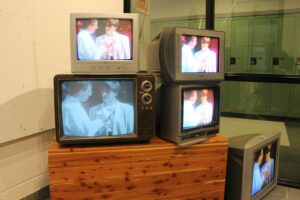
  2. Think of two TVs side by side. One is showing the hero’s channel. The other plays the villain’s channel. The timeframe is the same, but the locations are different. Flip back and forth between them.

    Image

    Photo credit: Annette Dawm, Pexels

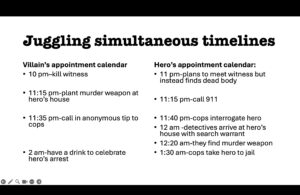
4. Use a calendar or appointment book. Log the day, time, and location for each character in each scene.

Image

Screenshot

In time-critical scenes, like a bomb ticking, you may need to detail the action minute by minute, or even second by second.

5. Use index cards or sticky notes in different colors (blue for hero, yellow for villain, green for secondary characters, etc.). Write a short summary of each scene (time, place, characters present, what happens) on the appropriate color card or sticky.

Another alternative is a white board using different color markers.

When the draft is complete, lay the cards out on a table. Kay DiBianca puts her stickies on closet doors in her office.

Study the color pattern. This visual review points out potential problems. Are there too many scenes in a row in one color? Do you need to rearrange the order to improve pacing or balance the characters?

Are there missing scenes? Or scenes that could be cut without hurting the story’s forward momentum?


Our creative brains all work differently. To keep track of multiple characters and story lines, some writers prefer programs like Scrivener (which Jim Bell uses), Memory Map, Wave Maker, and Fantasy Calendar.

I’m more visual and tactile-oriented so it’s easier for me to stay organized with physical appointment books, calendars, and index cards.

The method doesn’t matter as long as the author always stays aware of what the antagonist is doing in the shadow story.

Because that’s the wellspring of your story’s conflict.

~~~

TKZers: How do you monitor characters in the shadows? Do you use time-tracking programs? Low tech tools like calendars and index cards? Or another method? Comments welcome below.

~~~

Image

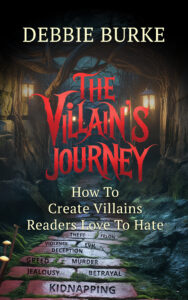
Today’s post is based on The Villain’s Journey-How to Create Villains Readers Love to Hate.

“Debbie Burke has filled a critical gap in writing craft instruction. We needed a book of solid advice for creating compelling, three-dimensional villains. This is it.” – James Scott Bell

Amazon

Barnes & Noble

Apple 

We Become the Stories We Tell Ourselves

The idea for this post began with a quote attributed to Michael Cunningham in A Home at the End of the World

We become the stories we tell ourselves”

This is especially true of writers. If you tell yourself, “I’ll never find an agent” or “My writing isn’t good enough to score a publishing contract,” chances are you won’t. Why? Because you’ve adopted a negative mindset.

Same principal applies to, “I can only write on weekends.” If you tell yourself you can only write on weekends, you’re already making decisions about your ability to write Monday through Friday, so if you slip behind the keyboard on a weekday, it’ll be more difficult to write. You’ve handicapped your creativity with a fixed (negative) mindset.

We’ve discussed fixed vs. growth mindsets before. I want to revisit the Mental Game of Writing *shameless plug for JSB* from a different angle, because it’s not discussed enough in writers’ circles.

RAY EDWARD’S THOUGHT EXPERIMENT 

Imagine you’ve been given a treasure. This treasure, like all magical treasures, comes with conditions. While it’s an unlimited treasure, each day you can only take one gold coin. Just one. And every day you suffer from amnesia. When you forget you have this treasure, you lose a day of unlimited value.

How will you remind yourself to take the coin? Leave a note? Set an alarm? Phone a friend and ask them to remind you? How will you remember not to waste a single coin?

You already own this treasure. It’s called life. Consider this your reminder. Each new day offers endless possibilities, in life as well as writing. What will you do with your coin today? Will you squander it by scrolling through social media for hours? Or will you cash it in for its full value?

Look. We’re all guilty of procrastination from time to time. The trick is to prioritize your writing.

Every morning, I watch the sunrise. Not only does it inspire me, it grounds me with a positive mindset for the day. If you roll over and slap the snooze button, dreading the day ahead, you’ll start the day with a negative mindset. Things tend to roll downhill from there.

Have you ever heard a writer complain about being a lousy writer? That’s a fixed mindset. Their mind is made up. They will never write well. Period.

A growth mindset is positivity based. If that same writer said, “I may not be the best writer today, but I will be” they’ve flipped the script. Because now, they know if they continue to show up, they will improve.

See the difference?

The writer with the growth mindset is moving forward. The writer with the fixed mindset would rather complain about writing than study, hone, and implement their craft.

Writers aren’t the only ones who fall prey to a fixed mindset. It’s easy to do.

Do these excuses sound familiar?

  • Too much to do today. I’ll write tomorrow.
  • Can’t write now. I just worked an eight-hour shift.
  • Too tired to write.
  • Not in the mood to write today.
  • I’m not inspired.
  • I have writer’s block.

Every excuse is steeped in negativity, yet this is common rhetoric in the writing community.

Let’s pull back the veil on each one.

TOO MUCH TO DO TODAY — I’LL WRITE TOMORROW

When life shakes the to-do list in your face, it’s easy to avoid the keyboard. The problem is, tomorrow never comes. If you are a professional writer, or striving to become one, then you must prioritize your writing.

Can you carve out thirty minutes in your busy schedule today? How about fifteen? How about five? No one’s too busy to write a paragraph.

CAN’T WRITE NOW — JUST WORKED AN EIGHT-HOUR SHIFT 

Writers all over the world work a full-time day job. Lee Child wrote his first novel during his commute to and from work. If you’re driving, can you dictate into your phone? Hands-free, please! I don’t want to cause any accidents.

Or write on your phone during your lunch break.

Or start supper fifteen minutes later than usual — after you’ve hit the keyboard.

Priorities, priorities, priorities. How bad do you want it? If writing full-time is your ultimate goal, you must continue to show up.

If you train yourself to write for fifteen minutes when you arrive home from work, the word count will continue to grow. An ever-increasing word count leads to confidence, excitement, and joy. There’s no downside. None. If all you have is fifteen minutes, you must protect that time. Tell your family and friends how much writing means to you. The house won’t burn down if you disappear for fifteen uninterrupted minutes, nor will your children starve.

Some days the words will flow. Other days they won’t. That’s okay. You still made progress. Don’t get caught up in evaluating your writing or hitting a certain word count right away, or you’ll backslide into a negative mindset. Celebrate the fact that you showed up.

TOO TIRED TO WRITE

With all the snow blowing I’ve done this winter, it’d be easy for me to use the “too tired” excuse. Battling Mother Nature does wear me out, but I also have multiple writing projects that need my attention. I take time to rest, enjoy a nice hot cup of tea, then hit the keyboard. If my hands hurt from squeezing the handles of my snowblower (a common problem), I may only squeak out 500 words that day — self-care is equally important — but at least it’s something.

NOT IN THE MOOD TO WRITE TODAY 

If we sit around waiting to get in the mood to write, the WIP will languish on the hard drive for months, even years.

“The only way out is through.”

—Robert Frost

Here’s where having a solid writing routine in place makes all the difference. For me, it’s sliding on the headphones. Once I crank the music, the world fades away, my focus narrows on the screen, and I’m transported into my story. It’s a form of self-hypnosis. When I hear that playlist, my creativity soars.

Find a routine that works for you and stick with it. You may be surprised by how quickly you can jump into the zone.

I’M NOT INSPIRED 

Seriously? I’ve never understood this excuse. What are you waiting for, a lightning rod to shoot from the sky? Lemme tell ya, watching cat videos on social media won’t inspire you, either. Stop wasting precious writing time. Slide on the headphones, or whatever works for you, and write something, anything, even if it’s only a paragraph.

If you don’t know what to write, review your writing from the day before. It’ll come to you. If you’re still stuck, go for a walk. Alone. And think about your story.

Planners may have a slight advantage over pantsers in this regard. If I know my next milestone in the story — first plot point, first pinch point, midpoint, etc., etc. — then I’m able to say, “Okay, the MCs need to wind up doing this or that. How do I get there from here?”

The answer may require research. Or the introduction of a new character. Or better yet, kill a character. Nothing kickstarts creativity faster than raising the stakes.

I HAVE WRITER’S BLOCK 

Pah-lease. Writer’s block is nothing more than a negative mindset with a title attached. You’ve convinced yourself you cannot write for whatever reason. Flip the script in your head, and the words will flow like Niagara.

Perhaps, you’re overwhelmed. It happens. Take a breath. You’re okay. Move on.

Or maybe, real life has given you more than your fair share lately. Or you’ve written yourself into a corner. Figure out what the root cause is, but please don’t call it writer’s block.

Burnout is something else entirely — been there, done that, got the scars to prove it — the subject of which has too many variables to discuss now. Want me to cover it next time?

Image

Maintaining a positive mindset takes work and perseverance, but you can do it… if you want to.

Therein lies the rub.

How will spend your treasure today?

When You’re Happy and You Know It

By Elaine Viets

 Image

What made you happy in the last 24 hours? What about the last three months?

OK, I’ll go first.

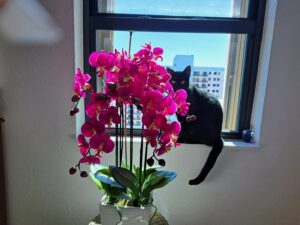
A surprise gift of orchids from a friend. And the silly antics of my cat Vanessa. Both made me happy in the last 24 hours. They’re pictured below.Image

In the last three months, the weekly phone calls from my cousin Lisa made me happy.

These questions are important not only for our well-being, but to understand how  writers create our characters. I read about happiness in a recent article in The Pudding, and if you don’t subscribe to this free newsletter, you’re definitely missing out on happiness.

Writer Alvin Chang’s Pudding article “mapped out 100,000 moments collected as part of a research project on what makes people happy. From sensory pleasure and serendipity to leisure and personal growth, he identified the major themes that emerge when we think about our most cherished moments.”

Here are few that may make you smile, especially the first one:

“My boss was away on business which made my workday very enjoyable and left me with a smile on my face all day.” Female, 36, married, parent

“I went to see my Grandma at the nursing home.” Male, 26, single

“My husband was ignoring me and I laid in bed thinking of funny words with the word ‘sass’ in them to describe him (like Sasquatch) – it amused me greatly.” Female, 26, parentImage

“I got to leave work early on Friday.” Female, 53, single, parent

“I took a day off to enjoy a nice day.” Male, 38, mot a parent

“Enjoyed a Hardboys Peach Country hard cider.” Male, 32, single, not a parent

“I made progress on some household projects.” Female, 22, married, not a parent

“I was able to stay home and work, while my brother-in-law picked up the kids from school by switching his schedule.” Female, 37, married, parent

Image

Scientists used to believe that happiness was U-shaped. “We are happy when we’re young, less happy when we’re middle-aged and then happy again when we’re old.”

Chang mentioned a research article by Arthur Stone that surveyed people between 18 and 85. It said, “Stress and anger steeply declined from the early 20s, worry was elevated through middle age and then declined, and sadness was essentially flat.”

But hold on . . . that U-shape may no longer be true. Another story says, “Pooling Global Minds data across 44 countries, including the United States and the United Kingdom, over the period 2020–2025 we confirm that ill-being is no longer hump-shaped in age but now decreases in age.”

So the middle-age slump is out. The twenties are a rough time. The reason for this is sad: “the deterioration in young people’s mental health both absolutely and relative to older people.”

Once you get through your difficult 20s, your chances of happiness increase.

When Harvard researchers followed people for their entire lives, Alvin Chang wrote, “they found that good relationships were the most important thing for happy, healthy lives.” We need a “meaningful life with a sense of purpose.”

Image

That makes sense. Except social media and smart phones have made us addicted to screens from a young age. “It’s taken a toll on how much time we spend with each other.”

Alvin Chang included a “happy map” with his article. Check it out here. https://pudding.cool/2026/02/happy-map/ he  says it’s “a mirror of the broken world we’ve built, as seen through our most cherished moments.”

What makes your characters happy?Image

Now in paperback: Sex and Death on the Beach, my new Florida beach mystery, is now in paperback. If you read it and like it, you’ll make me happy. https://tinyurl.com/3ut3chuu


What Writers Can Learn from Hugh Hefner

ImageRegardless of your views on Playboy magazine or its brand, Hugh Hefner was a trailblazer, an inspirational creator who wasn’t afraid of shattering societal norms. Writers can learn a lot from him.

Hefner didn’t only compete with existing magazines like Esquire or GQ — he created a new market by combining intellectual, serious journalism with adult entertainment. He created the magazine he wanted to read.

Lesson: Rather than follow trends, bring your vision to life. Write the book you want to read.

Despite being known for nude photographs, Playboy was a major platform for literary giants like Ray Bradbury, Kurt Vonnegut, and Margaret Atwood.  

Lesson: Quality writing attracts a loyal, discerning audience. It also elevates the book, series, and your entire portfolio of publications.

Hefner was the audience for his own magazine. As a “child of popular culture,” he lived his brand (the robe, the mansion, the Playboy bunnies and playmates), making his persona integral to his success.

Lesson: When the writer is the brand, it builds deep audience connection and loyalty.

Hefner leveraged Playboy to fight censorship, obscenity laws, segregation, and many other injustices. During the times of segregation, Hefner invited Aretha Franklin, Sammy Davis, Jr., Ray Charles, Miles Davis, and Stevie Wonder to perform at his Playboy Club. One stipulation: Walk through the front door like everyone else. Most business owners made Black entertainers enter through the kitchen or back exit.

The mere mention of mixing races became such a controversy, the South threatened to ban Playboy from all newsstands if Hefner followed through with his plan. Nearly 80% of sales came from southern regions at that time, but the aforementioned entertainers were also Hefner’s close friends. Which put him in an impossible position.

Do you put profits above friendship? Most business owners did. As someone who opposed segregation and other injustices of the times, Hefner could not. So, he ignored the threat. Once he made the decision to stand up to “The Man,” he doubled down and invited all entertainers, regardless of skin color, to enjoy the club before and after their performances —  for the first time, Whites and Blacks socialized in public.

The South followed through with the ban, costing Hefner a hefty loss in revenue. Didn’t matter. He stood firm in his beliefs. Segregation was a barbaric act, and Hefner refused to fall in line.

This is just one example of a creator trusting in themselves enough to bet others felt the same.

Lesson: Stay true to your beliefs and values, even if they’re not the popular opinion. Please don’t misread that advice. I am not suggesting you should commit career suicide by screaming on social media about hot-button issues. Let readers learn who you are through the style, theme(s), voice, and tone of your books. No one needs or wants to be slammed over the head with your personal opinions.

Behind the partying playboy image, Hefner was a relentless workaholic who often slept at his office. Later, he moved his workspace into his bedroom, often working from his oversized circular, rotating bed.

Lesson: Success in competitive media requires dedication, a strong work ethic, and a never-say-die spirit.

Hefner often cited his restrictive, “Midwestern Puritan” upbringing as the catalyst for his liberating and revolutionary content. Though men enjoyed the visual stimulation, they also enjoyed the articles. Probably still do.

Lesson: Use your background and life experience — negative and positive — as fuel for your unique, compelling, emotion-infused writing.

Hugh Hefner scratched and crawled his way to the top.

He fought for free speech.

He fought for free choice.

He fought haters, religious groups, and feminists, who all vowed to take him down.

He fought the State of Illinois and the courts.

Hefner trusted his vision for a better, more inclusive and less sexually repressed tomorrow.

Through the years, he started multiple companies — all built around the Playboy brand.

Lesson: When people trust a brand, they’ll follow its creator anywhere if the new company or product delivers the same quality and standards. Readers fall in love with a writer’s voice and style. Stay true to your brand and you can write whatever you want, without the need for an alias. Step outside your brand, and you may encounter difficulties.

For example, a cozy mystery writer probably shouldn’t venture into smut and expect their audience to stick around. Some may stay. Most will not. Why? Because the writer veered too far off-brand.

Could a thriller author write narrative nonfiction or memoir? Absolutely. Could they sell a children’s series to their existing audience? Sure, if it aligns with their brand.

Allow me to use myself as the example. My environmental thrillers focus on wildlife conservation (Oh, how I love to kill poachers! 😉 ). The children’s book series I’m working on has the same focus, only geared toward young conservationists of the future — the children or grandchildren of my existing audience.

I’ve also written psychological thrillers/serial killer thrillers, mystery, and true crime. By the time I ventured into environmental thrillers (aka eco-thrillers), the new genre didn’t surprise my readers. No matter how grisly some of storylines are, my love of animals shines through my work. All the pets are fully fleshed characters that readers adore. The genre switch (in the middle of the series, no less) still delivers the type of books readers expect from me.

Staying true to audience expectations is also how Hefner expanded his brand worldwide.

Write the book you want to read.

Write the book that’ll resonate with your target audience.

Be genuine.

Dig deep into your well of emotional truth and touch lives.

Build, and keep building, a brand you’re proud of.

Be the Hugh Hefner of your generation.

Creative Quirk or Signature?

When I first strolled through my new house with the realtor, I noticed a lot of unfinished work. For example, the previous owner painted the barn to match the house but left the tip of the peak untouched. Support posts on the covered porch were all painted, except the top of one. It baffled me. Why wouldn’t she paint those spots? Higher areas, she’d painted.

I could tell she’s creative. Painted butterflies, hummingbirds, and flowers dotted the landscape.

Did I buy the house from an emerging artist?

The support beam in the new addition (living room) has pallet wood wrapped around two sides, with the third side only painted. Gorgeous wood frames the back mudroom ceiling except for one tiny missing piece. The underside of an outside railing has new paint, one bare space, then continues to the barn loft. Four solar motion detectors line the back fence, with one blacked out with tape.

After I moved in, the closer I examined small details, the more my curiosity piqued. What’s going on here? The previous owner clearly has a fondness for 3s (as do I). Or maybe, she knows the importance of the number 3.

The number 3 often appears in nature and fundamental structures:

  • Atoms: protons, neutrons, electrons
  • Dimensions: length, width, height
  • Cycles: birth, life, death
  • Time: past, present, future
  • Essential survival needs: air, water, food
  • Geometric strength: The triangle is the simplest and most stable shape — it’s represented in everything from molecular structure to human-made architecture
  • Monocots: many flowering plants (monocots) have flower parts in multiples of three
  • Tree structure: roots, trunk, canopy
  • Primary colors of light: red, blue, yellow
  • States of matter: solid, liquid, gas
  • Layers of skin: epidermis, dermis, hypodermis
  • Types of muscle: skeletal, cardiac, smooth
  • Germ layers during development: ectoderm, mesoderm, endoderm
  • Circulations: Systemic, Pulmonary, Portal
  • Trinity: Earth, sun, moon… body, mind, spirit
  • Genetic code: DNA instructions are read in triplets (codons) to build proteins
  • Sensory Perception: Human color vision is trichromatic, based on three types of cones in the eyes sensitive to red, green, and blue light
  • Survival “Rule of 3”: Humans can typically survive 3 minutes without air, 3 hours without shelter in harsh environments, and 3 days without water
  • Geographic regions: land, sea, air
  • Insects: adult insects are characterized by a 3-part body: head, thorax, abdomen.
  • Dietary groups: herbivores, carnivores, omnivores

The number 3 represents universal patterns of stability and completeness.

Did the emerging artist find comfort in the power of 3? The mystery haunted me as I surveyed my new property.

Then one morning, I was admiring the sunrise from the back mudroom, when I noticed she’d painted only three sides of a window frame. The floor she tiled, except for one square in the corner by the water heater.

A ha! It’s an intentional act. Her creative signature, if you will.

Kind of a pain for the new buyer (me) to touch up all these spots but I also respect her creativeness — she left her signature on every improvement she made. And helped create the quirkiness I love about the property.

To her credit, she also left the supplies to finish every project. Maybe I’ll leave one or two minuscule signatures in a corner that’s not visible to others, as an homage to her creative spirit. Not the living room beam — that blank side drives me crazy. What she probably never considered was that buyers deduct money from their offer for unfinished projects. It’s automatic. The more a buyer must do, the less they want to spend.

The same could be said for readers.

If a reader runs into too many writing tics, they’ll either:

  • Never read that author again
  • Deduct stars for the annoyance
  • Give the author one last chance; they better deliver in the next book

Writing tics could be seen as a creative signature of sorts, I suppose, but not in a good way. Readers don’t want to be yanked from the story. They want immersion. They want you to sweep them away, to transport them into the scene and hold them captive. Writing tics do the opposite.

Even in my new home, some might look at the unfinished spots in a negative way. Not me. Though I’ll complete most of the projects for continuity, I love the quirkiness of the understated ones. With the mystery of why she did it solved, I appreciate her creative spirit.

The same cannot be said for writing tics. If you made no other writing resolutions this year, add this: Tighten your prose, TKZers!

New Year’s Thoughts from Fifteen Authors

by Debbie Burke

The New Year is a time when many writers ponder what we want to accomplish.

I thought it might be fun to see what well-known authors, past and present, think about the New Year. Here’s a collection of advice, musings, and cautions:

1. “Cheer up! Don’t give way. A new heart for a New Year, always!” – Charles Dickens (1812-1870), English novelist

2. “We went nowhere without figs and never without notebooks; these serve as a relish if I have bread, and if not, for bread itself. They turn every day into a New Year which I make ‘happy and blessed’ with good thoughts and the generosity of my spirit.” – Seneca, who lived at the cusp of BC and AD.

Image

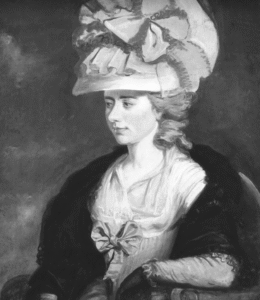
Frances Burney

3. “I opened the new year with what composure I could acquire…and I made anew the best resolutions I was equal to forming, that I would do what I could to curb all spirit of repining, and to content myself calmly—unresistingly, at least, with my destiny.” – Frances Burney AKA Fanny Burney (1752-1840), English novelist and playwright

4. “‘A merry Christmas, and a glad new year,’
Strangers and friends from friends and strangers hear,
The well-known phrase awakes to thoughts of glee;
But, ah! it wakes far different thoughts in me.
[…] I, on the horizon traced by memory’s powers,
Saw the long record of my wasted hours.” – Amelia Alderson Opie (1769-1853), English novelist and abolitionist

5. “Ring out the old, ring in the new,
Ring, happy bells, across the snow:
The year is going, let him go;
Ring out the false, ring in the true.” – Alfred Tennyson (1809-1892), English poet

6. “New Year’s Day: now is the accepted time to make your regular annual good resolutions. Next week you can begin paving hell with them as usual . . . New Year’s is a harmless annual institution, of no particular use to anybody save as a scapegoat for promiscuous drunks, and friendly calls, and humbug resolutions. Yesterday, everybody smoked his last cigar, took his last drink and swore his last oath. Today, we are a pious and exemplary community. Thirty days from now, we shall have cast our reformation to the winds and gone to cutting our ancient shortcomings considerably shorter than ever.”– Mark Twain (1835-1910), American author and humorist

7. “For last year’s words belong to last year’s language. And next year’s words await another voice. And to make an end is to make a beginning.” – T.S. Eliot (1888-1965), American poet

8. “Drop the last year into the silent limbo of the past. Let it go, for it was imperfect, and thank God that it can go.” – Brooks Atkinson (1894-1984), American theatre critic

9. “Youth is when you’re allowed to stay up late on New Year’s Eve. Middle age is when you’re forced to.” – Bill Vaughan (1915-1977), American author and columnist

10. “I made no resolutions for the New Year. The habit of making plans, of criticizing, sanctioning and molding my life, is too much of a daily event for me.” Anaïs Nin (1903-1977), French-American author

11. “The object of a New Year is not that we should have a new year. It is that we should have a new soul and a new nose; new feet, a new backbone, new ears, and new eyes. Unless a particular man made New Year resolutions, he would make no resolutions. Unless a man starts afresh about things, he will certainly do nothing effective.” – G.K. Chesterton (1874-1936), English author

Image

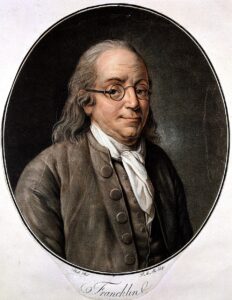
Benjamin Franklin
Photo credit: Wellcome CC BY-SA 4.0

12. “Be always at war with your vices, at peace with your neighbors, and let each new year find you a better man.” – Benjamin Franklin (1706-1790), American author and a founding father of the U.S.

13. “I have always loved New Year’s Eve and New Year’s Day. Even though our sense of time is arbitrary and human, it still means something. I love the feeling I always get on New Year’s Eve that I am lucky — that the universe has been generous to me, to have let me stick around for another year, and to now erase the slate and give me another chance. Tomorrow I will be gifted with a brand new year — with no mistakes in it yet, and no heartbreaks yet, and no failures yet. I get to try again. Amazing. You will be gifted with this huge blessing, too. A clean and empty book awaits us all. Maybe we will be able to write things differently this time. Maybe a bit better. Maybe we will be wiser this time. At least we get to try. We have all been given a fresh chance. Let’s close the old book, and open a new one.” – Elizabeth Gilbert (1969-), American author

Image

Woody Guthrie Statue
Photo credit: Cosmos Mariner, CC SA-BY 4.0

14. Woody Guthrie (1912-1967), American songwriter, offers his list of resolutions:

  • Work more and better
  • Work by a schedule
  • Wash teeth if any
  • Shave
  • Take bath
  • Eat good—fruit—vegetables—milk
  • Drink very scant if any
  • Write a song a day
  • Wear clean clothes—look good
  • Shine shoes
  • Change socks
  • Change bed cloths often
  • Read lots good books
  • Listen to radio a lot
  • Learn people better
  • Keep rancho clean
  • Dont get lonesome
  • Stay glad
  • Keep hoping machine running
  • Dream good
  • Bank all extra money
  • Save dough
  • Have company but dont waste time
  • Send Mary and kids money
  • Play and sing good
  • Dance better
  • Help win war—beat fascism
  • Love mama
  • Love papa
  • Love Pete
  • Love everybody
  • Make up your mind
  • Wake up and fight

15. And last from Susan Sontag (1933-2004), American author:

“I want to make a New Year’s prayer, not a resolution. I’m praying for courage.”

~~~

TKZers: Which of these quotes resonated with you? Why?

Do you disagree with any of them? Why?

Did you make writing resolutions or set goals? Want to share them?

~~~

ImageIs 2026 the year you want to learn to write fascinating villains and antagonists? Please check out Debbie Burke’s bestselling craft guide, The Villain’s Journey-How to Create Villains Readers Love to Hate.

Amazon

Barnes & Noble

Apple

Kobo

Interested in taking a villain workshop from Debbie? Please visit debbieburkewriter.com to learn about upcoming zoom and in person classes.

What a Difference a Day Makes

Mindset, clarity, control, and/or opportunities can all change in a single day. Think of how many plot twists could occur in a 24-hour period. Characters run full force into danger, narrowly escape, and end the evening in a hot tub with a cocktail. Or they don’t escape. Imagine how grueling every second of captivity must feel?

Entire novels that take place in a single day include:

  • Saturday by Ian McEwan follows a neurosurgeon through his Saturday, dealing with personal and national anxieties.
  • The Hours by Michael Cunningham interweaves three women’s lives across different eras, all connected by Virginia Woolf’s Mrs. Dalloway, with events occurring in one day. Albeit in different years.
  • The Flight Attendant by Chris Bohjalian is about a flight attendant who wakes with a dead man in a Dubai hotel. The MC must piece together the previous night before her next flight.
  • Rock Paper Scissors by Alice Feeney: A couple’s anniversary trip to a remote Scottish castle turns sinister as secrets unravel in a single, stormy weekend (more than one day but still a condensed timeframe).
  • Supremely Tiny Acts by Sonya Huber explores the small moments of a single day in a woman’s life.
  • The Mezzanine by Nicholson Baker focuses on a man’s lunch hour and his detailed observations of office life.
  • The Sun Is Also a Star by Nicola Yoon is a romance novel that follows two teens who meet and fall in love in a single day in New York City.

The above list demonstrates this technique isn’t limited to thrillers. A condensed timeframe could work with almost any genre.

Movie Examples:

  • Collateral shows how a cab driver’s night turns deadly as he’s forced to drive a hitman around LA for one wild night of murder and mayhem.
  • Ambulance focuses on two robbers who hijack an ambulance, and leads to a city-wide chase.
  • Unstoppable is about a runaway train that threatens a city, with a veteran engineer and young conductor racing to stop it in hours.
  • The Taking of Pelham 123 shows how a subway dispatcher must outwit hijackers holding passengers hostage in a lone NYC subway car.

All these stories use the compressed timeframe to heighten tension and force characters to make immediate decisions, which often leads to more conflict and higher stakes. Compressed timeframe novels are almost impossible to put down. The movies? Forget about it. They demand your full attention — keep the pause button handy for bathroom breaks. You won’t want to miss a second!

Crafting a novel set within a 24-hour period requires tight plotting, a strong central conflict, and a heightened sense of urgency.

Tips to Write Compressed Timeline Novels

Use a chronological structure that follows the progression of the day, from sunrise to sunset or from the inciting incident through the next 24-hours. If you begin each chapter with a heading to mark the hour, it’ll emphasize the ticking clock and add even more intensity.

Anchor the story around a major time-sensitive event, like a party, heist, or sudden disaster. The main character’s journey through this event provides a natural narrative arc. A strong inciting incident is a must. Whatever event kicks off the quest should happen early and be urgent enough to force the MC to act. For example, in Ian McEwan’s Saturday, the MC witnesses an accident that disrupts his peaceful day.

Use backstory strategically through dialogue, internal thoughts, or quick flashbacks. All must relate to the main storyline and reveal important tidbits and/or character traits. Since time is limited, be intentional with your dialogue. Conversations between characters can reveal relevant backstory and propel the plot forward.

Avoid unnecessary subplots. With such a tight window of time, every scene, conversation, and action should serve the storyline. You could weave in a subplot between dueling protagonists, like unreciprocated romantic feelings or a divorced couple forced to work together. Both would cause even more conflict and obstacles.

Word of caution: Don’t let the subplot destroy the pacing of the novel or detract from the main storyline. Let’s use my two quick suggestions as examples. The awkward moments of unreciprocated love could be used as comedy relief to give the reader a break from the tension. A divorced couple could also add hilarity if one spouse nitpicks the other at the worst possible time.

A countdown structure, where the plot builds toward the climax, heightens stakes, builds tension and conflict. Keep raising those stakes — challenge your characters! They cannot escape their fate by waiting for tomorrow, thus the pressure escalates throughout the day.

Use the setting to your advantage. Saturate the narrative with sensory details to create a strong sense of place, mood, and atmosphere. Take advantage of the time of day, traffic, weather, and location to reflect the characters’ changing moods and emotions.

Limit your cast. With less time to develop characters, a smaller cast allows for more intimate and detailed dynamics.

There isn’t much time for massive external changes, so trigger character flaws early and focus on internal changes to create a strong character arc. Show how the day’s events force them to change strategy, perspective, or arrive at a new understanding.

Also, the compressed timeline allows the perfect place to demonstrate the three dimensions of character through action and reaction under pressure. Give readers direct access to their inner lives with a deep POV. An omniscient narrator won’t be as effective.

Hope you all had a joyous holiday season, TKZers!

Have you written a story with a limited timeframe? What’s your favorite “crunch time” movie or novel? Why did the tight timeline work for you?

2025 in the Rearview Mirror

Image

“What you get by achieving your goals is not as important as what you become by achieving your goals.” —Zig Ziglar

 * * *

As we approach the end of 2025, it’s a time to get together with friends and family, enjoy good food and fellowship, and celebrate the joy of the season. Oh yeah, and review that list of goals we wrote down at the beginning of the year to see how we did.

Each time I review my list of goals for a year, I think of that song from The Mikado where Ko-Ko, the Lord High Executioner, sings “I’ve Got a Little List,” which turns out to be a very long list indeed. Here’s a fifteen-second clip from the Austin Gilbert & Sullivan Society performance (with my favorite actor playing the role of Ko-Ko) to illustrate:


Why set goals?

 “If you don’t know where you’re going, you’ll probably end up somewhere else.” —Yogi Berra

Setting a goal means you know where you want to go. A goal focuses the mind and gives clarity and direction. Most of us lead complicated lives with lots of things to do, so having a list of goals keeps us from getting overwhelmed by the volume of it all

Not only is it motivating to have something to shoot for, we all know the pleasure and sense of accomplishment that comes by realizing a goal and checking it off the list.

I read an article on goalbuddy.io recently that listed nine benefits of setting goals. (Read the article for an explanation of each one.)

 1. You become more charismatic
2. Goals make you live longer and you are full of energy
3. Goals help you stay motivated during tough times
4. Life doesn’t just happen to you, you make life happen as you want it to be.
5. Goals unlock the potential of your heart
6. Goals provide you with the clarity in which direction to go
7. The goals focus filter solves the problem with overwhelming once and for all
8. You feel like you are winning the game of life and you want more of it
9. Goals help you learn and grow

 It’s a good list. I particularly like #4, and I’d love to always make life happen as I want it to, but realistically, life does “just happen” sometimes. I missed one of my goals this year (completing the second Lady Pilot-in-Command novel) because of the time-consuming adventure of moving to a new home—something that wasn’t even on the radar at this time last year.

As for the rest of my 25 writing goals for 2025, I accomplished some, missed a few, and made progress on others. I even exceeded one: I intended to release one Reen & Joanie book in 2025, but I managed to publish two.

* * *

Moving on to 2026

Now it’s time to make plans for 2026. The second Lady Pilot-in-Command novel tops the list, and I’ll carry over some of the goals that appear every year (e.g., a bi-weekly blog post on TKZ, monthly post on my blog, attend at least one writers conference).

As we finalize our lists, let’s keep in mind that wise guidance spoken by the Cheshire Cat in Alice’s Adventures in Wonderland: “If you don’t know where you’re going, any road will get you there.”

Image

* * *

So TKZers: How about you? What were your goals for 2025? How did you do? Have you made your list for 2026 yet?

This is my last post for 2025. Wishing you all a healthy and happy holiday season. See you in 2026!

* * *

Image

The Reen & Joanie Detective Agency series

Smart sleuthing, real-world stakes, and heart—join Reen and Joanie as they chase clues, challenge assumptions, and prove that persistence and truth always matter. Both ebooks are on sale for the rest of the year. Click the image to go to the Amazon series page.

First Page Critique – This Uneasy Place

by Debbie Burke

Today, let’s welcome another Brave Author who submitted a first page entitled This Uneasy Place. The genre is described as speculative with horror elements. Please read then we’ll discuss on the flip side.

~~~

Lennie was about to give up sifting through the book from the Dwyton estate when she found it. A stray envelope. Fountain pen writing and a green halfpenny stamp, dated close to a century ago. But empty, by the looks of it.

She picked up the envelope to set aside for the customer who’d been searching for that very stamp for years – he’d be tweedy, about seventy, with smeary glasses and a smile of yellowed teeth, and he’d have fluttered into her bookshop on a whim, shaking his mammoth umbrella and hee-hawing gamely about British summers – and a letter lay folded beneath it.

A squeak escaped her. Tweedy old guy vanished. Crowds materialised instead, salivating over the letter and its illuminating contents, or important writer, or… Lennie picked through two pages covered with spikes and curls of Edwardian handwriting.

…I cannot impart to you by words alone how unshakeably (and rather unnervingly) Loweheaf village believes in old superstitions…

She called past antiquated spines of calfskin, sheepskin, goatskin, aged hardback, paperback, musty velvet, on rows of bookshelves bathed in low-watt fluorescence, to where Ollie, her boyfriend, stood, his cigarette hand suspended out of the bookshop’s open door. Traffic hissed through pools of rain from the latest deluge of June’s utter drenchfest. The smell of wet London pavements intruded on the chocolatey fragrance of her mother’s shop. Her shop, now, yes. But her mother the silent partner in her head.  ‘Hey, look at this letter.’

‘Letter? Savill’s making you a reasonable offer, again? Foxton’s? Or is it John D. Wood you’re turning down this time?’

Hilarious. No estate agent was going to get its claws her mother’s shop. She still had time, still had enough money to keep it going. Before that ran out, there’d be a turning point.

…old superstitions…legendary creatures included…Surely not in 1909? Not when the industrial age had seen off phantoms of old beliefs, shone electricity into dark corners, sent behemoths roaring and seething on rail tracks to upstage childhood monsters.

 ~~~

I found this piece intriguing yet frustrating. The mystery of a century-old letter caught my attention. So did the humorous, somewhat caustic voice. But I got lost in long, convoluted, parenthetical sentences and wandering descriptions that held promise but led to dead ends.  

There were wonderful turns of phrase and descriptions like:

“he’d be tweedy, about seventy, with smeary glasses and a smile of yellowed teeth, and he’d have fluttered into her bookshop on a whim, shaking his mammoth umbrella and hee-hawing gamely about British summer.”

This character leapt to vivid life in my imagination, yet it turned out he wasn’t even the point of the sentence. Maybe he’ll reappear later in the story. I hope so. But for now, he was a disappointing dead end.

I had to chop through bramble-bush narrative to find the actual point: Lennie found an old envelope with a rare, interesting stamp and a letter, tucked inside a book from an estate collection.

“A squeak escaped her. Tweedy old guy vanished. Crowds materialised instead, salivating over the letter and its illuminating contents, or important writer, or… “

Now I’m thoroughly lost.

Was the tweedy guy physically present? Did he vanish in a poof of smoke? Or was he only a memory?

Where did crowds come from? Are they pushing inside the bookshop? Why are they salivating? What illuminating contents? Which important writer?

The visual detail about the letter is lovely: “two pages covered with spikes and curls of Edwardian handwriting.”

But the mysterious warning about “old superstitions” gets buried under a rambling 37-word sentence about “calfskin, sheepskin, goatskin, aged hardback, paperback, musty velvet on rows of bookshelves bathed in low-watt fluorescence…”

As a description of the shop, it’s vivid, sensory, and beautiful. I’d like to get lost in this cool old bookstore.

But a reader shouldn’t get so lost that they’re unable to follow what’s happening.

After three readings, I finally got the gist of this page. It’s a rainy June in London. Lennie’s mother died and left Lennie a store full of antique books from estates. Her boyfriend Ollie smokes but is thoughtful about holding his cigarette out the door. His jibes about estate brokers indicate he thinks she’s being unrealistic about the business’ prospects, but she doesn’t want to sell the shop because it’s her mother’s legacy.

Apparently, Lennie has a fantasy that she’s going to discover valuable documents hidden among the musty old books. Then historians and collectors will offer her lots of money for the treasure, enabling her to continue to operate the store.

A 1909 letter about old superstitions in Loweheaf village may be the treasure she’s been hoping for.

At least I think that’s what’s going on.

The style has a distinct British voice that sets the appropriate tone and mood. However, style shouldn’t overwhelm the plot and make the reader work to decipher what’s relevant amid extraneous (although beautiful) description.

Brave Author, this page is frustrating because your writing has exquisite sensory detail and a lush style that should be preserved.

However, you need to shorten sentences so they’re comprehensible.

Journalists are warned: “Don’t bury your lede.” Unfortunately, you’ve done that.

I’m guessing you’re well into the story to the point where you’re so familiar with Lennie’s voice that she sounds completely natural to you. But a fresh reader needs to get accustomed to her voice before they can grow comfortable with it.

You may intend Lennie to be an unreliable narrator who drifts between fantasy and reality. If so, you still need to first ground the reader in reality. If Lennie engages in flights of fantasy, give the reader more clues.

Here’s a suggested rearrangement:

The spikes and curls of Edwardian handwriting in the letter made her squeak with excited curiosity. One particular sentence sounded compelling: …I cannot impart to you by words alone how unshakeably (and rather unnervingly) Loweheaf village believes in old superstitions…

Could this be the discovery she’d dreamed of? Tweedy old guy vanished from her imagination. In his place, crowds of eager historians and collectors materialized, salivating over the letter and bidding on the illuminating contents from an important writer, or…

Lennie called to her boyfriend Ollie, “Hey, look at this letter.”

Ollie stood at the front of the shop by the open door holding his cigarette outside. 

Traffic hissed through pools of rain from the latest deluge of June’s utter drenchfest. The smell of wet London pavements intruded on the chocolatey fragrance of her mother’s shop. Her shop, now, yes. But her mother the silent partner in her head.

Ollie extinguished his cigarette and sauntered toward her, past rows of shelves lined with antiquated book spines of calfskin, sheepskin, goatskin, aged hardback, paperback, musty velvet. Low-watt fluorescence bathed the interior.

‘Letter?’ he asked. ‘Savill’s making you a reasonable offer, again? Foxton’s? Or is it John D. Wood you’re turning down this time?’

Hilarious. No estate agent was going to get its claws her mother’s shop. She still had time, still had enough money to keep it going. Before that ran out, there’d be a turning point. Her concentration returned to the letter.

…old superstitions…legendary creatures included…Surely not in 1909? Not when the industrial age had seen off phantoms of old beliefs. By then, electricity shone light into dark corners of ignorance. Fanciful childhood monsters had been upstaged by progress with iron behemoths roaring and seething on rail tracks.


Brave Author, as harsh as some of my comments sound, the fixes are easy.

Shorten sentences. Read the page out loud to someone else. One hint that a sentence is too long is if you run out breath reading it. Ask the listener if they can understand the meaning. Are they confused? If so, rewrite until it’s clear to them.

Most important, don’t bury the lede. Lennie’s excited about the possible answer to her dilemma. Fit the superb descriptions of the shop around that lede. Descriptions should enhance the story, not overshadow it.

You’re a skilful writer with a wonderful eye for specific details. You can make this story compelling without much rewriting.

Thanks for submitting This Uneasy Place and wishing you good luck with it.

~~~

TKZers: what are your impressions of Lennie’s shop and the mysterious letter? Any suggestions for the Brave Author?

~~~
Image


Binge on a new thriller box set. Three exciting novels only $7.99.

Tawny Lindholm Thrillers Volumes 1-3

MG is for Middle Grade

Image

“Access to books and the encouragement of the habit of reading: these two things are the first and most necessary steps in education and librarians, teachers and parents all over the country know it. It is our children’s right and it is also our best hope and their best hope for the future.” –Michael Morpurgo

* * *

I’ve spent the better part of my writing time in 2025 writing and publishing Middle Grade novels, and Sue Coletta’s recent TKZ post on Writing for Children inspired me to share some of the things I’ve learned.

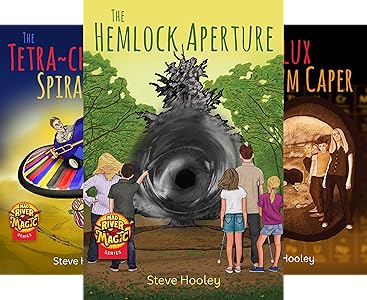
I asked my good friend and TKZ contributor emeritus Dr. Steve Hooley to help me. I had interviewed Steve on my blog earlier this year about his Middle Grade Fantasy series, The Mad River Magic Series. Steve’s thoughts about writing for the 8-12 year old level were so insightful, I asked his permission to quote from that interview and from later email exchanges. So here are some thoughts about Middle Grade books from both of us.

WHAT CONSTITUTES MIDDLE GRADE?

Steve:

Most authors define “middle grade fiction” as being written for ages 8 – 12 (third grade through sixth grade), and containing no sexual content or realistic violence. I think that another way to look at it is the intelligence and information processing skills of the reader. “Children” of this age are reaching the age where they can understand adult logic and reasoning. And they are not yet filled with the adolescent hormone-driven physical and sexual attraction that is found in young adult material, and that clouds their thinking.

They differ from books for younger readers in that they are more like adult books, longer, with plot and structure. And they differ from books for YA and adult in that they usually contain no profanity, sex, or overt violence.

Kay:

I like what Steve had to say about adult logic and reasoning. In my books, the two main characters solve mysteries by looking at things from multiple points of view. I believe this introduction to analytical logic and critical thinking skills will serve young readers well. (And I know Garry Rodgers will like that.)


WHY WRITE MIDDLE GRADE?

Steve:

In my opinion, the age group of readers of middle grade books is in the innocent age of transition to adulthood. This permits the reader to learn principles from the book that will prepare them for their adult life. And it gives the author a unique opportunity to present material which the reader can evaluate and consider regarding choices for their adult life.

Kay:

I had included two young girls, 10-year-old Reen and her 9-year-old cousin Joanie, in my third mystery novel, Time After Tyme. The girls were very popular with readers, and several people encouraged me to give them their own series. Although I hesitated for months while I worked on another novel, the idea of writing books that would contribute to a child’s intellectual growth appealed to me.  I decided to try to create an entertaining story that would have traces of problem-solving, teamwork, fair play, and persistence without preaching.


HOW MANY WORDS?

Steve commented on my blog that most of his Mad River Magic books are around 80K words, so I would put those books in the Older MG category.

Each of my books is around 30K words, so I think younger readers can handle the straightforward plotting and limited number of characters.


WHAT GENRES ARE ACCEPTABLE?

As we mentioned above, Steve’s books are in the Fantasy genre; mine are mysteries, but according to a recent post on Jenny Bowman’s site, MG books can cover a wide range of genres. She mentions mystery, fantasy, adventure, historical fiction, and even the re-telling of classic stories like Les Miserables.

In place of a romance genre, best friends and strong relationships are appropriate. And MG kids love to laugh, so humor is always welcome in Middle Grade fiction.


FINAL THOUGHTS

Steve included these thoughts in a recent email

  1. The name of genre (Middle Grade) makes no sense. It is not Middle “School” age.
  2. The wide discrepancy of reading skills in that age group. Some are reading adult books by the end of “middle grade”. Others (according to recent testing) are reading very poorly.
  3. Should there be two genres, a boys’ and a girls’ genre? Girls are always asking for romance by the 7th and 8th grade. While boys want adventure without all the icky girl stuff. (ex. Nancy Drew series vs. Hardy Boys)
  4. Marketing is difficult, unless you are trad published. Teachers want to recommend books that have won awards to their students.
  5. At that age, most readers are not buying their own books.
  6. At that age, readers can’t leave reviews on Amazon.
  7. Contact with students for beta reading must be handled with care. The best is to find a gifted and talented coordinator who will be the intermediary, because most teachers don’t have the time or the interest.

* * *

So TKZers: Have you written any Middle Grade Fiction? Have you read any MG novels? What are your thoughts about writing for children?

* * *

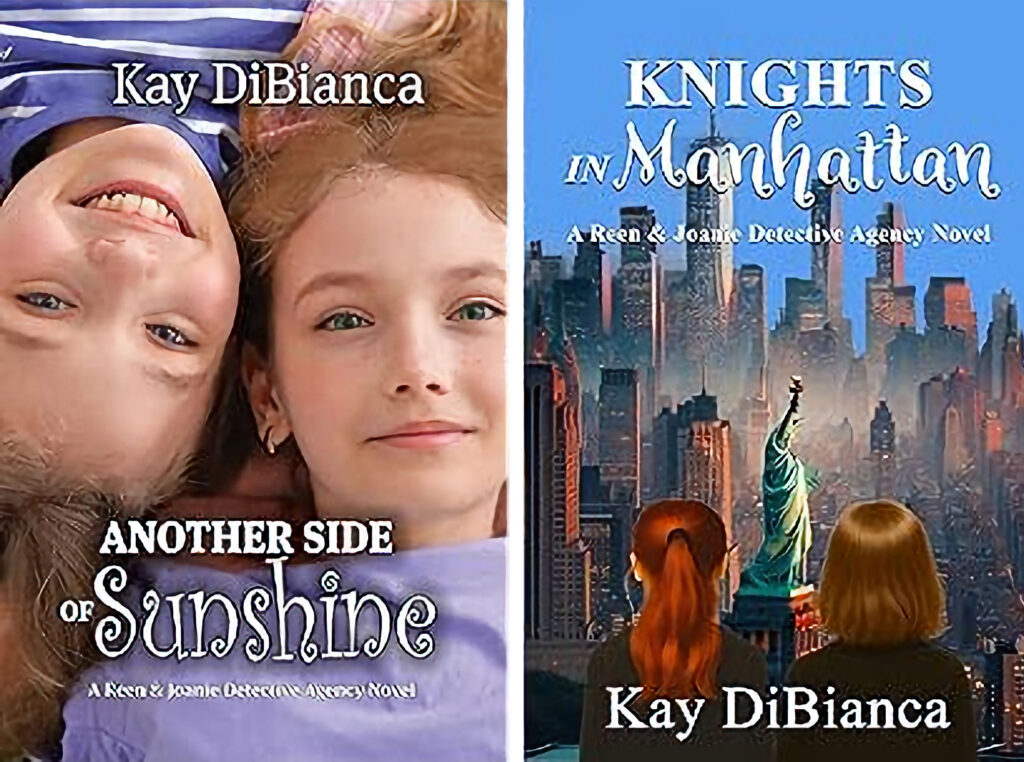
Image Whether they’re searching for hidden treasure in Bellevue or chasing tricky thieves through famous landmarks in Manhattan, Reen & Joanie are up to the job. Join the girls and make the world a better place.

Click the image to go to the Amazon series page.

* * *

Image

A hero on crutches, flying barrel carts, Indian magic, and a glow-in-the-dark magic pond, Bolt and the Mad River Magic gang have it all, living in the enchanted forest with their grandparents and practicing light magic.

Click on the image to go to the Amazon series page.