Based in the Bay Area for years, a co-editor of the
Poetic Labor Project, Alli Warren is also -- more importantly -- and for my money -- one of the best Anglophone lyric poets around. OK, yes, that's one of those blurbable statements that the business of evaluation and writing on contemporary work can tend towards, and what, anyway, is meant by lyric? Well one answer to that might be that we have to turn to poetry like Warren's to see how a term like lyric, at once vague and specific, might have a real purchase and a real purpose, and we have to turn to it to see how we can retain some faith in the real workings of real poetry without worrying about the other networks that structure its perception or reception. Which is just to say: her work is quietly singular; without fuss and with calm commitment, she has for the last few years been building up an achieved and purposive poetry, with none of the bravado or braggadocio that terms like ‘achieved’ build up in the bloated corpus of their own self-awareness, bestowing laurel wreaths in parades of categorising, crowning, dividing. It is
particular work, attentive to particularity, but with plenty of space to breathe. Because of that it feels like it's in the air - it feels like Warren's poetry can sometimes get taken for granted -- and its specific details can get overlooked, it's such a great
*ambiance* to be in -- but that closer look only serves to deepen a sense of (that word again!) its achievement. This that follows is a quick look at three recent pamphlets and books:
Movable C, I love it Though, her second full-length, out from Nightboat, and (more briefly)
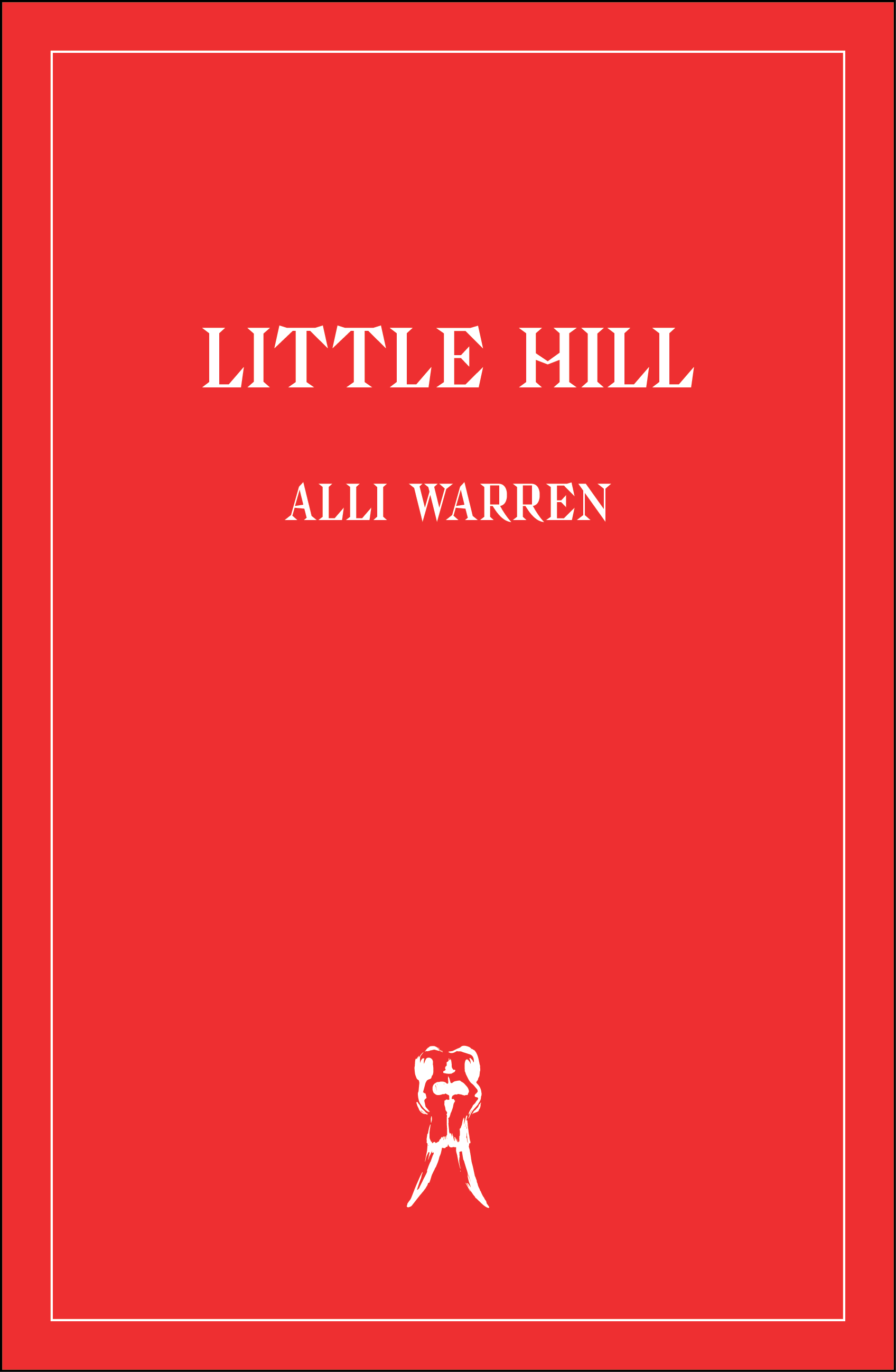
Little Hill, the most recent, from
the Elephants.
***

So
Movable C, printed in an edition of 200 by
Push Press a couple of years ago, is named after Ornette Coleman’s conception of the moveable central note (the 'middle C') as (non-)anchoring of the western pitch scale. As the closing citation from Coleman’s
New York Times obituary puts it, Coleman retained “a lifelong suspicion of the rules of western harmony and musical notation”, formulating instead a conception in which, rather than subscribing to a universally-applicable centring of pitch, every person (and not just musician) has their own tonal centre. Coleman’s youthful misunderstanding of the difference between the C of his own instrument, the alto sax, and the C on the “concert key” of the piano (an A on the alto), has been used by even sympathetic critics such as Gunther Schuller to disparage his lack of awareness of conventional ‘western’ / European pitch scales, painting Coleman as a kind of outsider artist, a musical primitive whose unique musical conception arose out of happy accident. But for Warren, it’s instead a model for how the field of the poem – as of Coleman’s ‘harmolodic’ ensembles – might enfold the multiple within the singular, attentive to, but not mired in, the detail of locale and of the specific fractures and cruelties of this particular epoch, century twenty-one.
The shortish pamphlet unfolds in prose sentences, sometimes harsh and tough, yet lovingly aware of the “possible future in the tender measure", always alive to the positioning of the subject in racialised, gendered and economic incidents and systems of violence, yet nonetheless leaving room for that which is not entirely tagged, tarred, complicit. Tonally at least, the book doesn’t really feel like Coleman’s lushly melodic, tautly over-spilling ‘free jazz’, though the concept of Harmolodics and of the moveable C might still be a useful analogy for the way that individual sentences relate and construct a mosaic or fabric weave of stark or sarcastic social observation, citation, and little darts of lyric flight. Neither are Warren’s sentences, really anything like the L=A=N=G=U=A=G=E ‘new sentence’; maybe closer to something like the unfolding of Lisa Robertson’s
Cinema of the Present, at once disjunctive and smoothly following. As sentences, they are between statement, question, overheard remark or quotation, expression of desire or contradiction to what is – “To make of my breathing a fealty”, “You call it a god, I call it a menace” – and, despite the flashes of Robertson’s luxuriant tone, they are more biting than Robertson, manifesting a sarcasm that shines through and shapes Warren’s typical capacity for the gracious potentials of song – “his chin is all of history”, “J. Edgar Fuckface says ‘justice is merely incidental to law and order’.” Whereas, in Warren’s other work (which tends to be more verse-based, operating at the level of the line rather than the sentence), rhyme is what carries what’s often a series of discrete poems through, here it’s the relative absence of that sonic “buoyancy” – which can smooth over disjunction – that gives the work its shape.
The poem begins, “It is in entering the street that I enter into exchange”. The public and the social space that the poems negotiate and lightly occupy is one regulated by the flows and constraints of racialised capitalism – “It’s not that policy became any less racist, they just coded the rhetoric and called it colorblind”. Against this, the poem does not valourise a space of the private as ideal relation; when love appears it is both small and big, individual and as social as that individuality must always be, but it’s not the total locus of what the poem proposes as its way of moving through the day. This work can desire both “an expanded geography of pleasure” and realise what geography currently constitutes – “As if I get a warm feeling when he says ‘good ol’boys state’ – he thinks we share a world, and my horror to the extent that we do”. Asking whether the pastoral idyll or ideal is “innocent pleasure or the bloody history of the field”, and “who is permitted unhindered breath”, Warren picks a number of morphing objects and locales to breathe through this hindrance. The vocabulary is at once specific – cultural references to Maggie Nelson’s
Argonauts, Kendrick Lamar’s ‘King Kunta’, or Kelis’ ‘My Milkshake brings the boys to the yard’– alert to the current conjunctures of late capital in America, and traverses past and present in the singular strength of what we call lyric: “study[ing] the past to denaturalize the present”, “the way out is across”. Warren writes “I’m nostalgic for what I’ve never seen in the world”, and the mood of this, as of much of Warren’s work, is a kind of chastened or sceptical utopianism, in which ‘hope’ is not some vague wish but a mode of active wishing, of desiring towards that seeks enactment rather than mere wish. As the book’s closing sentence has it, touching on Fred Moten: “I hope we can buoyant in the break, I hope we can be forked”.
Warren’s
Little Hill, named after the neighbourhood in which she lives, El Cerrito, and the tree-covered, Twin Peaks-esque hill that overlooks it, is closer again to a kind of nature poetry, but not ecopoetics de-socialised. Rather, both ecology and the social:
socius, a Latin noun meaning "comrade, friend, ally" and used to describe a bond or interaction between parties that are friendly, or at least civil; it has given rise to the word ‘society’; ecology, the study of the house, from
oikos, the same root as economy (household management), and
-logy, a type of language or discourse, a subject of study – the world as house, domesticated, or re-wilded, noting and reversing the mirrored and self-perpetuating notions of nature and culture, human and animal. Between those definitions, studying the past to denaturalize the present, as Warren puts it in
Moveable C; Little Hill, written perhaps a series of exercises for / to tune one’s ear (
Stephen Jonas!) or turn one’s hand in once again – Warren’s explanation for how these followed on from the book-length
I Love It Though – the voice here is
something like a bird (as birds are not cops, are not inscribed, in-scripted natural fallacies, but we still hear and sing the refracted idea of their outside sound). As Warren writes (flipping back to Moveable C), “An animal is equal to itself”. Warren doesn’t think that poetry can sing from beyond mediation – what is poetry but itself a form of mediation, no pure air gets through – but it can acknowledge mediation’s disguises and bring them out into the open which is also a space of possible futures we can sometimes glimpse and live within. Warren’s work has always been grounded -- begins from --
what is; but what is in the sense that appearance, (non-)essence, all of that, is itself shaped by the real abstractions of what capital shapes in our circumscribed field of vision; that break poetry inhabits and aims to sabotage. “You begin from economic fact”, a resonating line from her first collection,
Here come the Warm Jets: this is where this work begins. But not only here.
*
The door bangs in today’s new wind, sun shines still shining hot through the glass. Reading Warren's work makes one attentive to one's own place -- of reading, of writing, of all the other imbricated things that interpellate, situate, place one -- even as it includes the space for elsewheres without which poetry seems to have little to say. Sitting with this perfect-bound pocket book that came out from Nightboat in 2016, Warren’s
I Love it Though, your eyes can follow its garish, glittery road kill cover by Susi Brister and the road’s horizon to which that photo’s perspective leads, like a figure for what’s within those covers:
walking blind
out into the road
toward the end
of this world-system
(‘Out on the Wire’)

Brister’s photo (above) is from a series called ‘Fantastic Habitat’, in which pieces of fur or fabric are shaped into or cover animal- or rock-like forms within otherwise deserted landscapes. This particular picture from the series is entitled
Hi-Lo Rabbit on Country Road, and when I first glimpsed the cover in a small online thumbnail, I thought it was an image of real roadkill, and that the grossness of that image ironised the title beyond the measure it actually offers. As it is, Brister’s image is a kind of deliberarely mal-functioning trompe l’oeil set up, where blood is read glitter, fur coat is sheep pelt or sprawled roadkill corpse (both as indicies of the subject of violence discarded, half on and half off the road—“one foot in the office the other / lolling about in the field”), pink streamers are guts spilling out – like a kind of fabulous brutality, a grotty glamour of the visual trick, which gets us thinking already of meditations, arrangements, shapes and materials – the poetic equivalent of which might be things like phraseology, sound, tone.
Brister
says:
My previous work was about the form and less about the landscape. Now it’s about how those forms are interacting with the landscape, how they’re trying to adapt to a new environment as if it were its new natural habitat […] My desire is to bridge the gap between real and make-believe.
This serves as a good figure for where the poems in
I Love it Though are: “one foot in the office the other / lolling about in the field” – where the speaker as office worker is placed and where they seek to escape, in the geographies of field and sea and coast, aware of the violence that shapes those spaces (one type of metonymy) but also for their virtual space within some realm of the nearly-symbolic, the breathing-space of the poem’s bounded / un-bounded territory (Robert Duncan’s
meadow, say).
The book gets its title from the opening of Kanye West’s ‘
Devil in a New Dress’, but what we get here is not the model we get in West’s song, the (sexualised) temptations of the forbidden placed in opposition to Christian belief; Warren seeks another kind of pleasure, though, like West’s it might mix with (a different kind of) guilt. (And West looks
a bit different now than in 2017.) In West’s lyric the phrase 'I love it though' is a kind of apologia, veering between boasting, excusing and celebrating; love seems more an act of possession, which at the same time threatens self-possession, in Warren it might involve a refusal of possession, objectification, in whose hands the gleaming objects get to gleam.
Worth a pause here to consider the role of the recurring “inflated object”. In an apparent reverse riff on Stephen Still’s ‘Love the One you’re with’, Warren writes: “If you can’t win / with the one you love / love the inflated object”. As love object, the inflatable at the same time contains the possibility of deflation– at once reduced into a part of one’s self, the exterior interiorised while being mourned as exterior, and blown up out of whatever proportions the original encounter or desire was built. But that’s to understand solely as a kind of psychoanalytic reference point (like a version of a kind of Melanie Klein’s ‘internal objects’, say), pointed up no doubt by the reference to the object; might we understand it as well, say, politically, utopically, where the possibility of comradeship – not to win the one you love, but to win with the one you love – doesn’t bring about change, but the object of collective action, and the target (object!) of that collective action is still desired and loved, as a motor for continuance in the defeated present. As Warren puts it in an
interview with Lauren Levin at the LA Review of Books, “After deflating, our little balloon retains an embodied memory of what it once did, what it once was, and that potential remains, no matter its current state. Possibility is what I’m after; it gives me hope and strength to go on”. Again in that interview, Warren says that she loves the inflatable and inflatability for their changeability, their impermanence, the fact that the inflatable contains both a solid boundary and the constant possibility of puncture and deflation. “I think of a pink balloon, a womb, a cock, a financial bubble”. So the inflated object (which is itself not singular) can be inflated within the self, incorporated and mourned (Levin tells a story about a little girl losing a spade at the beach, to which Warren replies – that’s the first object, next it’ll be a lover leaving her and her desire for their return) – but there’s possibility here, and the folding in of patriarchal ordering (fertility), financial crisis (the metaphor of the bubble), potential for expansion both as it registers mendacity and as it imparts a giving of value and a blossoming more traditional poetic figurations, for weightlessness and flight. This is characteristic of how Warren’s work works: it’s almost never one thing at once. Indeed, the
Llein Trust’s website’s definition of internal objects has some serendipitous parallels here: “the content of phantasy but of phantasy that has real effects”, “no single definition can capture this concept”.
***
Lyn Hejinian’s blurb calls the working of Warren's book “a skeptic’s affirmation” – the ground is scepticism but this leads to the possibility of attention / love, not to its blockage. As in, I love it though. No comma. This mode, the mode of the skeptic’s affirmation, tends around the grammatical feature of the conditional ‘if’ -- short lines, sometimes a long swell of sheer joy in the sound play of an extended line, like when a musician seems to forget to breathe, carried on on the rush of ideas, toys with how long you can elongate a phrase. Discrete lyric stanzas or spiralling suspended grammar. “No death, no death”. Text my boss's boss, scrawl anti-state messages – there's always an agent, mediation, refraction, reacting to the state in the form of a conditional. Yet while the condition might seem to risk being a victim of circumstances, prey to fate, unable to direct in communal agency, it's also something like the Moten-esque break, the space of possibility. The poetry is a ‘beginning if’, seeks for ‘embedded thought’ is not ‘mere sentiment’. Despite the ubiquity of constant violent enforcement of racialised, classed and gendered division -- manifesting, say, in the figure of disgust that inheres in seeing cops on horses -- ‘I has / have a mouth’ -- an internal register of song, discrete but lined and open. One of Warren's conditional phrases is about the conditional itself: ‘If you cut a conditional / in half’ -- half-belief, half-fear, pictures of division whose stakes are bodies and future ‘rooting / for easy tender thing’, very well, ‘I repeat myself’, in the order not of cops but ‘clouds’.
As clouds morph, as shapes change and repeat, the poems plough forward in plentiful sound play on recurring words, ‘loan’, ‘landlord’, the language of financialisation, the crisis of 2008 and the now-decade after, fields literal or symbolic. Voices – the mocked voice of patriarchy – as in the mock courtroom justifications of ‘Protect me from what I want’, which is surely the book's stand-out single poem (like the opening and closing poems in Warm Jets, ‘Acting Out’ and ‘Personal Poem’ were that one’s clear highlights, hits – just excellent, stand-alone poems that are just there and clear, like that, what ‘Acting Out’ calls “tart talismans” you could carry around for luck or for an index of where things are at). The poem is a long list of things - actions, objects, metonymic, general, particular -- that “I did it for”. Just as the list of motivations is both broad and an index of the depravations of late capital in America, so the presumed 'I' includes a cast of bankers, rapists, war criminals, financiers.
I did it for the love of cash your honor […]
I did for the systematic recourse to subcontracting […]
I did it for the betterment of the brotherhood I did it for the
pauperization of the population
I did it for the woman I loved I did for the greatest
country the world has ever known I did it for their
flourishing
I did it for the same reason as you
This is the difficulty that Warren's work negotiates with such aplomb. I said at the start that this was lyric, work in that condition, but it never presumes the identification of poet and lyric I that we always know is both true and false whenever we talk about lyric -- Warren is a master of multiple voices, a ventriloquist par excellence, throwing that voice (as 'voice', at least in the best poetry, is a multiple, varied, flexible, adaptable thing) to see what comes to light under its singular shining strength. In this regard, Warren’s previous book,
Here Come the Warm Jets, has as its cover art a photograph of a figure with a face erased by a puff of smoke (Lindsey White’s ‘The Disappearing Act’). It’s magic trick, stand-up comedy,
White’s art playing on the gendered roles of artists and performers who traffic in illusion – in Warren’s poetry, ventriloquism, say, the switching of roles and the assumption of the entitled dude-ness of the patriarch, the Great White Father, the legislator, the racist, leads to a subject-position that is in no way the conventional model of lyric as either placed within a single subjectivity, easily identified with the identity of poet (as fixed thing), or else as a kind of filter for other voices that play around a whirling cast of characters, none of which quite cast purchase on where the poem is speaking from (and thus evacuate that crucial question). Warren’s poetry might appear at times to partake of both approaches, but it never falls into the easy pitfalls of either. Warren at times speaks as if from within that position of entitlement in order to prick its balloon of vanity and over-compensation from the inside. This may be an illusion, the puff of smoke erasing the face, and may speak to other modes of erasure, of lives and identities subordinated to the will of the patriarch, but it’s also what poetry traffics in, with a glamour and imagination to it that’s essential to what art might be doing for us, has done for us.

So this is lyric poetry. But lyric also relates, quite obviously, to the lyrics to songs. The titles to both Warren's full-length books reference pop lyrics:
I Love it Though has Kanye, as we saw,
Here Come the Warm Jets has Brian Eno -- very different artists, different songs, linked by different kinds of glam perhaps – there’s also a Gloria Gaynor epigraph here, which isn’t an epigraph per se but a reference to one (“The epigraph belongs to Gloria Gaynor / the green pervades, it’s a diamond, we all are” (‘A Yielding Hole for Light’). In the first poem of the book, we get to think about pop music after or before the crisis, there and elsewhere we get to have a common song of, say, folk lyric, say, work song, say, blues, we get it refracted through the culture industry and out the other side, in rhyme and rhythm which skirts and builds critique, in 1- or 3-page rolling bursts. In the best sweetly punchy way that you get in the best kind of avant-pop that always frays at the edges, or the more out-on-a-limb articulations of folk instrumental, avant-classical, free jazz, you always know exactly and are never quite sure where you are: certainty with the uncertainty of adjusting yourself to the proper scale, singing your measure, taking the world’s measure and not at its (whose?) word.
Warren’s measures of the ‘possible world’ are post-apocalyptic (‘after the end of the world’, ‘I did it for the terror of the totally plausible future’) and utopian. Sometimes at the same time. What does that mean? Well just think how, casually, three-quarters of a way through a poem titled sincerely-sarcastically for medical advice – ‘Take care of yourself and get plenty of rest’ -- we get a stanza which is basically the resplendently complicit and wonderful utopia of Frank O’Hara’s ‘Ode to Joy’ rendered in three lines -- which then (as ever in Warren's work) go somewhere else:
When I said I was going
to the bar I meant
no death, no death
free the big fish.
(‘The Last Great Heteronormative Hope’)
Reported speech, past recollection – “when I said”, what I said, what I should or shouldn’t have said – the skeptic reflects back on the adequacy or inadequacy of their own language in its social field. Warren talks in
an interview about how the poetry community in
"that exciting and mysterious concept, the Bay Area" is crucial to her work and how she can’t imagine this work existing outside, and her comrades within and outside that scene might, in part, be “those who persist in every break”. Those others might vanish to the solitary night watch, watching, listening, waiting, but even if alone, their voice and their ear might also contain another voice: “if there’s a chorus in my ear I’m not alone”. Often, these are poems about listening – Warren says at one point that she prefers the ear to thought, and then instructs: “ear, be an instrument for thought” – instrument here as in tool, musical instrument, playing and using and listening all in one, not a mode of interiority but of letting the exterior in. This isn’t the skeptic in the philosophical mode of one who distrusts the very existence of exterior objects, but rather, of the mediations of abstraction and reification which shape socialised perceptions; indeed, it’s the very desire to be open, to listen, that enables it to sing. Tonally -- and in a way that's very different, for example, to
Movable C -- there’s a kind of song-like archaism here – “where buds like bulbs be strung”, “begloved” – which sometimes has the taste of such unexpected sources as Hopkins or John Clare, and then there’s a kind of contemporary vernacular archaism (“ole timey cats”).
Warren knows that, to “endure in the impossible” we need song, but that “there are certain chord progressions / one should avoid”. The 'we' in these two lines is a complex proposition: is it the smothering capitalist realist ban on the supposedly impossible, or is it a necessary caution, the skeptic’s suspicion of musical ease, “the legalistic ease of uninterrupted aesthetic progress” in the terrible western world (where property is insistence on the right to white life, and, via O'Hara once more, to love at all’s – perhaps – to be a politician)? Somewhere between those two positions is where Warren situates herself, refusing to discount possibility, while retaining a suspicion of aesthetic ease. “I could” and “I want” are recurring formulations here – I could, conditional, invariant, pigs on horseback, boss’s mandate for suffering. Against these, and cognisant, always, of imbricated suffering and drudge, pleasure is a must: to give and celebrate it, and want it better, and more – the luxury that negates productivity. If, as Kathi Weeks suggests in
The Problem with Work, the tradition of the work ethic can reinforce the idea that productive labour alone -- whether from the position of capitalist exploitation, socialist mass productivity, the reinforcement of the dichtomy between the noble (masculinized) labourer vs the (feminised) shiftless, idle, lazy -- can redeem and fulfil human desire and potential, then its flipside, the embrace of decadent luxury, can easily tip over into the allowed luxury of pleasure enabled by class and race positionality. ( Warren knows this, and steers her way between them with absolute acuteness.
So that she knows exactly where she is and what she's doing, while allowing still for poetry's rational derangement, when leaning on a Whitmanesque "grassy pillow" in nature's "rude seat", these poems sit or walk, stumble or glide their way next to the sea: Oakland, as coastal location and the port and tech cities facing each other across the bay. Warren writes from the meadow, from the street, in the classic American mode of transport, stopping or speeding in cars -- a Mazda, a Saab, even a fictive 'Lambo'. These, like poems, are vehicles, transports, and if their connection is too often to a miltarised or mass culture
thanatos -- violent death as normativity or as escape from normativity (James Dean?) -- they are not the only vehicles Warren's poems ride in. Maybe it might be the march towards the port of Oakland to shut it down, occupation and reclaiming of space, escape and advance, taking over and retreat by this body of water, where the 'local' or 'national' meets the international zone of trade and all its violence, haunted by slave ships, by cargo ships, port shut downs, by violence and resistance, reality and dream. Warren sits, drives there, marches or strolls there to make a list of pleasures as long as the displeasures that plague us, in a tree beyond the reach of bosses and captains -- a dream -- but what is poetry for but to cultivate, in the face of capitalist realism, a realist anti-capitalist realist dream? I put down the book, got up from the chair, went to the window then opened it, to let the air circulate the house, its cooling breath. These poems are like that, they like that, the air is toxic but also the trace of elsewhere, unheard music heard when it’s disappearing. The door handle squeaks when it’s turned, the hand turns the pages, song that searches for conditions of the open and rhyme’s ridiculous fixed continuance, supposed connections between things that the poem can make real, false connections it can reveal to be false, revealed knowledge. The links already that poetry’s charged language reveals, but always teetering on the brink of breech of the absurd – 'egret / regret' – there’s a kind of lush earthy dump of Hopkins or John Clare, the sod’, syllables like boulders rolling out the mouth, song against ‘the star parade and the park’. The late Peter Culley as an everyday Orpheus, for whom nature still performs, even as 'nature' is constructed and annihilated by second nature, and ‘debt swallows the moon’.
Once again, 'you begin from economic fact'. But it's where you go form there that is what's crucial to and about Warren's work. H
ey, the heart is a stadium, a crowd / of carnival and competition. These poems sing from Peter Culley, or George Stanley, Gloria Gaynor or Ornette Coleman, but above all they sing from their own place, on a movable C of wavering bar lines, sweet-tough cadence, hymns or folk songs or pop ditties or classical melodies sung under the breath to propel momentum through the circumscribed day.