

Image
5D Magazine Issue7
previous arrow
next arrow

What If Science Could Guide Students Closer to God not Further Away?

Most kids are taught to see universe as random, lifeless, act of nature and godless — even in Islamic schools. Science becomes facts without meaning. Wonder without worship. Knowledge without soul.

5D Thinking reconnects science to its divine source — the Creator.

Our model doesn’t just teach students about the universe. It helps them see every law, pattern, and organism as a sign (ayah) pointing back to God.

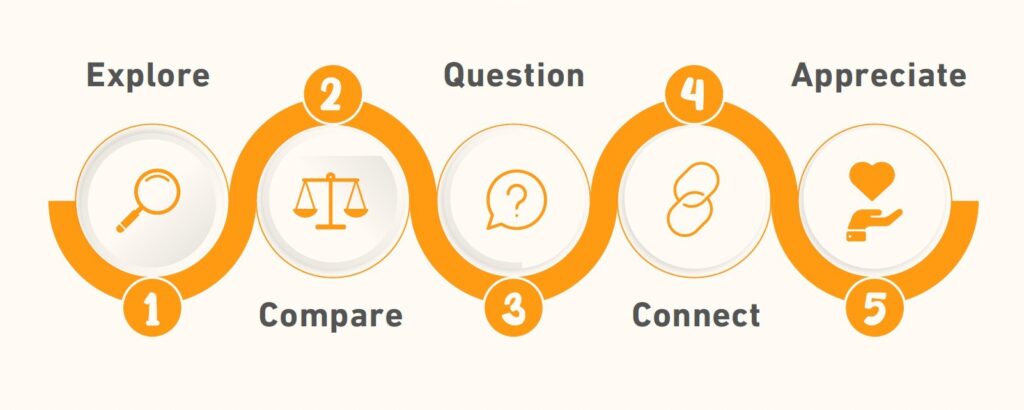
Through five transformative steps — Explore, Compare, Question, Connect, and Appreciate — 5D Thinking turns science into a journey of awe, ethics, and spiritual reflection.

Used in Islamic schools worldwide.
Loved by teachers and students, praised by principals.

“We thought that we have done very well for many years in terms of Islamization and integration of knowledge. Then we saw what 5D Thinking could really do. It is easy to understand and very practical to use. Once you learn the model’s five steps, you can apply it to any discipline, not just science.”

– Dr.Puteri Azlian Megat Ramli
International Islamic University
Malaysia

🌍 Implemented in schools in US, Canada, UK, Pakistan, South Africa, and Malaysia – with more on the way

🎓 Backed by a 4-tier certification system and custom school training

📚 KG to Grade 4 workbooks in use — with more on the way

📢 Endorsed by scholars, teacher-trainers, and education researchers

Start teaching science in a way that builds faith, sparks wonder, and connects every lesson back to Allah

5D Thinking to read the universe like an elegant book, building strong faith and sound character.

5D Thinking for Transformative Teaching

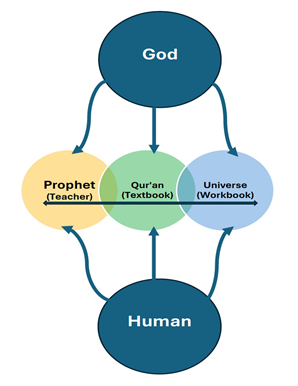
5D Thinking views the universe as an elegant book filled with profound meaning to bring positive transformation.

The model offers a unique 5D lens to filter secular ideology and perceive pure science as signs of God.

The 5D lens help to extract meaning and character lessons from the book of universe to foster excellence with strong faith and sound character.

Image

Introducing the 5D Platform

Lorem Ipsum has been the industry’s standard dummy text ever since the when an unknown printer took a galley f type and scrambled it to make a type specimen book.

Image
Image

Feeling Disconnected in a World of Misconnections?

In today’s fast-paced society, many people sense a profound void—a feeling that something essential is missing. They live in a world increasingly devoid of the Divine, where secular education often leads to a disconnection from God and a misconnection to false gods.

5D Thinking is a five-step, tawhidi model of negating misconnections with false gods (taghuts) and establishing reconnection with God by reading His signs in the giant book of the universe through the teaching of the Prophet (pbuh) under the light of the Qur’an.

The Essentials of 5Dimensional Thinking

The 5D Thinking approach is the first of its kind. It does NOT follow an eclectic approach, that simply add religious and ethical messages to scientific knowledge. Rather, it follows an integrative approach to derive meaning and character lessons from the scientific study of the universe. Thus, the 5D Thinking approach provides an enrichment in our scientific understanding of the universe by enabling us to see five dimensions of the experienced reality.

EXPLORE - Analytical Thinking

Studying the universe through science after filtering the embedded secular ideology.

COMPARE - Analogical Thinking

Using analogy to compare and contrast human-made objects with natural objects and events for better understanding

QUESTION -Critical Thinking

Engaging in critical thinking through questioning to find out the ultimate reality behind the natural objects and events

CONNECT -Meditative Thinking

Reflecting on the interconnectivity, complexity and benefits of natural objects and events to know about their Maker.

APPRECIATE Moral Thinking

Reading the universe as the most meaningful book and deriving moral lessons from scientific studies of natural objects events.

Moral Thinking

Reading the universe as the most meaningful book and deriving moral lessons from scientific studies of natural objects events.

EXPLORE 5D LESSONS
Category
Author
Category
Author
Category
Author
Category
Author
EXPLORE 5D BOOKS
Image

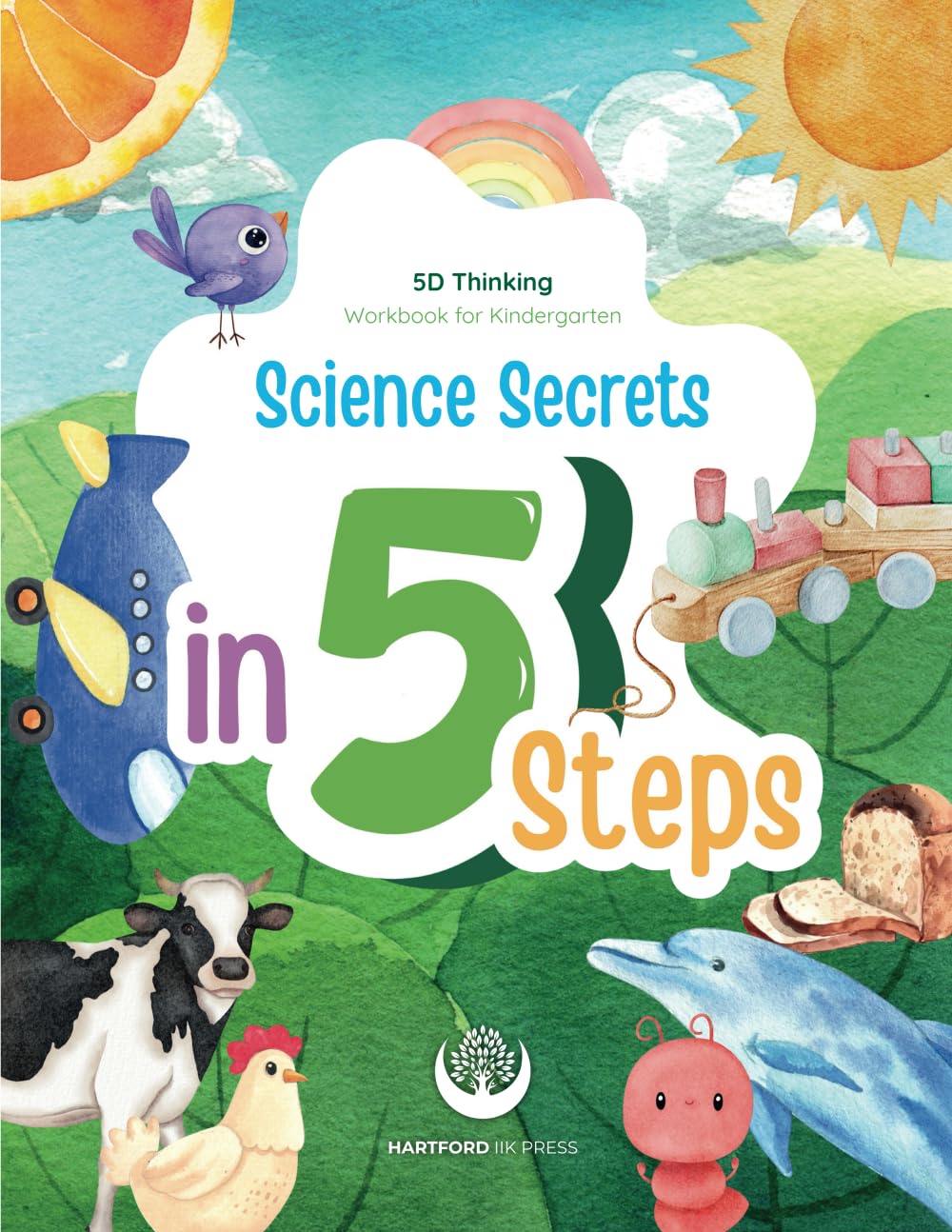
Book Name :

Science Secrets in 5 Steps: Discover Signs of God and Develop Sound Character (5D Thinking Workbooks)

Book Description :

Dr. Aydin has a strong academic background, publication record, and intellectual capacity to write the proposed book. He is a great teacher, researcher, writer, and

Science Secrets in 5 Steps” is an inspiring workbook for kindergarten students that blends the marvels of science with spiritual insights. This unique book is an essential resource for educators, parents, and students, particularly in the context of Islamic education.

Image

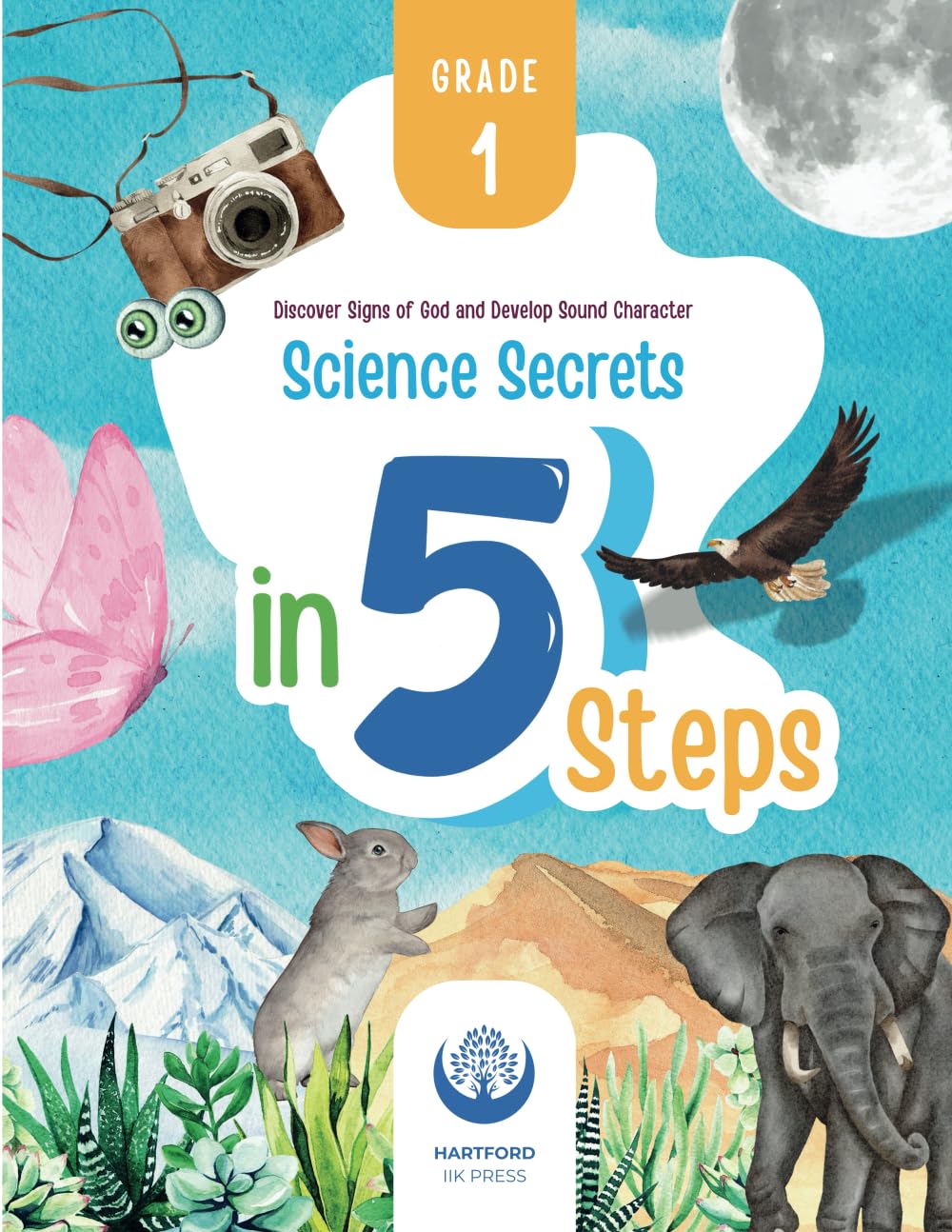
Book Name :

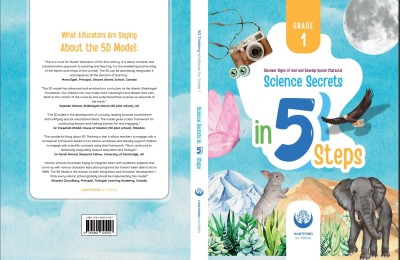
Science Secrets in 5 Steps: Grade 1

Book Description :

"Science Secrets in 5 Steps," developed by the 5D Thinking Team, is a vibrant and engaging workbook for first graders. Drawing inspiration from educational curricula

Comprising 14 chapters, this engaging workbook for first graders offers a broad range of topics through the unique 5D lens, aligned with international standards, ideal for educators, parents, and homeschoolers.

EXPLORE 5D Courses
Image

Courses Name :

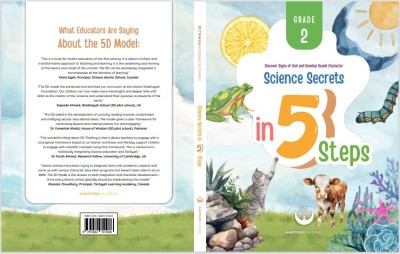
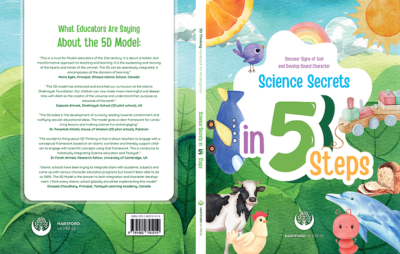
Science Secrets in 5 Steps Kindergarten 2

Courses Category:

Courses Description :

The “Science Secrets in 5 Steps” course incorporates the 5D Thinking model into science education, broadening students’ perspectives. It utilizes the 5D-Thinking Workbook tailored for Grade 2 learners. This course benefits students, teachers, and parents alike. Comprising twelve distinct chapters, each with its own distinctive layout, the course enhances learning experiences.

Image

Science Secrets in 5 Steps Kindergarten 2

This course integrates the 5D-Thinking model into science education, expanding learners thinking horizons.
Image
Dr. Necati Aydin; Uzma Ahmed; Aisha Alowais
Image

Courses Name :

Science Secrets in 5 Steps Kindergarten

Courses Category:

Courses Description :

The “Science Secrets in 5 Steps” course incorporates the 5D-Thinking model into science education, broadening students’ perspectives. It utilizes the 5D-Thinking Workbook tailored for kindergarten learners. This course benefits students, teachers, and parents alike. Comprising ten distinct chapters, each with its own distinctive layout, the course enhances learning experience. Additionally, every chapter includes supporting barcodes directing students to pertinent scientific videos.

Image

Science Secrets in 5 Steps Kindergarten

The "Science Secrets in 5 Steps for Kindergarten" course integrates the 5D-Thinking model into science education to expand learners' comprehension level. It uses a workbook specifically designed for kindergarteners, offering advantages to
Image
Necati Aydin; Uzma Ahmad; Saba Irshad Ansari
Image

Courses Name :

Science Secrets in 5 Steps Grade 1

Courses Category:

Courses Description :

The “Science Secrets in 5 Steps” course incorporates the 5D-Thinking model into science education, broadening students’ perspectives. It utilizes the 5D-Thinking Workbook tailored for Grade 1 students. This course benefits students, teachers, and parents alike. Comprising fourteen distinct chapters, each with its own distinctive layout, the course enhances student’s learning experiences. Additionally, every chapter includes supporting barcodes directing students to pertinent scientific videos.

Image

Science Secrets in 5 Steps Grade 1

This course integrates the 5D-Thinking model into science education, expanding learners thinking horizons.
Image
Dr. Necati Aydin; Uzma Ahmed; Aisha Alowais

Enter your email to subscribe

    Our Blogs
    I would like to reflect on key phenomenological concepts and the Husserlian phenomenological approach using a metaphor of a driving experience. I will then extend my reflection using the Nursianmana-i harfi approach. I hope this will help formulate a comparison between Husserlian phenomenology and the Nursian mana-i harfi approach. I think it is worth making such a comparison because the main pillar of both approaches is the human self. It seems to me that they both believe in the self as the key to human understanding (as a foundation of epistemology; in fact, phenomenology at its core is nothing but a new epistemology).
    I would like to reflect on key phenomenological concepts and the Husserlian phenomenological approach using a metaphor of a driving experience. I will then extend my reflection using the Nursianmana-i harfi approach. I hope this will help formulate a comparison between Husserlian phenomenology and the Nursian mana-i harfi approach. I think it is worth making such a comparison because the main pillar of both approaches is the human self. It seems to me that they both believe in the self as the key to human understanding (as a foundation of epistemology; in fact, phenomenology at its core is nothing but a new epistemology).
    I would like to reflect on key phenomenological concepts and the Husserlian phenomenological approach using a metaphor of a driving experience. I will then extend my reflection using the Nursianmana-i harfi approach. I hope this will help formulate a comparison between Husserlian phenomenology and the Nursian mana-i harfi approach. I think it is worth making such a comparison because the main pillar of both approaches is the human self. It seems to me that they both believe in the self as the key to human understanding (as a foundation of epistemology; in fact, phenomenology at its core is nothing but a new epistemology).
    We all have heard about Newton’s Apple Incident. Yes, I’m referring to Newton’s observation of a falling apple when he was sitting in a garden. This observation stimulated Newton to ponder upon the question that why apples fall down and why don’t they fall in the upward direction. Newton’s contemplative observation of an otherwise habitualizedphenomenon eventually led him to discover the miraculous gravitational force. I mentioned this legend for a purpose. The purpose is to draw a lesson that can radically change our approach. The lesson is, if an ordinary and everyday experienced process, action or thing is approached from a different angle then the veil of it “being ordinary”; a veil formed by the customary/habitual experience, will be torn apart. Subsequently, the horizons of new realities will get exposed. Basically, Newton did exactly the same thing.
    We all have heard about Newton’s Apple Incident. Yes, I’m referring to Newton’s observation of a falling apple when he was sitting in a garden. This observation stimulated Newton to ponder upon the question that why apples fall down and why don’t they fall in the upward direction. Newton’s contemplative observation of an otherwise habitualizedphenomenon eventually led him to discover the miraculous gravitational force. I mentioned this legend for a purpose. The purpose is to draw a lesson that can radically change our approach. The lesson is, if an ordinary and everyday experienced process, action or thing is approached from a different angle then the veil of it “being ordinary”; a veil formed by the customary/habitual experience, will be torn apart. Subsequently, the horizons of new realities will get exposed. Basically, Newton did exactly the same thing.
    We all have heard about Newton’s Apple Incident. Yes, I’m referring to Newton’s observation of a falling apple when he was sitting in a garden. This observation stimulated Newton to ponder upon the question that why apples fall down and why don’t they fall in the upward direction. Newton’s contemplative observation of an otherwise habitualizedphenomenon eventually led him to discover the miraculous gravitational force. I mentioned this legend for a purpose. The purpose is to draw a lesson that can radically change our approach. The lesson is, if an ordinary and everyday experienced process, action or thing is approached from a different angle then the veil of it “being ordinary”; a veil formed by the customary/habitual experience, will be torn apart. Subsequently, the horizons of new realities will get exposed. Basically, Newton did exactly the same thing.

    Get Your Free 5D Guide

    Free 5D Lessons, Training, Magazines, Webinar and other materials

    Reading the universe as the most meaningful book and deriving moral lessons from scientific studies of natural objects events.

    Reflecting on the interconnectivity, complexity and benefits of natural objects and events to know about their Maker.

    Engaging in critical thinking through questioning to find out the ultimate reality behind the natural objects and events

    Using analogy to compare and contrast human-made objects with natural objects and events for better understanding

    Studying the universe through science after filtering the embedded secular ideology.