Notes From The Analytical Engine

by Beat Frequency

/
  • Streaming + Download

    Includes unlimited streaming via the free Bandcamp app, plus high-quality download in MP3, FLAC and more.
    Purchasable with gift card
    Download available in 24-bit/44.1kHz.

      £7 GBP  or more


1.
2.
3.
Pisano Bebop 03:35
4.
5.
6.
Lazy Cakes 09:04
7.
8.
9.
10.
Going Postal 05:26
11.
Happy Drone 16:42
12.
Fair Dice 07:01
13.
14.
15.
16.
Catalan Rain 09:40
17.
Fuscous 09:45
18.
19.
20.
21.
Spirit Dream 13:06
22.
23.

about

tl;dr Each piece is based on a different mathematical sequence. Some feel serene, some restless, some endlessly unfolding.

Real word factors that shaped it. A desire to find a middle ground between ultra repetitive sequencers and random generators. The no-time of Covid lockdown. Watching a Canadian freight train three and a half miles long pass before my eyes whilst driving across Canada on cruise control.

This is fractal hold music written by space aliens for conventional instruments.

Music is full of Mathematics
Mathematics is full of Music

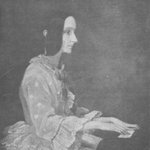
In August 1843, Ada Lovelace wrote, in Notes On The Analytical Engine,

"the engine might compose elaborate and scientific pieces of music of any degree of complexity or extent"

Three years in the making and with a total playing time of 3 hours and 33 minutes, Notes From The Analytical Engine is twenty three realisations of that vision, each a voyage into strange lands, familiar and yet not, unchanging but without repetition. As John Peel said of The Fall, "always different, always the same"(*)

Kick back, relax, and enjoy endless journeys(**) towards infinity.

(*) This is not like The Fall.

(**) Not actually endless. Average track length 9 minutes 15 seconds.

Clues For Mathematicians and Programmers.

Intruder Window – Traversals of a Collatz tree.
Hailstone Trajectories - Hailstone trajectories.
Pisano Bebop - Cutaway view of four overlapping Pisano cycles.
On the Teeth of Wheels - Stern's diatomic series.
The Bernoulli Shuffle - Bernoulli numbers, numerators and denominators.
Lazy Cakes - Lazy Caterer’s sequence and Cake numbers.
Between Realms - OEIS sequences A048673 and A064216.
Dinosaur Theory - OEIS sequences A080576, A080577, and A036036.
Kolakoski Contrapuntal - Mappings of the Kolakoski sequence as 6 bit binary digits.
Going Postal - Partial traversals of a permutation tree with 4 key changes, fizz-buzz rhythm loops.
Happy Drone - Happy numbers.
Fair Dice - From algorithm to emulate N faced dice given output from a 64bit prng.
Triangular Bells - Bell numbers.
Gauge Invariance - Chords constructed from traversal of a permutation tree.
Pascal's Wager - Pascal’s triangle.
Catalan Rain - Catalan numbers.
Fuscous - Stern’s diatomic series again.
Sydney's Donkey - Lengths of hailstone trajectories.
Attraction Engine - OEIS Sequence A063989.
Duet of Triangular Bells - Bell numbers and Bell triangle.
Spirit Dream - Yet another take on Stern’s diatomic series.
Axioms of Power - Traversals of a power set tree.
A Traveller's Reverie - Fibonacci numbers.

One piece described in full:

Kolakoski Contrapuntal
endless duet for player pianos

Left Piano

Take the Kolakoski Sequence (A000002) and subtract 1 from each element.
e.g. 1, 2, 2, 1, 1, 2, 1, 2, 2, 1, 2, 2, 1, 1, 2, 1, 1, 2, 2, ...
→ 0, 1, 1, 0, 0, 1, 0, 1, 1, 0, 1, 1, 0, 0, 1, 0, 0, 1, 1, ...

Concatenate the elements in batches of six, starting with the first element.
→ 011001, 011011, 001001, ...

Treat each element of this sequence as a binary number.
→ 011001₂ = 25₁₀, 011011₂ = 27₁₀, 010011₂ = 19₁₀, ...

The pitch of each note is determined by mapping each number onto a piano key.
0 ⇒ C2, 1 ⇒ C♯2, ... 63 ⇒ D7

The duration of each note is determined by the parity of its binary representation. Notes with an even number of 1s in the binary representation are crotchets (quarter notes). Notes with an odd number of 1s in the binary representation are quavers (eighth notes).

Right Piano

As for Left Piano, except the first three elements of the Kolakoski sequence are discarded and concatenation starts with the fourth element.

Tempo and Duration
The piece should be played at 140bpm for as long as is desired (about ten minutes or so is good) ending when both players hit a low note.

Notes

The Numberphile video "The Kolakoski Sequence" is a good introduction.
youtu.be/co5sOgZ3XcM

William Kolakoski's relationship to the sequence that bears his name is interesting.
en.wikipedia.org/wiki/William_Kolakoski#Personal_significance_of_sequence_to_Kolakoski

The Kolakoski sequence is cubefree. This means that no subsequence of any length can occur more than two times in a row. This limits the number of notes that the procedure above generates to 18 out of the 64 possible 6 digit binary numbers.

The 18 notes are symmetrically but not evenly spread over 4 octaves, separated by the following intervals.

2 2 5 1 2 3 1 1 9 1 1 3 2 1 5 2 2

Just as the number of notes is limited, so is the number of different sequences of notes, so the piece has recurring motifs. Similarly, these motifs only occur in a limited set of orders, and so on, giving the piece a complex structure at all scales.

credits

released December 15, 2021

license

all rights reserved

tags

about

Beat Frequency Rickmansworth, UK

Beat Frequency is Gordon Charlton.

bandcamp.com/thegordoncharlton

contact / help

Contact Beat Frequency

Streaming and
Download help

Report this album or account

If you like Beat Frequency, you may also like: