January’s Font of the Month: Bungee Widths

Font of the Month, 2026/01 PDF Try
Bungee widths

Last year, I sent you a story about how a squished use of my font Megavolt inspired me to make Megavolt Narrow. The moral of the story was that type designers should see stretching and squishing type not as a misuse, but as a challenge.

Bungee is my most widely-distributed font, and it has probably been squished more times than all of my other fonts combined. This wide distribution has put some distance between me and my creation—it was released and open-sourced nearly a decade ago, and I’ve barely touched it since. (Huge thanks to Just van Rossum and Marte Verhaegen, who did a big modernization and cleanup of the font files in 2024.)

Living in the countryside, I don’t get to see Bungee in action as much as my city-dwelling friends. But every once in a while I pass through a city and see it in the wild. After encountering some squished Bungee on a restaurant menu, I decided it was finally time to accept the challenge that was presented to me and draw some Bungee Widths.

Bungee squish tripoli

Some lightly-squished Bungee on the menu at Tripoli. Photo by Nick Sherman, designer of the Bungee minisite.

Bungee was inspired by and designed for vertical signs with stacked letters—its vaguely-monospaced appearance, straight sides, and distinctive serifs on I and L all stem from those origins. Even though the vast majority of Bungee uses are horizontal, I love that these little vertical details seep into each use of the typeface.

But let’s forget about vertical typesetting for the moment. Don’t get me wrong…I love a font with a gimmick, and I will choose a purpose-driven “gimmick font” over a general-purpose “vibes font” any day of the week. 

But at a certain point, a gimmick font needs to transcend its gimmick and just be a font. Bungee has found its way onto everything from seltzer cans to sports programming to Pokémon books, and most of those users were not worrying about vertical text. And it has been refreshing for me to return to Bungee all these years later and not feel compelled to worry about it either.

Image

With straight sides and open apertures, Bungee had no trouble getting narrow. I started by over-squeezing each letter, down to about 40% of the original width. Then I added back the necessary stem thickness to the outside of the shape, widening it back to about 70% of the original width. Finally, I thinned out the horizontal strokes, elongated the vertical straight segments, and un-squished each curve.

Bungee Extra Condensed

While I was revisiting the design, I also played around with reducing Bungee’s rounded corners (now available as a variable axis) and tried my hand at a lowercase too (currently available in a separate font, only for the Extra Condensed width). I’m still not sure about the diagonal crossbar on that lowercase a!

Bungee lowercase

It’s also worth noting that, like the original version of Bungee, these fonts come with the Open Font License rather than my standard one. I realize that it’s a little odd to send out a font to the club that is destined to be free, but if I didn’t do it for the club, it would never happen! 

I hope that you still find some value in it, or that I can make it up to you in future months. And I hope it’s at least a little interesting to change up this aspect of the club…you can feel free to send Bungee Widths to friends, file issues on the repo, and even check out my source files if you want to. (Be warned: they are an unholy mess at the moment!) 
 

December’s Font of the Month: Bradley DJR Text

Font of the Month, 2025/12 Try Buy $24
Bradley djr email 2000

If you’ve sent me an email recently, you may have noticed that my response was riddled with typos. It might be because I’ve been doing a lot of multitasking this month, with visiting relatives and holiday plans. And it might be because my two-year-old twins are at an age where they are constantly hitting random keys on my keyboard. 

But it is probably because I’ve been test driving this month’s font of the month Bradley DJR Text as my default font for email and web browsing. And spending that much time looking at that much blackletter definitely takes some getting used to! But, as Zuzana Licko wrote, “You read best what you read most”. So I probably just need to stick with it for a while longer.

Bradley djr text dark 2000


I feel like there are two types of Font of the Month editions: one where I declare “Here’s a thing I worked on!” and another one where I ask, “Um, should I keep working on this?” Bradley DJR Text is definitely in the latter category. 

I have no idea how you’ll ever use this, or if you’ll ever use this. (Maybe you are hosting a jousting tournament next weekend?) But I’ve been thinking about making a texty blackletter since I saw some exquisite specimens at the St Bride Library during my visit last year.
 

Figgins 2000

1821 Specimen of Printing Types by Vincent Figgins, photographed at St Bride Library.

At first, I was going to try my hand at reviving a blackletter like these. But then I spent all of last month with the Bradley files open on my computer, and wondered if I could combine the lovely, even texture of these English blackletters with Bradley’s simplified, easy-to-read shapes.

Bradley was originally a very bold and very condensed design. My first attempt at reviving its smaller sizes emulated the original metal, which got a bit looser and a bit wider at smaller sizes, but still just as chunky.

This time, I really tried to make a true Text weight for Bradley, adding an extra upstroke to characters to bridge the gap created by the lighter, wider forms.

Bradley djr text strokes 2000

I played a lot with how much to open up the design, constantly switching back and forth between my type design app and my testing environment, mostly my web browser running the recently-resurrected Type-X extension. I encourage you to try it out yourself!

Bradley djr wiki 2000

I tried to strike a balance between something that is actually comfortable to read in text, and something bold and narrow enough to feel sufficiently Bradley-esque. I made other moves, too—enlarging the figures, raising the sunken caps, and drawing simplified variants of a few of the more ornate shapes like A, J, and P.

Please consider this to be a beta font—nothing is settled, and I’ve spent very little time polishing the shapes and evening out the typographic color. I don’t have a working variable font yet, but I am throwing in the original Display and a couple in-between sizes as well, which I think could work nicely in smaller headlines. Enjoy it!

November’s Font of the Month: Bradley DJR Outline

Font of the Month, 2025/11 PDF Try Buy $24
Bradley djr outline

For November, I’m sending you Bradley DJR Outline, a continuation of my Bradley revival that resurrects its outlined variant. American Type Founders published Bradley Outline in the late 1890s, a few years after the original design created by Herman Ihlenburg and based on lettering by Will H. Bradley.

This has been on my to-do-someday list for a long time, but never seemed like the most pressing thing. Bradley DJR is arguably the most holiday-coded font in my collection, and I needed something quick and easy to work on this month, so this seemed like the perfect moment to take my revival to the next level.

Bradleyoutline specimensofprint00amerrich

Bradley Outline as shown in ATF’s Specimens of printing types, 1897

The original Bradley Outline has a charming handmade touch, giving the font a very different feel than the mechanical strokes we can easily create in our contemporary apps. My version strives to find a midpoint between the two, toning down some of the round corners and wobbly line quality that would make it jarring in a crisp, modern design, while hopefully preserving most of its appeal.

Unlike a purely mechanical outline, this stroke subtly modulates its contrast to follow Bradley’s diagonal axis of thicks and thins. On top of that, it opportunistically pinches at thin strokes and tight intersections to create a little extra space—this is most apparent in the crossbar of a, the northwest and southeast corners of s, and the tight interior space inside f

At the last minute, I decided to add an interior stroke that separates the Outline from the Fill. (One reason this mailing is late again...I’m sorry!) Most of the time you probably won’t need it, but in some settings I think it really helps the letters pop!

Bradley djr outline 2

I’ve been making color fonts for nearly a decade now, but I still struggle to find an intuitive way to present them to users. 

Here I’ve included the Regular (Outline) and Fill fonts, for you to layer as you please. I’ve included color fonts with Red, Gold, and Silver palettes for you to work from, as well as SVG versions of these that will work in legacy apps. And like I did for Nickel, I’ve included a special style (“Color”) which uses the current foreground color in your application to set the Fill.

Please keep in mind that you can always upload these fonts to my Color Font Customizer or use CSS override-colors to create your own palette. And remember that you can use these layers and color fonts in combination with mechanical strokes and drop shadows to customize the look of the letters even further.

This update may be small, but it is mighty! I hope it helps you add a pop of color to your holiday designs, as well as the things you make in the year to come.

Bradley djr outline 3

October’s Font of the Month: Gimlet Sans Mono (Beta)

Font of the Month, 2025/10 Try Buy $24
Gimlet sans mono text sample 1200

Monospace fonts used to be specialty fonts, designed for typewriters, computer programming, and tabular data. But in recent years they have started to take on a more mainstream role in graphic design, offering alternatives to existing type styles that feel just a little more technical, data-driven, or peculiar. 

I’ve always been interested in how technical limitations can influence the aesthetic choices in a typeface, and how those choices often then take on a life of their own that transcend the original tech. I feel like this is what is happening with Monospace fonts, which you will often find used in contexts that don’t demand that text is set on a fixed-width grid. My typeface Input is one of many typefaces built around cultivating the feeling of “monospacedness”, even in its proportionally-spaced styles. 

At the same time, I’ve been a bit skeptical of the every-sans-needs-a-mono trend…are there really so many use cases for this, and will the sans just get watered down in the process? It was Ruggero Magrì’s idea to create a monospace for my revival of Forma, and it took some convincing to get me on board. But since Ruggero and I released Forma DJR Mono late last year, it has been eye-opening to hear from users how much they appreciate the addition to the family. It has made me reconsider what a general-purpose Monospace can and should be.

And this month I’ve been working on Gimlet Sans Mono, a monospace companion for my ever-growing quirkhorse Gimlet Sans.

Gimlet sans mono opsz waterfall 1200

With Gimlet Sans Mono, I tried to leave all of my Monospace baggage behind, and instead design a general-purpose sans serif that just happens to be monospace. I couldn’t decide which of Gimlet Sans’s optical sizes to use as the starting point for the monospace, so I monospaced them all. Is an optical size axis for a Mono useful to anybody? I truly have no idea.

Every monospace font has to confront a core liability: our letters vary in width and complexity, and cramming them all into a single space will inevitably get uncomfortable. It’s like forcing every person you know to wear the same size t-shirt—it may be a perfect fit for some, but others will be swimming in it or bursting at the seams.

Gimlet sans mono text sample 1 1200

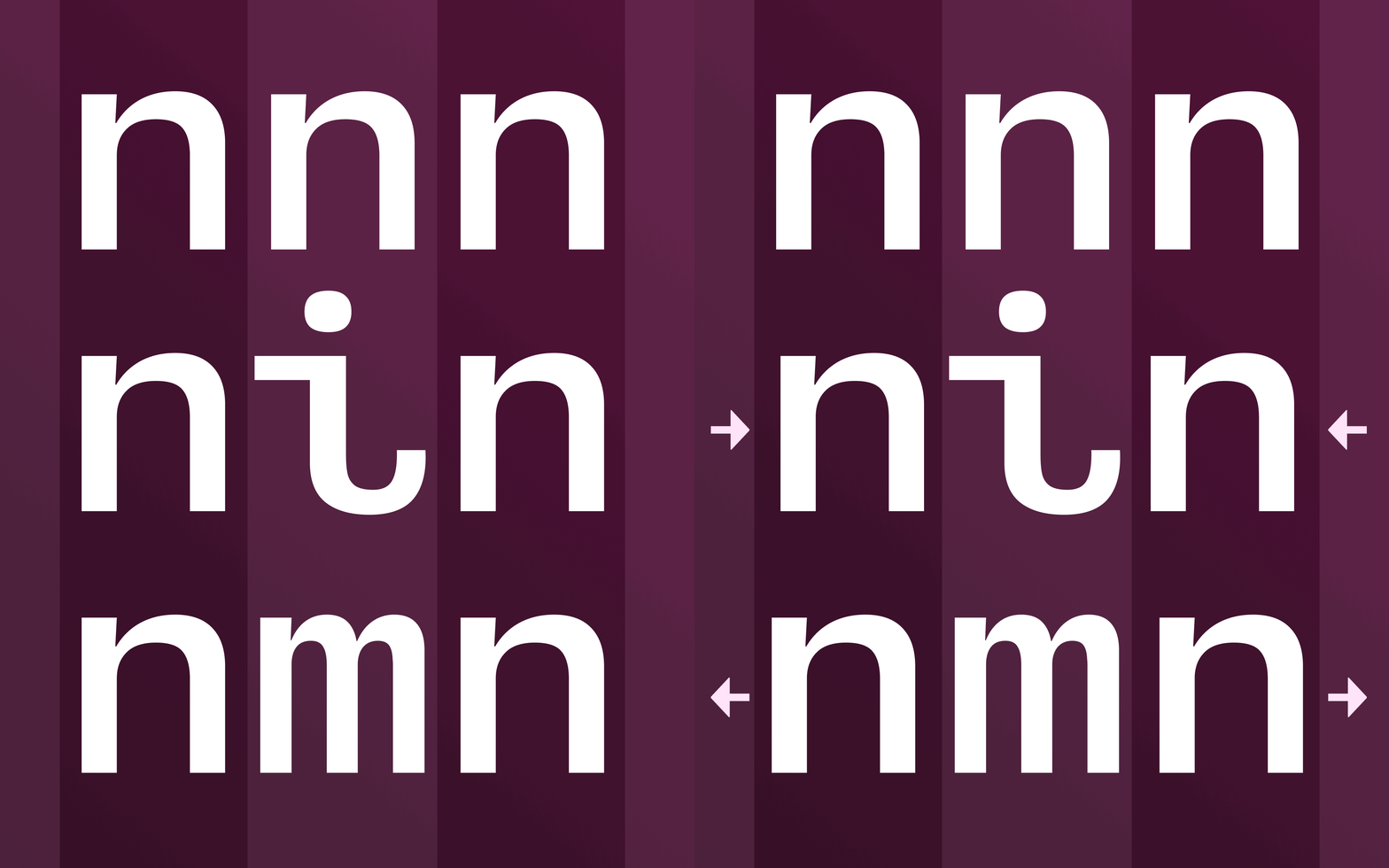
Wide letters like M / W / m / w and narrow letters like capital I and lowercase i / l always require special attention. For the lowercase i and l, I waffled between the conventional three-serif style (see “Fictional” in the image below) and a quirkier flip-curl style that borrows from the bottom of c and t. The former spaced better, since it didn’t leave a huge gap on the lower left. But it just didn’t feel as interesting or emblematic of the typeface. I left it as an alternate, in case you disagree!

It’s important to note that, as the narrow and wide letters are getting stretched and squeezed, the negative space around them is getting stretched and squeezed as well. This creates an uneven rhythm in text, which is exacerbated by the fact that monospace fonts traditionally have no kerning to help with especially troublesome pairs.

Gimlet sans mono ulc 1200

At first I tried to do something similar to the “texture healing” approach popularized by Lettermatic’s Monaspace fonts for GitHub, which contextually widens letters like m and narrows letters like i when they appear in sequence. I really like this idea, but found this approach to be a little too overt for Gimlet Sans…I didn’t want to lose too much of the monospace flavor, and it was a little jarring to see different widths of the same letter appear in the same word (“filmmaker” for example).

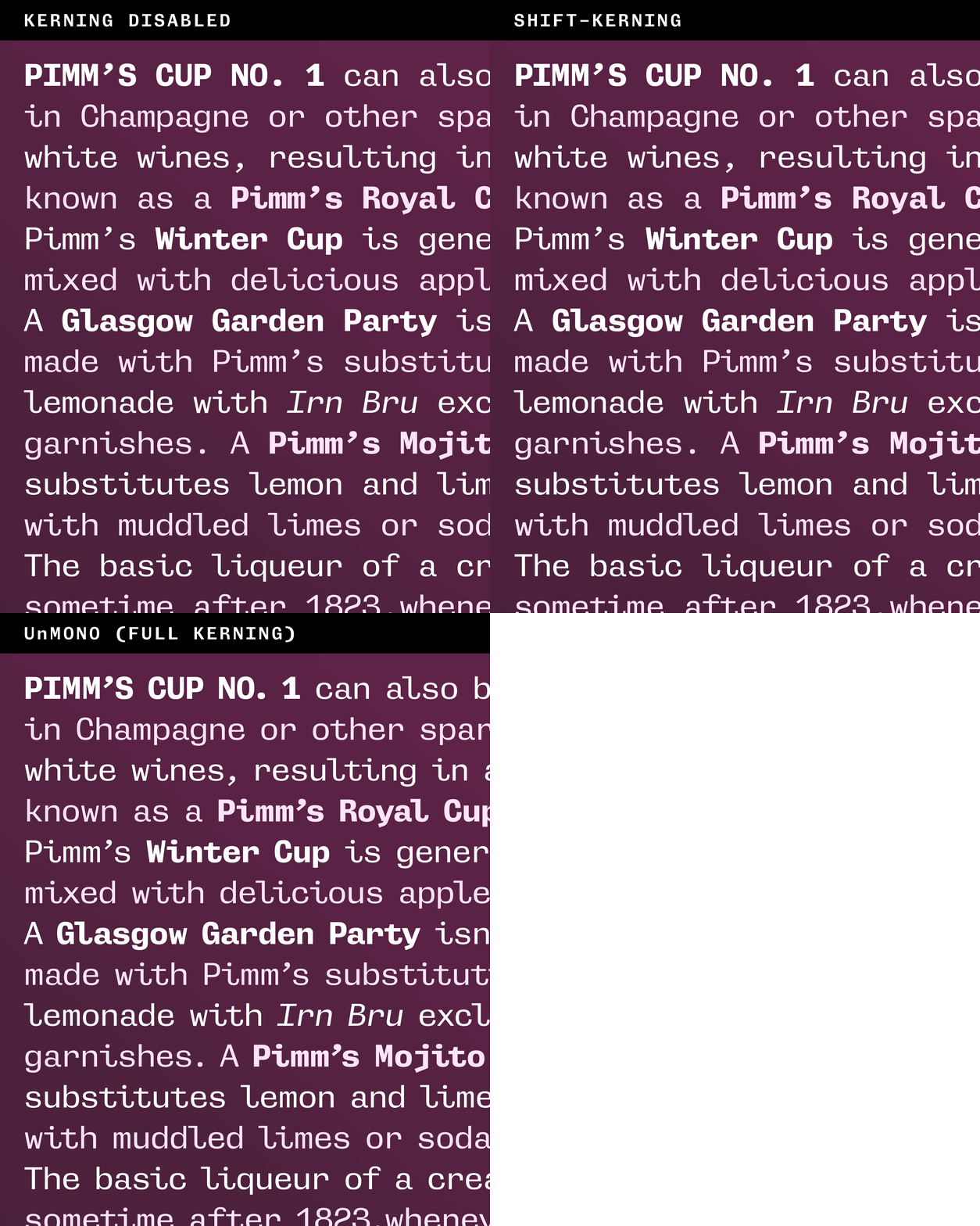
I settled on a shift-kerning approach that leaves the letter shapes and widths as they are, but contextually shifts letters to the left or right in an attempt to balance out some of the unevenness. Essentially, I treat the narrow and wide letters like i and m as magnets that can either attract or repel the letters around them, without affecting the monospace grid. The effect is much more subtle than texture healing (maybe too subtle!), but it affects many more pairs.

Shift-kerning

This shift-kerning approach hacks the Monospace grid, but I also wondered if it would be useful to have a second version of the font that does away with the Monospace grid completely. 

Gimlet Sans UnMono has letterforms that are identical to the Mono, but with proportional spacing and kerning that are a little easier to take, especially at display sizes. My process was simple: I unset the bit in the font that officially makes it a monospace, narrowed the wordspace and some other punctuation like the period and comma, and copied in the kerning from the original version of Gimlet Sans (with a few tweaks here and there). 

I’m still not feeling sure about any of this, and I’m still changing things even as I am about to hit “send”...the fonts are very Beta. But I want to hear what you think about my little trip down this monospace rabbit hole. Shift-kerning…good or bad? Will you ever use the Optical Size axis or the UnMono version? I’m genuinely curious to know.

No kerning vs. shift-kerning vs. UnKerning

September’s Font of the Month: Kuhlman

Font of the Month, 2025/09 PDF Try Buy $24
Kuhlman cover 2000

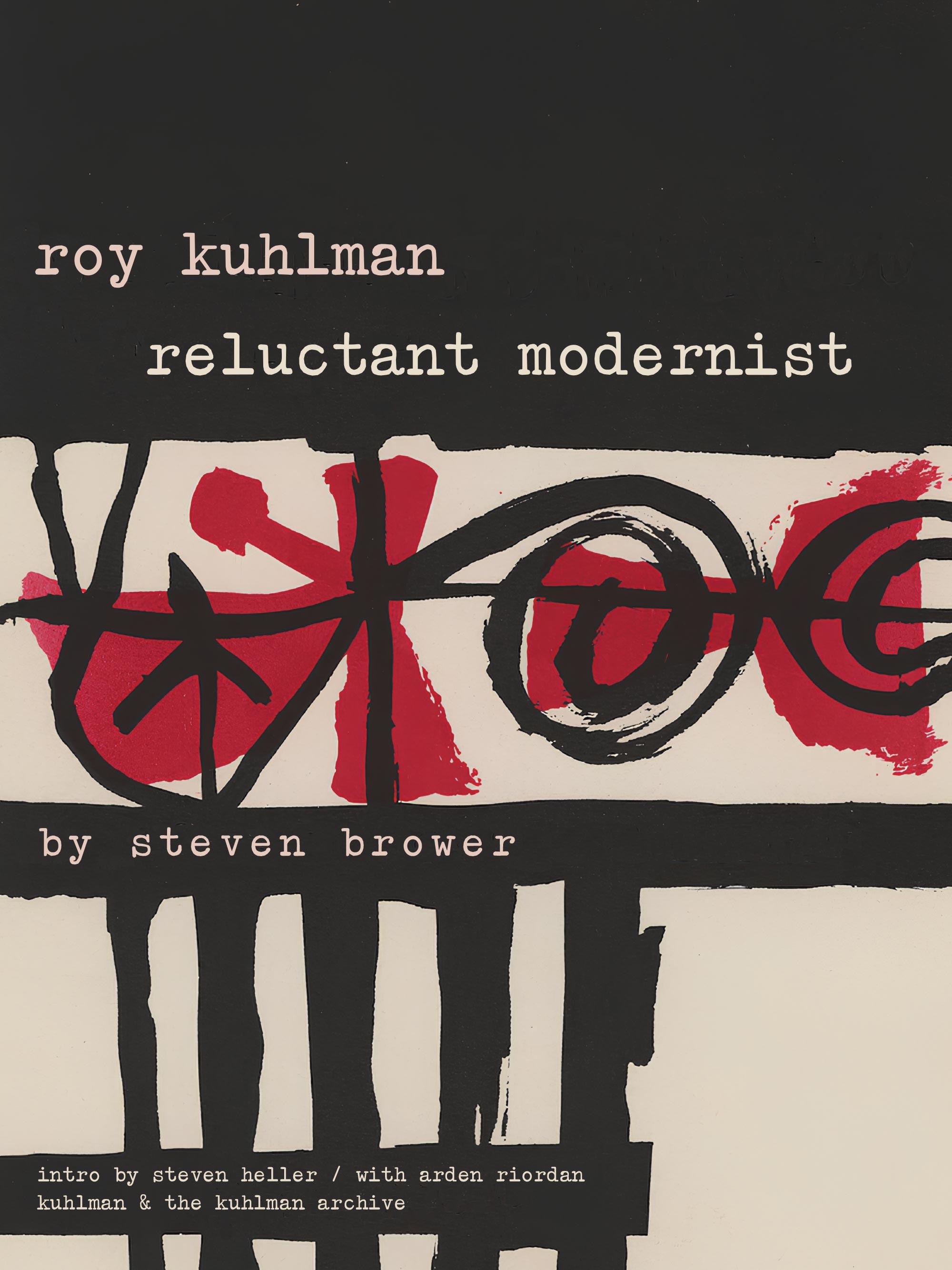
Roy Kuhlman: Reluctant Modernist is an upcoming monograph about the graphic designer Roy Kuhlman. It will be published November 4 by Fantagraphics, an excellent publisher of comics, graphic novels, and books about visual culture (not to mention a frequent user of my typefaces!). 

I had the privilege of working with Steven Brower, the book’s author, and his collaborator Craig Welsh to design a typeface that celebrates Kuhlman’s designs and commemorates the book’s publication. And with the blessing of The Kuhlman Archive, I am delighted to be able to share the Kuhlman font with you today.

Kuhlman 3 2000

According to Brower, Kuhlman’s cover designs for Barney Rosset’s Grove Press in the 1950s were “at once, illustrative, abstract, conceptual, comical, serious and revolutionary.” Some of Kuhlman’s covers featured his distinctive hand-lettering style, which Brower describes as “conveying the ‘beat’ sensibility of the times.” He created this lettering using cut paper or Rubylith/Amberlith, a masking film on acetate. Brower continues, “Kuhlman would remove this film after cutting with an Exacto knife, leaving the desired forms in place.”

The dilemma of democratic socialism collier 2000

Brower and Welsh sifted through Kuhlman’s covers and compiled contact sheets of the letterforms in alphabetical order. Seeing the letterforms assembled like this really demonstrates the variety of weights, widths, and contrasts that Kuhlman employed across his covers. But at the same time it also exposes how consistent his other stylistic choices were: octagonal rounds, clipped diagonals, opportunistic horizontal stress, wobbly edges, and not-so-subtle misalignments. I knew a prefabricated typeface could never replicate the inventiveness of a designer with an Exacto knife, so my challenge with this font was to capture a bit of Kuhlman’s particular blend of chaos and consistency.

Contact sheet brower 2000

Collected letterforms from Kuhlman’s covers, assembled by Steven Brower

Never before has a typeface of mine called out so desperately for OpenType randomization. Kuhlman contains three separate alphabets that the font automagically cycles through. Because randomization sequences cannot extend across multiple lines, you can use the “Random Seed” variable axis to alter the starting point for randomization in each line of your text block and avoid repeating shapes.

Kuhlman abc 2000

My hope is that these automatic alternates will act as a baseline for randomization, and that you, the designer, will add your own playful spin on top of that.

To that end, I have also included a variable width axis that allows you to traverse the expansive range of Kuhlman’s work, from the broad, squarish letters of Little Peter in War and Peace to the slender letters of Black Skin, White Masks. (I’ve also started to rough in a third pole that gets closer to The Jewish Wife & Other Short Plays.) The width axis can also come in handy when justifying a text block—you can either apply your own randomness by mixing widths in a single line, or you can simply widen the entire line until it fits.

At the risk of it feeling a bit “autotracey”, I resisted the urge to clean up the vectors too much. Brower, Welsh, and I discussed how rough the font should feel, and settled on a middle ground where the crumpled edges preserve the rawness of the original design but are not so obtrusive that they distract from the letter’s essential shape. And in the whole typeface, there is nary a curve to be found.

Kuhlman widths 2000

I hope that, if nothing else, this font encourages you to explore Kuhlman’s work and maybe even get out your Exacto knife and do some cut-paper lettering of your own. And I probably don’t have to tell you how important preorders are in the book business these days, but they are. With that in mind, I encourage you to check out Brower’s book and consider ordering a copy!

Wishing you a wonderful month!