Would you like to change the market?
Select area of operation
You will be redirected to another page for the selected market
Image
FAQ
ImageImage
Would you like to change the market?
Select area of operation
You will be redirected to another page for the selected market
Image
    Other services
    • More about services
    Business sectors
    Partners
    ImageGet in touch

    Blog

    Check our blog

    Learn more about the latest industry trends, changes in regulations and development opportunities for your company.
    30 October, 2024

    VAT in real estate transactions

    Understanding the rules that apply to the taxation of real estate transactions is essential for anyone operating in the market, whether investors,...

    Image
    28 February, 2025

    Omnibus package – incoming changes in ESG reporting

    The European Commission’s proposals to simplify ESG regulations as part of the so-called Omnibus Package published on February 26th 2025 have sparked...

    Image

    Latest

    • Image

      Italy: Annual VAT return requirements for 2026

      Businesses registered for VAT purposes in Italy are required to submit an annual VAT return for the 2025 reporting year. The annual return (dichiarazione annuale IVA) summarises VAT transactions carried out during the 2025 tax period and complements the information reported through periodic VAT filings.

      Purpose of the annual VAT return

      The annual VAT return provides an overview of VAT transactions reported during the year. While periodic VAT returns focus on aggregated figures, the annual return requires a breakdown of transactions based on their nature and applicable VAT rates.

      Additional transactions included in the return

      It may also include certain transactions that are not reported through periodic VAT communications, such as specific exempt supplies.

      Does filing trigger a VAT payment

      In most cases, the submission of the annual VAT return does not trigger an immediate VAT payment.

      Filing deadline

      The Italian annual VAT return for the 2025 tax year must be submitted electronically between 1 February and 30 April 2026.

      Who must file the return

      The obligation to file applies to VAT registered businesses regardless of whether they are in a net VAT payable or VAT refund position.

      Need support with Italian VAT reporting?

      Ensure correct filing and avoid compliance risks in Italy
      Book a consultation

      Electronic submission

      The annual VAT return must be submitted exclusively via electronic channels to the Italian tax authority (Agenzia delle Entrate).

      Non-established businesses

      This requirement also applies to non established companies registered for VAT purposes in Italy.


      Italian VAT refunds

      In Italy, VAT refunds are generally requested through the annual VAT return. The annual filing serves as the basis for determining whether a taxpayer is entitled to a refund of excess input VAT for the reporting period.

      Bank guarantee and “visto di conformità”

      As a rule, the refund of recoverable VAT may require the provision of a bank guarantee. However, under certain conditions, this requirement can be replaced by a certificate known as “visto di conformità”.

      What is “visto di conformità”

      This certificate verifies the alignment between the VAT return, VAT ledgers and issued invoices. The “visto di conformità” must be issued by a certified Italian chartered accountant.

      Additional documentation requirements

      Before approving the VAT refund, the Italian tax authorities may also request supporting documentation, such as copies of invoices.


      Source:

      Imprese – Che cos’è – Agenzia delle Entrate, Imprese – Modello e istruzioni – Agenzia delle Entrate

      27 May, 2026
    • Hands assembling puzzle piece over sustainability charts

      UK SRS and FCA Guidance Explained: What Changes for Sustainability Reporting?

      This month, the UK government released its long‑awaited Sustainability Reporting Standards (SRS), aligned with the International Sustainability Standards Board’s (ISSB) IFRS S1 and IFRS S2. It’s a defining moment that finally gives UK companies a clear blueprint for sustainability reporting. The draft UK Sustainability Reporting Standards (UK SRS) set out the core disclosure content based on IFRS S1 and S2, while the FCA’s CP26/5 consultation explains how those standards would be applied specifically to UK‑listed companies. In practice, the UK SRS define what must be disclosed, whereas CP26/5 sets who must report, when the rules take effect, and how they will operate within the UK Listing Rules —…

      The Scope of the UK SRS and CP26/5 Requirements

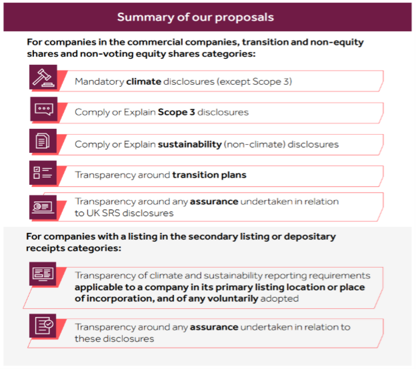
      The FCA proposes that the new rules apply to the following categories of listed companies:

      • Commercial companies (UKLR 6)
      • Non equity shares and non voting equity shares (UKLR 16)
      • Transition category (UKLR 22)
      • Secondary listing (UKLR 14)
      • Depositary receipts (UKLR 15)

      Categories excluded from the requirements

      Image

      Source: FCA Consultation Paper CP26/5 

      The FCA suggests excluding:

      • Closed-ended investment funds (UKLR 11) and open-ended investment funds (UKLR 12)
      • Shell companies (UKLR 13)
      • Debt and debt-like securities (UKLR 17)
      • Securitised derivatives (UKLR 18), as well as warrants, options, and other miscellaneous securities (UKLR 19)

      How the UK SRS Compare to IFRS and TCFD

      If you’re familiar with IFRS or the former TCFD framework, Novata has prepared a helpful comparison table summarising key differences and similarities across UK SRS, IFRS S1/S2, and TCFD.

      UK SRS IFRS S1 & S2 TCFD Framework 
      Status UK-endorsed sustainability standards (exposure drafts published) Global baseline standards issued by the ISSB Voluntary global disclosure framework for climate risks (TCFD disbanded in 2023
      Primary Objective Provide consistent, decision-useful sustainability information for UK capital markets Provide a global baseline of sustainability disclosures focussed on enterprise value Improve transparency on voluntary climate-related risks and opportunities 
      Scope SRS S1: All sustainability-related risks and opportunities 
      SRS S2: Climate-related disclosures 
      IFRS S1: General sustainability disclosures 
      IFRS S2: Climate-related disclosure 
      Climate-related risks and opportunities only 
      Materiality Focus Enterprise value (financial materiality) Enterprise value (financial materiality) Financial impacts of climate risks and opportunities 
      Structure Mirrors IFRS & TCFD structure across four core pillars Incorporates TCFD four pillars: Governance, Strategy, Risk Management, Metrics & Targets Four pillars: Governance, Strategy, Risk Management, Metrics & Targets 
      Alignment with TCFD Full incorporates and builds on TCFD principles IFRS S2 incorporates and extends TCFD Original framework 
      Prescriptiveness High: detailed, standardised disclosure requirements High: detailed, standardised disclosure requirements Moderate: principles-based guidance 
      Climate Scenario Analysis Required under SRS S2 where climate risk is material  Required under IFRS S2 Recommended 
      Transition Plans Required disclosure where applicable Required disclosure where applicable Recommended 
      Scope 1 & 2 Emissions Mandatory under SRS S2 Mandatory under IFRS S2 Recommended 
      Scope 3 Emissions Required where material, with transitional reliefs Required where material, with transitional reliefs Recommended 
      Link to Financial Statements Requirement to connect sustainability and financial reporting Explicit requirement to connect sustainability and financial reporting No formal linkage requirement 
      UK-Specific Elements May include UK-specific phasing, guidance, or regulatory interaction Explicit requirement to connect sustainability and financial reporting Not jurisdiction-specific 

      Need support with Italian VAT reporting?

      Ensure correct filing and avoid compliance risks in Italy
      Book a consultation

      The UK SRS Timeline and What Happens Next

      The UK government published the draft UK SRS following its 2025 consultation. The FCA is currently requesting feedback on its Consultation Paper (CP26/5), which opened on January 30th and will close on March 20th. The goal is to ensure that UK SRS align with international frameworks and improve transparency for investors, consumers, and companies.

      Expected implementation timeline

      A final FCA policy statement is expected this autumn, once the UK SRS are finalised (anticipated this spring). This would enable the new rules to take effect on 1 January 2027 — the proposed start date for mandatory UK SRS reporting for listed companies.

      FCA implementation roadmap

      In their Consultation Paper (CP26/5), the FCA lays out its proposed timeline for the implementation of the SRS


      Image

      Source: FCA Consultation Paper CP26/5 


      Conclusion

      As the UK moves toward adopting the UK Sustainability Reporting Standards, organisations should recognise that these rules signal a major shift toward more transparent, globally aligned sustainability reporting.

      How to prepare for UK SRS reporting

      By combining the content of UK SRS S1 and S2 with the FCA’s CP26/5 implementation framework, companies now have a clear understanding of what they must disclose, who will be in scope, and how reporting expectations will be phased in ahead of 2027.

      Preparing early—by strengthening data, governance, and reporting processes—will help businesses ensure compliance, meet investor expectations, and gain a strategic advantage as the UK transitions to a more consistent, investor focused sustainability disclosure regime.


      Sources 

      22 May, 2026
    • Image

      ESG Without the Mandate: A Practical Guide for Companies Under 1,000 Employees

      In October 2025, the European Parliament rejected the proposed simplifications to the CSRD and CSDDD directives, which means their final form is still taking shape. The next vote is scheduled for November. If the proposed compromise is adopted, the new thresholds for mandatory ESG reporting would come into effect no earlier than 2026, and CSDDD-related obligations would begin applying from 2029. For companies with fewer than 1,000 employees, this is a period of uncertainty—but also an opportunity to make strategic decisions.

      Does ESG reporting still apply to you?

      According to current proposals:

      • CSRD would apply to companies with more than 1,000 employees and over EUR 450 million in net turnover.
      • CSDDD would apply to companies with more than 5,000 employees and turnover above EUR 1.5 billion.

      For companies below these thresholds, this would mean one thing: the formal obligation to report may no longer apply. But this does not mean ESG stops being relevant—quite the opposite.

      ESG reporting not only helps you meet market expectations but, above all, allows you to identify risks that may translate into real financial losses—from supply chain disruptions and increasing energy costs to the potential loss of contracts.

      Why voluntary ESG reporting is worth the effort

      1. Maintaining your position in the supply chain

      According to the report Decarbonisation Is Already Here, prepared by the Climate & Strategy Foundation, 72% of SMEs using their calculator state that clients ask them about their carbon footprint—19% receive such questions regularly.

      If your company supplies goods or services to larger entities, it is worth being prepared for these inquiries. A lack of data may lead to losing a contract to a competitor who has those figures ready.

      2. Risk assessment by financial institutions

      Banks and investment funds still need to report ESG under their own regulations, and nothing indicates this will change soon. They rely heavily on data provided by their clients to meet these obligations. This means the absence of ESG policies may negatively affect the risk assessment of companies applying for financing.

      Example: A construction company with no adaptation plan for extreme weather events may be considered high-risk and receive worse loan terms—or be denied financing altogether.

      Book a non-binding consultation and learn how to meet regulatory expectations safely and efficiently.

      Contact our expert for support.
      Get in touch

      3. Insurance and climate-related risks

      Climate change affects not only energy costs and resource availability but also insurance pricing. Insurers increasingly require ESG data to assess operational risk. For example, a logistics company without a climate risk analysis may be unable to secure coverage for a warehouse in a flood-prone region. In 2022, Poland’s largest energy companies spent PLN 31 billion on emissions allowances alone—nine times more than four years earlier.

      4. Early identification of financial risks

      A properly conducted analysis of carbon footprint, resource consumption, and ecosystem impact helps identify risks before they become costly. For instance, identifying the risk of rising electricity prices and investing in your own renewable energy source can protect your operating costs in years to come.

      5. ESG as a competitive advantage

      Companies that report ESG manage costs more effectively, attract investors, and build business resilience. In municipal tenders, requirements such as fleet electrification increasingly influence contractor selection.

      Research results presented in the Ayming International ESG Barometer 2025 clearly show that businesses are developing a deeper understanding of ESG. When asked about progress in implementing selected ESG solutions, 35% of companies indicated they have already implemented e-mobility (e.g., EV infrastructure), and another 48% plan to do so. This means that staying competitive requires keeping pace with the sustainability initiatives your competitors are already implementing.

      What can you do right now?

      If your company falls below the new thresholds, you can decide how to proceed—but taking a thoughtful, strategic approach will help you make the most of this flexibility:
      Image

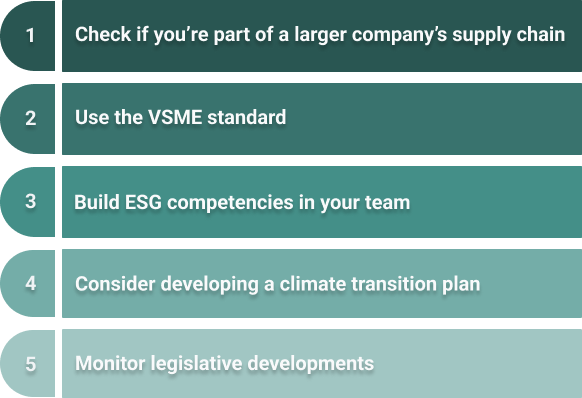
      1. Check whether you’re part of a larger company’s supply chain

      If your clients fall under CSRD, expect inquiries about their emissions, environmental policies, and broader ESG risks. Even without formal reporting, it is beneficial to implement basic due diligence procedures.

      2. Use the VSME standard

      The European Commission plans to launch a free portal providing guidance and reporting templates for small and medium-sized businesses. It offers a straightforward, accessible starting point that aligns with current market expectations.

      3. Build ESG competencies in your team

      Even a basic report relies on accurate data, clear processes, and team engagement. Starting early makes it easier to build toward more advanced practices over time. Begin with straightforward assessments—such as energy consumption, Scope 1 and 2 GHG emissions, or diversity policies.

      4. Consider developing a climate transition plan

      While it is not mandatory, preparing one can be highly beneficial. Companies that develop such plans are better equipped to navigate rising energy prices, evolving regulations, and increasing client expectations. In 2023, 54% of companies published a transition plan, and 40% set a net-zero target..

      5. Monitor legislative developments

      The Omnibus proposal has not been adopted, and another vote is scheduled for November. Keeping track of these developments will help you stay prepared.

      Summary: Don’t wait—act!

      Changes in CSRD and CSDDD are not merely deregulation—they signal that the EU is seeking balance between climate ambitions and business realities. For companies under 1,000 employees, this is the moment to make a conscious decision.

      ESG is here to stay. As its form, scope, and pace evolve, companies that embrace it now will not only secure regulatory clarity but also position themselves for meaningful, lasting market advantage.

      If you want to discuss how to approach ESG in your company—we’re here to help. We support companies under 1,000 employees in implementing ESG practices, building resilience, and preparing for the future.

      5 December, 2025
    • Image

      Key updates on 2026 VAT rate changes in Lithuania

      The Lithuanian parliament (Seimas) has approved a series of significant changes to the country’s VAT system, set to take effect from January 1, 2026. The reform introduces higher VAT rates for several sectors, including accommodation, culture, and heating, while also lowering the tax on books.

      Key updates

      The following changes will take place:

      • The reduced VAT rate of 9% will increase to 12%, affecting accommodation, certain transport services, and cultural events. This may result in higher prices that will affect end customers
      • The VAT on heating, hot water, and firewood will rise to the standard rate of 21%. Households and service providers will face additional costs, particularly during colder periods.
      • A reduced VAT rate from 9% to 5% will apply to books and printed or electronic publications, as well as non-periodical publications, both printed and electronic (e.g. manuals, academic texts), as a means of promoting reading and learning.

      This excludes:

      • calendars,
      • notebooks,
      • publications in which advertising constitutes more than 4/5 of content,
      • other similar printed matter.

      These measures are expected to have wide-reaching effects across the hospitality, publishing and utilities.


      Source:

      XV-287 Lietuvos Respublikos pridėtinės vertės mokesčio įstatymo Nr. IX-751 19 straipsnio pakeitimo …

      25 November, 2025
    • Image

      7% VAT rate for restaurants in Germany from 2026

      Starting from 1 January 2026, Germany will reinstate a 7% VAT rate on restaurants and catering services, excluding the sale of beverages. The measure was included in 2025 Tax Amendment Act as a permanent solution aiming to provide lasting support to the hospitality industries, which are facing continued economic pressure. This will also help to align Germany with neighboring countries, many of which already introduced reduced VAT rates on food services, helping restaurants near borders to remain competitive. The measure also works to simplify the complex VAT distinctions between dine-in and takeaway services.

      Update on VAT for restaurants

      The change follows the previously temporarily implemented VAT reduction during the COVID-19 pandemic, which was applied as governmental help to support restaurants and catering services in the struggling hospitality industry. In January 2024, the standard VAT rate was reintroduced and, in face of ongoing economic pressures, is now being revisited.

      Businesses can find more information in an administrative letter containing clarification on combination offers (e.g. menu including drinks) and restaurant vouchers, which are advised to be switched to multi-purpose ones, enabling customers to benefit from reduced VAT in 2026.

      Source:

      Tax Amendment Act 2025: Gesetzentwurf der Bundesregierung – Entwurf eines Steueränderungsgesetzes 2025

      12 November, 2025
    • Image

      VAT increase on unhealthy foods from 2026 in Slovakia

      The Slovak government has announced an increase in the VAT on food products with high sugar or salt content. It will raise the VAT rate from 19% to 23%, starting from 1 January 2026. The decision has been made as a part of a broader Tax Amendment Act 2025 and its goal is both to strengthen additional revenue as a fiscal consolidation measure, as well as to discourage overconsumption of sugar and salt as a public health initiative.

      New VAT rate

      The new VAT rate will supposedly affect about one-quarter of current food products, all of which have higher contents of sugar and salt, namely:

      • soft drinks,
      • confectionery,
      • chips,
      • processed snacks.

      Some foodstuffs and products will be exempt from the increase, such as:

      • salt and sugar as basic raw ingredients,
      • baby food, food for diabetics, dairy drinks, yogurts,
      • 100% fruit juices
      • other staple or essential food items.

      Businesses, especially ones that produce borderline products (e.g. “low-sugar” variants, snacks with moderate amounts of salt), will need to review their product classification and determine whether their goods will be subject to the higher 23% VAT rate. This means a necessary update to IT systems, pricing models and invoicing processes to adequately reflect the new rate. Producers, suppliers and retailers are advised to reassess cost structures and margins while awaiting further clarification from Ministry of Finance and Health.

      Source:

      – Tax Amendment Act 2025: Verejnosť a médiá : Udalosti : NRSR: Poslanci schválili balík konsolidačných opatrení na budúci rok…

      12 November, 2025
    • Image

      EPR in Germany: What you need to know when selling products abroad

      Are you currently selling or planning to sell products to customers in Germany? Regardless of your sales model whether B2B, B2C, via your own online shop, or through platforms like Amazon or eBay, you are likely subject to Germany’s Extended Producer Responsibility (EPR) regulations.

      What should you know about EPR as a seller, distributor, or manufacturer?

      EPR places environmental responsibility on companies for the entire lifecycle of their products. Whether you’re a manufacturer or simply a seller, you must comply with specific obligations. Failure to do so can result in fines, blocked listings, or even a complete ban on selling in Germany. Below you’ll find all the essential information to help you stay compliant.

      Image

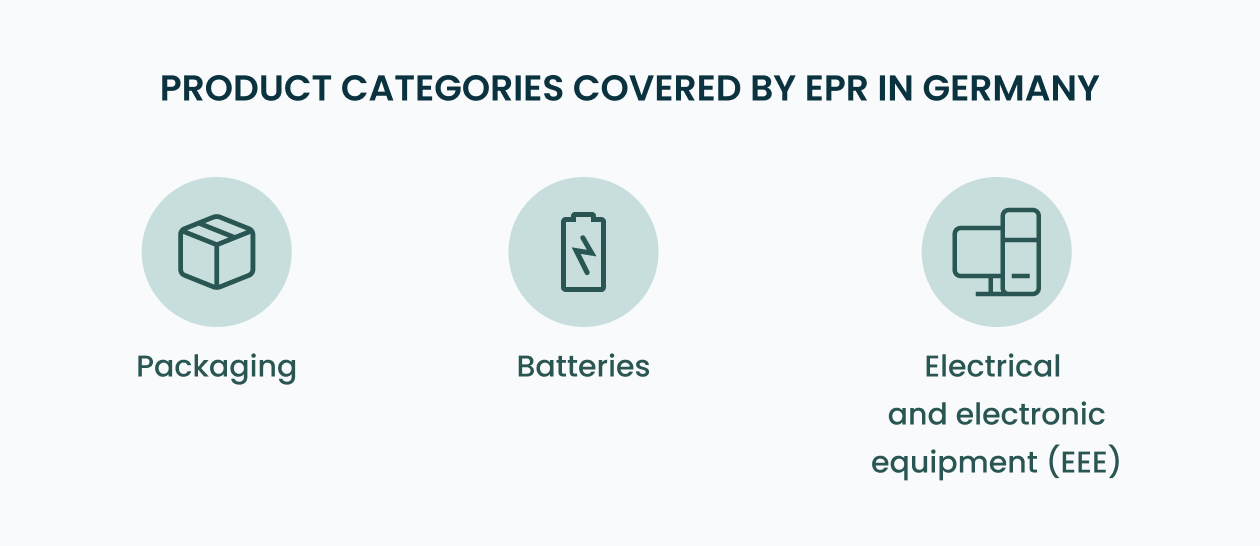
      Extended Producer Responsibility (Erweiterte Herstellerverantwortung – EHV) is a legal framework that requires companies to manage their products after their end-of-life. It applies to several product categories: packaging, batteries, electrical and electronic equipment (EEE)

      Under the “polluter pays” principle, if you profit from selling regulated products, you are also responsible for their environmental impact. This includes recycling, disposal, and financial contributions to waste management systems.

      Image

      Who must comply?

      1. Manufacturers and brand owners
        • Produce goods and sell under their own brand
        • Outsource production but sell under their own brand (private label)
      2. Exporters and cross-border sellers
        • Sell directly to German consumers via e-commerce
        • Operate online shops or sales platforms with delivery to Germany
      3. Retailers and mail-order companies operating in Germany
        • Sell online or via mail order within Germany
        • Deliver products directly to end customers
      4. Importers and distributors
        • Import goods into Germany
        • Resell them (wholesale or retail)

      If your business sells physical goods in Germany and those products generate waste such as packaging, electronic devices or batteries, you are likely subject to EPR regulations. These rules apply regardless of where your company is bases.

      How to comply with EPR in Germany: Step-by-step guide

      Before starting salesOngoing obligations
      1. Identify which products are subject to EPR1. Report the volume of the products and packaging
      2. Register with the relevant authorities:2. Pay environmental fees
      3. Sign a contract with a dual system operator3. Keep your registration data up to date
      4. Obtain your EPR registration number
      5. Appoint an authorized representative in Germany (if you don’t have a local entity)

      New plastic tax – what you should know

      From 1 January 2024, Germany introduced an environmental levy on single-use plastic products. This includes takeaway food containers, plastic cups, bags, and wet wipes.

      Obligations for producers and importers:

      • Register in the DIVID system
      • Track quantities sold from 2024
      • Submit annual reports
      • Pay the calculated levy

      Funds collected are used to reimburse municipalities for waste management and environmental protection, reinforcing Germany’s commitment to sustainability.

      Book a non-binding consultation and learn how to meet regulatory expectations safely and efficiently.

      Contact our expert for support.
      Get in touch

      What are the risks of non-compliance?

      Ignoring EPR obligations can lead to serious consequences:

      • Fines – substantial financial penalties
      • Blocked listings – marketplaces may suspend your products
      • Sales bans – in extreme cases, complete exclusion from the German market

      Beyond legal risks, non-compliance can damage trust with customers and business partners.

      Not sure if EPR applies to your business?We’re here to help.

      Navigating EPR requirements can be complex—especially for companies entering the German market. At EFF, we specialize in supporting businesses at every stage. From registration with LUCID and Stiftung EAR to appointing a local representative and ongoing reporting—we provide full support to help you stay compliant.

      Act now – Avoid costs. Gain advantage. Be responsible.

      Environmental regulations like EPR are here to stay and are becoming stricter. Governments and consumers expect greater accountability. Acting now helps you avoid financial and operational risks and positions your brand as a sustainability leader.


      Source:

      – Zentrale Stelle Verpackungsregister (ZSVR). (n.d.). Verpackungsregister [Website].https://www.verpackungsregister.org/
      – Stiftung elektro‑altgeräte register (stiftung ear). (n.d.). stiftung ear – Your authority for implementing ElektroG & BattG [Website]. https://www.stiftung-ear.de/en/

      22 October, 2025
    • Image

      Limiting ESG reporting – A path to climate catastrophe?

      In recent years, climate policy has become one of the pillars of sustainable development strategies for companies worldwide. The obligation to report on ESG (Environmental, Social, Governance) was designed to increase transparency in environmental actions and to encourage businesses to take tangible preventive, corrective, and adaptive measures in response to climate change. However, plans to ease ESG reporting requirements, included in the European Commission’s so-called Omnibus proposal, may have serious consequences – both for the environment and the economy.

      Slowing down climate action – Short-term gain, long-term loss

      Although the proposal to reduce the number of companies required to report on ESG has its advantages and may be attractive to businesses seeking to avoid additional administrative costs, these short-term savings will not offset long-term consequences. Without transparent reporting, companies will find it easier to limit investments in green technologies and climate adaptation. This means:

      • Fewer companies will monitor their greenhouse gas emissions and energy efficiency.
      • Decarbonisation initiatives in production and supply chains will be scaled back.
      • Businesses will be less inclined to implement adaptation strategies, such as protection against extreme weather events.

      It is therefore crucial to emphasise the objective of the Omnibus. Simplifying reporting requirements is not intended to weaken climate strategies. On the contrary – by freeing up company resources from complex reporting processes, the goal is to give them space to implement actions as quickly as possible. In short: more action, less bureaucracy – a step towards real results.

      Companies must remember that without adequate mitigation measures, climate change will accelerate, and its effects will cut across multiple areas.

      Learn more about the Omnibus!

      Read our article on this topic.
      Read more

      Here are a few examples of real consequences:

      • Extreme weather events will damage infrastructure – Severe storms, floods, and heatwaves will become more frequent and intense. Without proper preparation and adaptation, companies exposed to these threats will face enormous financial losses. An example is the 2021 floods in Germany, which cost the economy over EUR 30 billion.
      • Disruptions in raw material supplies and supply chains – Droughts and other weather anomalies will adversely affect agriculture, among other sectors, leading to higher food and raw material prices. Companies unprepared for such circumstances will face serious operational challenges.
      • Higher insurance premiums and financial losses – Insurers are already raising premiums for companies in areas threatened by climate change. As the problem escalates, companies will be forced to pay more, impacting their profitability.
      • Loss of investor and consumer trust – Investors increasingly factor ESG into financial decisions. Companies that scale back reporting and climate action risk losing access to financing and facing capital outflows.

      Why is ESG transparency crucial?

      Responsible ESG reporting is not merely a bureaucratic requirement – it is a mechanism that drives companies to take real climate action. Transparency enables progress evaluation and increases pressure on businesses to implement sustainable strategies on a broad scale.

      If the limitation of ESG reporting obligations results in halting activities in these areas, it will be a step backwards in the fight against climate change. The growing climate risk and its consequences will cost global economies billions of dollars annually. If companies fail to act now, in a few years they will face even greater losses – both financial and environmental. Climate change does not wait for reports – it spreads regardless of political decisions. Businesses that ignore responsibility for their actions today will face unavoidable costs tomorrow.


      Sources:

      – Powódź w Niemczech. 30 mld euro na fundusz odbudowy [Floods in Germany: EUR 30 billion reconstruction fund]

      21 August, 2025
    • Image

      Reporting to CDP – How to prepare and when to seek support

      Reporting to CDP may seem challenging, especially for companies just beginning their ESG journey. What once was optional is now, more often than not, a condition imposed by clients and investors. In this article, we explain what CDP is, how the reporting process works, and why companies choose to seek advisory support.

      Reporting to CDP – what, why, and how

      What is CDP?

      CDP (Carbon Disclosure Project) is an organization that promotes transparency in corporate activities related to climate, water, and land use. Each year, it invites companies to complete a questionnaire that helps assess their environmental impact and how they manage climate-related risks.

      CDP is not only an ESG tool – it is also a valuable source of data for investors and analysts who rely on reporting outcomes when making financial decisions.

      Why do companies report to CDP?

      An increasing number of organizations choose to participate in CDP, even if not formally required to do so. Why? Because reporting to CDP brings tangible benefits:

      • You enhance credibility – showing that you take ESG seriously and act transparently.
      • You gain easier access to financing – CDP data can serve as leverage in negotiating terms, e.g., for loans.
      • You understand climate risks – supporting long-term business resilience.

      How does the process work?

      The reporting process is cyclical. The questionnaire is published in spring, with submission deadlines falling in summer. Questions cover, among others, climate strategy, CO2 emissions (Scope 1, 2, and 3), reduction targets, risk management, and supplier engagement.

      Scores are awarded on a scale from D to A. A higher rating means not only prestige but also greater stakeholder trust.

      Challenges and difficulties

      For many companies, reporting to CDP poses a significant challenge, particularly the first time. The main obstacles include lack of data – especially Scope 3 emissions (from suppliers), lack of time to collect and compile information requiring cross-departmental collaboration, and limited knowledge. The questionnaires are highly technical, demanding both knowledge of ESG terminology and an understanding of a complex scoring methodology. Additionally, many organizations lack dedicated teams or specialists responsible for environmental reporting.


      Image

      Advisory support in CDP reporting – how we can help your company

      An advisor can provide invaluable support, particularly if your company is reporting to CDP for the first time or lacks internal resources. External assistance is also essential when aiming to improve your score or align your CDP report with other ESG documents.

      Working with our advisors allows your company to benefit from:

      • Pre-reporting evaluation – assessing whether your company is prepared for reporting.
      • Questionnaire completion – we help interpret CDP questions and develop response strategies.
      • Data collection – we know where and how to obtain the necessary information.
      • Score improvement – our expertise helps you achieve a stronger final rating.

      Learn more about the Omnibus!

      Read our article on this topic.
      Read more

      CDP as part of a broader ESG strategy

      A CDP report is not the only reporting tool – it should complement other sustainability activities, such as Ecovadis, CSRD, or TCFD reports. A comprehensive approach is key – a well-structured reporting process allows the same data to be leveraged across multiple documents, e.g., in communication with investors and clients.

      With a consistent approach, you:

      • streamline processes,
      • create a consistent narrative,
      • stay ready for changing regulations and rising market expectations.

      Step by step towards effective reporting

      Whether your company has already been invited to CDP or is planning to join, early preparation is key.

      The key steps include:

      • Assembling a team responsible for ESG and environmental data.
      • Reviewing available data and past reports.
      • Establishing a timeline and milestones.
      • Contacting an advisor to carry out a pre-reporting evaluation.
      19 August, 2025

    Contact form

    Image
    Contact us and we will respond within 24 hours!
    Kontakt
    Close
    Would you like to change the market?
    Select area of operation
    You will be redirected to another page for the selected market
    Image
    Polska
    Jesteś tutaj
    Image
    Image
    United Kingdom
    Go to page
    Image
    Image