
Download FireBug – Free Firefox Debugging Tool for Web Developers
Overview
FireBug is the classic, free Firefox extension that turns the browser into a full‑featured web debugging suite. From the moment you launch the panel, you gain instant visibility into HTML markup, CSS styles, JavaScript execution, Ajax traffic and even raw JSON responses. The core of FireBug is its powerful debugger, which automatically walks through your scripts line‑by‑line, lets you set breakpoints, watch variables, and view the call stack in real time. When a page throws an error, the tiny FireBug icon in the status bar lights up, signaling that something went wrong and offering a direct link to the offending line of code. Whether you prefer the panel docked at the bottom of the window or floating in a separate window, FireBug adapts to your workflow. It also respects a blacklist of sites you wish to exclude, keeping performance snappy on pages you don’t need to inspect. In short, FireBug removes the guesswork from debugging, allowing developers of all skill levels to identify and fix issues quickly, without having to wade through cryptic console logs.
Key Features of FireBug
- Live JavaScript Debugger: Set breakpoints, step through code, and inspect scope variables on the fly.
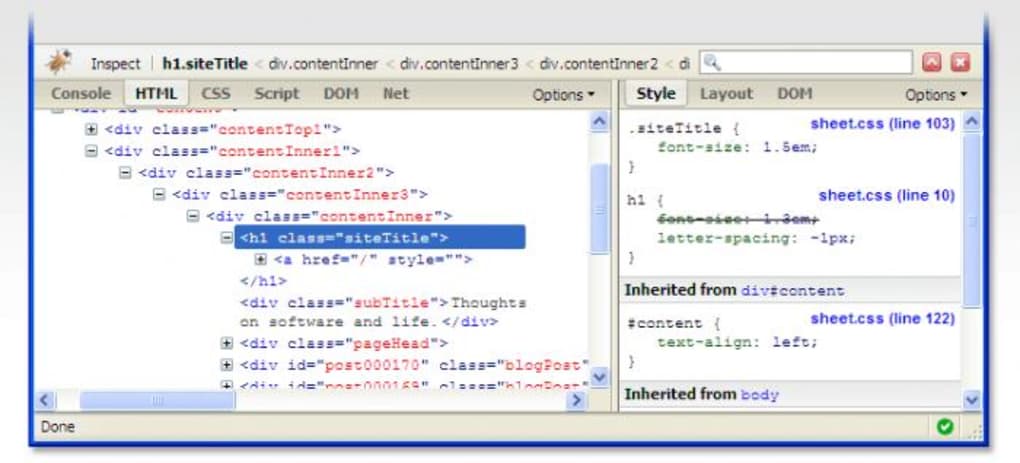
- CSS Inspector: Edit styles directly in the panel and see changes reflected instantly in the browser.
- HTML Panel: Browse, modify, and delete DOM nodes without reloading the page.
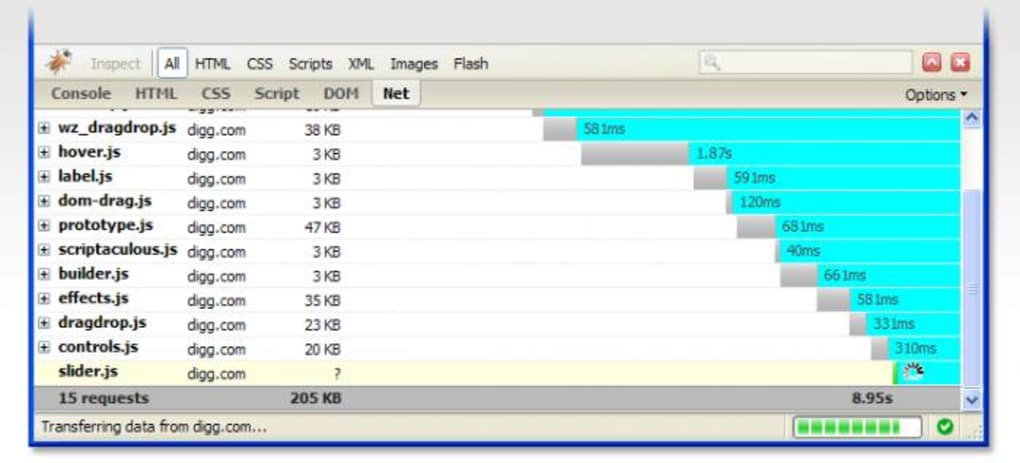
- Net Monitor: View every HTTP request, response headers, status codes, and timing details, including a new column for protocol.
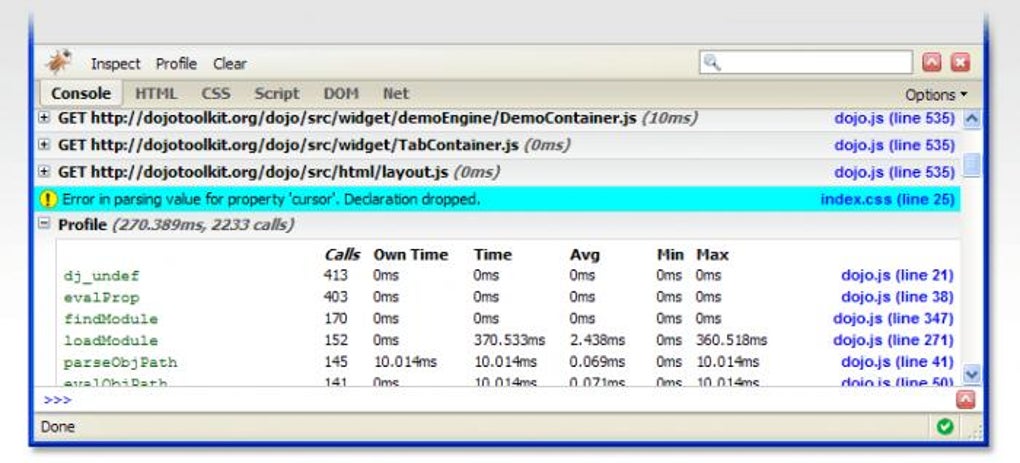
- Console with Origin Info: Every log entry shows its source file and line number, making tracing easier.
- Command Line Interface: Execute JavaScript snippets in the context of the inspected page.
- Ajax & JSON Viewer: Copy JSON responses to the clipboard, see tooltips for array items, and inspect Ajax payloads.
- Conditional Breakpoints & Tooltips: Add breakpoints that trigger only when a condition is true, with helpful tooltip hints.
- Font Viewer & Tooltip: Preview loaded fonts and get quick font details via hover.
- UI Docking & Blacklist: Dock the panel at the bottom, side, or open it in a separate window; exclude sites you never want to debug.
Installation, Configuration & Daily Usage
Getting FireBug up and running is a straightforward process that takes just a few minutes, even for developers who are new to browser extensions.
Step‑by‑Step Installation
- Open Firefox and navigate to the official FireBug add‑on page.
- Click the “Add to Firefox” button; Firefox will prompt you to confirm the installation.
- Accept the permissions request and let Firefox download the extension.
- After the download completes, click “Restart Firefox” to activate FireBug.
Initial Configuration
Once Firefox restarts, you’ll see the FireBug icon in the status bar. Click the icon to open the main panel. From the gear icon (settings) you can:
- Choose the default docking position (bottom, side, or separate window).
- Enable or disable individual panels (HTML, CSS, Script, Net, Console).
- Set up a blacklist of domains that FireBug should ignore, preserving performance on sites you trust.
- Adjust debugger preferences, such as automatically pausing on uncaught exceptions.
Everyday Workflow
When you encounter a broken page, simply look at the FireBug icon – a red badge indicates an error. Open the Script panel to view the exact line where the problem occurred. Set breakpoints by clicking the line numbers, then refresh the page to trigger the debugger. Use the Console panel to log variables or run ad‑hoc commands. The Net panel lets you monitor Ajax calls, inspect response headers, and even resend HTTP requests with a single click. For CSS tweaks, switch to the CSS panel, modify a rule, and see the change instantly without reloading. All these actions are performed in real time, which dramatically reduces the feedback loop during development.
FireBug works on any operating system that supports Firefox, including Windows, macOS, and Linux. Because it lives inside the browser, there’s no separate installer or additional runtime required – you only need a recent version of Firefox (preferably 78+ for the best compatibility).
Pros, Cons, FAQ and Final Verdict
Pros
- Completely free and open‑source, with regular community updates.
- All‑in‑one debugging suite: JavaScript, CSS, HTML, Ajax, and network monitoring.
- Live editing capabilities eliminate the need for page reloads.
- Intuitive UI that can be docked or detached to suit any workflow.
- Rich console output that includes origin info for every log entry.
Cons
- Only works with Firefox; developers using Chrome must rely on DevTools.
- Performance can dip on very large pages if all panels are enabled.
- Some newer web APIs (e.g., Service Workers) have limited support compared to native DevTools.
- Occasional UI glitches after Firefox updates require a quick restart of the extension.
Frequently Asked Questions
Is FireBug still actively maintained?
Yes. Although the original project slowed down after Firefox introduced its own built‑in DevTools, the community has kept FireBug alive with regular patches, especially for the latest Firefox ESR releases.
Can I use FireBug to debug mobile websites?
FireBug runs inside the desktop version of Firefox, but you can simulate mobile devices using Firefox’s Responsive Design Mode. This lets you inspect how your site behaves on different screen sizes while still using FireBug’s panels.
How does FireBug differ from Firefox’s built‑in DevTools?
FireBug offers a more granular, panel‑based experience with features like JSON copy‑to‑clipboard, advanced conditional breakpoints, and a dedicated font viewer. For developers who prefer a lightweight, extension‑driven workflow, FireBug remains a popular alternative.
Is there a way to export my debugging session?
Yes. FireBug includes a “Save” option in the Net panel that lets you export request/response logs as HAR files, which can be shared with teammates for further analysis.
Do I need to restart Firefox after updating FireBug?
A quick restart is recommended after each update to ensure that all new features load correctly and any lingering UI glitches are cleared.
Conclusion & Call to Action
FireBug remains one of the most accessible, free, and powerful debugging tools for Firefox developers. Its comprehensive suite of panels, live editing capabilities, and intuitive UI make it a go‑to solution for anyone who spends even a few minutes troubleshooting web pages. While it’s limited to Firefox and may lag behind the native DevTools for the newest web APIs, its feature set—especially the JSON viewer, conditional breakpoints, and font inspector—still offers unique value that many developers appreciate.
If you’re looking for a reliable, no‑cost way to speed up your debugging workflow, download FireBug today, enable the panels you need, and start debugging with confidence. The installation is quick, the learning curve is shallow, and the productivity gains are immediate. Happy coding!