Image

Augmented Reality Project Utilizes The Nintendo DSi

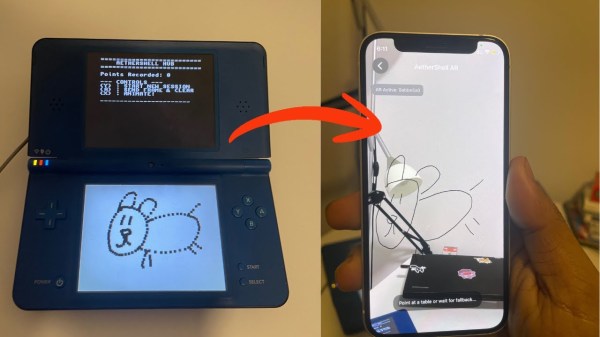
[Bhaskar Das] has been tinkering with one of Nintendo’s more obscure handhelds, the DSi. The old-school console has been given a new job as part of an augmented reality app called AetherShell. 

The concept is straightforward enough. The Nintendo DSi runs a small homebrew app which lets you use the stylus to make simple line drawings on the lower touchscreen. These drawings are then trucked out wirelessly as raw touch data via UDP packets, and fed into a Gemini tool geometric reconstruction script written in Python which transforms them into animation frames. A Gemini tool is used to classify what the drawings are in order for a future sound effects upgrade, too. These are then sent to an iPhone app, which uses ARKit APIs and the phone’s camera to display the animations embedded into the surrounding environment via augmented reality.

One might question the utility of this project, given that the iPhone itself has a touch screen you can draw on, too. It’s a fair question, and one without a real answer, beyond the fact that sometimes it’s really fun to play with an old console and do weird things with it. Plus, there just isn’t enough DSi homebrew out in the world. We love to see more.

Continue reading “Augmented Reality Project Utilizes The Nintendo DSi”
Image

Turn ‘Em On: Modern Nintendo Cartridges May Have A Limited Lifespan

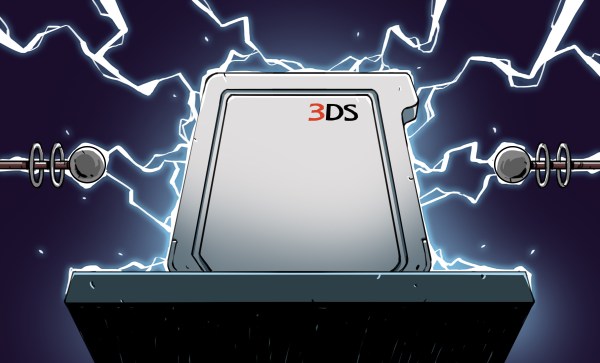
Cartridge-based consoles have often been celebrated for their robust and reliable media. You put a simple ROM chip in a tough plastic housing, make sure the contacts are fit for purpose, and you should have a game cart that lasts for many decades.

When it comes to the Nintendo 3DS, though, there are some concerns that its carts aren’t up to snuff. Certain engineering choices were made that could mean these carts have a very limited lifespan, which could now be causing failures in the wild. It may not be the only Nintendo console to suffer this fate, either, thanks to the way modern cart-based consoles differ from their forebearers.

Continue reading “Turn ‘Em On: Modern Nintendo Cartridges May Have A Limited Lifespan”

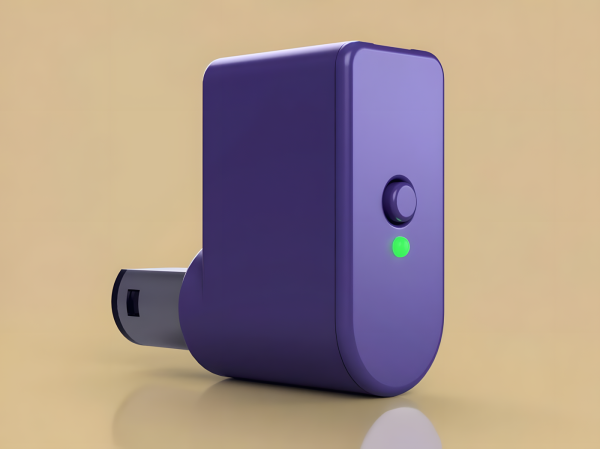
Computer rendering of a DIY, purple Nintendo Wavebird controller adapter

Wavebird Controller Soars Once More With Open Source Adapter

After scouring the second-hand shops and the endless pages of eBay for original video game hardware, a pattern emerges. The size of the accessory matters. If a relatively big controller originally came with a tiny wireless dongle, after twenty years, only the controller will survive. It’s almost as if these game controllers used to be owned by a bunch of irresponsible children who lose things (wink). Such is the case today when searching for a Nintendo Wavebird controller, and [James] published a wireless receiver design to make sure that the original hardware can be resurrected.

Continue reading “Wavebird Controller Soars Once More With Open Source Adapter”

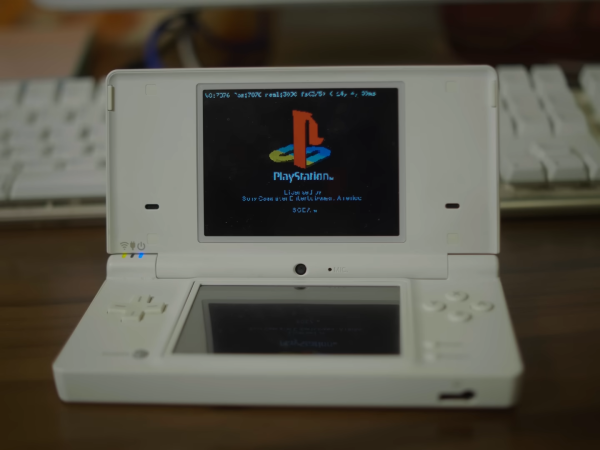
PS1 logo on the top screen of a white DS

Running An Entire PS1 Emulator In A DS Cartridge

Gaming on a Nintendo DS can bring back great memories of long car trips from the past. But looking back, we remember wishing to play more than the DS could ever hope to handle. [fami] looks into the SuperCard DSTWO in her recent video, a solution to our past sorrows.

Able to play anything from the very games designed for the DS to emulated PS1 games, the DSTWO is more than capable of surpassing the abilities of the DS itself. More impressively, all games are run directly from the cartridge itself rather than on the DS’s hardware. While this emulated console within a handheld is impressive, it is far from simple to get running.

The DSTWO runs with an Ingenic JZ4732 as the CPU, completely different from any native architecture of the DS. Pair this with the unhelpful SDK made for the cartridge, and the aging hardware is held together by the community development behind any improvements. This is aided by the CPU similarities of another widely modded game console, the Dingoo A320.

When not having a fit, and after going through hours of troubleshooting, you might find the DSTWO running a game of SimCity 2000 or even Spyro the Dragon inside a DS. Even with the difficulties of use, the fact that these games run at all is impressive. If you want to try the DSTWO emulation yourself, check out the forums.

This is far from the only example of extreme care going into emulation. Here at Hackaday, we have covered similarly impressive projects such as this completely DIY handheld made for any retro game emulation you throw at it.

Continue reading “Running An Entire PS1 Emulator In A DS Cartridge”

Image

Nintendo Switch 2 Teardown, Let’s A-Go!

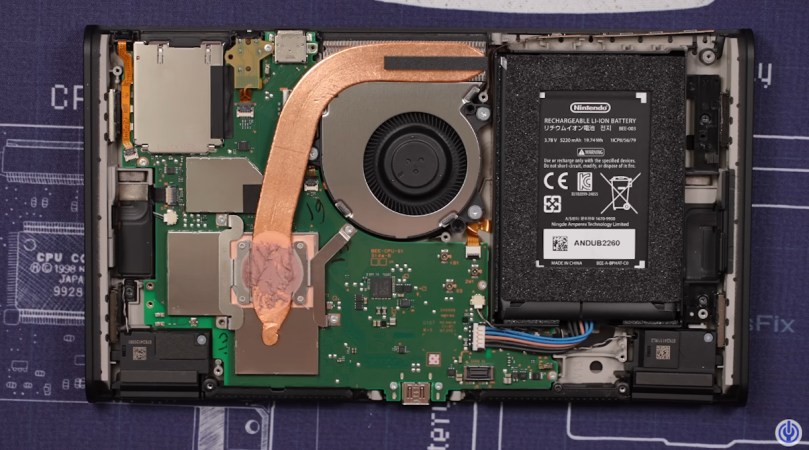
A new console challenger has appeared, and it goes by the name Nintendo Switch 2. The company’s latest iteration of the home console portable hybrid initially showed promise by featuring a large 1080p display, though very little official footage of the handheld existed prior to the device’s global release last week. However, thanks to a teardown video from [TronicsFix], we’ve got a little more insight into the hardware.

ImageThe technical specifications of this new console have been speculated on for the last handful of years. We now know NVIDIA is again providing the main silicon in the form of a custom 8x ARM Cortex A78C processor. Keeping the system powered is a 5220 mAh lithium ion battery that according to [TronicsFix] is held in with some seriously strong adhesive.

On the plus side for repairability, the onboard microphone and headphone jack are each attached by their own ribbon cable to the motherboard. The magnetic controller interfaces are also modular in design as they may one day prove to be a point of failure from repeated detachment. Speaking of which, [TronicsFix] also took apart the new version of the Joy-Con controller that ships with the system.

Arguably the biggest pain point for owners of the original Nintendo Switch was the reliability of the analog sticks on the diminutive controllers. There were widespread reports of “stick drift” that caused players to lose control as onscreen avatars would lazily move in one direction without player input. For the Switch 2, the Joy-Con controllers feature roughly the same number of dome switch buttons as well as haptic feedback motors. The analog sticks are larger in size on the outside, but feature the same general wiper/resistor design of the original. Many will cry foul of the continued use of conventional analog stick design in favor of hall effect sensors, but only time will tell if the Nintendo Switch 2 will repeat history.

Continue reading “Nintendo Switch 2 Teardown, Let’s A-Go!”

Image

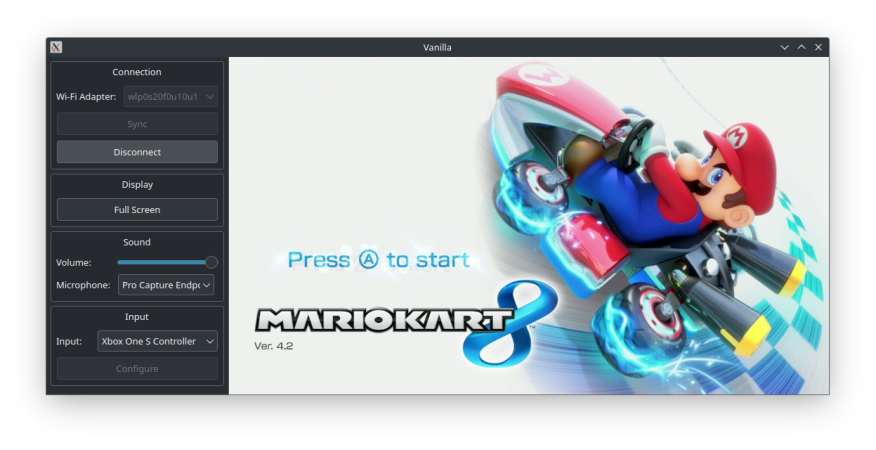
An Open-Source Wii U Gamepad

Although Nintendo is mostly famous for making great games, they also have an infamous reputation for being highly litigious not only for reasonable qualms like outright piracy of their games, but additionally for more gray areas like homebrew development on their platforms or posting gameplay videos online. With that sort of reputation it’s not surprising that they don’t release open-source drivers for their platforms, especially those like the Wii U with unique controllers that are difficult to emulate. This Wii U gamepad emulator seeks to bridge that gap.

The major issue with the Wii U compared to other Nintendo platforms like the SNES or GameCube is that the controller looks like a standalone console and behaves similarly as well, with its own built-in screen. Buying replacement controllers for this unusual device isn’t straightforward either; outside of Japan Nintendo did not offer an easy path for consumers to buy controllers. This software suite, called Vanilla, aims to allow other non-Nintendo hardware to bridge this gap, bringing in support for things like the Steam Deck, the Nintendo Switch, various Linux devices, or Android smartphones which all have the touch screens required for Wii U controllers. The only other hardware requirement is that the device must support 802.11n 5 GHz Wi-Fi.

Although the Wii U was somewhat of a flop commercially, it seems to be experiencing a bit of a resurgence among collectors, retro gaming enthusiasts, and homebrew gaming developers as well. Many games were incredibly well made and are still experiencing continued life on the Switch, and plenty of gamers are looking for the original experience on the Wii U instead. If you’ve somehow found yourself in the opposite position of owning of a Wii U controller but not the console, though, you can still get all the Wii U functionality back with this console modification.

Thanks to [Kat] for the tip!

Image

RTEMS Statement Deepens Libogc License Controversy

Earlier this month we covered the brewing controversy over libogc, the community-developed C library that functions as the backbone for GameCube and Wii homebrew software. Questions about how much of the library was based on leaked information from Nintendo had been circulating for decades, but the more recent accusations that libogc included code from other open source projects without proper attribution brought the debate to a head — ultimately leading Wii Homebrew Channel developer Hector Martin to archive the popular project and use its README as a central point to collect evidence against libogc and its developers.

ImageAt the time, most of the claims had to do with code being taken from the Real-Time Executive for Multiprocessor Systems (RTEMS) project. Martin and others in the community had performed their own investigations, and found some striking similarities between the two codebases. A developer familiar with both projects went so far as to say that as much as half the code in libogc was actually lifted from RTEMS and obfuscated so as to appear as original work.

While some of these claims included compelling evidence, they were still nothing more than accusations. For their part, the libogc team denied any wrongdoing. Contributors to the project explained that any resemblance between libogc code and that of either leaked Nintendo libraries or other open source projects was merely superficial, and the unavoidable result of developing for a constrained system such as a game console.

But that all changed on May 6th, when the RTEMS team released an official statement on the subject. It turns out that they had been following the situation for some time, and had conducted their own audit of the libogc code. Their determination was that not only had RTEMS code been used without attribution, but that it appeared at least some code had also been copied verbatim from the Linux kernel — making the license dispute (and its solution) far more complex.

Continue reading “RTEMS Statement Deepens Libogc License Controversy”