
May 27, 2026
Xona’s Justin Deifel Brings Government PNT Experience to the LEO Era
He spoke with Inside GNSS about what Xona’s Pulsar means for the future of resilient PNT.
By Inside GNSS
Global Navigation Satellite Systems Engineering, Policy, and Design



He spoke with Inside GNSS about what Xona’s Pulsar means for the future of resilient PNT.
By Inside GNSS
In 2017, the main message at the Munich Satellite Summit was clear: GNSS needs a backup. Nearly 10 years later, the message hasn’t changed; we may have more tools available but very little progress has been made—while the threat to GNSS only continues to grow.
By Dana A. Goward
GNSS interference is no longer a distant concern or a technical edge case. As jamming, spoofing and autonomy requirements expose the limits of today’s PNT architectures, LEO is emerging as one of the most important alternatives to understand.
By Zak M. Kassas
Over the next six issues, Dr. Güenter W. Hein will critically review the development of Galileo, drawing on more than two decades of direct experience with Europe’s satellite navigation system. But this series is not simply a look back. Galileo’s history is also a study in geopolitics, technical ambition, institutional complexity, international cooperation, spectrum management and interoperability—issues that remain central to today’s global PNT aspirations.
By Günter W. Hein
Colorado Springs-based Apogee has been awarded a five-year, $103.6 million task order to provide positioning, navigation, and timing contractor support services for the Department of Defense, supporting modernization, acquisition, and sustainment planning across the global PNT enterprise.
By Inside GNSS
FocalPoint Positioning has unveiled Precise+, a software-defined receiver technology that delivers sub-metre GNSS accuracy in environments where conventional carrier phase tracking typically fails — without the use of inertial sensors, dead reckoning, or sensor fusion.
By Inside GNSS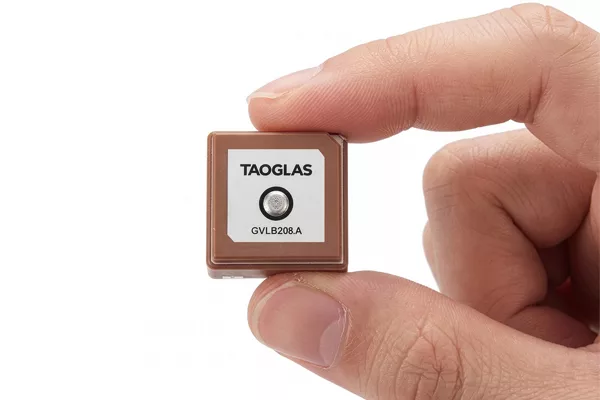
Taoglas has introduced the GVLB208 Series, a dual-band L1/L5 stacked patch antenna in a 20 x 20 x 8 mm footprint — one of the smallest packages available for concurrent L1/L5 operation. The series is the first in a new family of ultra-compact GNSS antennas from the company.
By Inside GNSS
Septentrio has extended its mosaic-G5 module family with the P8, a multi-frequency GNSS receiver designed for mission-critical applications in contested electromagnetic environments.
By Inside GNSS
NASA Earthdata and principal investigator Stephen Leroy of JANUS Research Group have released a new set of Global Navigation Satellite System Radio Occultation data products reformatted to a common Climate and Forecast convention-compliant format, improving cross-program usability for atmospheric researchers and GNSS data users.
By Inside GNSS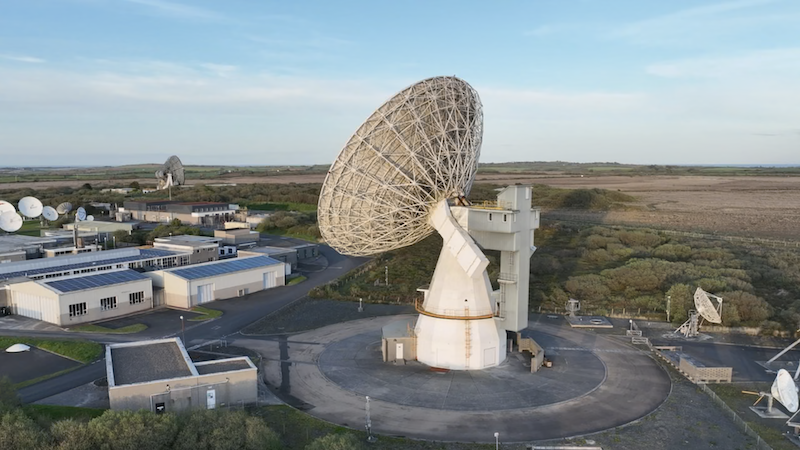
Intuitive Machines has announced that it has entered into a definitive agreement to acquire Goonhilly Earth Station Ltd, the United Kingdom’s leading deep space communications provider, and its U.S. subsidiary Goonhilly USA Inc., operating as COMSAT.
By Inside GNSS
TrustPoint has been awarded a $4 million Tactical Funding Increase (TACFI) contract to demonstrate a GPS-independent positioning, navigation, and timing system.
By Inside GNSS
Iridium Communications announced Thursday it has entered into a definitive agreement to acquire the remaining stake in Aireon LLC, the space-based ADS-B air traffic surveillance operator that has flown as a hosted payload on the Iridium constellation since 2019.
By Inside GNSS
Septentrio has launched the mosaic-G5 P6, a multi-frequency precise positioning module extending the company’s mosaic receiver line for commercial UAV, robotics, and industrial automation integrators.
By Inside GNSS
Trimble has introduced a smart antenna enclosure option for its PX-1 RTX positioning solution, targeting commercial drone delivery integrators seeking to reduce development timelines.
By Inside GNSS
Thales has introduced the TopStar Smart Receiver, a three-function positioning, navigation, and timing unit designed for land vehicles, drones, and munitions operating under active electronic warfare conditions.
By Inside GNSS
The UK Ministry of Defence has awarded a £6 million contract to Team Elaris, a QinetiQ-led consortium, to develop a deployable concept for enhanced Long-Range Navigation (eLoran) as a GPS-independent positioning, navigation, and timing alternative for military operations in contested environments.
By Inside GNSS
Inside GNSS is on the ground at XPONENTIAL 2026 as an official media partner of the world’s largest autonomous systems and robotics event, taking place May 11–14 at Huntington Place in Detroit, Michigan. Educational programming opens May 11; exhibits run May 12–14.
By Inside GNSS
Mayflower Communications Company, Inc. has introduced the NavGuard® 750 Integrated M-Code Anti-Jam System (IMAS), a fully integrated Assured Position, Navigation and Timing (APNT) solution designed for severely size, weight, and power (SWaP)-constrained military platforms.
By Inside GNSS
ANELLO Photonics has secured $25 million in Series B-2 financing round to accelerate production of its silicon-photonics-based inertial navigation systems for GPS-denied and contested environments.
By Inside GNSS
Colorado Springs-based Apogee has been awarded a five-year, $103.6 million task order to provide positioning, navigation, and timing contractor support services for the Department of Defense, supporting modernization, acquisition, and sustainment planning across the global PNT enterprise.
By Inside GNSS
FocalPoint Positioning has unveiled Precise+, a software-defined receiver technology that delivers sub-metre GNSS accuracy in environments where conventional carrier phase tracking typically fails — without the use of inertial sensors, dead reckoning, or sensor fusion.
By Inside GNSS
Taoglas has introduced the GVLB208 Series, a dual-band L1/L5 stacked patch antenna in a 20 x 20 x 8 mm footprint — one of the smallest packages available for concurrent L1/L5 operation. The series is the first in a new family of ultra-compact GNSS antennas from the company.
By Inside GNSS
Septentrio has extended its mosaic-G5 module family with the P8, a multi-frequency GNSS receiver designed for mission-critical applications in contested electromagnetic environments.
By Inside GNSS
NASA Earthdata and principal investigator Stephen Leroy of JANUS Research Group have released a new set of Global Navigation Satellite System Radio Occultation data products reformatted to a common Climate and Forecast convention-compliant format, improving cross-program usability for atmospheric researchers and GNSS data users.
By Inside GNSS
TrustPoint has been awarded a $4 million Tactical Funding Increase (TACFI) contract to demonstrate a GPS-independent positioning, navigation, and timing system.
By Inside GNSS
Septentrio has launched the mosaic-G5 P6, a multi-frequency precise positioning module extending the company’s mosaic receiver line for commercial UAV, robotics, and industrial automation integrators.
By Inside GNSS
Trimble has introduced a smart antenna enclosure option for its PX-1 RTX positioning solution, targeting commercial drone delivery integrators seeking to reduce development timelines.
By Inside GNSS
Thales has introduced the TopStar Smart Receiver, a three-function positioning, navigation, and timing unit designed for land vehicles, drones, and munitions operating under active electronic warfare conditions.
By Inside GNSS
The UK Ministry of Defence has awarded a £6 million contract to Team Elaris, a QinetiQ-led consortium, to develop a deployable concept for enhanced Long-Range Navigation (eLoran) as a GPS-independent positioning, navigation, and timing alternative for military operations in contested environments.
By Inside GNSS
Mayflower Communications Company, Inc. has introduced the NavGuard® 750 Integrated M-Code Anti-Jam System (IMAS), a fully integrated Assured Position, Navigation and Timing (APNT) solution designed for severely size, weight, and power (SWaP)-constrained military platforms.
By Inside GNSS
Lockheed Martin has completed the “core mate” production phase for GPS IIIF Space Vehicle 11, the assembly milestone that formally marks a satellite’s structural birth. SV11 will be the first GPS IIIF satellite to launch, though no launch date has been announced.
By Inside GNSS
BAE Systems has entered full-rate production and commenced initial deliveries of its NavGuide GPS receiver, a portable, field-installable system designed to provide secure military M-Code positioning, navigation, and timing for vehicle, handheld, and sensor-based applications.
By Inside GNSS
u-blox has announced the ZED-X20P-01B, a new variant of its ZED-X20P all-band GNSS module that adds global Precise Point Positioning capability and native support for the Galileo High Accuracy Service (HAS), enabling decimeter-level accuracy without dependence on local RTK correction infrastructure.
By Inside GNSS
Microchip Technology has introduced the MD-990-0011-B plug-in timing module family, with holdover performance engineered to maintain synchronization through GNSS outages.
By Inside GNSS
PlanetiQ has been awarded a $15 million Strategic Funding Increase (STRATFI) contract by the U.S. Air Force to develop and launch a new generation of satellites combining three GNSS-based Earth observation techniques in a single platform.
By Inside GNSS
Northrop Grumman has delivered the first production unit of the EGI-M, a modernized airborne positioning, navigation and timing system engineered to maintain accuracy in GPS-contested and denied environments.
By Inside GNSS
Rohde & Schwarz has announced new signal simulation capabilities supporting Pulsar, the Low Earth Orbit positioning, navigation, and timing constellation being developed by Xona Space Systems.
By Inside GNSS
Xona Space Systems opened a satellite manufacturing facility in Burlingame, California on April 9, moving its Pulsar positioning, navigation, and timing service from orbital demonstration to production-scale deployment.
By Inside GNSS
Speaking at the recent Munich Satellite Navigation Summit, Mark Brammer, Positioning Program Lead for the UK’s National PNT Office, outlined the United Kingdom’s bold vision for the future of positioning, navigation, and timing (PNT), a system built not on a single pillar, but on international cooperation, multi-technology fusion, and a clear-eyed view of GNSS resilience.
By Peter Gutierrez
At the 2025 Munich Satellite Navigation Summit, Ramsey Faragher, Director and CEO of the UK Royal Institute of Navigation, delivered a sobering assessment of satellite navigation vulnerabilities based on findings of the ‘Operational Performance of Satellite Navigation Systems’ (OPS) report.
By Peter Gutierrez
Airbus is leading the development of the next generation of the European Geostationary Navigation Overlay Service (EGNOS), Europe’s satellite-based augmentation system (SBAS). EGNOS version three (V3) will provide a completely new DFMC service – dual frequency, multi-constellation – augmenting both GPS and Galileo signals.
By Peter Gutierrez
The impact Ignacio Fernández Hernández, Galileo Authentication and High Accuracy Manager for the European Commission, has had on the EGNOS and Galileo programs, as he does his part to advance GNSS.
By Peter Gutierrez
The Institute of Navigation recognizes Dr. John Raquet with prestigious Johannes Kepler Award at the ION GNSS+ 2024 Conference.
By Inside GNSS
Steve Woolven’s early experience running his family’s resort coupled with his ambitious academic pursuits helped lay the groundwork for a successful career in the PNT industry and his current role as President of Trimble Applanix.
By Peter Gutierrez
Topcon Positioning Systems has announced that Ray O’Connor, president and chief executive officer, will retire in September 2025 after over three decades of exceptional leadership. O’Connor will transition to the role of Chairman of the Topcon Positioning Systems Board of Directors effective September 1, 2024, providing guidance and support to the executive leadership team during this important year of transition.
By Inside GNSS
Silicon Sensing is to open its first US office, with a dedicated in-country team lead by the new head of sales – Americas, Kevin Swain. This new facility will help ensure the company efficiently supports the growing demand for their rugged, high performance inertial products across North and South America.
By Inside GNSS
At Xponential 2024 in San Diego, Inside GNSS sat down with Jamie Marraccini, CEO of Inertial Labs, to discuss the company’s advanced solutions for GNSS vulnerability and their role in enhancing navigation for UAS operations in GNSS-denied environments.
By Inside GNSS
Speaking to Inside GNSS at the recent InterGEO conference in Berlin, Olivier Casabianca, Vice President of Trimble Positioning Services, said “If you look at the way we work today, GNSS is still the key component, serving all of what we would consider the central geospatial industries, meaning construction, agriculture, transportation, etcetera. People talk about making a digital version of the world, and we understand that starts with knowing where you are, before, during and after, whatever job you’re doing. Precise positioning is fundamental.”
By Peter Gutierrez
Industry veteran Mariam Sorond has taken over as the CEO of NextNav.
By Inside GNSS
Dr Mark Marshall takes on role as emerging inertial sensing technologies open new market opportunities.
Dr Mark Marshall has been appointed as Chief Engineer of Silicon Sensing Systems Ltd. Dr Marshall joined Silicon Sensing in 2017 as the lead engineer on numerous inertial programmes. Immediately prior to commencing as Chief Engineer he was the company’s Consultant Engineer and Electronics Discipline Manager. In this role he was responsible for the electronics and mechanical design of the company’s latest generation, tactical grade inertial measurement unit (IMU) – the DMU41.
By Inside GNSS
Cheryl Gramling knew early on what she wanted to do in life. Today, she is assistant chief for technology, mission engineering and systems analysis division, at NASA’s Goddard Space Flight Center, and she’s playing a key role in getting us back to the Moon.
By Peter Gutierrez
Helix is pleased to announce the appointment of Tom Beese as Chairman of its Board of Directors.
By Inside GNSS
Rx Networks announced today that Michael Longinotti, Chief Executive Officer and Chief Financial Officer, will retire from the company at the end of 2022, then continue to serve as a board member. John Carley, VP of Sales and Marketing, has been appointed by the Board of Directors to succeed Longinotti as Chief Executive Officer on January 1, 2023.
By Inside GNSS
The Institute of Navigation’s (ION) Satellite Division presented Dr. Boris Pervan with its Johannes Kepler Award September 23, 2022 during the ION GNSS+ Conference held September 19-23, at the Hyatt Regency Denver At Colorado Convention Center.
By Inside GNSS
The Institute of Navigation (ION) announced the recipients of the 2022 Fellow membership during the ION International Technical Meeting (ITM) and Precise Time and Time Interval Systems and Applications (PTTI) meeting held January 25- 27, 2022 at the Hyatt Regency Long Beach in Long Beach, California.
By Inside GNSS
FocalPoint Positioning, founded in 2015, is, as they say, very happening. Its Supercorrelation is a chipset-level software product for mobiles, wearables and vehicles that is changing the positioning game in urban environments. Interesting and energetic, FocalPoint founder Ramsey Faragher came out of the defense industry and has a risen rapidly in the GNSS firmament.
By Peter Gutierrez
As CEO Jean-Yves Courtois puts it, Orolia is focused on solving the hard problems. To do that, the France-based company, a global provider of resilient positioning, navigation and timing (RPNT) solutions, has become a technology integrator.
By Inside GNSS
He spoke with Inside GNSS about what Xona’s Pulsar means for the future of resilient PNT.
By Inside GNSS
Colorado Springs-based Apogee has been awarded a five-year, $103.6 million task order to provide positioning, navigation, and timing contractor support services for the Department of Defense, supporting modernization, acquisition, and sustainment planning across the global PNT enterprise.
By Inside GNSS
FocalPoint Positioning has unveiled Precise+, a software-defined receiver technology that delivers sub-metre GNSS accuracy in environments where conventional carrier phase tracking typically fails — without the use of inertial sensors, dead reckoning, or sensor fusion.
By Inside GNSS
Taoglas has introduced the GVLB208 Series, a dual-band L1/L5 stacked patch antenna in a 20 x 20 x 8 mm footprint — one of the smallest packages available for concurrent L1/L5 operation. The series is the first in a new family of ultra-compact GNSS antennas from the company.
By Inside GNSS
Septentrio has extended its mosaic-G5 module family with the P8, a multi-frequency GNSS receiver designed for mission-critical applications in contested electromagnetic environments.
By Inside GNSS
NASA Earthdata and principal investigator Stephen Leroy of JANUS Research Group have released a new set of Global Navigation Satellite System Radio Occultation data products reformatted to a common Climate and Forecast convention-compliant format, improving cross-program usability for atmospheric researchers and GNSS data users.
By Inside GNSS
Intuitive Machines has announced that it has entered into a definitive agreement to acquire Goonhilly Earth Station Ltd, the United Kingdom’s leading deep space communications provider, and its U.S. subsidiary Goonhilly USA Inc., operating as COMSAT.
By Inside GNSS
TrustPoint has been awarded a $4 million Tactical Funding Increase (TACFI) contract to demonstrate a GPS-independent positioning, navigation, and timing system.
By Inside GNSS
Iridium Communications announced Thursday it has entered into a definitive agreement to acquire the remaining stake in Aireon LLC, the space-based ADS-B air traffic surveillance operator that has flown as a hosted payload on the Iridium constellation since 2019.
By Inside GNSS
Septentrio has launched the mosaic-G5 P6, a multi-frequency precise positioning module extending the company’s mosaic receiver line for commercial UAV, robotics, and industrial automation integrators.
By Inside GNSS
Trimble has introduced a smart antenna enclosure option for its PX-1 RTX positioning solution, targeting commercial drone delivery integrators seeking to reduce development timelines.
By Inside GNSS
Thales has introduced the TopStar Smart Receiver, a three-function positioning, navigation, and timing unit designed for land vehicles, drones, and munitions operating under active electronic warfare conditions.
By Inside GNSS
The UK Ministry of Defence has awarded a £6 million contract to Team Elaris, a QinetiQ-led consortium, to develop a deployable concept for enhanced Long-Range Navigation (eLoran) as a GPS-independent positioning, navigation, and timing alternative for military operations in contested environments.
By Inside GNSS
Inside GNSS is on the ground at XPONENTIAL 2026 as an official media partner of the world’s largest autonomous systems and robotics event, taking place May 11–14 at Huntington Place in Detroit, Michigan. Educational programming opens May 11; exhibits run May 12–14.
By Inside GNSS
Mayflower Communications Company, Inc. has introduced the NavGuard® 750 Integrated M-Code Anti-Jam System (IMAS), a fully integrated Assured Position, Navigation and Timing (APNT) solution designed for severely size, weight, and power (SWaP)-constrained military platforms.
By Inside GNSS
ANELLO Photonics has secured $25 million in Series B-2 financing round to accelerate production of its silicon-photonics-based inertial navigation systems for GPS-denied and contested environments.
By Inside GNSS
Lockheed Martin has completed the “core mate” production phase for GPS IIIF Space Vehicle 11, the assembly milestone that formally marks a satellite’s structural birth. SV11 will be the first GPS IIIF satellite to launch, though no launch date has been announced.
By Inside GNSS
Hexagon has completed its acquisition of Inertial Sense, a Utah-based provider of GNSS+INS navigation technology, adding more than 30,000 deployed inertial systems to its assured positioning, navigation, and timing portfolio.
By Inside GNSS
As of May 20, Starlink users will no longer be able to access location data on their devices. The gRPC API software interface on the Starlink terminals has been allowing users to get their location, in many instances despite GPS jamming and spoofing in their area.
By Dana A. Goward


In 2017, the main message at the Munich Satellite Summit was clear: GNSS needs a backup. Nearly 10 years later, the message hasn’t changed; we may have more tools available but very little progress has been made—while the threat to GNSS only continues to grow.
By Dana A. Goward
GNSS interference is no longer a distant concern or a technical edge case. As jamming, spoofing and autonomy requirements expose the limits of today’s PNT architectures, LEO is emerging as one of the most important alternatives to understand.
By Zak M. Kassas
Over the next six issues, Dr. Güenter W. Hein will critically review the development of Galileo, drawing on more than two decades of direct experience with Europe’s satellite navigation system. But this series is not simply a look back. Galileo’s history is also a study in geopolitics, technical ambition, institutional complexity, international cooperation, spectrum management and interoperability—issues that remain central to today’s global PNT aspirations.
By Günter W. Hein