
The Science
Driving research toward understanding the OPHN1 science at the molecular level — and ultimately, toward a cure.
Driving Research Toward a Cure
OPHN1 science focuses on how the Oligophrenin-1 (OPHN1) gene affects brain cell communication, molecular pathways, and the development of future therapies. Understanding these changes helps researchers identify better treatment targets.
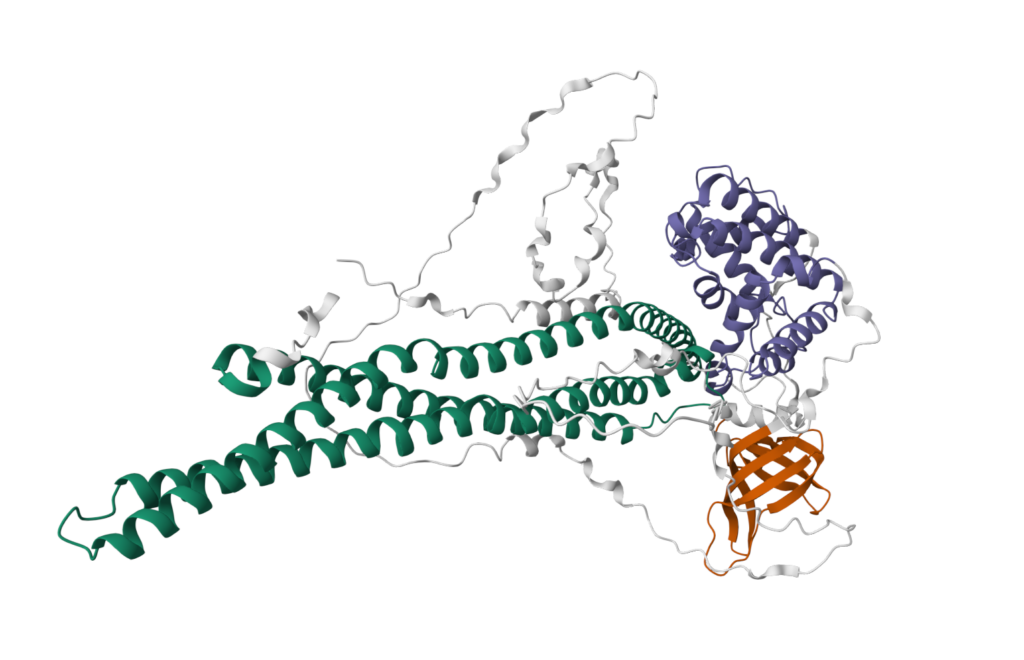
Understanding the Function of the OPHN1 Gene
OPHN1 encodes Oligophrenin-1, a RhoGAP protein that stimulates GTP hydrolysis on Rho-family GTPases, with RhoA as its primary substrate. This activity suppresses ROCK signaling and tunes actin cytoskeletal dynamics, supporting the growth and stabilization of dendritic spines and, by extension, synaptic function.
OPHN1 is also required for AMPA receptor stabilization at postsynaptic densities and for regulation of synaptic vesicle endocytosis at presynaptic terminals.
Explore the Science Behind OPHN1
OPHN1 Protein Domains
Structure and function of OPHN1’s BAR, PH, RhoGAP, and proline-rich domains
Presynaptic & Postsynaptic
OPHN1 regulates signaling and trafficking on both sides of the synapse
The Science in Everyday Language
OPHN1 helps shape how brain cells send messages, receive messages, and store what they’ve learned.
It does this by helping regulate the actin cytoskeleton — the internal scaffolding that lets brain cells build, strengthen, and remodel the connections between them. Without OPHN1 working properly, those connections don’t form or adapt the way they should.
OPHN1 sits on the X chromosome and works by regulating a signaling pathway called RHO/ROCK. Patients with OPHN1 functional deficiency — those with a pathogenic mutation or gene deletion — display overactive ROCK pathway activity in their neurons. That overactive pathway is at the root of many of the brain changes seen in OPHN1 syndrome.
Because of this, ROCK inhibitors such as Fasudil have been tested in preclinical OPHN1-deficient models and improve several — though not all — features of the disorder. ROCK inhibitors are one therapeutic path the OPHN1 Foundation is actively evaluating, alongside genetic therapies aimed at restoring OPHN1 function more directly.
