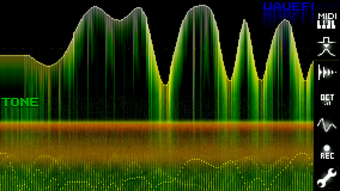

PixelWave: Kreativer Wavetable‑Synthesizer mit Retro‑Pixel‑Design
Übersicht
PixelWave ist ein Desktop‑Synthesizer für Musikschaffende, die eine einzigartige Kombination aus Retro‑Ästhetik und modernen Sound‑Design‑Möglichkeiten suchen. Mit einer pixel‑Art‑Benutzeroberfläche bietet die Software ein immersives audiovisuelles Erlebnis, das sich in der digitalen Musikproduktionslandschaft abhebt. Die Kernfunktionalität dreht sich um das Zeichnen benutzerdefinierter Wellenformen, die Nutzer dann in Echtzeit spielen können, was einen praxisnahen Ansatz zur Klanggenerierung ermöglicht. Dieses Feature spricht sowohl Anfänger, die Synthese erkunden, als auch erfahrene Produzenten, die mit unkonventionellen Klangfarben experimentieren, besonders an.
Die Software unterstützt MIDI‑Keyboard‑Eingaben und ermöglicht so eine nahtlose Integration mit externen Controllern sowie eine verbesserte Live‑Performance‑Workflow. Vorgefertigte Wellenformen – insgesamt neun – bieten einen Ausgangspunkt für schnelle Klangkreation, während der einstellbare Oktavenbereich von 2 bis 6 Flexibilität bei der Tonhöhen‑Gestaltung bietet. Kreationen können direkt im WAV‑Format exportiert werden, was die Kompatibilität mit gängigen DAWs und Vertriebsplattformen sicherstellt. Die Integration von Audiobus‑ und IAA‑Support erweitert die Einsatzmöglichkeiten zusätzlich, indem sie die Konnektivität mit anderen Audio‑Anwendungen, insbesondere in mobilen oder hybriden Umgebungen, ermöglicht.
Zielgruppen sind elektronische Musikproduzenten, Sound‑Designer und Hobbyisten, die an experimentellem Audio interessiert sind. Die leichte Bauweise und das kostenlose Preismodell machen die Software für ein breites Publikum zugänglich. Während der Entwickler, PixelWave Studio, über seinen Namen hinaus nicht näher beschrieben wird, deutet der Fokus des Produkts auf kreative Ausdruckskraft und visuelles Feedback auf ein starkes Engagement für Nutzerbindung und künstlerische Erkundung hin.
Hauptfunktionen & Fähigkeiten
- Custom Waveform Drawing – Users can manually draw waveforms using the pixel interface, enabling precise control over sound shape and character. This feature supports real-time playback, allowing immediate auditory feedback during creation.
- Predefined Waveforms – Nine built-in waveforms provide instant access to classic synth sounds, reducing setup time and serving as a foundation for further customization.
- Octave Range Adjustment – The ability to set the number of octaves from 2 to 6 allows users to tailor the pitch range to specific musical contexts, from deep bass tones to high-frequency textures.
- MIDI Keyboard Support – Full compatibility with MIDI controllers enables expressive live performance and integration into existing music production setups.
- WAV Export Functionality – Projects can be exported as standard WAV files, ensuring broad compatibility with audio editing software and distribution platforms.
- Audiobus and IAA Integration – These protocols enhance connectivity with other audio applications, expanding the software’s role in multi-app workflows, especially on mobile or hybrid systems.
These features collectively support a creative workflow that emphasizes visual and sonic experimentation. For example, a sound designer might use the waveform editor to craft a unique pulse shape for a video game sound effect, then export it directly as a WAV file for use in a project. A beginner composer could start with one of the predefined waveforms, adjust the octave range, and play melodies using a MIDI keyboard to learn synthesis fundamentals.
Benutzeroberfläche, Arbeitsablauf & Leistung
The user interface of PixelWave is centered around a retro pixel art aesthetic, offering a distinctive visual identity that enhances the creative experience. The layout is minimalistic, with the waveform editor occupying the main workspace, flanked by controls for octave settings, playback, and export. Navigation is straightforward, relying on intuitive mouse interactions and keyboard shortcuts, which likely contribute to a smooth workflow for users familiar with digital audio tools.
Workflow efficiency is supported by the real-time playback of drawn waveforms, allowing immediate testing of sonic ideas without the need for complex parameter adjustments. The integration of MIDI input further streamlines performance and composition. However, exact performance details were not specified by the developer. General observations suggest that the software operates efficiently given its 12.4 MB size, but resource usage such as CPU and RAM consumption remains undocumented.
Stability and responsiveness are expected to be consistent with lightweight desktop applications, especially on systems meeting standard requirements. The developer did not provide additional system requirements, so users should ensure their environment supports basic audio processing. No reported crashes or bugs were mentioned in the available information.
Kompatibilität & Systemanforderungen
PixelWave is available for both Windows and Mac operating systems, making it accessible to a wide range of users across major desktop platforms. The software version is 1.2.0, released on April 15, 2024. The installation size is 12.4 MB, indicating a compact footprint that requires minimal disk space.
Exact system requirements were not listed by the developer. Compatibility information is limited to the supported platforms. Users should verify that their system meets the baseline requirements for running audio applications, including proper audio drivers and MIDI support. The software’s lightweight nature suggests it can function on older or less powerful machines, but specific hardware specifications were not provided.
Vor- und Nachteile
Vorteile
- Free to download and use, lowering the barrier to entry for new users.
- Unique retro pixel interface enhances visual appeal and creative engagement.
- Real-time waveform drawing with immediate playback supports rapid experimentation.
- Supports MIDI input for expressive performance and integration with external gear.
- WAV export functionality ensures compatibility with other audio tools and platforms.
- Lightweight at just 12.4 MB, ideal for systems with limited storage.
Nachteile
- Exact system requirements were not specified, which may cause uncertainty for some users.
- Limited information on audio latency or performance under load.
- Only nine predefined waveforms may restrict advanced users seeking extensive presets.
- Pixel interface, while distinctive, may not appeal to users preferring modern UIs.
- No mention of advanced synthesis features like filters, envelopes, or modulation options.
FAQ-Bereich
Ist PixelWave mit Windows und Mac kompatibel?
Ja, PixelWave ist für sowohl Windows‑ als auch Mac‑Betriebssysteme verfügbar.
Kann ich ein MIDI‑Keyboard mit PixelWave verwenden?
Ja, die Software unterstützt MIDI‑Keyboard‑Eingaben, wodurch Echtzeit‑Performance und Integration mit externen Controllern ermöglicht werden.
Ist PixelWave sicher zum Herunterladen und Verwenden?
Als kostenlose Desktop‑Anwendung, entwickelt von PixelWave Studio, ist sie für den sicheren Einsatz konzipiert. Nutzer sollten sie aus offiziellen Quellen herunterladen, um die Authentizität zu gewährleisten.
Benötigt PixelWave eine Internetverbindung?
Nein, die Software arbeitet offline. Sie erfordert keine Internetverbindung für die Kernfunktionen, obwohl Updates möglicherweise eine Verbindung benötigen.
In welchem Dateiformat kann ich meine Kreationen exportieren?
PixelWave ermöglicht den Export von Sound‑Designs als WAV‑Dateien, was die Kompatibilität mit den meisten Audio‑Programmen und Vertriebsplattformen sicherstellt.
Fazit
PixelWave steht als kreativer und zugänglicher Wavetable‑Synthesizer heraus, der visuelle Kunst mit funktionalem Sound‑Design verbindet. Die Retro‑Pixel‑Oberfläche bietet einen erfrischenden Kontrast zu konventionellen Synth‑Ästhetiken und spricht Nutzer an, die sowohl Form als auch Funktion schätzen. Die Möglichkeit, Wellenformen in Echtzeit zu zeichnen, kombiniert mit MIDI‑Support und WAV‑Export, macht das Tool zu einem vielseitigen Werkzeug für Musikproduktion und Klang‑Experimentation.
Obwohl fortgeschrittene Synthese‑Features und detaillierte System‑Spezifikationen fehlen, machen das leichte Design und das kostenlose Preismodell es zu einer ausgezeichneten Wahl für Anfänger und Hobbyisten. Fortgeschrittene Nutzer könnten die Funktionspalette als begrenzt empfinden, doch die Einfachheit und visuelle Anziehungskraft bieten eine überzeugende Alternative für schnelles Prototyping und kreative Erkundung.
Für alle, die einen einzigartigen, kostenfreien Einstieg in die Audiosynthese mit einer markanten visuellen Identität suchen, liefert PixelWave ein befriedigendes Erlebnis. Die Kombination aus Retro‑Charme und praktischer Funktionalität positioniert es als herausragende Option im Bereich Musiksoftware.
Download PixelWave now