Projects
PPSA develops and implements projects that align with the cross-commodity issues within its remit.
PPSA is currently running or collaborating on projects in the following areas
Safety
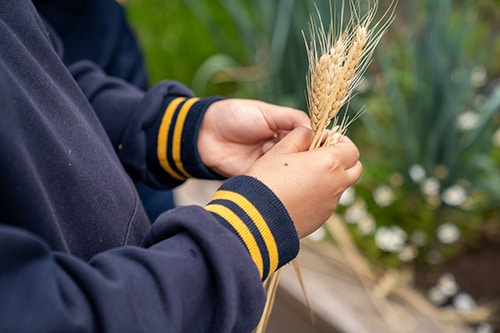
Ag careers and education
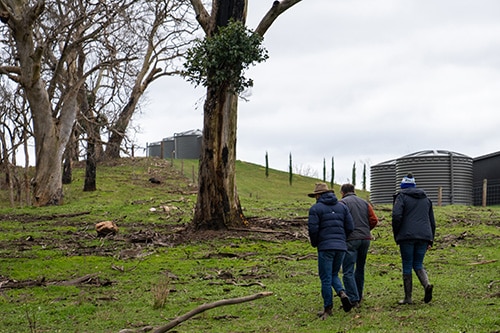
Natural Resource Management

Developing primary industries

preparing primary industries
Safety
Farm Safety For Kids
PPSA is delivering the ‘National Farm Safety Education Fund’ in SA, focusing on farm safety for kids. Guided and supported by PPSA’s membership of Farmsafe Australia, this project is developing sector specific resources to educate kids who live on or visit a farm about safety.
These resources are aimed at reducing the barriers for teachers and parents to deliver farm safety lessons in a fun and interactive way including seven videos. In addition to the videos, this project will deliver workshops, teacher professional development, and on-farm excursions. Importantly, this project aims to deliver key thought-provoking messages from the voice of kids, equipping a new generation of engaged and aware children to understand the inherent risks associated with food and fibre production and the ways in which those risks can be mitigated.
The content of these videos and classroom activities has been developed with guidance from FarmSafe Australia, SafeWork SA and KidSafe SA. The resources provide up-to-date information to support the delivery of curriculum units on farm safety in schools.
The Farm Safety For Kids project is delivered by Food and Fibre Education SA (the education arm of AgCommunicators) and funded by the Australian Government Department of Agriculture, Fisheries and Forestry through the National Farm Safety Education Fund: Improving Farm Safety Practices project.
Resources
Click the links below to download Farm Safety For Kids Resources.
Farm Safety Project Fact Sheet
Videos
Hit play below to watch the Farm Safety For Kids Series from start to finish. We recommend viewing the videos in the following order:
- Hierarchy of Control
- Dairy
- Grains
- Livestock
- Horticulture
- Viticulture
- Forestry
Road safety
Primary Producers SA is joining the call for a turn around to South Australia’s horror start to 2023 on the roads, launching its Road Safety Campaign.
The state’s road fatalities are more than double the figure recorded at the same time last year, and about two thirds of those fatalities have happened on country roads.
PPSA Chair Professor Simon Maddocks said any life lost on the roads is too many and PPSA wants to see this year’s worrying trend turned around.
He said, as the peak organisation representing the primary production sector in SA, PPSA is acutely aware of the vital role that safe, efficient and cost-effective transport plays in our state.
Professor Maddocks said feedback coming through from PPSA’s Transport and Supply Chain Committee was that, anecdotally, farmers and transporters are reporting more near misses on the roads, with impatience a major factor in these incidents.
In a bid to curb this worrying trend, PPSA is running a road safety campaign, through radio advertisements, backed up by newspaper messaging.
The PPSA Road Safety campaign is supported by the Department of Primary Industries and Regions.
Heavy vehicle safety
PPSA has collaborated with Grain Producers SA on three different heavy vehicle projects which have been made possible by funding from the National Heavy Vehicle Regulator’s Heavy Vehicle Safety Initiative, supported by the Federal Government.
The projects are outlined briefly below. For more information, visit the GPSA website.
Chain of Responsibility … Made Easy!
In early 2019, GPSA held interactive, FREE and practical workshops for our members, and PPSA commodity group members, in conjunction with industry experts Natwide Personnel.
These workshops have helped to:
- Educate farmers about what the new chain of responsibility laws mean for farm practices when using heavy vehicles on public roads,
- Ensure compliance for all members of the farming business, and
- Provide attendees with the opportunity to question and seek expert advice on their farm situations.
- Following attendance, farmers received support and advice from Natwide for the following 12 months
Roadworthy Heavy Vehicles … Made Easy!
The Roadworthy Heavy Vehicles … Made Easy! project consists of theory and practical workshops which are designed for members of PPSA who own and operate their own heavy vehicles and help to deliver on our commitment to road safety.
Theory workshops are led by road transport experts who have a comprehensive knowledge of quality management and national heavy vehicle maintenance systems, to provide primary producers with:
- Outline of the NHVR Heavy Vehicle Inspection Manual
- Road safety awareness
- Producer compliance and maintenance responsibilities
- Requirements of the regulator
In addition, all theory workshop participants have the opportunity to take part in a practical workshop to receive valuable hints and tips on keeping heavy vehicle’s roadworthy.
Primary producers who attend the workshops will receive training and knowledge which will be essential in helping them to develop a tailored approach to heavy vehicle maintenance, inspections and compliance on vehicles involved in their farm businesses.
Moving Ag Machinery … Made Easy!
The Moving Ag Machinery … Made Easy! project is gathering feedback from across the commodity spectrum to help inform improvements, training and resources aimed at primary producers who access the NHVR Portal for permits.
A steering committee chaired by strategy and marketing specialist Michael Neale is overseeing the project, with members including:
- John Gilbert, NHVR
- Brad Perry, GPSA
- Caroline Rhodes, Primary Producers SA
- Dion Woolford, grain and livestock producer
- Robert Brokenshire, Livestock SA
- Anthony Pfitzner, grain and livestock producer
- Adrian Flowers, SA Forest Products Association
- Lindsay Crouch, Pringles Crouch
- Tim Glover, Ramsey Bros
- Tom Hage, Hage Tractors & Implements
- Sami Gilligan, Wine Grape Council of SA
- Toni Clarke, Local Government Association
- Jarrod Beilby, Regional Development Australia
This project will be seeking to understand what issues producers have in understanding the National Class 1 Agricultural Vehicle and Combination Mass and Dimension Exemption Notice 2020 (No.1) and, if their machinery falls outside of the notice, educate them on accessing the relevant permit through the NHVR Portal. It will also be an important feedback mechanism for all levels of government to understand the issues facing those moving agricultural vehicles and combinations to meet statutory requirements.
GPSA will conduct surveys and focus groups to gain a broader understanding of the issues facing producers, with producers from across all commodity sectors strongly encouraged to participate.
This information will be captured in an action plan that will inform workshops, training and educational resources for primary producers.
Ag careers and education
PPSA is proud to coordinate Educating Kids About Agriculture, a primary schools education program which provides teachers and students with hands-on, on-farm or in-school experiences which explore livestock, cropping, horticulture, viticulture and sustainable water management.
There are three education hubs in SA which are delivering a range of activities, and after a successful pilot phase we are now inviting primary schools to participate and utilise the resources. These Hubs cover much of SA, plus they offer complimentary education activities to suit different year levels and curriculum areas.
The project has been delivered in SA through Primary Producers SA, with support from the Department of Agriculture, Water and the Environment through funding from the Australian Government’s Educating Kids About Agriculture initiative. Program delivery partners are AU2100, Food and Fibre Education SA and George the Farmer.
View the flyer below to register your school’s interest for 2022. All programs are free of charge and include curriculum linked activities to engage your students in the science of agriculture and food production.
The E.W. Stevens Trust Fund was established at the request of the late Mr Earnest William Stevens in his Will on 21 January 1988.
The trust was established to provide funds for two main purposes:
- Provision of scholarships to assist students residing in rural or remote areas who are in difficult financial circumstances to undertake study at secondary or tertiary institutions.
- Provision of financial assistance to farmers and/or graziers who have suffered hardship due to natural disaster.
The initial trustee of the fund was the person holding office of the Chief Executive of the United Farmers & Stockowners of SA Inc, who then amalgamated to form the South Australian Famers Federation Inc. The Federation changed to Primary Producer’s SA (PPSA) in 2013, who now act as the fund trustees. The PPSA Council has established a Board of Trustees who are responsible for:
- Annual application process
- Setting the eligibility and selection criteria
- Value of annual distributions
- Investment of trust funds; and
- Annual reporting and statutory compliance
Visit the scholarships page for more information or contact:
Alyssa Stockwell
Executive Officer
AgCAREERSTART is a 10-12 month gap-year program designed to kick-start your career in farming.
If you’re under 25 and at the start of your career, it’s a great way to learn new skills, apply your knowledge, and build your confidence.
PPSA is proud to deliver the AgCAREERSTART program in South Australian on behalf of the NFF
As a participant you will:
- Get matched with a host-farmer based on your skills and interests
- Work and earn for 10-12 months
- Receive training, mentoring and support to complete a VET course
- Enjoy access to industry events and a network of industry members and peers”
Find out more Home – AgCAREERSTART
Natural Resource Management
NRM Liaison
PPSA has a vital role in supporting the land and soils, water resources and natural environments that underpin farmers’ livelihoods and lifestyles.
PPSA supports the sustainable management of those natural resources through its advocacy for investments in State and Federal Government programs, and legislation and regulations aimed at promoting productivity and profitability alongside environmental management.
PPSA is partnering with the Department of Environment and Water (DEW) and the Department of Primary Industries and Regions (PIRSA) to enable industry to be active participants in shaping the natural resources management (NRM) agenda, now in the context of the Landscapes SA Act 2019.
Through the partnership with DEW, PPSA assists with the implementation of the productivity aspects of the Landscape Act and contributes to a number of state and national policies and programs. PPSA is funded to continue to employ a part-time Liaison Officer, and to contribute to state-wide initiatives of mutual interest to PPSA and DEW. The Agreement sets out to:
- Improve relationships between the primary production sector, DEW and Landscape Boards
- Provide for ongoing input into key areas of DEW business to ensure that boards support the management of water, pests and soil, and
- Engage in relation to the Landscape South Australia Act (2019), particularly for developing a State Landscape Strategy.
Key areas of focus include: management of land and water resources, wildlife management (including overabundant native species), nature conservation, fire management, native vegetation management, liaison with the National Parks and Wildlife Service and the Management of Crown lands.
PPSA also has a partnership with PIRSA to support for those areas of importance to the primary production sector.
PPSA has an established NRM Committee to further the interests and policy perspectives of producers and the commodity groups which represent them.
Developing primary industries
In 2021, the South Australian Government granted $1 million over two years to assist Primary Producers SA (PPSA) in developing primary industries in South Australia. One of the expectations was that the funding would support PPSA to represent key policy needs of primary industries to State Government, particularly through input into legislative reform.
In advising on primary industries development activities, PPSA develops and implements cross-commodity policies and projects that promote the social, economic, and environmental sustainability of the South Australian primary production sector. Our commodity group membership extends to the grain, livestock, dairy, forestry, horticulture and winegrape industries.
As shown in this report, PPSA has proven to be an efficient and effective conduit to the primary production sector by coordinating cross-industry engagement, while becoming a trusted adviser to the Minister for Primary Industries and Regional Development and the Chief Executive of the Department of Primary Industries and Regions (PIRSA).
- PPSA has demonstrated its capacity to respond and adapt to the government priorities of the day, including but not limited to, preparedness for Exotic Animal Disease incursions, the development of the Premier’s Green Economy strategy, developing an industry-wide approach to mitigating spray-drift, and co-sponsoring the 2023 Primary Industries Forum organised by PIRSA.
- PPSA has demonstrated the value of ongoing coordination of industry engagement to the effective workings of government. Through improved professionalism and capacity, PPSA has assumed co-leadership of the formal PPSA-PIRSA Strategic Meetings held on a quarterly basis, in addition to establishing formal quarterly meetings with the Minister. These forums are critical to maintaining two-way dialogue and offer direct engagement between industry and government.
Government funding has enabled PPSA to transform its business to a professional and well-resourced representative body for the state’s primary producers, who are responsible for generating $17.3 billion in primary industries and agribusiness economic activity.
Significant time and resources have been directed to documenting PPSA’s policy research and promoting the work program undertaken as part of this Grant. This has included launching a new website as an information portal for the project outcomes and resources. PPSA has also established a regular media presence and sponsored many industry events through speaking opportunities to promote South Australian agriculture to the broader community.
PPSA is proud to champion the significant contribution our sector makes across the broad portfolio of government policies and programs in our role as a peak industry body. By providing a strong, united voice, we can help ensure our sector continues to thrive.
preparing primary industries for the impact of compounding and complex disasters
Government and emergency response agencies have an enhanced understanding of primary industries’ vulnerabilities in the event of a natural disaster following the completion of a pilot project.
In addition, there is also a commitment to shared responsibility between government and industry to address gaps.
Preparing primary industries for the impacts of compounding and complex natural disasters was a joint project between the Department of Primary Industries and Regions (PIRSA) and Primary Producers SA.
South Australian Dairyfarmers’ Association, the Wine Grape Council of SA and the South Australian Forest Products Association led the industry engagement component of the project to explore the risks of compounding and complex disasters on people, production, profitability and supply chains.
The pilot project focused on the three industries at a regional level, with dairy focusing on the Fleurieu Peninsula, wine grapes the Adelaide Hills and forestry the Limestone Coast.
The project was a significant producer and stakeholder engagement exercise which has culminated in the development of three industry reports which will help shape disaster preparedness and response.
The three industry reports revealed common themes which PPSA will use to inform its policy platform.
PPSA is committed to advocating for change and will drive action on priority preparedness, response and recovery recommendations which can be used across industries.
This project has laid the groundwork for a resilient agricultural sector in SA by addressing vulnerabilities, fostering shared responsibility and enhancing preparedness.
The outcomes align with both local needs and national priorities, ensuring a sustainable and adaptable future for forestry, dairy, and wine grape industries.
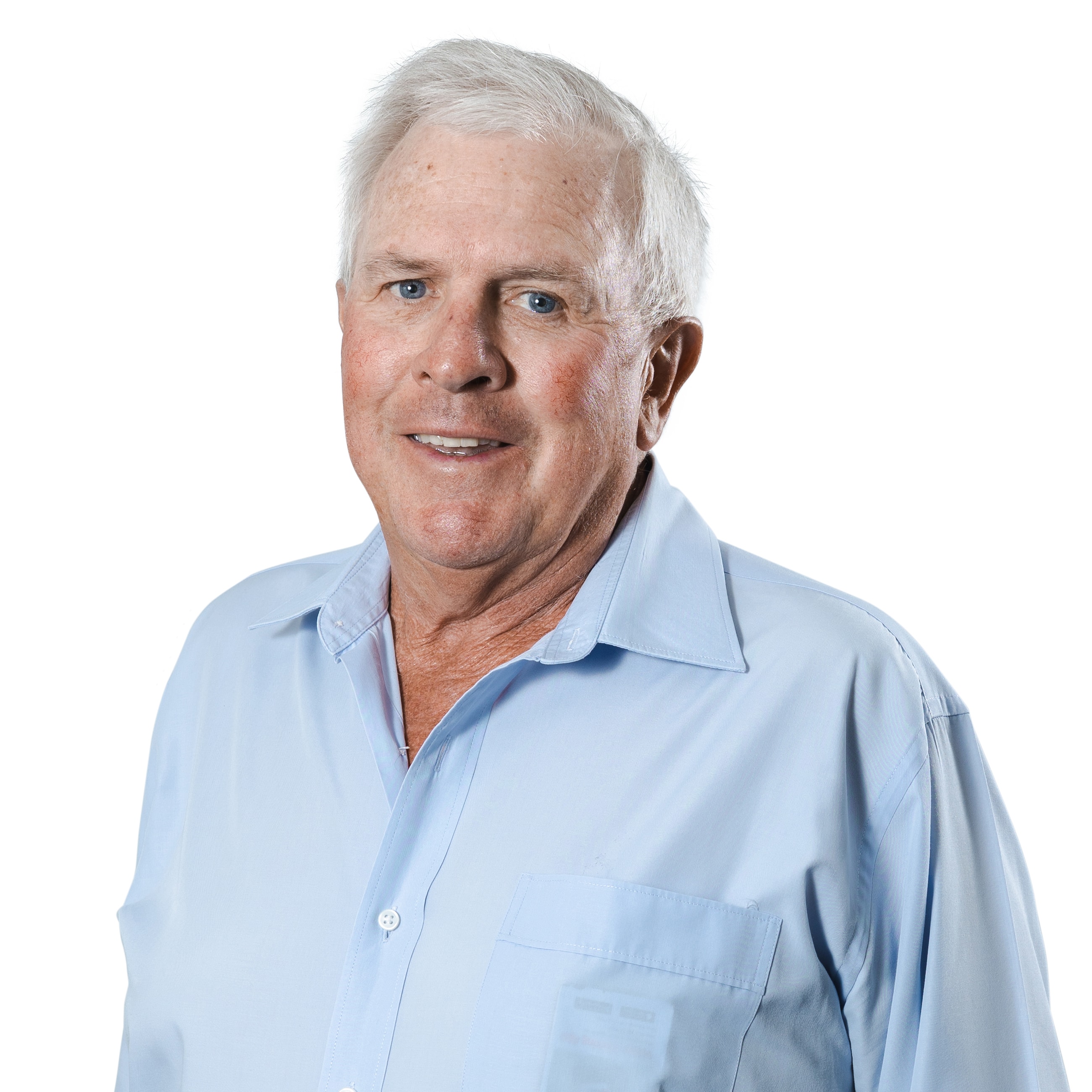
Forest products industry case study with Nathan Paine, South Australian Forest Products Association

Significant investment has ensured the Limestone Coast forest industries are well-equipped to detect, respond to and recover from bushfire.
With a rotation length spanning from 15 years to more than 30 years, the forest industries are hyper-focused on protecting that asset to ensure every seedling planted today is a log that can be processed tomorrow.
The industry invests approximately $13 million every year in fire prevention and response, which covers 300 paid firefighters, 70 firefighting vehicles and a number of aerial appliances, including a Blackhawk helicopter.
But there is also additional investment to ensure the Green Triangle can rapidly detect and stamp out fires.
“Through more than $2m in funding from the South Australian Government, a network of eight cameras has been established across the region in what is the world’s first fire detection network,” South Australian Forest Products (SAFPA) CEO Nathan Paine said.
“Those eight cameras support six staffed observation towers across the Green Triangle.
“Ultimately, the cameras and the towers are designed to quickly identify fires. The quicker we can identify a fire, the quicker we can get to it and put it out before it becomes a larger fire and threatens plantation assets or any other land.
“By working with the Country Fire Service (CFS) and other government agencies, the forest industries have been able to develop one of the most comprehensive detection and response strategies I have ever seen.”
However, even with such an impressive detection and response strategy, there are always improvements that can be made – something the industry is well-aware of.
That is why SAFPA has been participating in a joint project between Primary Producers SA and the Department of Primary Industries and Regions called Preparing primary industries for the impact of compounding and complex disasters.
This is a pilot project focusing on the South Australian wine grape, dairy and forest product industries at a regional level, with the Limestone Coast being the focus for the forest products industry.
A key aim of the project was to deliver an increased understanding of industry vulnerabilities and a commitment to shared responsibility between government and industry to address gaps and actions to mitigate risk.
PPSA and PIRSA co-designed and delivered an industry-led approach in conjunction with SAFPA to explore the risks of compounding and complex disasters on people, production, profitability and supply chains.
The project recognises that primary producers are on the frontline of climate change, facing an increasing number of natural disasters every year which are also becoming more severe. These natural disasters are often coming in quick succession before the chance to fully recover from the first one.
The end result of the project is an industry report which details the key vulnerabilities of the forest sector in the event of multiple fires in the Green Triangle, the high-priority control measures and industry-led actions that can be implemented to reduce the risk and impact of compounding and complex natural disasters.
The industry engagement for the project kicked off with the Limestone Coast Disaster Resilience Summit in April 2024 which brought together key stakeholders from other commodity groups, local government, emergency services, Landscape Boards and other government agencies. The summit was also attended by Minister for Primary Industries and Regional Development Clare Scriven and then-Minister for Emergency Services Joe Szakacs.
Nathan said the summit helped to form stronger bonds between government, emergency services and industry so future challenges could be tackled in a more untied fashion.
The forest sector has had a chance to leverage those stronger bonds since the compounding and complex disasters project has wrapped up, with a fire at Joanna near Naracoorte in January 2025 posing a potential risk to plantations.
“The CFS chief commander briefed me in on their response to the incident which influenced how industry, through the Green Triangle Fire Alliance, engaged with CFS during that event,” Nathan said.
“In responding to that fire, the CFS made specific reference to the fact they were making decisions based on a better understanding of forestry and the assets we were trying to protect.
“The forest industries and the CFS always had a close partnership, but that has been significantly strengthened following the engagement we’ve had through this project.”
One of the priority areas to arise out of the complex and compounding disasters project is a single source of truth regarding available water sources that can be used by aerial appliances.
On the recovery front, SAFPA is looking to engage with the Environment Protection Agency to start establishing an agreed protocol for storing burnt logs.
There will also be more engagement from industry with the CFS and Country Fire Authority in Victoria to run cross-border training exercise.
“The South Australian forest industry is turning 150 years old in 2025 and is a critical part of the state’s economy and wider primary industries sector,” Nathan said.
“The Green Triangle produces 35 percent of the nation’s structural frame timber, 60 percent of our agricultural posts and poles, 25 percent of Australia’s particle board and 48 percent of our packaging and pallets.
“That’s why it’s so important to invest in protecting the industry and constantly improve our preparedness.”
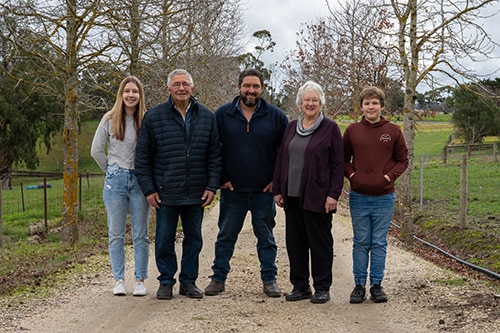
Fleurieu Peninsula dairy farmer case study with Warren Jacobs, Mt Compass

The Fleurieu Peninsula’s cooler climate, reliable rainfall, underground water supply and proximity to milk processing plants make it an ideal region for dairy farming.
Those reasons are exactly why Warren Jacobs has milked cows at Mount Compass for decades and recently invested heavily in the latest technology – including an eight-stall robotic dairy – which he hopes will see his family remain there for decades to come.
However, it is not without its challenges, as Warren well knows.
He has observed changes in the climate during his time dairy farming, particularly a trend towards more hot days, extreme storms and more summer rainfall.
“When it comes to climate change, I believe it’s not only about how the weather changes but also about how you adapt your farming methods to it,” Warren said.
To adapt to some of the changes in the climate Warren has observed, he has started planting more dryland lucerne on sandy areas of his property.
Lucerne’s deep root systems mean it can access moisture further down in the soil profile. The increasing summer rainfall Warren has observed is ideal for lucerne as it grows well through spring, summer and autumn, helping to fill the summer feed gap for the dairy herd.
“Having access to irrigation is critical for us as it gives us more stability in our feed sources during periods of extended dry conditions, which often results in higher prices for bought-in fodder,” Warren said.
While adapting to a changing climate is one thing, being prepared for the potential impacts of a changing climate is another.
Data from the Department of Environment and Water’s SA Climate Projections Viewer indicates that the average daily temperature has increased over the last century and will continue to do so, bringing with it less annual rainfall and conditions conducive to bushfire.
Warren has recently taken part in a joint project between the Department of Primary Industries and Regions (PIRSA) and Primary Producers SA (PPSA) titled Preparing primary industries for the impacts of compounding and complex disasters.
This is a pilot project focusing on the South Australian wine grape, dairy and forest product industries at a regional level, with the Fleurieu Peninsula being the focus for dairy.
A key aim of the project was to deliver an increased understanding of industry vulnerabilities and a commitment to shared responsibility between government and industry to address gaps.
PPSA and PIRSA co-designed and delivered an industry-led approach in conjunction with the South Australian Dairyfarmers’ Association to explore the risks of compounding and complex disasters on people, production, profitability and supply chains.
The project recognises that primary producers are on the frontline of climate change, facing an increasing number of natural disasters every year which are also becoming more severe.
A group of Fleurieu dairy farmers – including Warren – and other industry representatives explored the following scenario to assess the industry’s preparedness for bushfire.
You’re standing on your farm on 12 January 2027. South Australia is into its eighth day of a forecasted 11-day heatwave where the temperature has been over 45 degrees Celsius. There’s a strong north-westerly wind blowing, the Country Fire Service (CFS) has declared this as the third catastrophic fire danger day in a row and SA Power Networks has flagged that power is likely to be cut at any time. The milking herd is showing visible signs of distress and many have gone off their feed. You can now see smoke on the horizon and the smell of fire is in the air. There’s a strong possibility a major fire is over the hill.
The end result is an industry report which uses the above scenario to detail key vulnerabilities of the dairy industry on the Fleurieu, the priority areas of impact, the high priority controls and industry-led actions that can be implemented to help reduce the risk and impact of such a compounding and complex disaster.
Being part of the project caused Warren to reflect on his current on-farm preparedness measures and what he could improve to be better prepared.
“Irrigation is an important fire risk mitigation tool for us as it can be used as a fire break or as a safe haven for cows if there is a fire nearby,” he said.
“We also currently use irrigation to help us manage heat stress in the herd. During a heatwave we will put the sprinklers on for the cows or put them in a paddock downwind from the sprinklers.
“We’ve also got sprinklers in the dairy yard to keep the herd cool when they are waiting to be milked. A series of hot days in a row is a huge risk to cows, but we find that if we can cool them off at least once a day then they can still maintain their milk production.
“The dairy is on mains power but we have a backup generator which automatically kicks in if the power goes out so we are still able to milk the cows. Cows need access to drinking water and we have a gravity-fed tank that can still supply some water in the event of an outage.
“In terms of our preparedness to fight a fire, we have farm firefighting units which we will put on utes and fill up on days of extreme conditions and we have other equipment such as the calf milk trailer that we can mobilise as a back-up in the event of a fire.”
One particular area where Warren would like to improve is staff preparation.
“We employ eight people across two farms,” he said.
“At the moment, our emergency management plan is more a verbal understanding between employees, but we need to properly document and record the plan to ensure all our employees are on the same page.
“There are some other infrastructure improvements we could make too, such as backup power for the irrigation system. We could also spread our fodder stocks out a bit more so we don’t have most of it in the one area.”
Through Warren’s involvement in the project, he has also identified a number of off-farm measures he would like to see government, industry and other stakeholders implement.
“I would like to see telecommunications companies install better backup power on mobile towers because we have had storms where the power has gone out for a few days and we lost mobile communication, which would be a major concern in a bushfire,” he said.
“I think it is also important that industry and government communicate the plans already in place, such as Bushfire Management Plans and the role of Emergency Management Committees.
“We now know about them through our involvement in the project, but there is an opportunity to extend those plans to the wider community on the Fleurieu so everyone knows there is a coordinated approach in the event of an emergency.”
This project was funded under the Disaster Risk Reduction Grants Program, funded by the Australian Government and the South Australian Government.
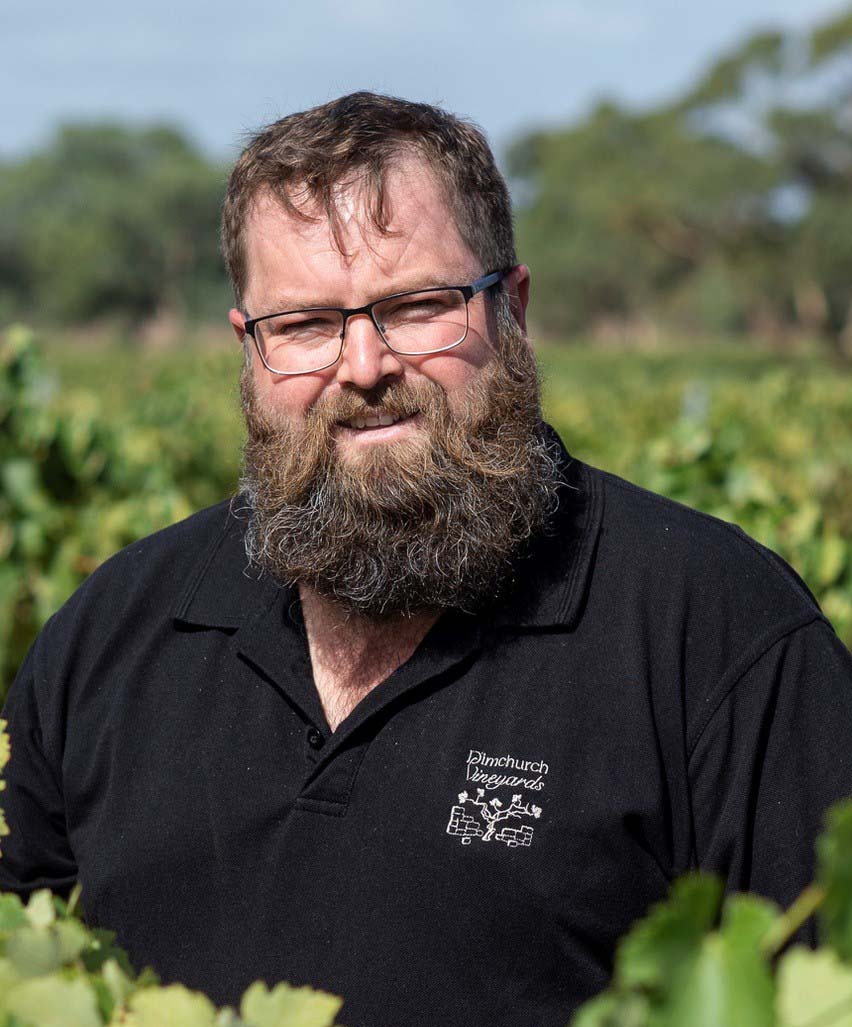
Adelaide Hills wine grape grower case study with Lachlan Allen, Woodside

Preparedness for natural disasters is just part of life in the Adelaide Hills.
The undulating terrain, dense tree canopy and vast grasslands make the region particularly vulnerable to bushfire, while increasing population growth in the area heightens the importance of everyone being prepared.
The Cudlee Creek bushfire that burned during the 2019-20 bushfire danger season following a dry winter was one of the worst in living memory, razing more than 23,250 hectares, killing one person and severely impacting the region’s primary producers.
The wine industry in particular was among the hardest hit. Barristers Block at Woodside, operated by the Allen family, lost almost 100 per cent of its vineyards.
You can never be completely prepared for a disaster like Cudlee Creek, according to Lachlan Allen.
“If you think you are, something will go wrong,” he said.
While the devastation was hard to come to terms with, it also presented a unique opportunity for the Allens.
Since purchasing Barristers Block in 2006, Lachlan said he had noticed a gradual increase in soil temperature.
The fire meant they were able to plant a new varietal on some of the land – Fiano – which is better adapted to warmer climates.
It also taught them some lessons in preparedness.
“Some things are just a given. On days of forecast extreme or catastrophic fire danger we make sure all our tanks are full, firefighting units are full and everything is generally good to go,” Lachlan said.
“We are normally dealing with seven-day forecasts which gives us some time to prepare and take other steps like slashing grass to get on the front foot, but we know we have to be constantly thinking during the fire danger period.”
Since Cudlee Creek, the Allens have installed two large water tanks at the top of their block which are connected to sprinklers across the vineyard headlands. Water is fed to the sprinklers – which were installed purely for fire protection – through a petrol-powered pump.
“Another issue that arose from Cudlee Creek was firefighters having trouble accessing properties, so we have put in gates across our property for ease of access,” Lachlan said.
“With the exception of the headland sprinklers, the rest of the vineyard and irrigation system is on mains power. In the event of a catastrophic fire, SA Power Networks would be likely cut it, meaning we wouldn’t have water.
“To mitigate that risk, we could invest in a large generator but that is cost prohibitive. That’s a big barrier to a lot of risk control measures – if we had the money then we’d put permanent sprinklers everywhere.”
Lachlan – who is a Wine Grape Council of SA (WGCSA) board member and secretary of the Adelaide Hills Wine Region Inc – has used his experience from the Cudlee Creek fire to contribute to a joint project between the Department of Primary Industries and Regions (PIRSA) and Primary Producers SA (PPSA) titled Preparing primary industries for the impacts of compounding and complex disasters.
This is a pilot project focusing on the South Australian wine grape, dairy and forest product industries at a regional level, with the Adelaide Hills being the focus for wine grapes.
A key aim of the project was to deliver an increased understanding of industry vulnerabilities and a commitment to shared responsibility between government and industry to address gaps and actions to mitigate risk.
PPSA and PIRSA co-designed and delivered an industry-led approach in conjunction with WGCSA to explore the risks of compounding and complex disasters on people, production, profitability and supply chains.
The project recognises that primary producers are on the frontline of climate change, facing an increasing number of natural disasters every year which are also becoming more severe. These natural disasters are often coming in quick succession before the chance to fully recover from the first one.
Through the project, wine grape growers and stakeholders from the Adelaide Hills explored the scenario of a prolonged heatwave coupled with catastrophic fire conditions, stressed grape vines, low water availability for irrigation and the high likelihood of power being cut off.
The end result is an industry report which uses the above scenario to detail key vulnerabilities of the wine grape industry in the Adelaide Hills, the priority areas of impact, the high priority controls and industry-led actions that can be implemented to help reduce the risk and impact of such a compounding and complex disaster.
Lachlan said it was an important project to be part of, with plenty of learnings for him from the process.
“At the end of the day, we put steps in place as landholders in the Adelaide Hills to mitigate risks on our property, but each individual landholder will have a different view on risk,” he said.
“The good thing about the Hills is people are always open to listening and education. We are realistic here – bushfire risk needs to be managed.
“Landholders shouldn’t be reliant on programs such as this one. Preparedness should be part and parcel of what they are doing in their own environment.
“I think the learnings from this project can only benefit the region. We need to keep talking and finding solutions to benefit everyone.”
This project was funded under the Disaster Risk Reduction Grants Program, funded by the Australian Government and the South Australian Government.

This project was funded under the Disaster Risk Reduction Grants Program, funded by the Australian Government and the South Australian Government.