A colorized compilation of time lapse images from May 2 to May 15, showing the changing view from the Psyche spacecraft approaching the Mars crescent, "when Mars looked back at us."

This is Psyche’s first view of a nearly “full Mars” seen shortly after the spacecraft’s closest approach to the planet on May 15, 2026. The view extends from the south polar cap northwards to the Valles Marineris canyon system and beyond.

This view of the Martian surface, captured by NASA’s Psyche spacecraft on May 15, 2026, shows streaks that have formed due to wind blowing over impact craters in the Syrtis Major region. The image scale is nearly 1,200 feet (360 meters) per pixel. The wind streaks extend to about 30 miles (50 kilometers) long, and the large craters near center-bottom of the scene average around 30 miles in diameter.

This is the highest-resolution view of the water ice-rich south polar cap of Mars captured by NASA’s Psyche mission after it made its close approach with the planet for a gravity assist. The image scale is around 0.7 miles per pixel (1.14 kilometers per pixel). The cap itself extends across more than 430 miles (700 kilometers). The image was acquired with Imager A on May 15, 2026, at about 1:53 p.m. PDT.

Captured by the multispectral imager instrument on NASA’s Psyche mission, this is an enhanced-color view of the large double-ring crater Huygens (upper left; about 290 miles, or 470 kilometers, in diameter) and the surrounding heavily cratered southern highlands near 15 degrees south latitude.

This view of a crescent Mars was captured on May 15, 2026, at about 5:03 a.m. PDT by NASA’s Psyche mission as it approached the planet for a gravity assist. The image has been processed into a natural-color view using red, green, and blue data from the multispectral imager instrument.

The Psyche spacecraft is approaching Mars for a gravity assist on May 15 that will give it a boost in speed and adjust its trajectory toward asteroid Psyche for eventual arrival in 2029.

This colorized image of Mars was captured by NASA’s Psyche mission on May 3, 2026, about 3 million miles (4.8 million kilometers) from the planet.
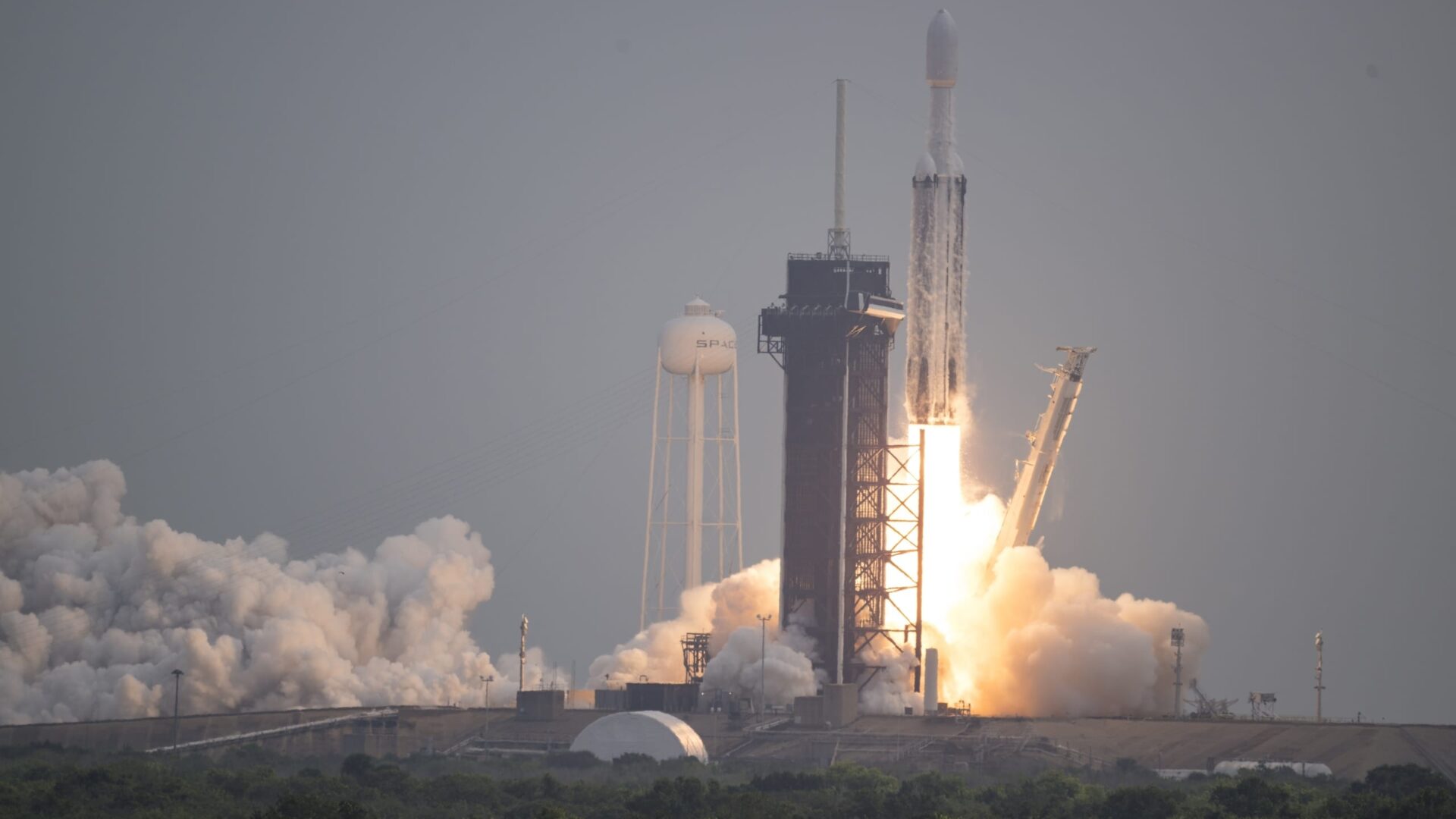
A SpaceX Falcon Heavy rocket with the Psyche spacecraft onboard is launched from Launch Complex 39A, Friday, Oct. 13, 2023, at NASA’s Kennedy Space Center in Florida. Credit: NASA/Aubrey Gemignani
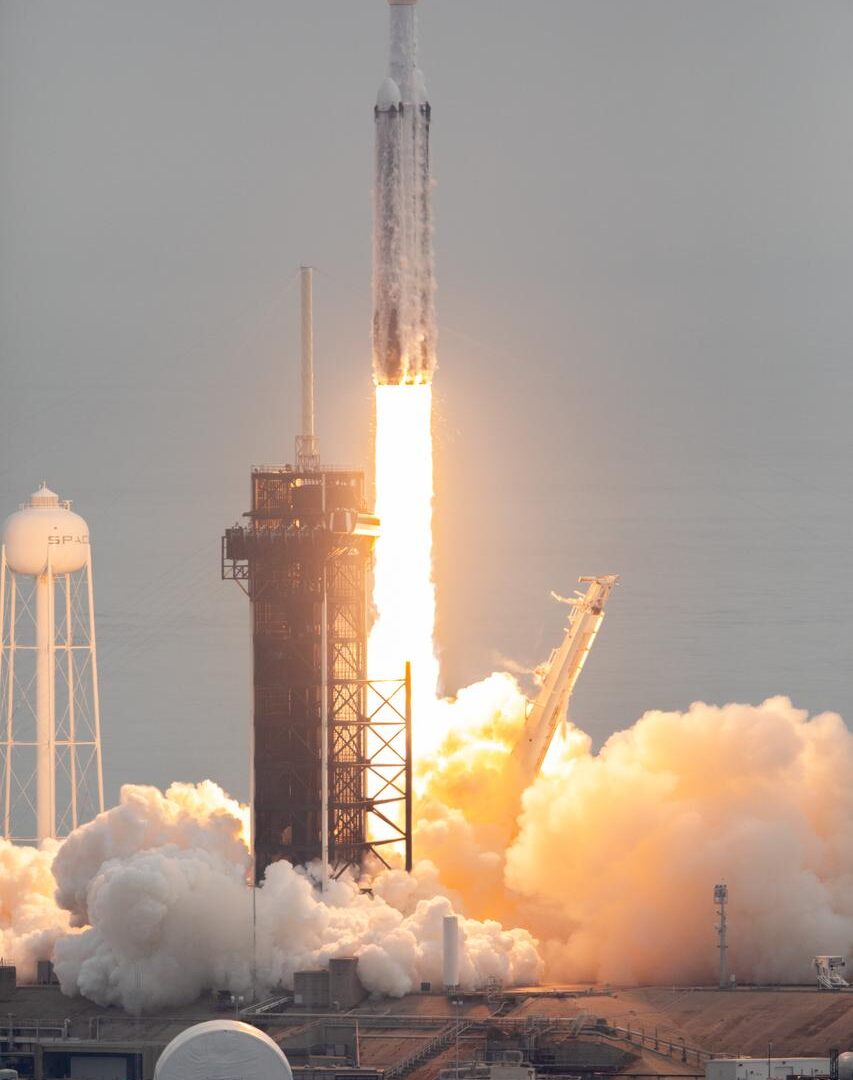
NASA’s Psyche spacecraft, atop a SpaceX Falcon Heavy rocket, lifts off from Kennedy Space Center’s historic Launch Complex 39A in Florida at 10:19 a.m. EDT on Friday, Oct. 13, 2023. The Psyche mission will study a metal-rich asteroid with the same name, located in the main asteroid belt between Mars and Jupiter. This is NASA’s first mission to study an asteroid that has more metal than rock or ice. Riding with Psyche is a pioneering technology demonstration – NASA’s Deep Space Optical Communications (DSOC) experiment – which will be the first test of laser communications beyond the Moon. Photo credit: NASA/Kim Shiflett
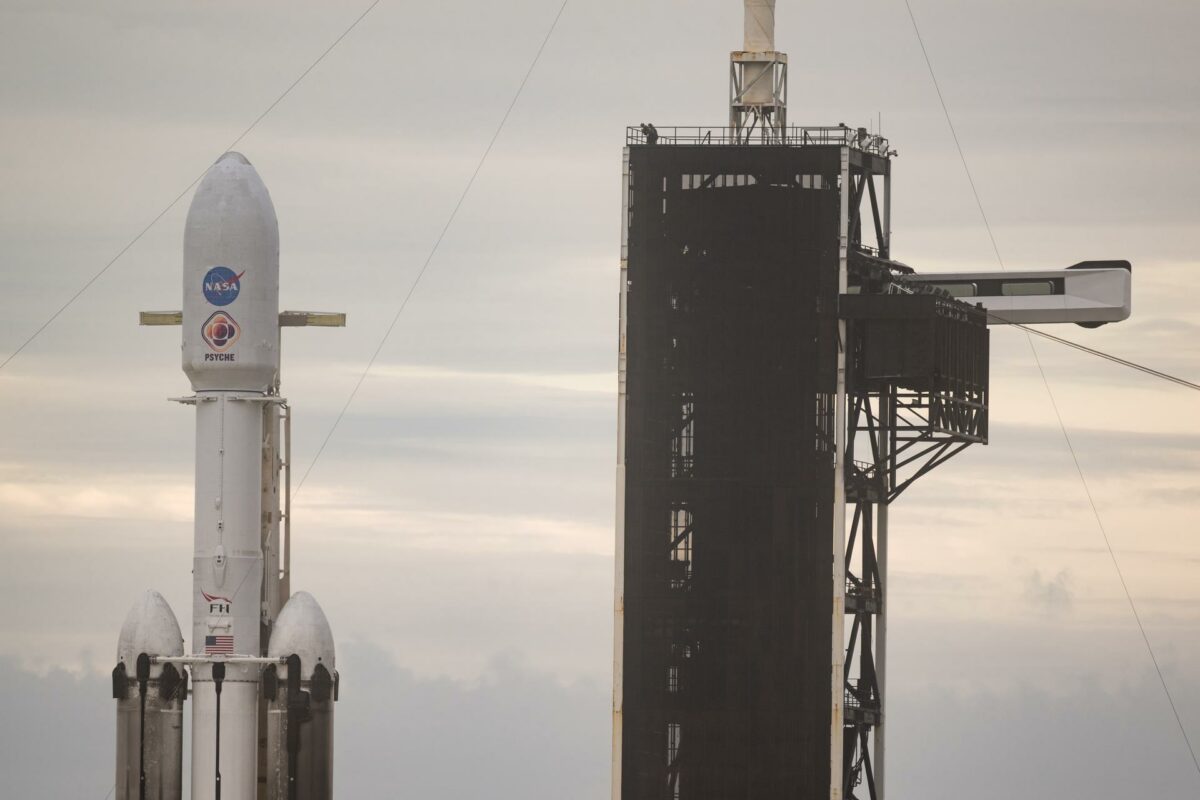
A SpaceX Falcon Heavy rocket with the Psyche spacecraft onboard is seen at Launch Complex 39A as preparations continue for the Psyche mission, Wednesday, Oct. 11, 2023, at NASA’s Kennedy Space Center in Florida. Photo credit: NASA/Aubrey Gemignani
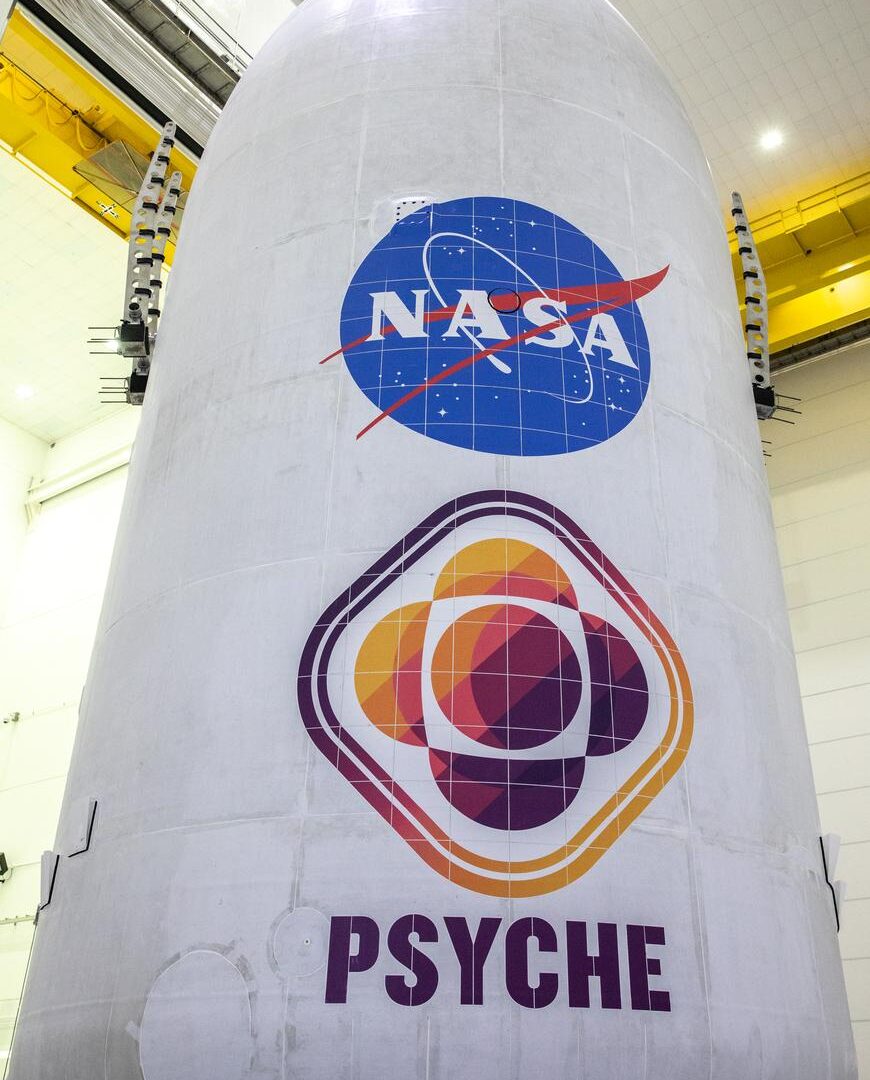
Teams transport NASA's encapsulated Psyche spacecraft from the Astrotech Space Operations Facility in Titusville to Launch Pad 39A at Kennedy Space Center in Florida on Friday, Oct. 6, 2023. Psyche will launch atop a SpaceX Falcon Heavy rocket. Liftoff is targeted for 10:16 a.m. EDT Thursday, Oct. 12. Riding with Psyche is a pioneering technology demonstration, NASA's Deep Space Optical Communications (DSOC) experiment. Photo credit: NASA/Ben Smegelsky
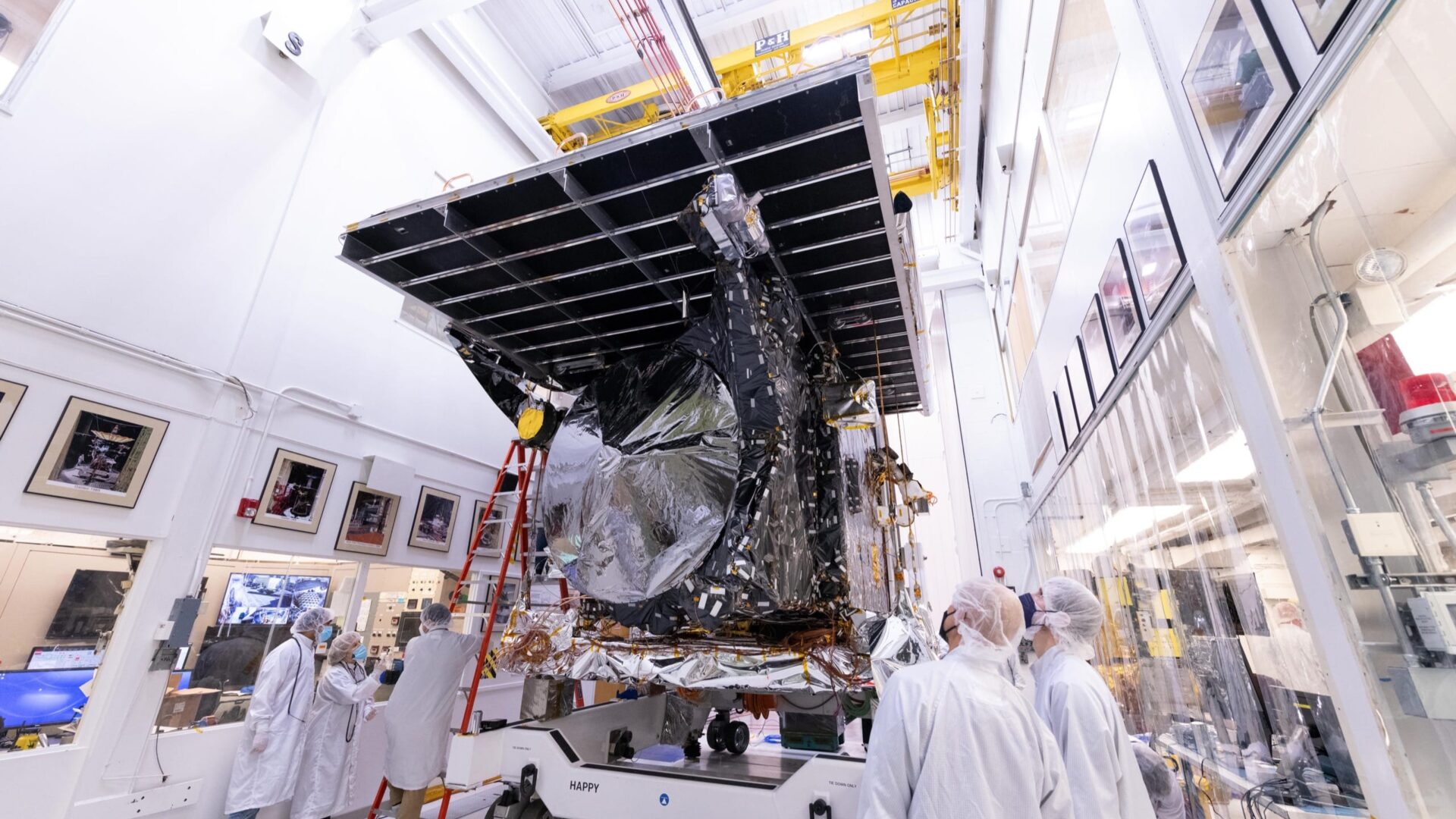
NASA's Psyche spacecraft is seen in early 2022 on its way to the vacuum chamber at the agency's Jet Propulsion Laboratory in Southern California. Credit: NASA/JPL-Caltech
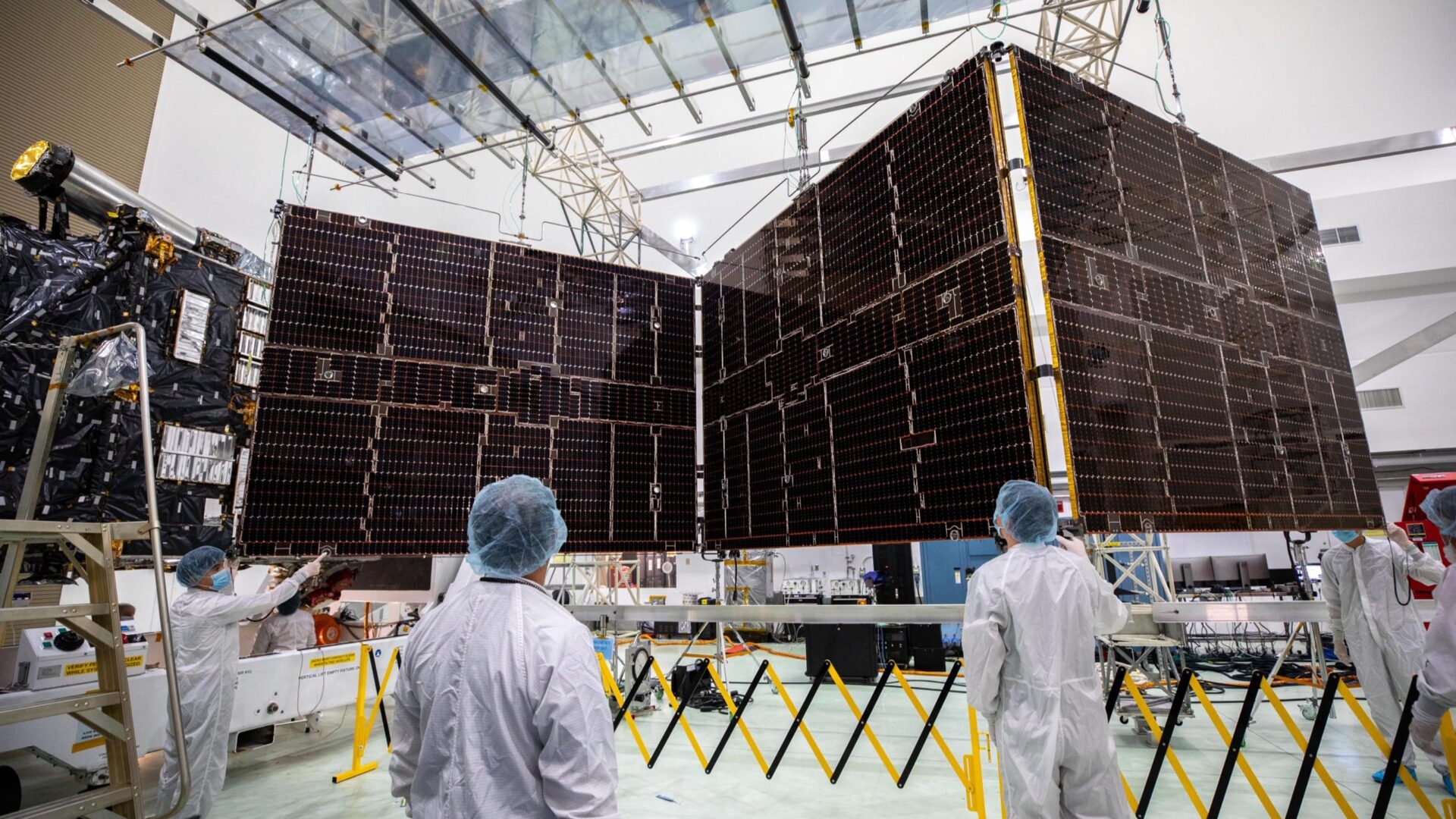
Technicians begin to retract one of the two solar arrays attached to NASA's Psyche spacecraft. This photo was taken on July 25, 2023, inside the Astrotech Space Operations facility near the agency's Kennedy Space Center in Florida. Credit: NASA/Kim Shiflett
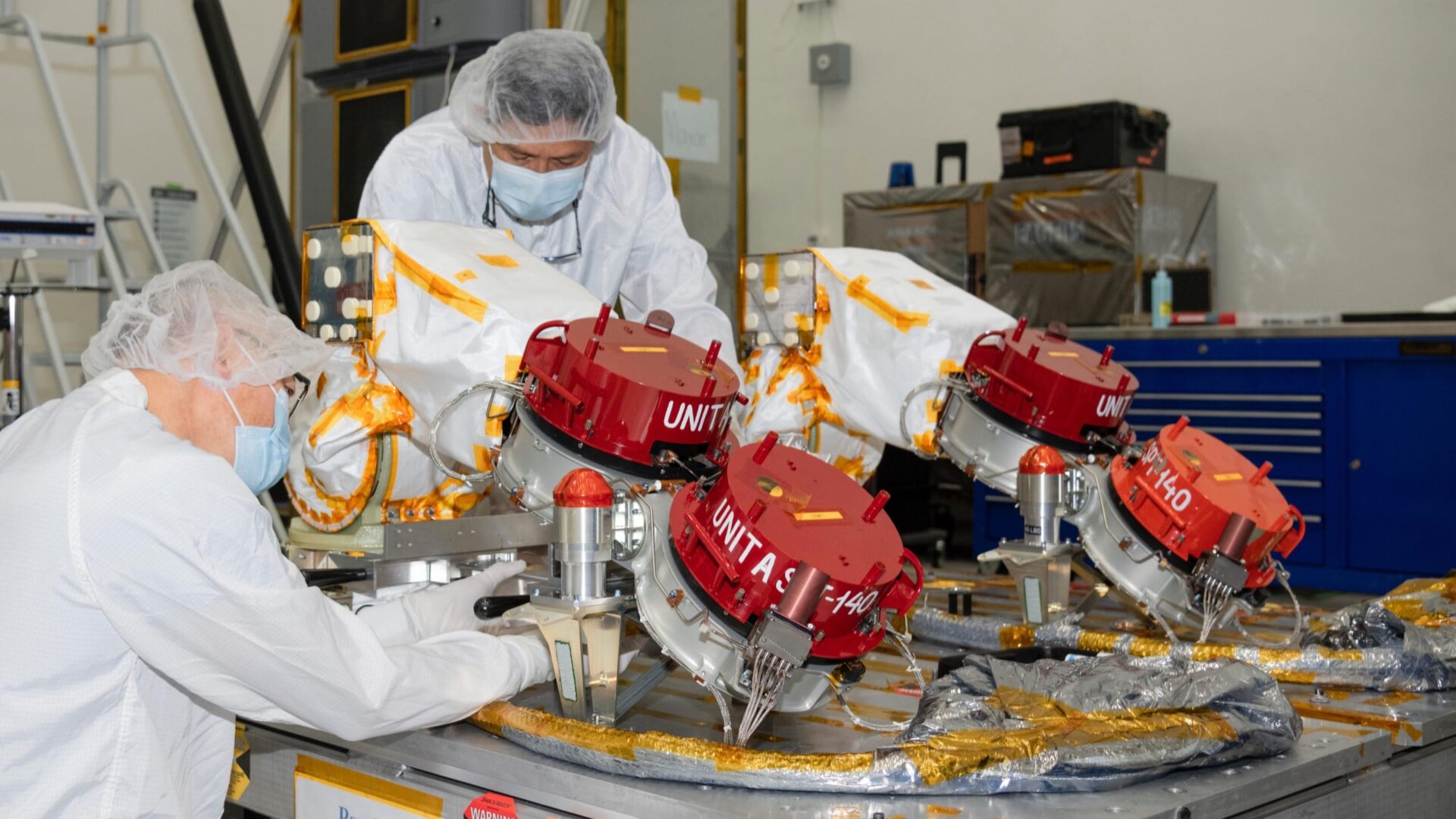
Engineers at NASA’s Jet Propulsion Laboratory in Southern California prepare to integrate four Hall thrusters (beneath red protective covers) into the agency’s Psyche spacecraft in July 2021. Credit: NASA/JPL-Caltech
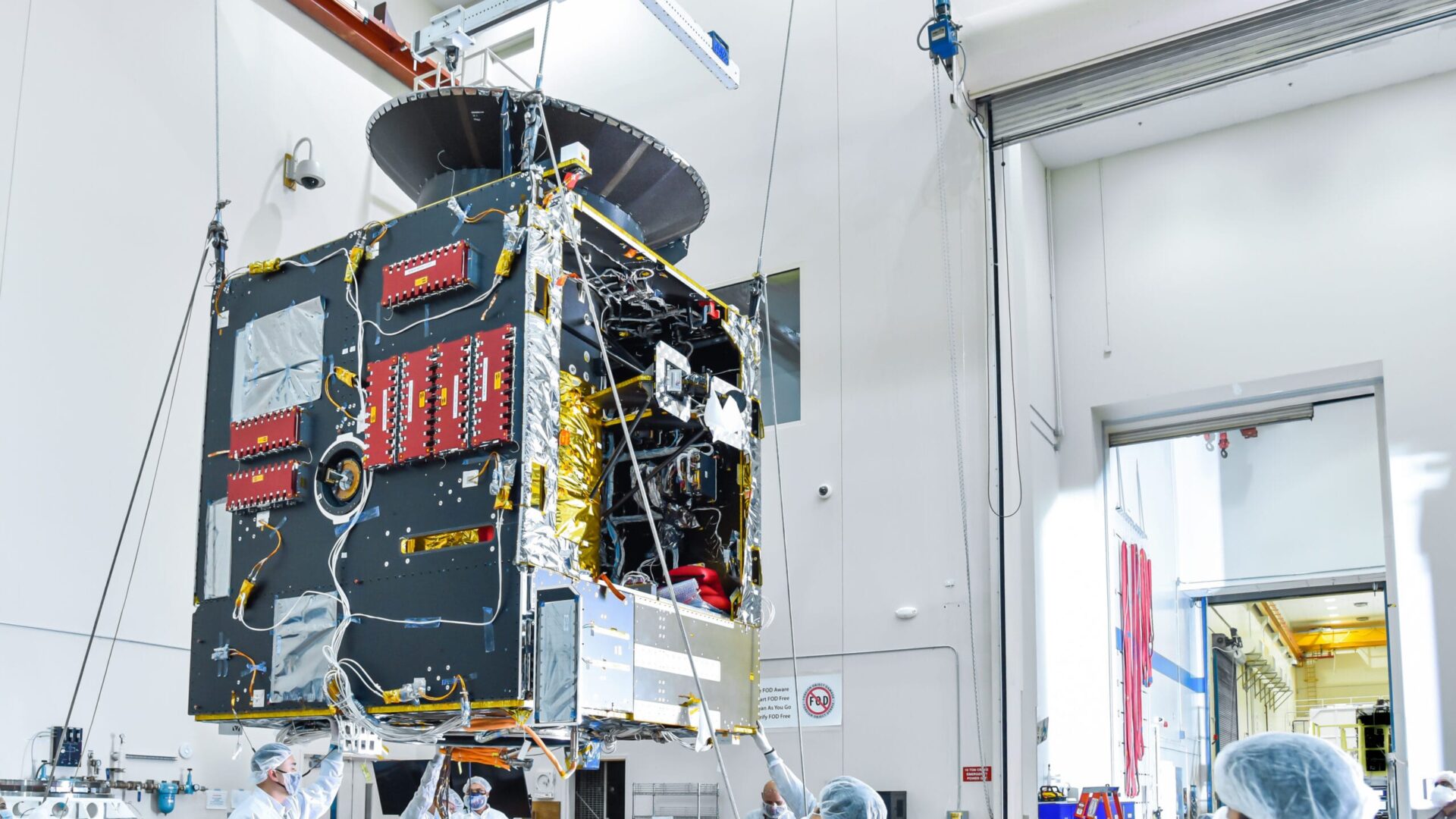
After Maxar Technologies successfully installed Psyche’s High Gain Antenna, their team moved the Psyche Solar Electric Propulsion (SEP) Chassis to the alignment stand at their factory in Palo Alto, CA. Credit: Maxar
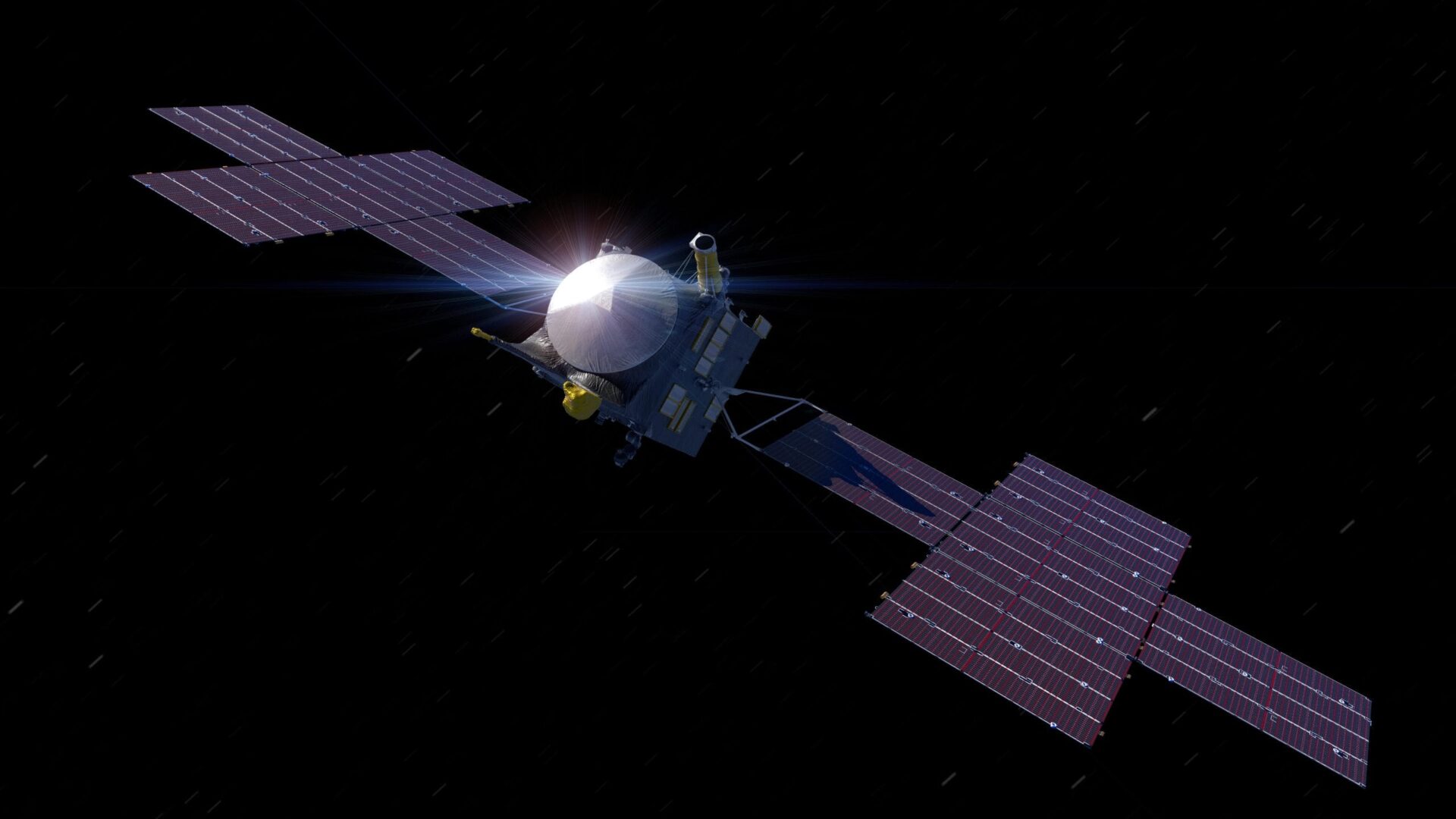
This illustration, updated as of March 2021, depicts NASA’s Psyche spacecraft. The image was created by Peter Rubin. Credit: NASA/JPL-Caltech/ASU
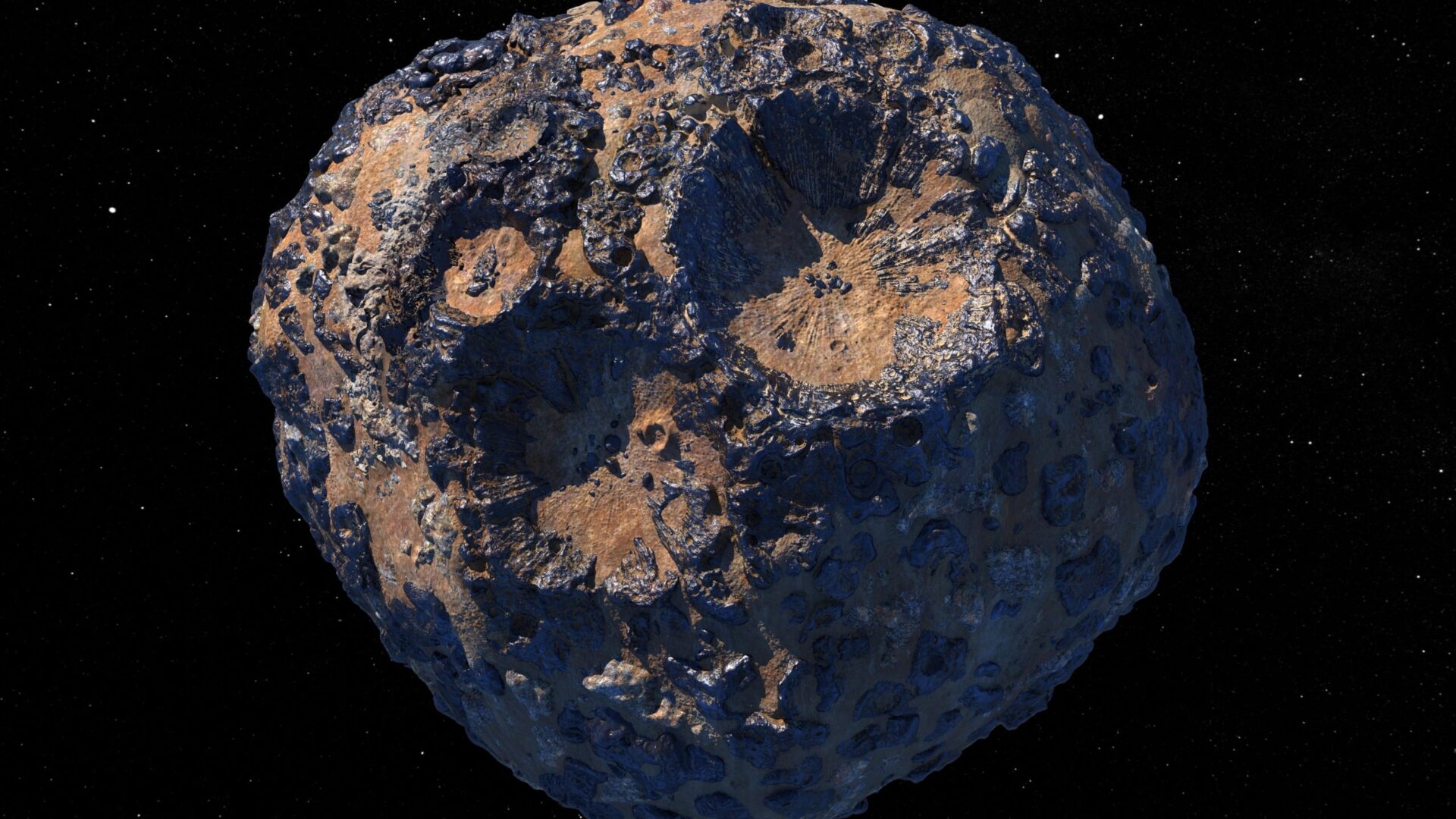
This illustration, created in March 2021, depicts the 140-mile-wide (226-kilometer-wide) asteroid Psyche, which lies in the main asteroid belt between Mars and Jupiter. The image was created by Peter Rubin. Credit: NASA/JPL-Caltech/ASU