
Download TinyGUI4CV – Fast, Secure Cisco VPN Menu Bar Helper
Overview
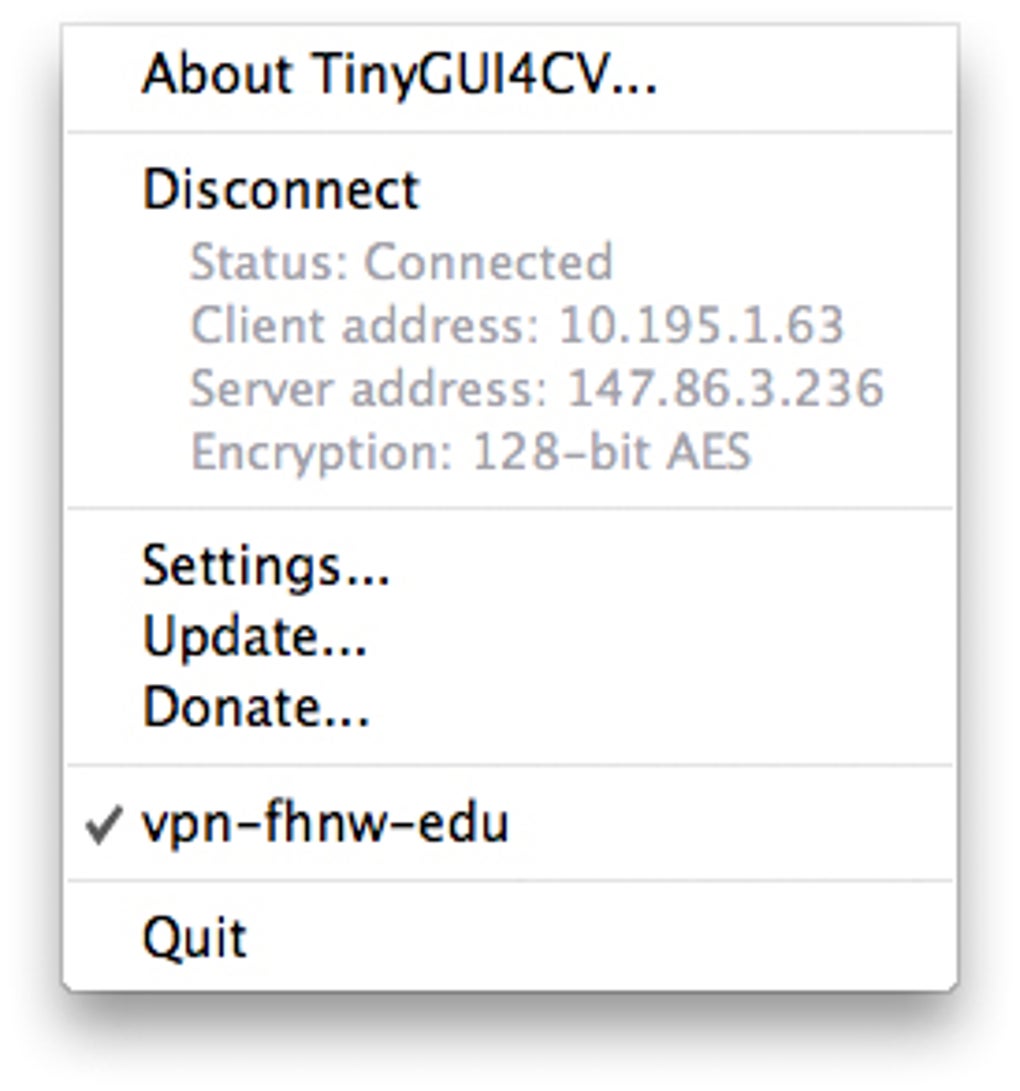
TinyGUI4CV is a lightweight companion utility that sits in your menu bar and gives you instant control over Cisco’s legacy VPN client. While it does not replace the Cisco client, it acts as a smart plug‑in that streamlines the connect/disconnect workflow, displays real‑time connection statistics, and even offers a quick‑access configuration panel. The tool was born out of frustration with the original Cisco VPN client’s sluggish disconnect routine and clunky user interface. By exposing essential functions through a compact menu, TinyGUI4CV eliminates the need to hunt through multiple windows just to toggle a VPN connection. In addition to a one‑click connect/disconnect button, the app shows the current IP address, the type of encryption in use, and basic performance metrics such as latency and data throughput. Users can also trigger client updates, view the underlying Cisco configuration, and perform a clean disconnect without ever opening the full Cisco client. For anyone who relies on Cisco’s VPN for daily remote work, TinyGUI4CV provides a faster, more transparent, and less intrusive experience while keeping the security guarantees of the original client intact.
Key Features
- Menu‑Bar Shortcut: Adds a persistent icon to the macOS or Windows taskbar for instant access.
- One‑Click Connect/Disconnect: Toggle the VPN with a single click, bypassing the slow disconnect routine of the native client.
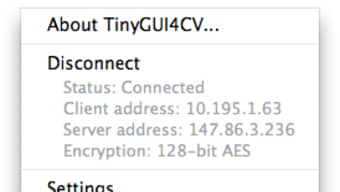
- Live Connection Stats: Displays current IP address, encryption type, latency, and data transfer rates.
- Configuration Panel: Quick view and edit of Cisco VPN settings without opening the full client.
- Update Helper: Checks for Cisco client updates and can launch the update process directly from the menu.
- Secure Disconnect: Performs a clean shutdown of the VPN tunnel, ensuring no residual routes remain.
- Lightweight Design: Minimal CPU and memory footprint, keeping system resources free for other tasks.
- Cross‑Platform Support: Available for Windows 10/11 and macOS 10.14+ (with experimental Linux builds).
Each of these features was designed with the everyday remote worker in mind. The menu‑bar shortcut eliminates the habit of opening the full Cisco client just to verify whether you are connected. Real‑time statistics give you immediate feedback on connection health, which can be crucial when troubleshooting slow network performance. The built‑in configuration panel mirrors the most common settings from Cisco’s client—such as tunnel group, group name, and authentication method—so you can adjust them on the fly. Moreover, the update helper ensures you stay on the latest, most secure version of the Cisco client without manual downloads. Together, these capabilities turn a traditionally clunky VPN workflow into a sleek, efficient process that saves both time and frustration.
Installation & Usage Guide
Step‑by‑Step Installation
- Download the installer from the official TinyGUI4CV website (choose the Windows or macOS package based on your OS).
- Run the installer and follow the on‑screen prompts. The installer will automatically detect an existing Cisco VPN client and register TinyGUI4CV as a helper.
- During installation you may be asked to grant accessibility permissions (macOS) or administrator rights (Windows) so the menu‑bar icon can control the Cisco client.
- Once installation finishes, a new icon appears in your menu bar (macOS) or system tray (Windows). Click it to launch the TinyGUI4CV interface.
Basic Usage
After launching, the menu presents three primary options: Connect, Disconnect, and Stats & Settings. Selecting Connect initiates the Cisco VPN client in the background and establishes the tunnel using the saved profile. The Stats pane instantly shows your public IP, encryption algorithm (e.g., AES‑256), latency, and current throughput. To end the session, choose Disconnect; TinyGUI4CV sends a clean termination command to the Cisco client, ensuring no lingering routes or DNS leaks. If you need to change VPN credentials, server address, or group name, open the Settings panel, edit the fields, and click Save. The changes are written directly to the Cisco configuration file, so the next connection uses the updated parameters.
Troubleshooting Tips
• Icon not appearing: Verify that the app has the required permissions (System Preferences → Security & Privacy → Accessibility on macOS; Run as Administrator on Windows).
• Connection fails: Check that the underlying Cisco client is up‑to‑date; use TinyGUI4CV’s Check for Updates feature.
• Stats show “N/A”: Ensure the VPN is actually connected; the stats panel only populates after a successful tunnel handshake.
By following these simple steps, most users can get TinyGUI4CV up and running within five minutes, gaining immediate control over their Cisco VPN experience.
Compatibility, Pros & Cons, FAQ & Conclusion
Supported Operating Systems
TinyGUI4CV is officially supported on Windows 10, Windows 11, and macOS 10.14 (Mojave) through macOS 14 (Sonoma). An experimental build for popular Linux distributions (Ubuntu, Fedora) is also available, though it may lack some UI polish.
Pros
- Instant one‑click VPN control reduces workflow friction.
- Live connection statistics give quick insight into tunnel health.
- Lightweight and consumes negligible system resources.
- Integrated configuration editor saves time compared to opening Cisco’s full client.
- Free to download, with optional donations for continued development.
Cons
- Only works as a companion; you still need the Cisco VPN client installed.
- Linux support is experimental and may lack some features.
- No built‑in VPN protocol selection; it relies entirely on Cisco’s client capabilities.
Frequently Asked Questions
Do I need a Cisco VPN license to use TinyGUI4CV?
Yes. TinyGUI4CV is a helper utility that requires the official Cisco AnyConnect or legacy VPN client to be installed and properly licensed. The tool does not provide VPN functionality on its own.
Is TinyGUI4CV safe to use with corporate VPNs?
Absolutely. The app does not alter encryption or authentication mechanisms; it merely sends control commands to the existing Cisco client. All traffic continues to be encrypted by Cisco’s native protocols.
Can I customize the menu‑bar icon?
Yes. In the Settings panel you can choose from a few built‑in icons or supply a custom PNG file (16×16 px recommended) that will replace the default logo.
What happens if the Cisco client crashes while TinyGUI4CV is running?
TinyGUI4CV monitors the client’s process state. If a crash is detected, the menu will automatically display a warning and offer to restart the Cisco client. No residual network routes remain.
Is there a paid version with extra features?
Currently TinyGUI4CV is completely free. The developer has indicated that future premium modules (e.g., automated profile switching) may be introduced, but the core functionality will remain free and open‑source.
Conclusion & Call to Action
For professionals who rely on Cisco’s VPN but are tired of its cumbersome interface, TinyGUI4CV delivers a sleek, secure, and truly helpful overlay. By placing essential controls in the menu bar, offering real‑time statistics, and simplifying configuration management, it turns a once‑clunky process into a smooth, almost invisible part of your daily workflow. Because it’s free, lightweight, and requires no additional licensing, there’s little downside to giving it a try. Download TinyGUI4CV today, install it alongside your existing Cisco client, and experience instant VPN control that finally matches the speed and convenience you expect from modern software.