

Learn what CBD is and what it can do for you (and what it can't) so you can shop for CBD products smartly and safely.
What is CBD?
CBD is short for cannabidiol, a chemical compound found in cannabis. That's it! Though we do have a special name for the type of chemical compound it is. That's “cannabinoid.”

Cannabinoid who?
Cannabinoids are chemical compounds found in both cannabis and the human body. Let that sink in. You can find cannabinoids in weed and your own body.
We have different names to distinguish the two:

Phytocannabinoid
The cannabinoids produced by the cannabis plant—like CBD's psychoactive cousin, THC—and they mimic the functions of our endocannabinoids.


Endocannabinoid
The cannabinoids we all produce
within our own bodies.


You and CBD
were actually
made for each other.
That's because humans have endocannabinoid systems that make us uniquely primed to process cannabinoids. Our endocannabinoid system is basically a bunch of locks and keys. We have endocannabinoid receptors that act like locks and cannabinoids act like keys. So if you've ever felt like you've unlocked a different chamber of your brain after consuming cannabis, you're not far off.

What does CBD do?
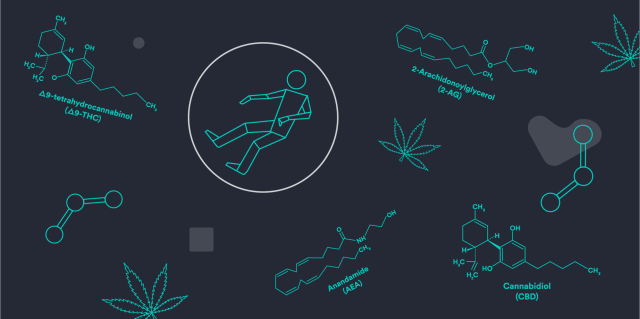
Intro to your endocannabinoid system
Yes,
CBD is psychoactive.
Contrary to popular belief, CBD does have psychoactive effects — just not in the same way that THC does. Anything that changes the brain's activity is “psychoactive,” even if that change is barely perceptible.
No,
CBD on its own will not get you high.
Due to slight differences in their molecular structures, THC binds very well with certain receptors in the brain to produce that classic “high.” CBD can't activate those same receptors. Taking a bunch of CBD with the hope it'll unleash the euphoric feelings associated with THC is like expecting to start your car with your house key.


Here's what CBD could potentially do for you
Emerging evidence shows CBD could potentially help with anxiety, pain, and sleep.


There's just one catch.
CBD is generally safe, but it may interact poorly with some medications. Talk to your doctor about the potential risks of taking CBD with other medications.

The state of CBD research

What drugs shouldn't be taken with CBD?
One golden rule makes shopping for CBD easy.
While there are countless products on the market claiming to contain CBD, not all of them actually do. Only purchase CBD products from legitimate retailers and brands that provide certificates of analysis for their products. Read the product's certificate of analysis to ensure it is free from pesticides and actually contains the amount of CBD the product's label claims it does.


Experiment to find
what works best for you.
For potential mild anxiety relief that lasts an hour or more, consider trying CBD edibles and tinctures. For a potential quick hit of relief that will fade within the hour, try a high-CBD hemp pre-roll or vape pen. For potential pain relief, consider experimenting with a CBD topical.
Discover verified CBD products
Find your CBD

Learn what CBD is and what it can do for you (and what it can't) so you can shop for CBD products smartly and safely.
What is CBD?
CBD is short for cannabidiol, a chemical compound found in cannabis. That's it! Though we do have a special name for the type of chemical compound it is. That's “cannabinoid.”
Cannabinoid who?
Cannabinoids are chemical compounds found in both cannabis and the human body. Let that sink in. You can find cannabinoids in weed and your own body.
We have different names to distinguish the two:
Phytocannabinoid
The cannabinoids produced by the cannabis plant—like CBD's psychoactive cousin, THC—and they mimic the functions of our endocannabinoids.
Endocannabinoid
The cannabinoids we all produce
within our own bodies.
You and CBD were actually made for each other.
That's because humans have endocannabinoid systems that make us uniquely primed to process cannabinoids. Our endocannabinoid system is basically a bunch of locks and keys. We have endocannabinoid receptors that act like locks and cannabinoids act like keys. So if you've ever felt like you've unlocked a different chamber of your brain after consuming cannabis, you're not far off.
What does CBD do?
Intro to your endocannabinoid system
Yes,
CBD is psychoactive.
Contrary to popular belief, CBD does have psychoactive effects — just not in the same way that THC does. Anything that changes the brain's activity is “psychoactive,” even if that change is barely perceptible.
No,
CBD on its own
will not get you high.
Due to slight differences in their molecular structures, THC binds very well with certain receptors in the brain to produce that classic “high.” CBD can't activate those same receptors. Taking a bunch of CBD with the hope it'll unleash the euphoric feelings associated with THC is like expecting to start your car with your house key.
Here's what CBD could potentially do for you.
Emerging evidence shows CBD could potentially help with anxiety, pain, and sleep.
There's just one catch.
CBD is generally safe, but it may interact poorly with some medications. Talk to your doctor about the potential risks of taking CBD with other medications.
The state of CBD research
What drugs should not be taken with CBD?
One golden rule makes shopping for CBD easy.
While there are countless products on the market claiming to contain CBD, not all of them actually do. Only purchase CBD products from legitimate retailers and brands that provide certificates of analysis for their products. Read the product's certificate of analysis to ensure it is free from pesticides and actually contains the amount of CBD the product's label claims it does.
Experiment to find
what works best for you.
For potential relief of mild anxiety that may last an hour or more, consider trying CBD edibles and tinctures. For a potential quick hit of relief that may fade within the hour, try a high-CBD hemp pre-roll or vape pen. For potential pain relief, consider experimenting with a CBD topical.

Learn what CBD is and what it can do for you (and what it can't) so you can shop for CBD products smartly and safely.
What is CBD?
CBD is short for cannabidiol, a chemical compound found in cannabis. That's it! Though we do have a special name for the type of chemical compound it is. That's “cannabinoid.”
Cannabinoid who?
Cannabinoids are chemical compounds found in both cannabis and the human body. Let that sink in. You can find cannabinoids in weed and your own body.
We have different names to distinguish the two:
Phytocannabinoid
The cannabinoids produced by the cannabis plant—like CBD's psychoactive cousin, THC—and they mimic the functions of our endocannabinoids.
Endocannabinoid
The cannabinoids we all produce
within our own bodies.
You and CBD were actually made for each other.
That's because humans have endocannabinoid systems that make us uniquely primed to process cannabinoids. Our endocannabinoid system is basically a bunch of locks and keys. We have endocannabinoid receptors that act like locks and cannabinoids act like keys. So if you've ever felt like you've unlocked a different chamber of your brain after consuming cannabis, you're not far off.
What does CBD do?
Intro to your endocannabinoid system
Yes,
CBD is psychoactive.
Contrary to popular belief, CBD does have psychoactive effects — just not in the same way that THC does. Anything that changes the brain's activity is “psychoactive,” even if that change is barely perceptible.
No,
CBD on its own will not get you high.
Due to slight differences in their molecular structures, THC binds very well with certain receptors in the brain to produce that classic “high.” CBD can't activate those same receptors. Taking a bunch of CBD with the hope it'll unleash the euphoric feelings associated with THC is like expecting to start your car with your house key.
Here's what CBD could potentially do for you
Emerging evidence shows CBD could potentially help with anxiety, pain, and sleep.
There's just one catch.
CBD is generally safe, but it may interact poorly with some medications. Talk to your doctor about the potential risks of taking CBD with other medications.
The state of CBD research
What drugs should not be taken with CBD?
One golden rule makes shopping for CBD easy.
While there are countless products on the market claiming to contain CBD, not all of them actually do. Only purchase CBD products from legitimate retailers and brands that provide certificates of analysis for their products. Read the product's certificate of analysis to ensure it is free from pesticides and actually contains the amount of CBD the product's label claims it does.
Experiment to find what works best for you.
For potential relief of mild anxiety that may last an hour or more, consider trying CBD edibles and tinctures. For a potential quick hit of relief that may fade within the hour, try a high-CBD hemp pre-roll or vape pen. For potential pain relief, consider experimenting with a CBD topical.
The information contained in this site is provided for informational purposes only, and should not be construed as medical or legal advice.
