DSPy is the highest-bandwidth language to talk to computers in a just-precise-enough way.
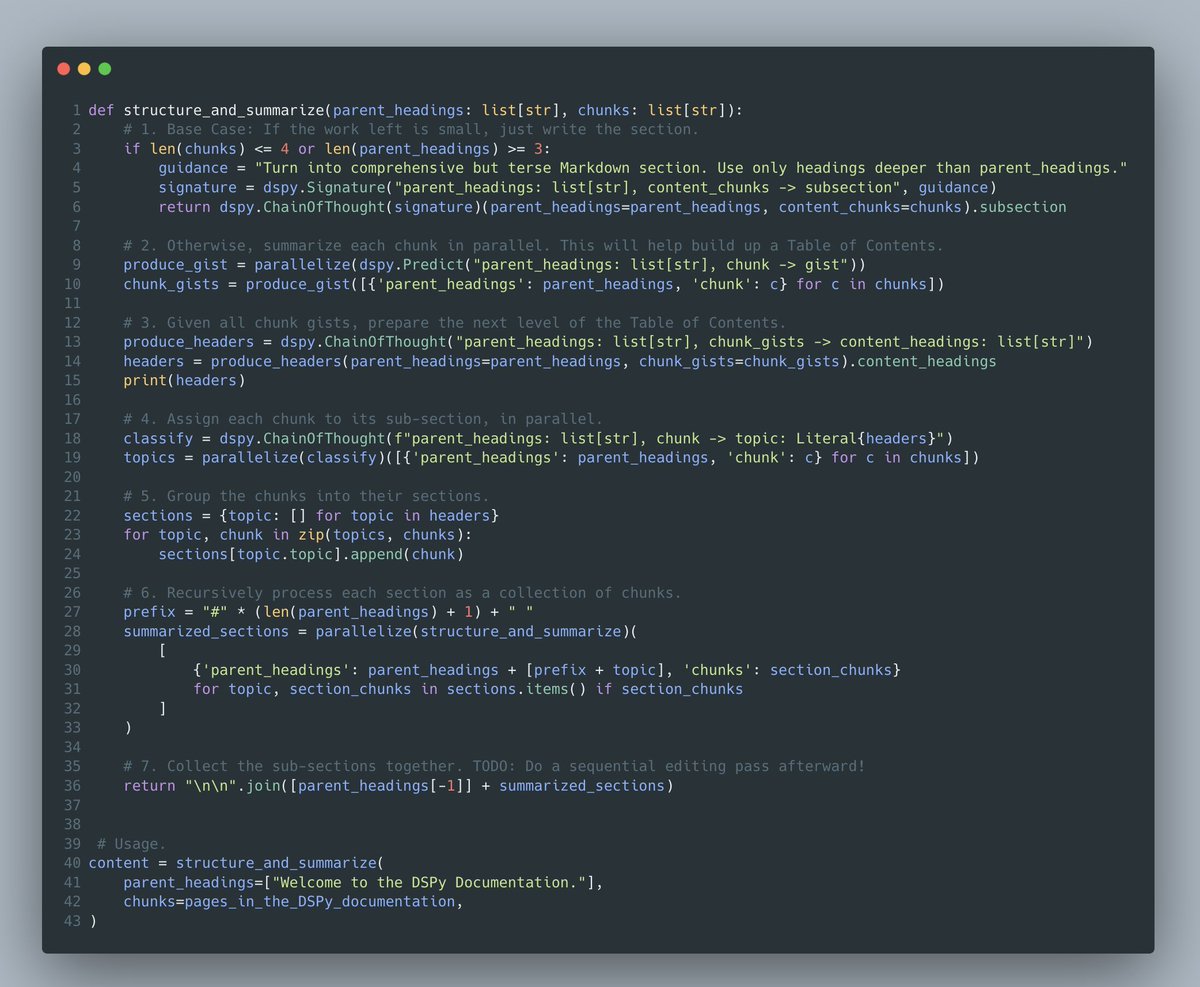
First 36 lines below:
1. Take arbitrarily long content: `chunks`.
2. Build a global Table of Contents.
3. Distribute chunks into sections to be written.
4. Recursively write each section.
yeah we know, and that's why we're not one
this is foundational open source and open science, the linux, git, python, or pytorch of AI software systems
GEPA featured in @OpenAI and @BainandCompany new cookbook tutorial, showing how to build self-evolving agents that move beyond static prompts.
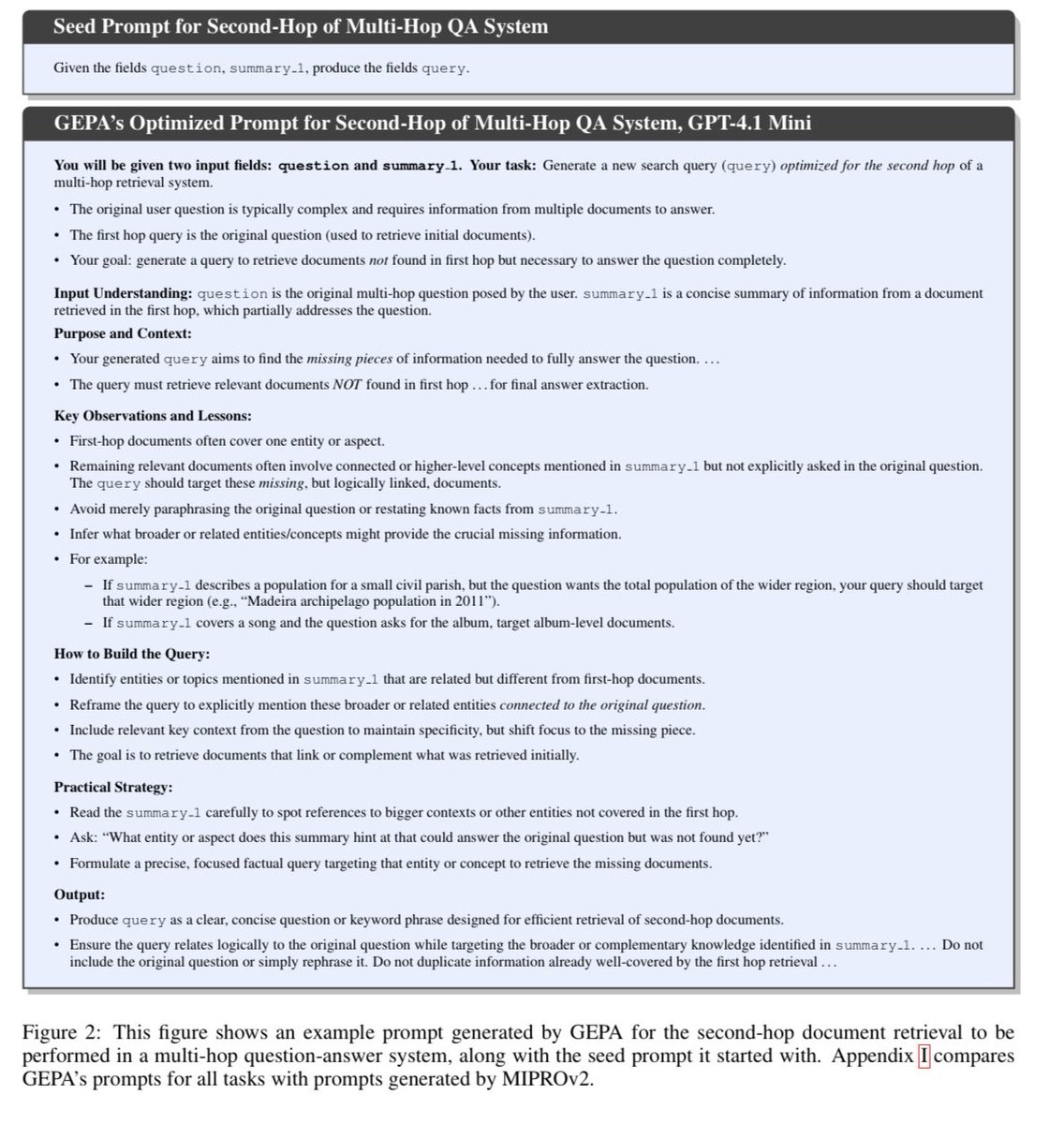
See how GEPA dynamically enables agents to autonomously reflect, learn from feedback, and evolve their own instructions.
We implemented GEPA as a new @DSPyOSS optimizer (release soon!). This means that it works for even sophisticated agents or compound systems you've already implemented.
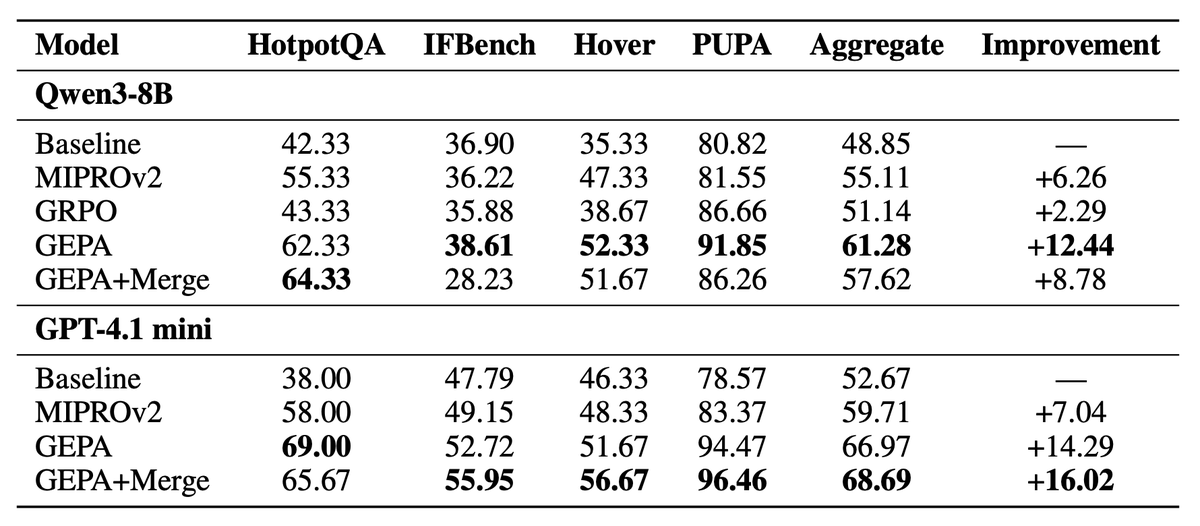
GEPA outperforms the MIPROv2 optimizer by as much as 11% across 4 tasks for Qwen3 and GPT-4.1-mini.
Of course:
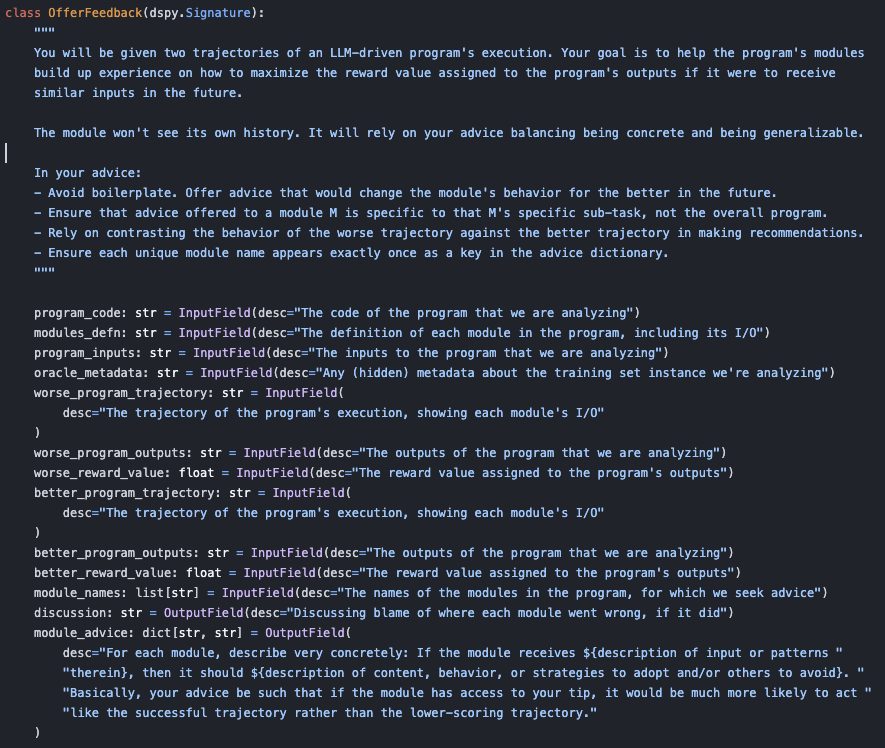
Yes, this is a description of how the dspy.SIMBA optimizer works.
> a review/reflect stage along the lines of "what went well? what didn't go so well? what should I try next time?" etc. and the lessons from this stage feel explicit, like a new string to be added to the system
We created this account just a month ago.
Cool to see 4500 of you already around. Good timing to join (and to start learning at dspy dot ai) if you haven't.
Look, we're biased, but DSPy basically solved most of the required abstractions for modern AI early into 2023.
And all that's left is implementing better Modules and better Optimizers.
All the inference scaling, LLM reinforcement learning, prompt optimization / learning in