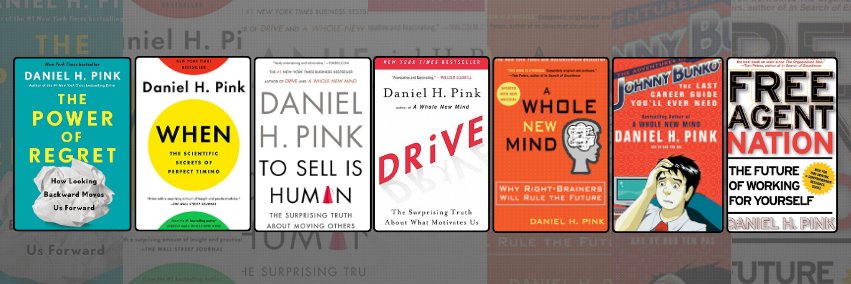
For the last 20+ years, I’ve been studying work, creativity, science, and the human condition.
Over the next few months, I’ll be sharing the best of what I’ve learned about living a life that matters. Stay tuned!
Want happier, healthier kids?
Offer them autonomy.
Massive new meta-analysis makes it plain:
In every culture, control leaves children worse off — but autonomy helps them people engage, learn, and grow.
Is it better to solve problems in isolation or by collaborating with others?
Harvard research says . . . neither.
The best solutions come from "intermittent collaboration" -- group work punctuated by breaks to think & work by ourselves.
For reasons known only to the K-pop gods, one of my books (DRIVE) makes a cameo in BTS's just-released music video.
HT: @7WaterLily & @BTSBookClub_twt
(Link: youtu.be/9IHwqdz8Xhw)
Top teachers were the *most* likely to seek advice from their peers. The better the teacher performed, the more likely they were to obtain feedback on how to be even better.
Asking for advice & feedback is a sign of strength, not weakness.
digest.bps.org.uk/2018/08/03/the…
One of the best predictors of academic success in young children: Curiosity. It's as important as self-control, and especially valuable for lower-income kids. Classrooms should spark curiosity rather than demand compliance.
1. When elementary teachers specialize in a subject (ex: math) & students switch teachers for each class, students learn *less*.
2. Students with the same teacher 2 years in a row learn more.
Bottom line: Kids do better when teachers know them well.
Age-restricted adult content. This content might not be appropriate for people under 18 years old. To view this media, you’ll need to log in to X. Learn more
When teachers started class by greeting each students at the door by name, academic engagement increased by 20 percentage points and disruptive behavior decreased by 9 percentage points.