Image
user avatar
ElowitzLab
@ElowitzLab
Lab of Michael Elowitz at Caltech. Synthetic biology and systems biology
Los Angeles
Joined December 2013
Posts
  • user avatar
    Delivering and expressing a gene in cells is usually a messy (heterogeneous) process. The messiness interferes with research and applications such as gene therapy. In two new papers, we introduce a toolbox of synthetic miRNA-based control circuits that enable more precise, gene
    Image
  • user avatar
    This illustration by @Wonderstrucksci, inspired by Waddington’s second most famous drawing, shows with remarkable directness how MultiFate’s 3 transcription factors, interacting in combinations, produce a multistable epigenetic landscape.
    Image
  • user avatar
    Just posted a preprint on our new spatial genomic recording system, baseMEMOIR. biorxiv.org/content/10.110… Motivation: Cells divide, differentiate, and migrate to form exquisitely organized tissues. Reconstructing the dynamic histories of individual cells, including their lineage
    Image
  • user avatar
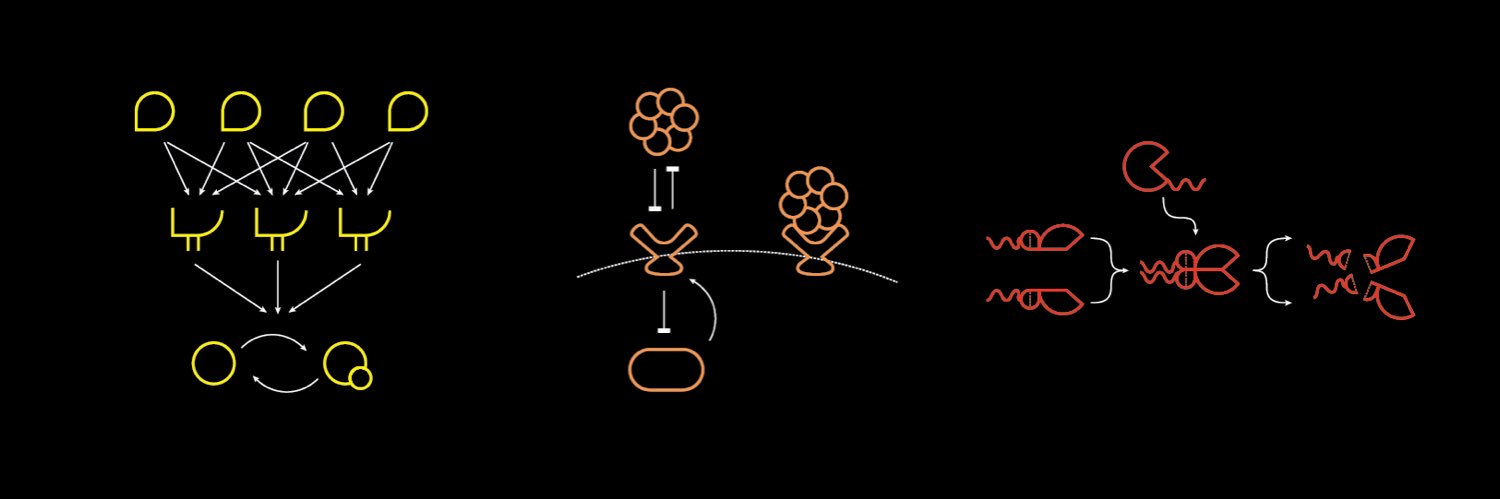
    Many intercellular communication systems (BMP, Notch, Wnt, FGF, etc) use sets of promiscuously interacting ligand and receptor variants rather than seemingly simpler one-to-one architectures. Why? Our 2 papers grappling w/this question just out in @CellSystemsCP
    Image
  • user avatar
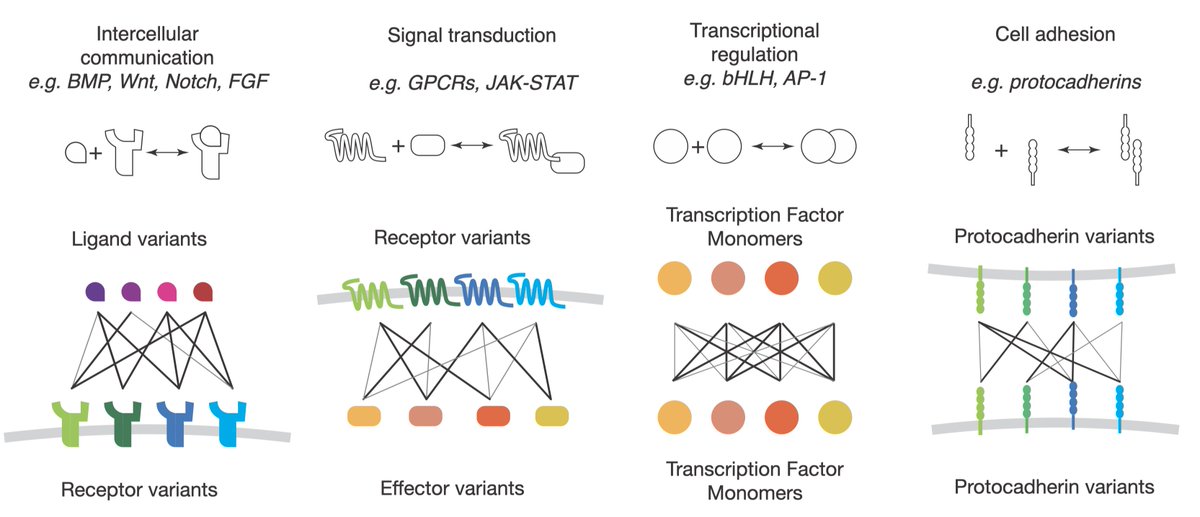
    “Messy” many-to-many protein networks control signaling, transcription, adhesion, etc. Is this a bug or a feature? In this new perspective, we argue for feature, critical for multicellularity. With brilliant @HeidiKlumpe, @jgojalvo, & @yaronantebi. authors.elsevier.com/a/1hHu6_siQzni…
    Image
  • user avatar
    The best cells speak for themselves. Our new system, intMEMOIR, allows cells to record lineage history in a digital format that can be recovered by imaging: biorxiv.org/content/10.110….
    Image
  • user avatar
    RNA is informant and agent. Controlled RNA export from cells could enable cell-cell delivery of functional and non-destructive tracking of cell dynamics. Our new paper, led by brilliant @FelixHorns, engineers RNA export for both capabilities: authors.elsevier.com/sd/article/S00…
    Image
  • user avatar
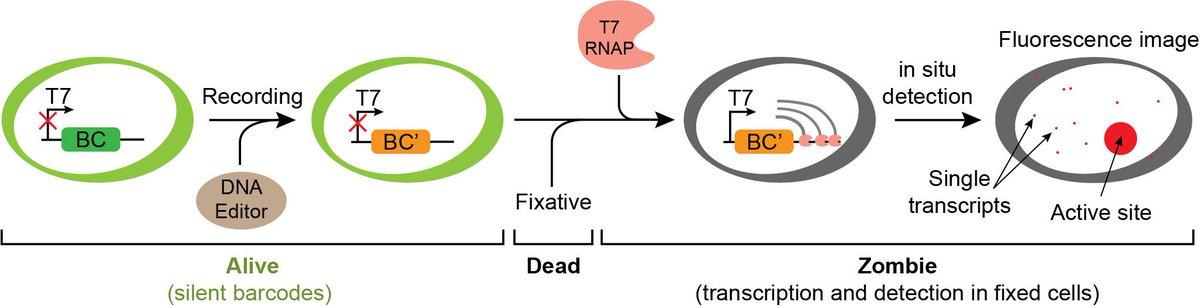
    If we could read out DNA barcodes in situ, we could “see” the history of individual cells directly in tissues. Here we show good old T7 polym transcribes barcodes in fixed cells, without in vivo expression, providing unexpected capabilities. go.nature.com/2CX0tNu 1/
    Image
  • user avatar
    Our new lab website, years in the making, is now live: elowitz.caltech.edu. (And a fond farewell to our old website…)
    Image
  • user avatar
    What does it take to generate multiple cell states? To find out, we designed and built "MultiFate", a synthetic circuit that generates multistability in mammalian cells. biorxiv.org/content/10.110… . Work from brilliant student @RonZhu2015 w/ @jesusdelrio_7 and @jgojalvo.
  • user avatar
    In his 1952 classic, Turing showed that ≥2 interacting, continuously diffusing morphogens can spontaneously generate beautiful biological patterns. On a discrete cell lattice, we find that 1 morphogen is enough for stable spatially periodic patterns cell.com/cell-systems/r…
  • user avatar
    Cell comm pathways (BMP, Wnt, etc) use many ligand & receptor variants in combinations. Ligands can behave in weirdly “contextual” ways, replacing each other in one process but not another. What’s the logic+function of these pervasive bewildering systems? 2 new preprints…
  • user avatar
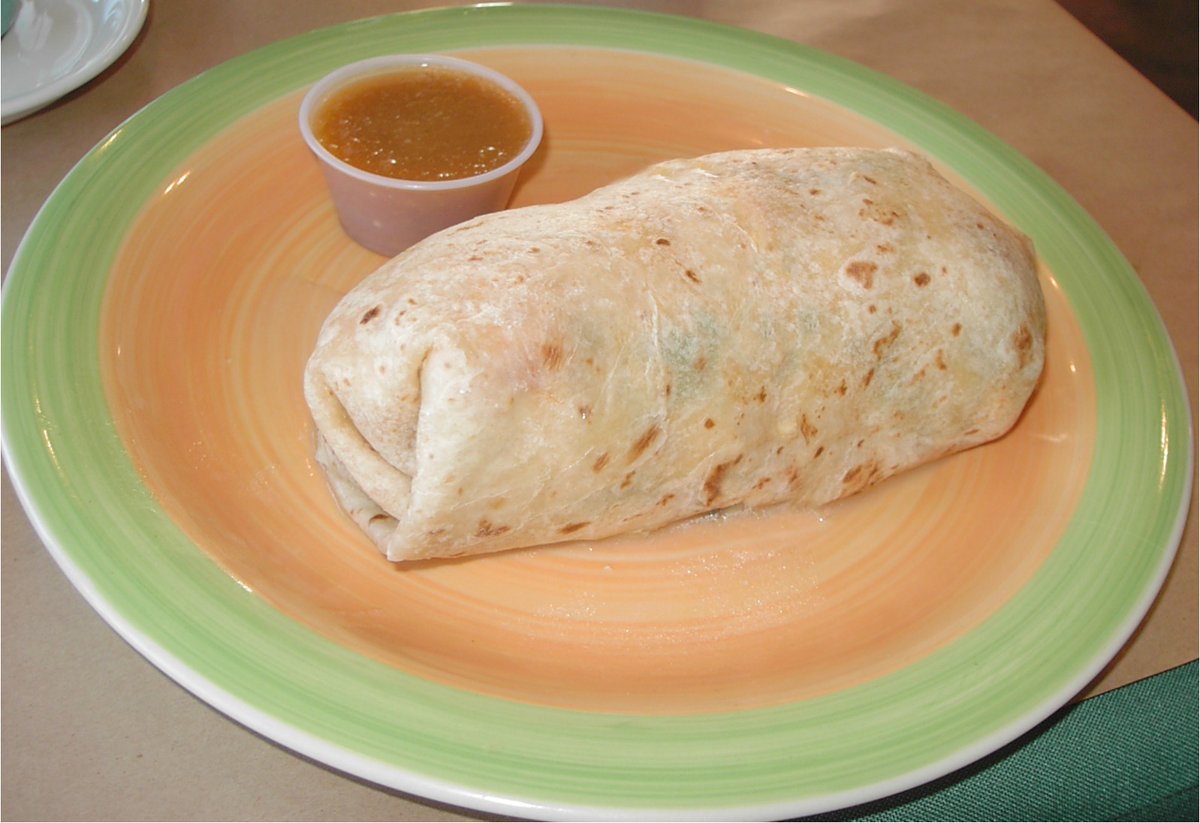
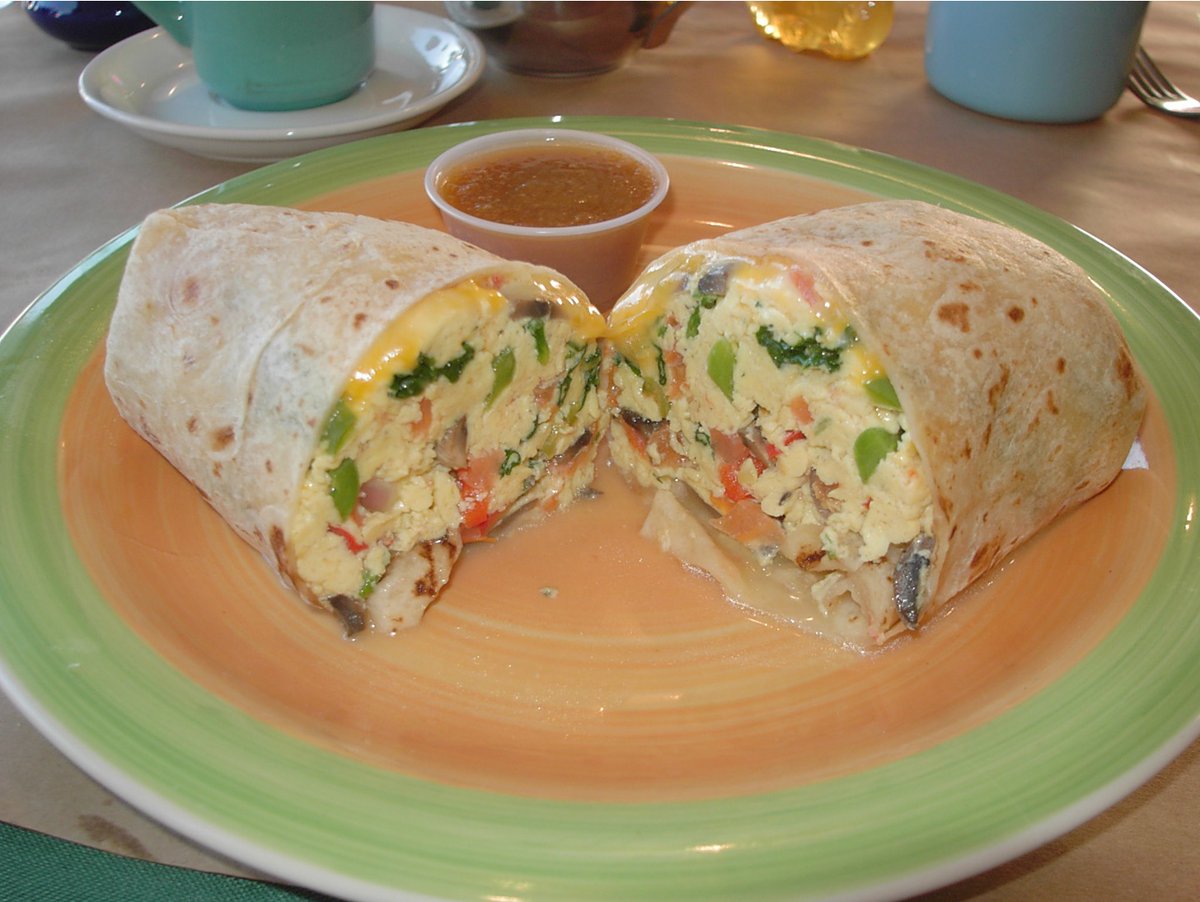
    Hard to believe it’s almost 2 decades since I was served, and later consumed, this molecularly precise model of a gram negative bacterium. The model captures 3 features of the cell: - high protein density, but low molecule number - carbohydrate surface - cheese in periplasm
    Image
    Image
    Image
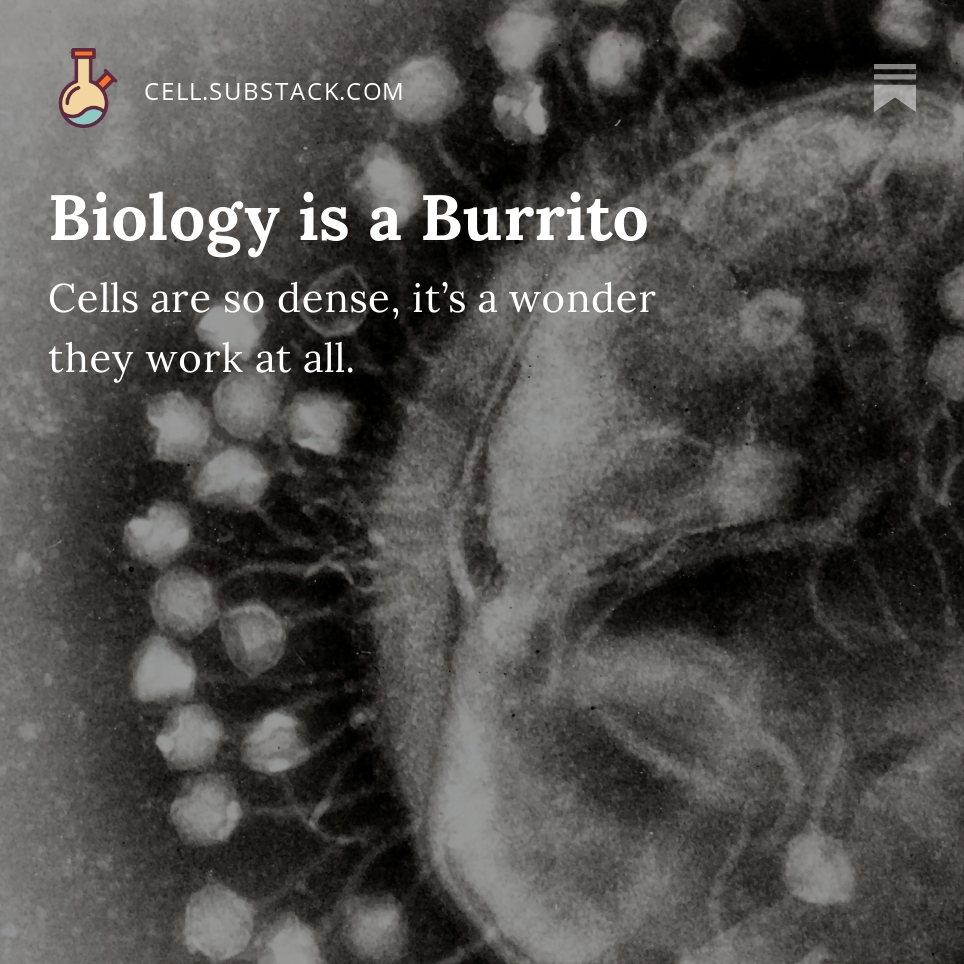
    🌯 BIOLOGY IS A BURRITO 🌯 Cells are crowded and very fast places. It's a miracle that anything works at all. The central dogma is often depicted as DNA -> RNA -> proteins, but it's so much more: A biophysical marvel inside the smallest of vessels. 💓 open.substack.com/pub/cell/p/bur…
  • user avatar
    Synthetic biology could enable new types of programmable therapeutics. Our new preprint introduces synthetic protein circuits that selectively trigger cell death in Ras-mutant cancer cells, with interesting advantages compared to existing approaches.