Tomorrow, I'm flying to Los Angeles for oral argument in what may be the most important Fourth Amendment case pending in the United States today. The basic facts: The FBI broke open and searched hundreds of safe deposit boxes without any reason to think the boxholders did
The FBI raided Jeni Pearson's safe deposit box and tried to take all the contents using civil forfeiture. Jeni fought back, along with other @IJ clients, and won...
Except, when the FBI returned the box contents, $2,000 was missing. So Jeni and @IJ sued again.
Yesterday, we got
So, now the case moves forward to discovery -- meaning we get to ask the FBI some uncomfortable questions about what exactly happened to the missing $2,000. I literally couldn't be looking forward to that more.
So why is the case so important? The fundamental principle at stake is that if the government wants to search and seize your property, it has to have some reason to think you did something wrong. The FBI came up with a blatant scheme to circumvent that fundamental principle, and,
Update about this case: Still no decision, but it has been a big month in other ways. And the government has gotten up to some interesting hijinks. I'll explain.
For starters, oral argument was fantastic. The judges called the government's conduct "egregious" and "outrageous."
The FBI did all that pursuant to a warrant, but, critically, the warrant specifically said that it did not "authorize a criminal search or seizure of the safety deposit boxes." That was an important limitation: The FBI had reason to think that USPV, the business, had violated the
The FBI, though, had what must have seemed like an evil genius plan. The warrant allowed the FBI to seize the "nest" of safe deposit boxes -- the metal shell in which all the boxes were housed -- and then, having seized the nest, the FBI decided that it would have to "inventory"
Yesterday, the district court rejected that argument.
The Takings Clause bars the government from taking private property without just compensation. That means, if the government takes your $2,000 and never gives it back, the government has to compensate you for the loss.
The only problem is the search the FBI conducted was not an "inventory." An inventory is supposed to safeguard property against claims of theft and loss, but here the FBI was already planning to keep everything in the boxes---using civil forfeiture. The FBI concocted its
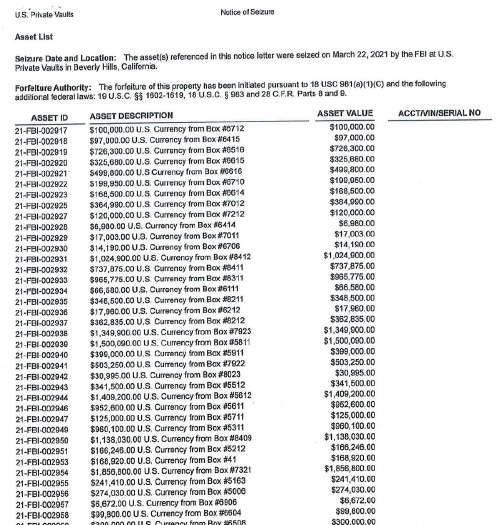
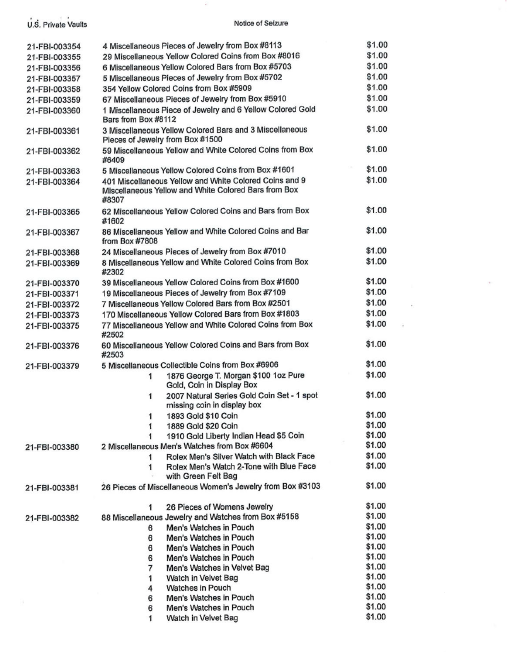
All in all, the FBI sought to forfeit over a hundred million in cash seized from the vault, plus untold millions more in gold, silver, and other valuable property.
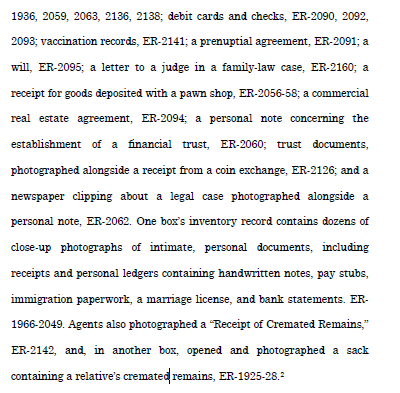
@IJ sued and largely thwarted the FBI's forfeiture plans. Millions of dollars in property was ultimately returned. But now the FBI retains thousands of pages of records documenting the contents of the boxes -- including legal documents, personal notes, financial records, and
Jeni's fight for her missing $2,000 is another chapter in the story of U.S. Private Vaults, a safe deposit box facility in Beverly Hills that the FBI raided in March 2021. @IJ challenged the raid, and, earlier this year, the Ninth Circuit held that the raid violated the Fourth
Tomorrow, I'm flying to Los Angeles for oral argument in what may be the most important Fourth Amendment case pending in the United States today. The basic facts: The FBI broke open and searched hundreds of safe deposit boxes without any reason to think the boxholders did