Image
user avatar
Jim Free
@JimFree
Former NASA Associate Administrator
Posts
  • user avatar
    Fly-by complete! @NASA_Orion completed its closest fly-by of the Moon this morning, 81 miles above the lunar surface, traveling 5,102 mph. Before the fly-by, we conducted an outbound powered fly-by burn, increasing speed at a rate of more than 580 mph: blogs.nasa.gov/artemis

    Taken from Orion's Solar Array Wing Camera, Earth is seen in the distance as a pale blue dot, as Orion traveled around the Moon this morning on a powered fly-by burn.
  • user avatar
    I'm impressed by our #Artemis I team's dedication - their care for @NASA_SLS and @NASA_Orion is keeping us on track. Designing for this environment is challenging, and our design stood up to the test of the storm. We are pressing toward launch on Nov 16: go.nasa.gov/3hC0spN
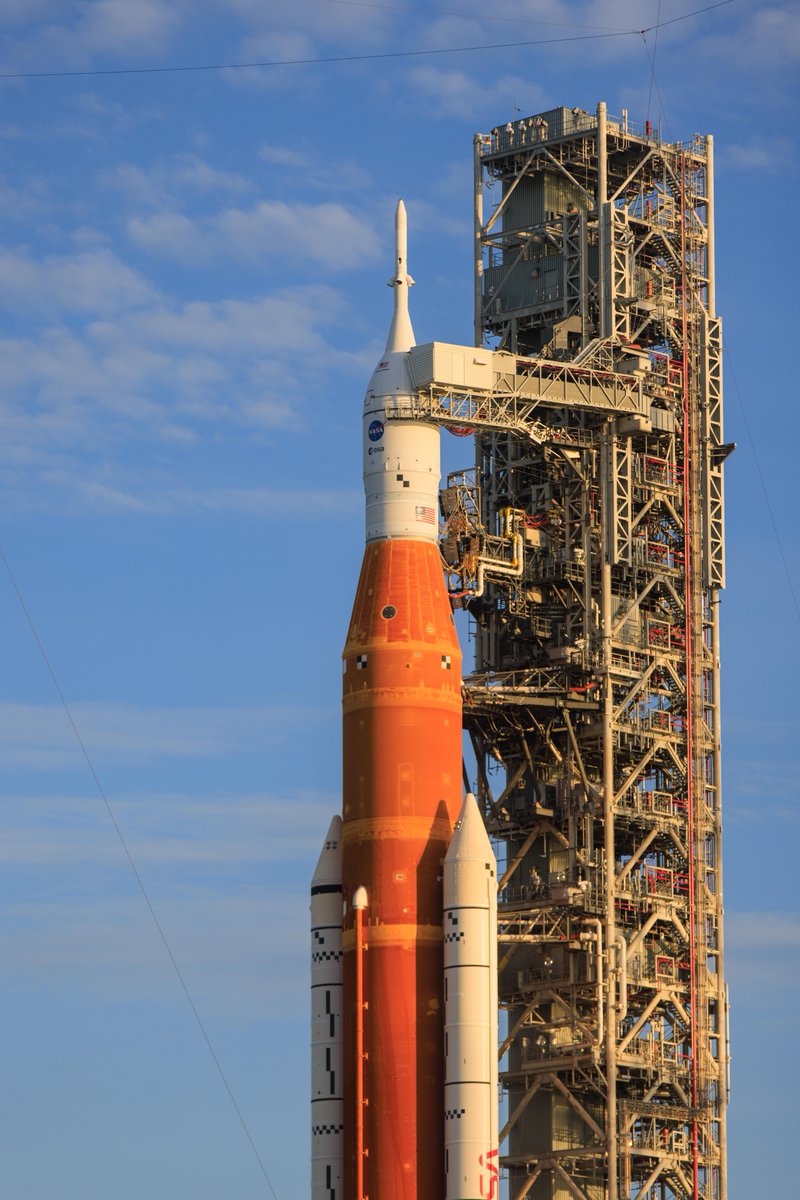
    NASA’s Space Launch System (SLS) rocket with the Orion spacecraft aboard is seen atop the mobile launcher at Launch Pad 39B, Friday, Nov. 11, 2022, at NASA’s Kennedy Space Center in Florida. Teams began walkdowns and inspections at the pad to assess the status of the rocket and spacecraft after the passage of Hurricane Nicole. Photo Credit: (NASA/Joel Kowsky)
  • user avatar
    Overnight, we powered-up @NASA_SLS’s core stage components for the #Artemis I launch, including the avionics boxes located inside the core stage. The boxes are connected to various sensors and flight computers to command and control the rocket during tanking, liftoff, and ascent.
    Image
  • user avatar
    This is why we test. Overnight, we unexpectedly lost communication with @NASA_Orion while reconfiguring the link between the spacecraft and the Deep Space Network. We've since restored the link with an adjustment on the ground and are examining root cause. go.nasa.gov/3XswKDZ
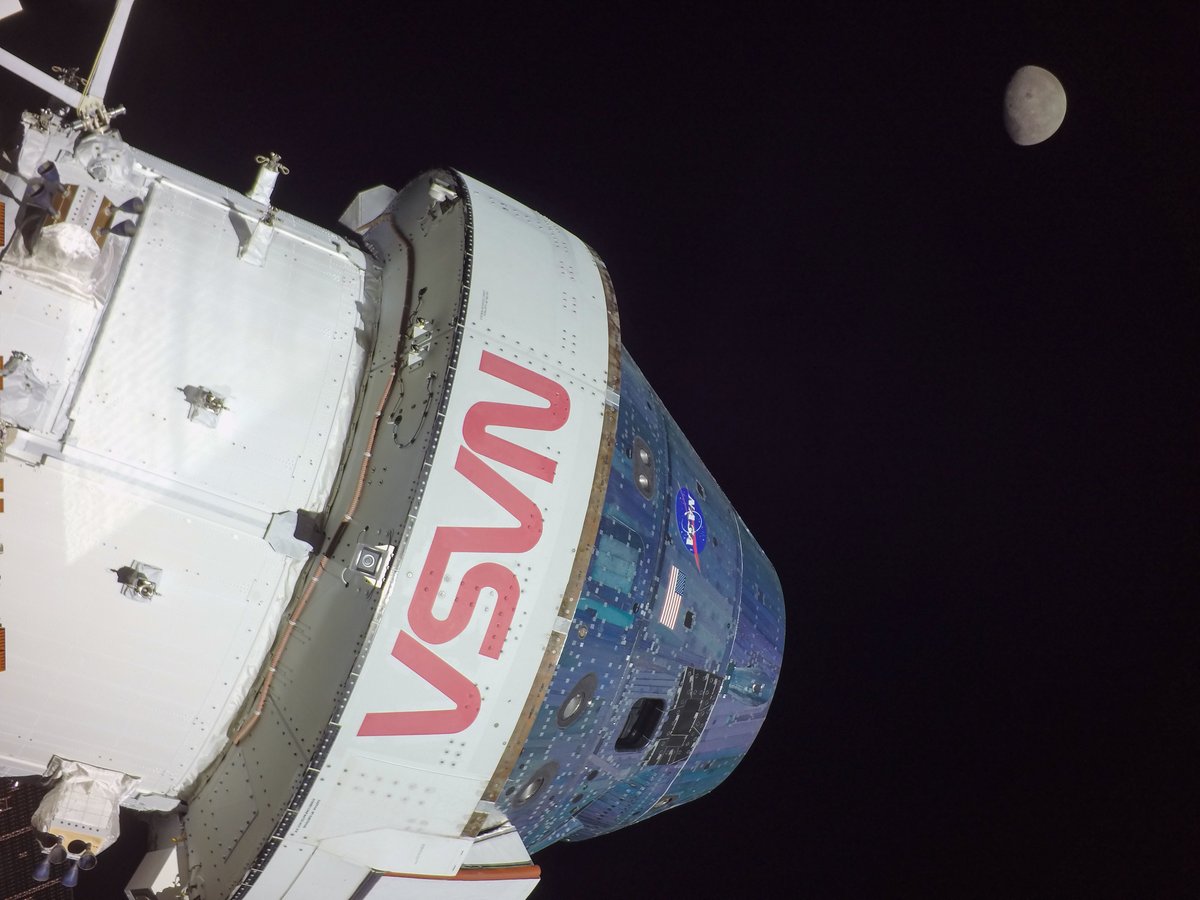
    Taken on the fifth day of the Artemis I mission, this photo showing the Orion spacecraft with the Moon beyond was captured by a camera on the tip of one of Orion’s solar arrays. The spacecraft arrived at its closest approach to the moon the following day, Nov. 21, 2022, coming within 80 miles of the lunar surface.
  • user avatar
    We polled GO today to send @NASA_Orion on a powered fly-by approximately 80 miles above the surface of the Moon! Tune in to coverage of the maneuver on Monday, Nov 21 at 7:15 AM ET on nasa.gov/live.
    Image
  • user avatar
    Update on our #Artemis I mission:
    Image containing a statement from NASA, summarized as follows: Peak conditions for Nicole have passed at NASA Kennedy, and our focus is now on our employees and then getting back into launch operations. Teams monitored SLS and Orion remotely during the storm and successfully maintained purges and other essential support. While wind sensors at the launch pad detected peak wind gusts up to 82 mph (71 knots) at the 60-foot level, this is within the rocket’s capability. Our team is conducting initial visual check-outs, and camera inspections show very minor damage such as loose caulk and tears in weather coverings. Additional onsite walk down inspections will happen soon. We took the decision to keep Orion and SLS at the launch pad very seriously, making the best decision possible with high uncertainty in predicting the weather four days out. With the unexpected change to the forecast, the team decided the launch pad was the safest place for the rocket to weather the storm.
  • user avatar
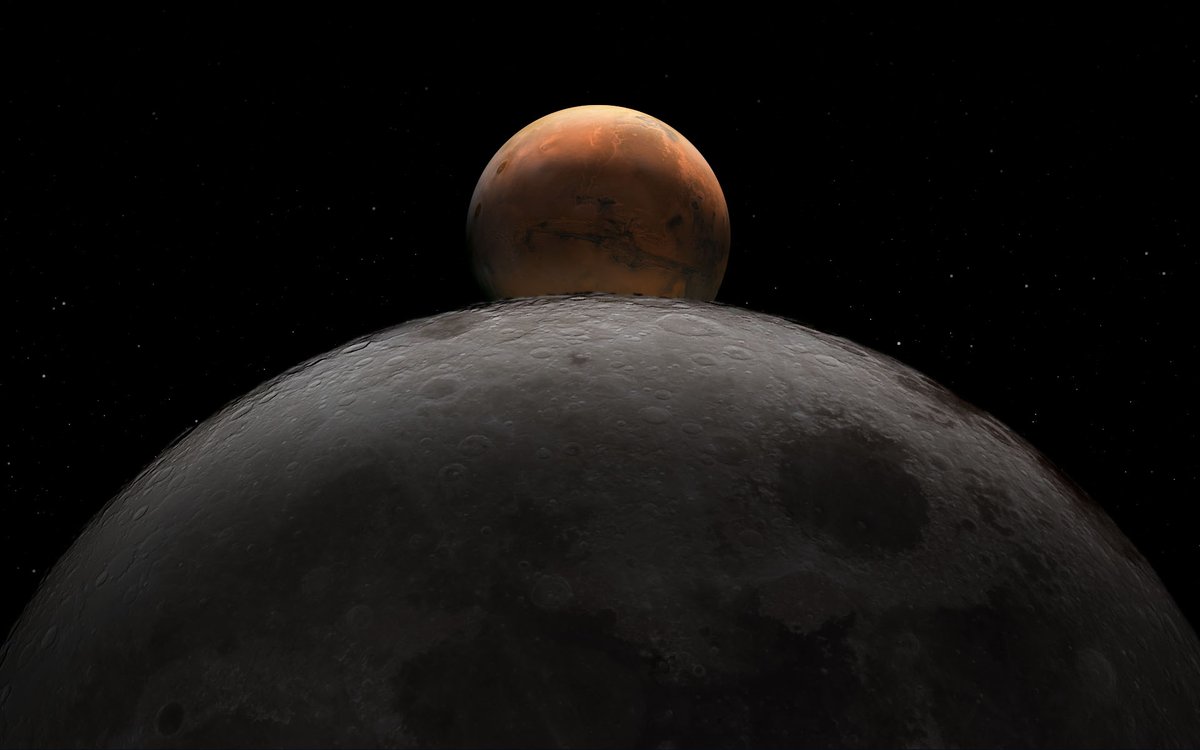
    #Artemis is more than going to the Moon. We’re learning to live & work on another world so we can explore more of the solar system, and we need your help. We’re extending the deadline to June 3 to get your feedback on @NASA’s draft Moon to Mars objectives: go.nasa.gov/3yRK7DM
    Image
  • user avatar
    We’ve been incredibly efficient with our use of propellant on #Artemis I so far. As of Nov. 21, we've used a total of 3.7K lbs of propellant, 76 lbs less than expected. We have 2.1K lbs of margin available over what we planned for use, an increase of 201 lbs from expected values.
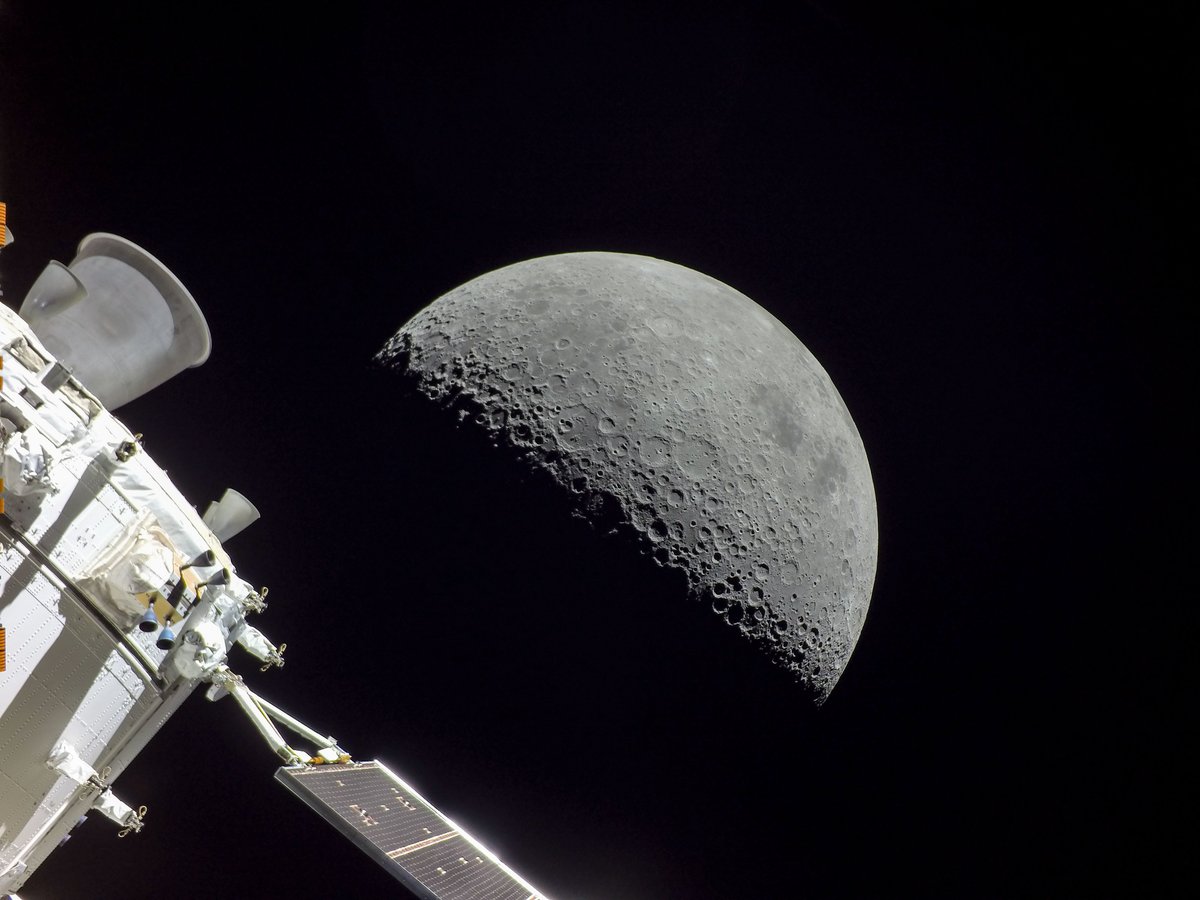
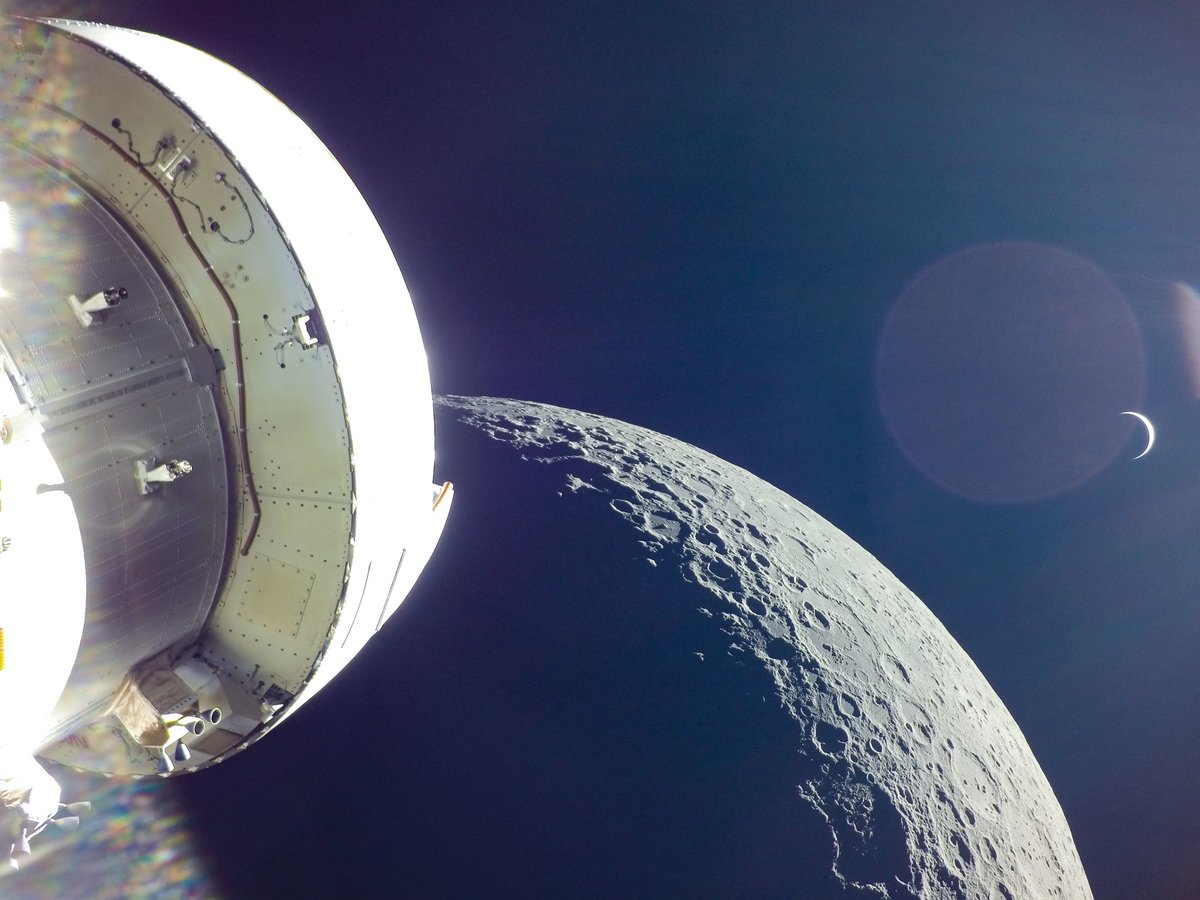
    A portion of the far side of the Moon looms large just beyond the Orion spacecraft in this image taken on the sixth day of the Artemis I mission by a camera on the tip of one of Orion’s solar arrays. The spacecraft entered the lunar sphere of influence Sunday, Nov. 20, making the Moon, instead of Earth, the main gravitational force acting on the spacecraft. On Monday, Nov. 21, it came within 80 miles of the lunar surface, the closest approach of the uncrewed Artemis I mission, before moving into a distant retrograde orbit around the Moon. The darkest spot visible near the middle of the image is Mare Orientale
  • user avatar
    We've left lunar orbit! @NASA_Orion fired its main engine today to exit distant retrograde orbit and set itself on a course for Earth. The burn is one of two maneuvers we'll make ahead of splashdown on Dec 11. Next up? Return powered fly by on Dec 5. go.nasa.gov/3XJ3s4h
    A camera on the tip of one of the Orion’s four solar arrays captured Earth when the spacecraft was 264,000 miles from our home planet on the Artemis I mission.
  • user avatar
    The imagery we continue to get out of @NASA_Orion's onboard cameras is outstanding. Downlinked the lunar fly-by photos yesterday, and they are incredible - a few of my favorites below. Visit flickr.com/nasa2explore to see the rest.
    A portion of the far side of the Moon looms large just beyond the Orion spacecraft in this image taken on the 20th day of the Artemis I mission by a camera on the tip of one of Orion’s solar arrays. The return powered flyby burn committed Orion to a return to Earth trajectory ahead of a splashdown off the coast of California on Dec. 11. At its closest point, Orion flew within 80 miles of the lunar surface.
     On flight day 20 of the Artemis I mission, Orion captured the Moon on the day of return powered flyby. The burn, which lasted 3 minutes, 27 seconds, committed the spacecraft to a Dec. 11 splashdown.
    On the 20th day of the Artemis I mission, Orion captured the Earth rising behind the Moon following the return powered flyby. The 3 minute, 27 second, return powered flyby burn, committed the spacecraft to a Dec. 11 splashdown in the Pacific Ocean.
  • user avatar
    Activities are going smoothly for #Artemis I. @NASA_Orion completed a planned trajectory correction burn today, and entered into the Moon's gravitational field. We'll conduct another trajectory correction burn tonight before performing the fly-by burn tomorrow morning.
    Orion is approaching the Moon ahead of our powered flyby maneuver during which we'll pass within 80 miles (130 km) of the lunar surface.
  • user avatar
    Image
  • user avatar
    I’m honored to return to @NASA. In my new role, I’ll focus on near-term success of #Artemis, while charting a clearly defined path for human exploration of Mars. Follow me for updates along the way.
    NASA Administrator Bill Nelson, left, shakes hands with Jim Free after being sworn in as the first associate administrator of the new Exploration Systems Development Mission Directorate, Monday, Sept. 20, 2021, at the Mary W. Jackson NASA Headquarters building in Washington.
  • user avatar
    Today at 5PM ET, we're hosting a media briefing to preview upcoming #Artemis I operations. @NASA_Orion is preparing to enter the Moon’s orbit, and we'll perform a powered flyby approximately 80 miles over the surface of the Moon. Tune in at nasa.gov/live.
    Image